
What Is a Blue Collar Worker?
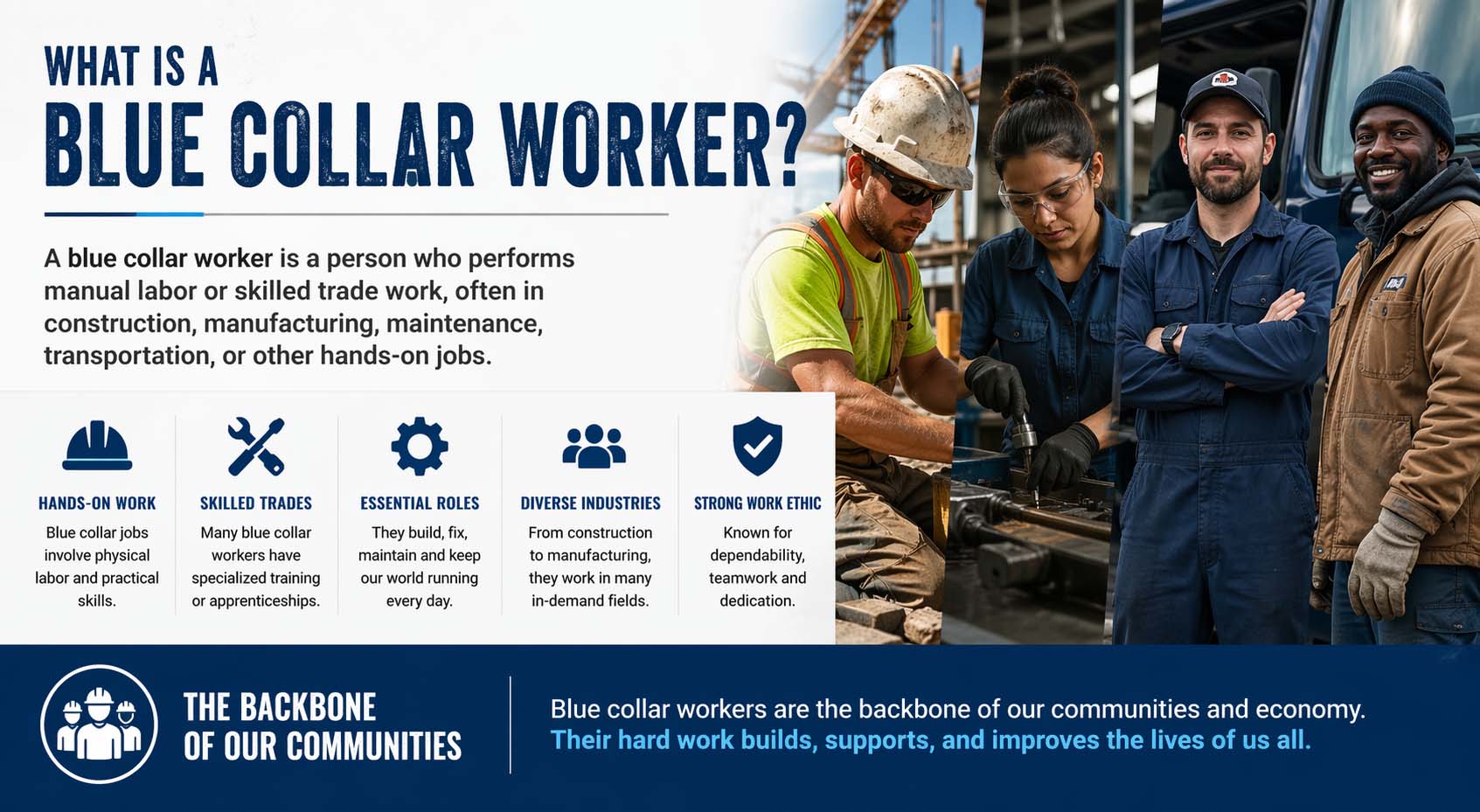
Many people ask what is a blue collar worker because the term is widely used in job discussions, career planning, and economic conversations. A blue collar worker is generally someone who performs manual labor, skilled trades, technical work, or hands-on services. These jobs are often essential to industries such as construction, manufacturing, transportation, maintenance, energy, and logistics.
Blue collar workers help build homes, repair vehicles, operate machinery, install electrical systems, maintain roads, and keep supply chains moving. Without these professionals, many daily services and business operations would stop.
The phrase blue collar originally referred to the durable blue uniforms or work shirts worn by laborers. Today, the term represents a large and valuable workforce that keeps communities functioning.
What Is a Blue-Collar Worker?
If you are wondering what is a blue-collar worker, it usually refers to someone whose job requires physical tasks, practical skills, or operation of tools and machinery. These workers may be employed indoors or outdoors and often work in active environments rather than traditional office settings.
Blue collar jobs can range from entry-level positions to highly specialized careers requiring years of training and certification. Electricians, plumbers, mechanics, welders, truck drivers, machine operators, and construction workers are common examples.
Many blue collar roles also involve technical knowledge, safety training, and problem-solving skills.
What Is Considered a Blue Collar Worker?
A common question is what is considered a blue collar worker in today’s economy. In modern workplaces, the category includes jobs focused on physical production, installation, repair, transportation, and field services.
Examples include:
- Construction workers
- Carpenters
- Welders
- Electricians
- Plumbers
- Factory machine operators
- Delivery drivers
- HVAC technicians
- Mechanics
- Warehouse staff
Some jobs use advanced technology, but they are still considered blue collar because they involve practical, operational, or manual work.
What Is the Definition of a Blue Collar Worker?
If you ask what is the definition of a blue collar worker, the simplest answer is a person employed in manual labor or skilled trade work. These positions may require apprenticeships, vocational education, four-year college degree.
However, many blue collar careers now demand high levels of expertise. For example, industrial technicians may use computer systems, diagnostic software, and precision tools daily.
The definition has expanded over time to include workers who combine physical skill with technical ability.
What Is a Blue Collar Worker Mean?
Some people phrase the question as what is a blue collar worker mean. It means someone whose career is centered on hands-on tasks that support infrastructure, production, transportation, repair, or essential services.
These jobs are critical because they help society function. Roads are built by construction teams, electricity is maintained by technicians, products are manufactured in factories, and goods are delivered by logistics workers.
Blue collar workers often perform tasks that directly create or maintain physical systems people rely on every day.
Common Industries for Blue Collar Workers
Blue collar professionals are employed across many industries. where workers build homes, offices, bridges, and roads.
Manufacturing is another major employer, with machine operators, assemblers, welders, and quality control staff helping produce goods.
Transportation and logistics rely on truck drivers, forklift operators, warehouse employees, and delivery teams.
Energy and utilities need technicians, line workers, and maintenance crews to keep power, water, and gas systems running smoothly.
Skills Needed for Blue Collar Jobs
Blue collar work requires more than physical strength. Many jobs demand technical knowledge, communication, attention to detail, and safety awareness.
Important skills include:
- Problem solving
- Equipment operation
- Mechanical understanding
- Teamwork
- Time management
- Safety compliance
- Precision and accuracy
- Reliability
Trades such as electrical work, plumbing, and welding also require certifications and continuous learning.
Education and Training
Not all blue collar jobs require university degrees. Many workers enter the field through vocational schools, apprenticeships, trade programs, or hands-on training.
For example, electricians and plumbers often complete apprenticeships . Mechanics may attend technical institutes, while machine operators learn through employer training.
This makes blue collar careers attractive for people who want practical skills, faster entry into the workforce, and real earning potential.
Salary and Career Growth
Blue collar jobs vary widely in pay depending on location, skill level, certifications, and industry demand. Some entry-level roles may start modestly, but skilled trades can earn strong incomes.
Electricians, welders, crane operators, HVAC technicians, and specialized mechanics often earn competitive wages. Many experienced workers can also start their own businesses or move into supervisory roles.
Career growth opportunities include:
- Team leader
- Foreman
- Site supervisor
- Operations manager
- Business owner
- Trainer or instructor
Blue Collar vs White Collar Jobs
Blue collar jobs are usually hands-on and operational, administrative. However, both types of work are valuable and necessary.
Modern workplaces increasingly blend the two categories. For example, a technician may use software systems daily, while an office employee may manage industrial operations remotely.
The old distinction matters less today than skill, performance, and opportunity.
Why Blue Collar Workers Matter
economies. They build infrastructure, maintain transportation networks, manufacture products, repair systems, and provide essential services.
During emergencies or supply disruptions, society often realizes how important these roles truly are. Skilled labor shortages in many countries have also increased demand for trained blue collar professionals.
Conclusion
Understanding what is a blue collar worker helps careers. Blue collar workers include tradespeople, technicians, operators, drivers, and labor professionals who keep industries moving.
Whether you ask what is a blue-collar worker, what is considered a blue collar worker, or what is the definition of a blue collar worker, the answer points to a vital workforce that supports everyday life. These careers offer strong opportunities, valuable skills, and an essential role in the modern economy.