

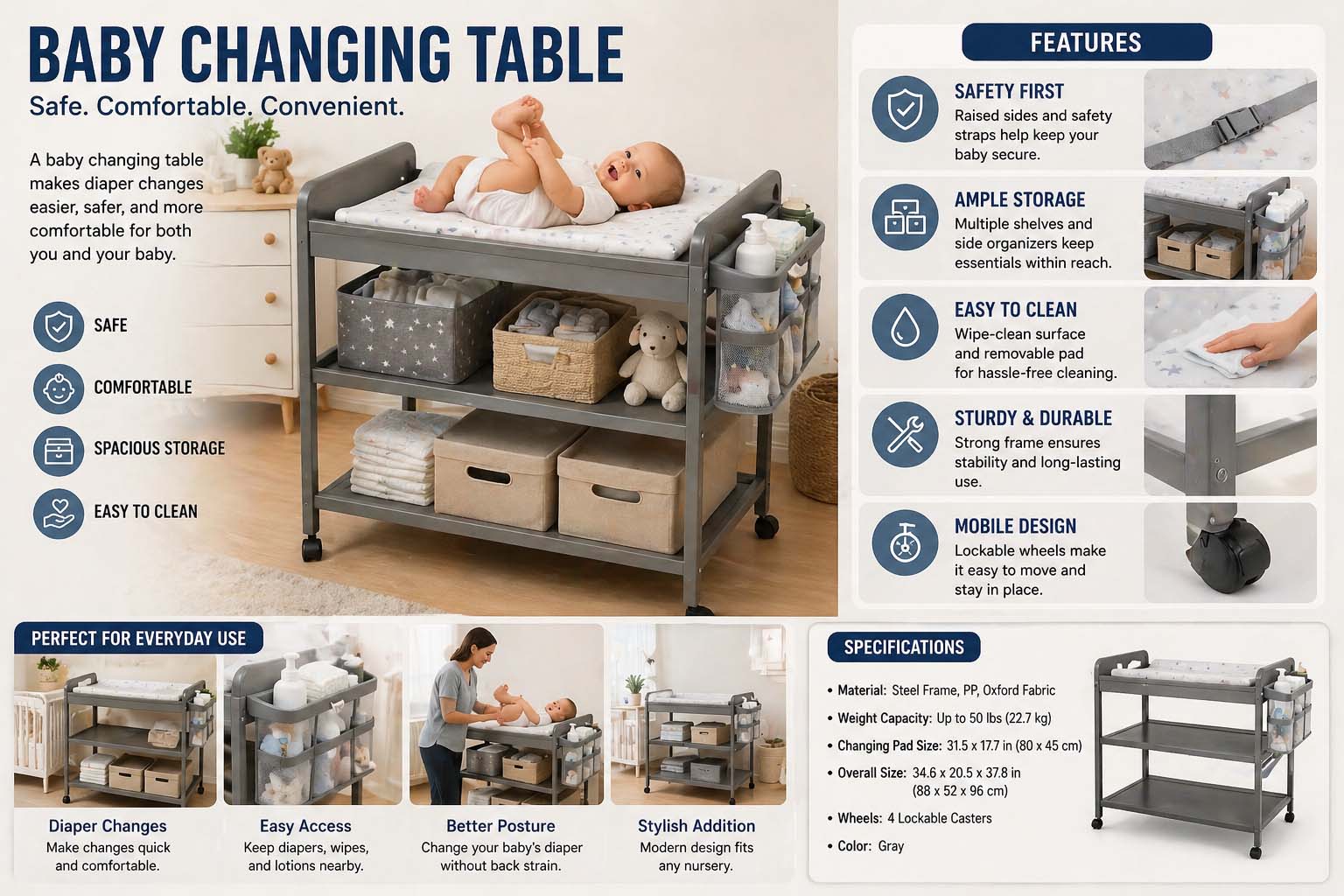
Creating a safe and comfortable nursery starts with choosing furniture that supports daily routines. One of the most practical items every parent should consider is a baby changing table. From diaper changes to storing essentials, this piece of furniture can make life easier during the first years of your child’s life. With stylish designs, added storage, and multifunctional features, today’s changing tables are more useful than ever.
A well-designed provides a secure space where parents can change diapers, dress their baby, and organize nursery supplies. It also helps reduce strain on the back by offering a comfortable standing height. Whether you have a large nursery or a compact room, there are many options available to match your needs.
Why Every Nursery Needs a Baby Changing Table
Parents quickly discover how often diaper changes happen during infancy. Having a dedicated station for changing makes this daily task smoother and more organized. Instead of searching for wipes, diapers, or clothes around the room, everything can be stored within easy reach.
Safety is another major benefit. Many models include guardrails or raised sides that help keep the baby secure during changing time. Combined with a padded changing mat, the setup becomes both safe and comfortable.
The right baby changing table also keeps your nursery looking neat. With drawers, shelves, and baskets, clutter stays hidden while essentials remain accessible.
Baby Dresser Changing Table
One of the most popular nursery furniture choices is the baby dresser changing table. This style combines a dresser with a changing surface on top, offering the best of both worlds. Parents can store baby clothes, blankets, socks, and diapers inside the drawers while using the top as a secure changing station.
This option is especially useful because it grows with your child. Once diaper days are over, the changing topper can often be removed, leaving you with a stylish dresser for years to come. That makes the baby dresser e a smart long-term investment.
Many modern designs come in white, natural wood, gray, or espresso finishes, making it easy to match your nursery décor. It blends style with practicality, which is why so many parents prefer it.
Choosing the Best Size and Style
When shopping for a changing table, think about your available space first. Measure the nursery carefully so the furniture fits without overcrowding the room. Compact tables work well in smaller homes, while larger dresser combinations offer more storage.
The style should also suit your routine. Some parents prefer open shelving for quick access, while others like drawers for a cleaner look. If you move often, a lightweight portable model may be ideal.
Durability matters too. Solid wood or high-quality engineered wood provides better stability and longer life. A sturdy baby changing table ensures safe everyday use.
Baby Changing Table Dresser
Another common term parents search for is baby changing table dresser. This furniture style focuses on combining nursery storage with convenience. It usually features multiple drawers below and a changing pad space above.
A baby changing table dresser works well for families who want fewer pieces of furniture in the room. Instead of buying a separate dresser and changer, one unit handles both tasks. This saves money and floor space.
Many parents also appreciate how elegant these pieces look. Rather than appearing temporary or overly baby-themed, many modern dressers have timeless designs that continue to look beautiful as children grow older.
Safety Tips for Everyday Use
No matter which model you choose, safety should always come first. Keep one hand on your baby during every diaper change, even if guardrails are present. Never leave a child unattended on the changing surface.
Use a secure changing pad that fits properly, and inspect screws or hardware regularly to ensure the furniture stays stable. Keep lotions, powders, and wipes within reach but out of your baby’s hands.
Placing the baby changing table away from windows, cords, or wall décor adds another layer of safety. A secure nursery layout gives parents greater peace of mind.
Baby Crib with Changing Table
Families with limited space often love the baby crib with changing table option. This design combines a crib and changing station into one furniture piece. It is ideal for apartments, smaller bedrooms, or minimalist nurseries.
A baby crib with changing table keeps everything close together. Parents can lift the baby from the crib and move directly to the changer without crossing the room. Many models also include drawers or shelves underneath for diapers and clothing.
These combo units are practical and space-saving while still offering attractive designs. Some even convert into toddler beds later, adding more long-term value.
How to Organize Your Changing Station
Organization can make daily routines easier. Keep diapers, wipes, creams, spare outfits, and burp cloths close to the top shelf or drawer. Use small bins or drawer dividers so items stay sorted.
Many parents place a laundry hamper nearby for quick clothing changes. Soft lighting above the baby changing table can also help during nighttime diaper changes without fully waking the baby.
Simple organization saves time, especially during busy mornings or late-night wakeups.
Baby Cribs with Changing Table
Another growing trend is baby cribs with changing table designs that offer complete nursery functionality in one package. These models often feature side-mounted changers, lower storage shelves, and convertible crib frames.
Materials and Design Trends
Modern nursery furniture focuses on both style and sustainability. Many brands now offer non-toxic finishes, eco-friendly wood, and GREENGUARD-certified materials. This helps parents create a healthier room environment.
Final Thoughts
A baby changing table is more than just nursery furniture—it is a daily helper that adds comfort, organization, and convenience to parenthood. Whether you choose a dresser combo, a compact changer, or a crib combination, the right option can simplify life during your baby’s early years.
