
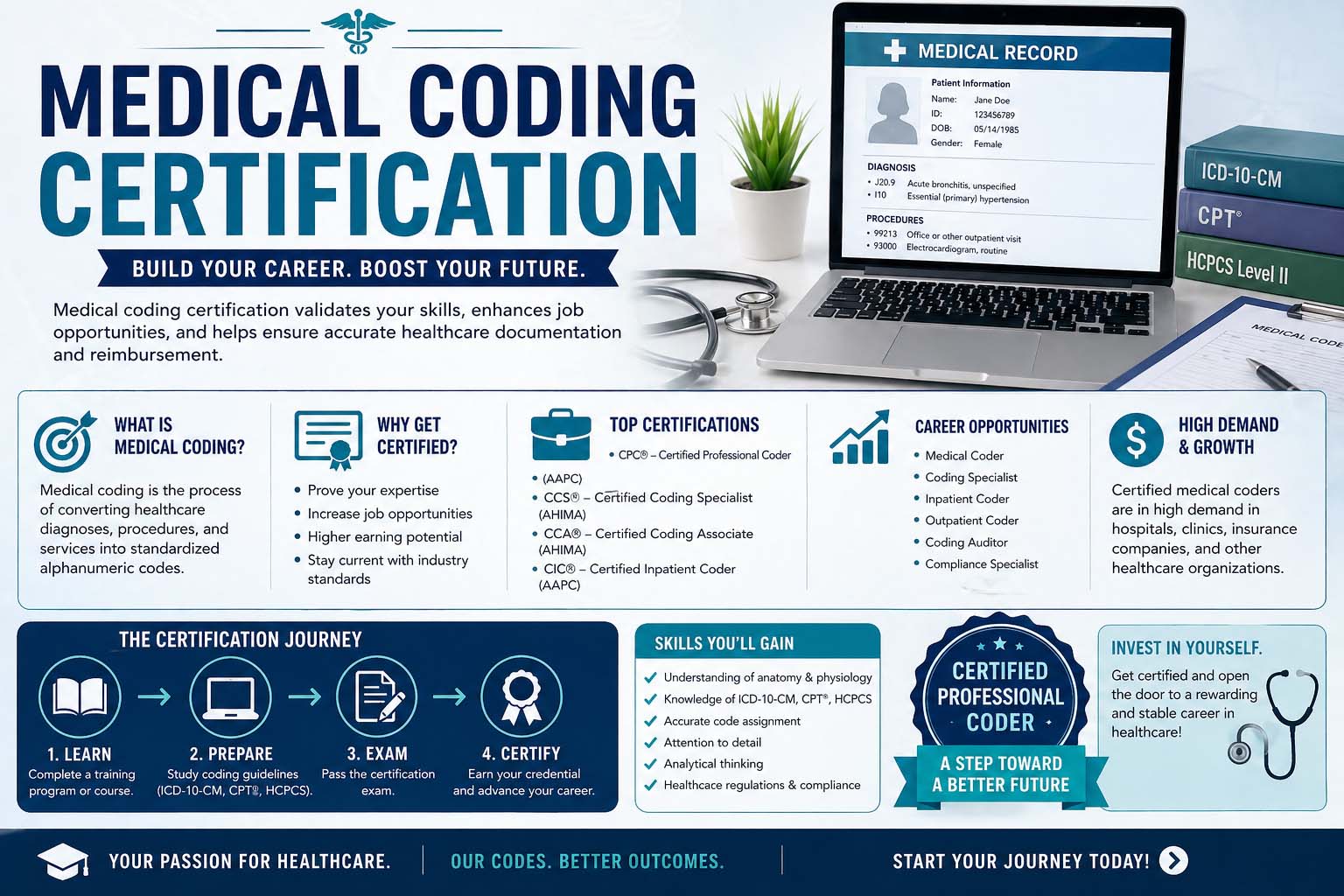
The healthcare industry continues to grow every year, creating strong demand for skilled professionals who help medical offices, hospitals, and insurance companies operate efficiently. One of the most valuable credentials in this field is medical coding certification. This certification can open doors to stable employment, remote work opportunities, and long-term career advancement. For individuals who want to work in healthcare without direct patient care, this path offers an excellent option.
Medical coding professionals translate patient diagnoses, treatments, and procedures into standardized codes used for billing, insurance claims, and recordkeeping. Accuracy is essential because coding affects reimbursement, compliance, and patient documentation. Earning a recognized shows employers that you have the knowledge and skills required to succeed.
Why Medical Coding Certification Matters
Healthcare organizations rely on accurate coding every day. Hospitals, clinics, physician offices, and insurance companies need trained coders to process claims correctly and maintain proper records. Without skilled coders, delays in payments and billing errors can create serious problems.
A professional certification proves that you understand coding systems such as ICD, CPT, and HCPCS. It also demonstrates commitment to industry standards. Many employers prefer certified applicants because they can contribute quickly and require less training. In competitive job markets, medical coding certification can make your resume stand out.
Certification may also lead to better earning potential. While salaries vary by location and experience, certified coders often qualify for stronger compensation than non-certified candidates. Over time, advanced credentials can support promotions into auditing, compliance, management, or specialized coding roles.
Medical Billing and Coding Certification
Many students search for medical billing and n because billing and coding are closely connected career paths. Coding focuses on translating healthcare services into standardized codes, while billing uses those codes to prepare claims and manage payments.
Programs that combine both subjects can be highly valuable because they teach a complete revenue cycle process. Students learn insurance terminology, patient account management, reimbursement procedures, claim submission, and appeals. This broader skill set can increase job flexibility.
Professionals with medical billing and may work in hospitals, specialty practices, dental offices, rehabilitation centers, or third-party billing companies. Some employers appreciate candidates who understand both sides of the process because they can handle multiple responsibilities.
If you enjoy organization, detail-oriented work, and solving administrative challenges, this combined pathway can be an excellent career move.
Medical Coding Certification Online
Modern education has made training more accessible than ever. Many students prefer medical coding certification online because it offers flexibility for busy schedules. Online learning allows working adults, parents, and career changers to study at their own pace while balancing other responsibilities.
Online programs often include digital textbooks, interactive lessons, coding exercises, practice exams, and instructor support. Some institutions also provide career services such as resume help and interview preparation. This format can be ideal for self-motivated learners who prefer studying from home.
When choosing online, it is important to research accreditation, curriculum quality, certification exam preparation, and student reviews. A reputable program should teach current coding standards and prepare students for recognized industry exams.
Online education can also reduce commuting time and provide access to programs outside your local area, giving you more options to choose from.
Medical Coding and Billing Certification
The phrase medical coding and billing certification is commonly used by people seeking a career that blends administrative healthcare knowledge with technical coding expertise. This route appeals to those who want a practical profession with steady demand and opportunities for advancement.
Students in these programs often learn anatomy basics, healthcare law, insurance processes, coding guidelines, patient privacy rules, and claims management. Because healthcare regulations constantly evolve, continuing education is also an important part of long-term success.
With medical coding and billing certification, graduates may pursue roles such as coder, biller, reimbursement specialist, insurance claims analyst, or office administrator. Some professionals later specialize in areas like cardiology, orthopedics, pediatrics, or outpatient surgery coding.
Medical Billing and Coding Certification Online
For those seeking convenience, medical billing and coding certification online is one of the fastest-growing education choices. Remote learning gives students the chance to build new skills without relocating or attending fixed classroom schedules.
Online certification programs can range from short-term certificate courses to more in-depth diploma or associate degree options. The best choice depends on your career goals, budget, and available time. Shorter programs may help you enter the workforce quickly, while longer programs may provide deeper training.
Many people choose medical billing and coding certification online because it can support a transition into remote work. Since coding and billing tasks are computer-based, some employers offer hybrid or fully remote positions once experience is gained.
Skills Needed for Success
Strong attention to detail is one of the most important qualities in this profession. A small coding mistake can affect payment or compliance. Analytical thinking is also valuable because coders review documentation carefully and apply correct guidelines.
Communication skills matter as well. Coders often work with providers, billing staff, or insurers to clarify information. Time management is another key strength, especially when handling deadlines and multiple claims.
Career Outlook and Opportunities
Healthcare remains one of the most stable industries. As populations grow and medical services expand, the need for accurate coding and billing continues. This creates opportunities for certified professionals in many settings.
Some coders begin in entry-level positions and later move into senior coding, auditing, education, consulting, or compliance roles. Others choose freelance or contract work after gaining experience.
How to Choose the Right Certification Path
Start by identifying your goals. If you want coding-focused work, choose a coding-centered program. If you want broader office responsibilities, a combined billing and coding route may fit better. Consider schedule flexibility, budget, and whether online learning suits your style.
Conclusion
Earning a medical coding certification can be a smart step toward a dependable and rewarding healthcare career. Whether you pursue medical billing and coding certification, choose medical coding certification online, explore medical coding and billing certification, or enroll in medical billing and coding certification online,