

Many people dream of traveling the world while building a stable career, which is why the question how much do flight attendants make is searched so often. Flight attendants enjoy unique work experiences, travel perks, and the opportunity to meet people from different cultures. However, salary expectations can vary depending on airline, location, years of experience, and schedule.
A career as a flight attendant can be rewarding both financially and personally. Some professionals begin with entry-level pay and gradually increase earnings through seniority, premium routes, and international flights. In this guide, we’ll explore what influences salaries and answer common questions about income in this profession.
How Much Do Flight Attendants Make a Year
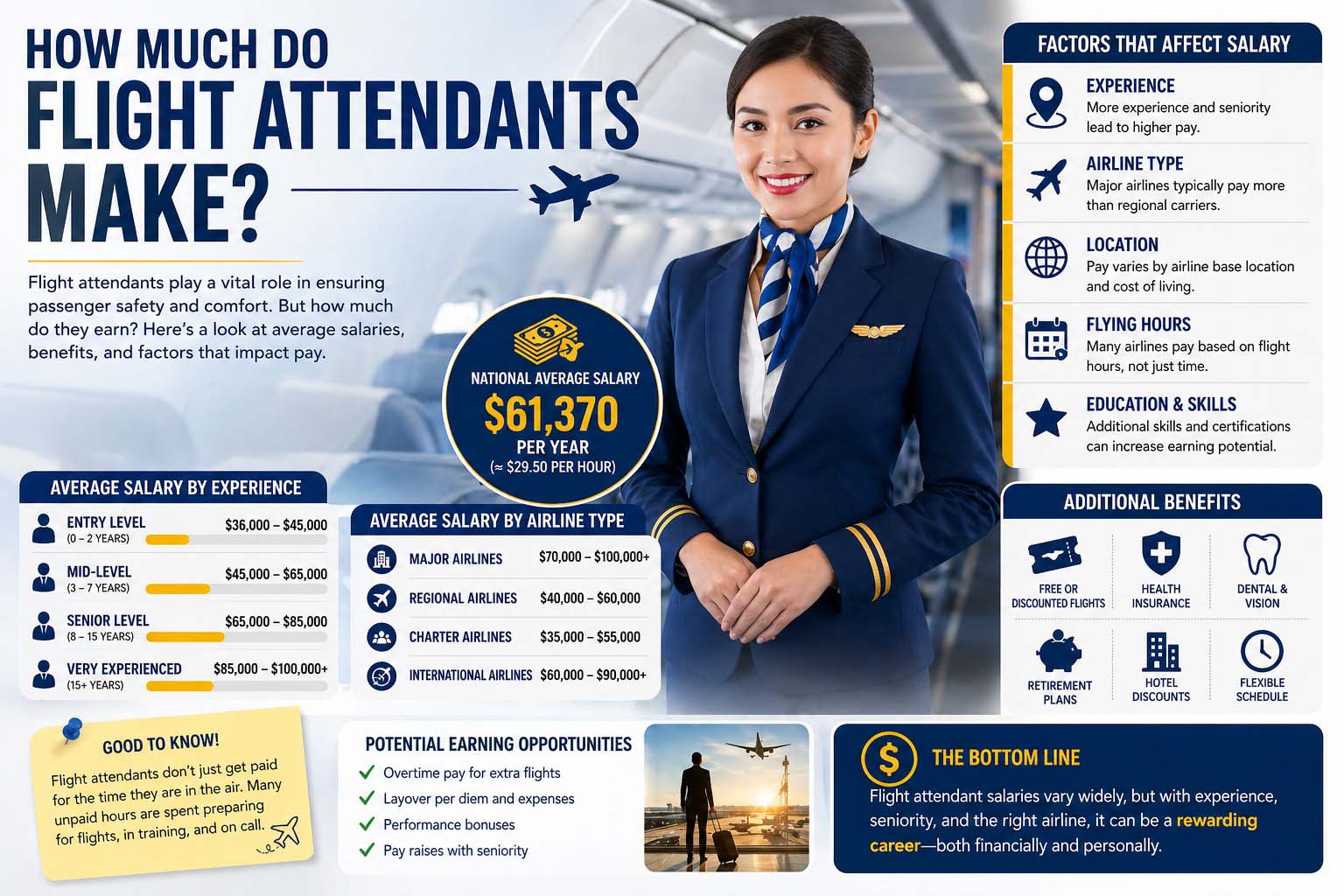
One of the most common questions is how much do flight attendants make a year. In the United States, many entry-level flight attendants earn between $30,000 and $45,000 annually. Those with several years of experience can often earn $50,000 to $80,000 or more. Senior attendants working for major airlines may earn over $90,000 annually depending on flight hours and bonuses.
Annual income is often based on hourly pay rather than a fixed salary. This means the number of hours flown each month plays a major role in total earnings. International flights, overnight trips, and holiday schedules may also increase yearly pay.
Benefits can also add significant value. Many airlines provide free or discounted travel, retirement plans, health insurance, and paid training. These perks make the total compensation package more attractive than salary alone.
Factors That Affect Flight Attendant Salaries
When discussing how much do flight attendants make, it is important to understand that not all airlines pay the same. Large international airlines usually offer higher wages than smaller regional carriers. Experience level is another major factor. A new hire may start with modest pay, while someone with ten years of service often earns considerably more.
Base location can also matter. Flight attendants based in cities with higher living costs may receive better compensation or additional allowances. Schedules also influence income. Employees who choose longer trips or more flying hours often earn more than those working fewer routes.
Language skills can sometimes increase opportunities as well. Airlines that serve global routes may seek bilingual crew members, creating more chances for premium assignments.
How Much Do Delta Flight Attendants Make
Many applicants ask how much do Delta flight attendants make because Delta Air Lines is considered one of the top employers in aviation. Delta flight attendants often earn competitive pay compared to many other airlines in the industry. New attendants may start around the mid-range salary level, while experienced crew members can earn significantly more with seniority.
At Delta, compensation may include hourly wages, boarding pay, profit-sharing opportunities, and travel benefits. Senior flight attendants on international routes may reach strong annual earnings over time. Because Delta is a major carrier with a strong reputation, jobs can be highly competitive.
How Much Money Do Flight Attendants Make in Real Life
The phrase how much money do flight attendants make often reflects curiosity about real-world take-home pay. While official salary numbers can provide averages, actual earnings depend on taxes, deductions, and monthly schedules. Someone flying many hours during busy seasons may take home more than someone working a lighter roster.
Many attendants also earn extra income through per diem payments. Per diem is money paid to cover meals and expenses while away from home. Though not always counted in salary headlines, it can add noticeable value each month.
Career Growth and Long-Term Earnings
One of the best parts of becoming a flight attendant is the ability to increase income over time. Seniority systems are common in the airline industry. The longer you stay with an airline, the more likely you are to receive higher pay, better schedules, and preferred routes.
Long-term employees often enjoy more control over their work-life balance. They may choose premium international destinations or schedules with fewer days worked but longer trips. These options can improve both earnings and quality of life.
How Much Do Flight Attendants Make Per Month
Another common search is . Monthly income depends heavily on flight hours and pay scale. Entry-level attendants may earn around $2,500 to $3,500 monthly before taxes, while mid-career professionals may earn $4,000 to $6,000 or more. Senior attendants at major airlines can sometimes exceed that range during busy periods.
Monthly earnings can fluctuate because schedules vary. Some months may include more flying hours, holiday pay, or international assignments. Other months may be lighter due to personal preferences or lower seasonal demand.
Is Becoming a Flight Attendant Worth It?
For many people, the answer is yes. While the job includes challenges such as irregular schedules, time zone changes, and long hours on your feet, it also offers unique rewards. Travel opportunities, hotel stays in new cities, and meeting passengers from around the world can be exciting experiences.
Financially, the role can become more rewarding with time. Starting salaries may be modest, but long-term earning potential can be solid at major airlines. Combined with travel benefits, many attendants feel the career provides strong overall value.
Tips for Increasing Flight Attendant Income
New attendants can improve earnings by being flexible with scheduling and open to various routes. Picking up extra trips during high-demand seasons may boost income quickly. Gaining seniority and staying with a reputable airline also tends to improve pay over time.
Professionalism and reliability matter as well. Strong performance can lead to better opportunities, leadership roles, and long-term career growth. For international carriers, learning another language may also create valuable advantages.
Conclusion
So, how much do flight attendants make? The answer depends on airline, experience, location, and monthly schedules. Entry-level attendants may start with moderate income, while experienced professionals at top airlines can earn impressive yearly salaries.