
Asking for a salary increase can feel intimidating, but learning how to ask for a raise is an essential skill for career growth. Whether you’re confident in your contributions or unsure where to start, approaching the conversation with preparation and professionalism can significantly increase your chances of success. This guide will walk you through everything you need to know, from timing and preparation to communication and follow-up, so you can confidently request the compensation you deserve.
Many employees hesitate when it comes to discussing salary, often fearing rejection or conflict. However, knowing how to ask for a raise is not just about money—it reflects your value, growth, and commitment to your role. Employers expect high-performing employees to advocate for themselves. When done correctly, it demonstrates confidence, professionalism, and a clear understanding of your contributions.
Before making the request, it’s important to assess your performance, achievements, and market value. If you’ve consistently exceeded expectations, taken on additional responsibilities, or contributed to company success, these are strong indicators that it’s time to initiate the conversation.
How to Ask for a Raise at Work
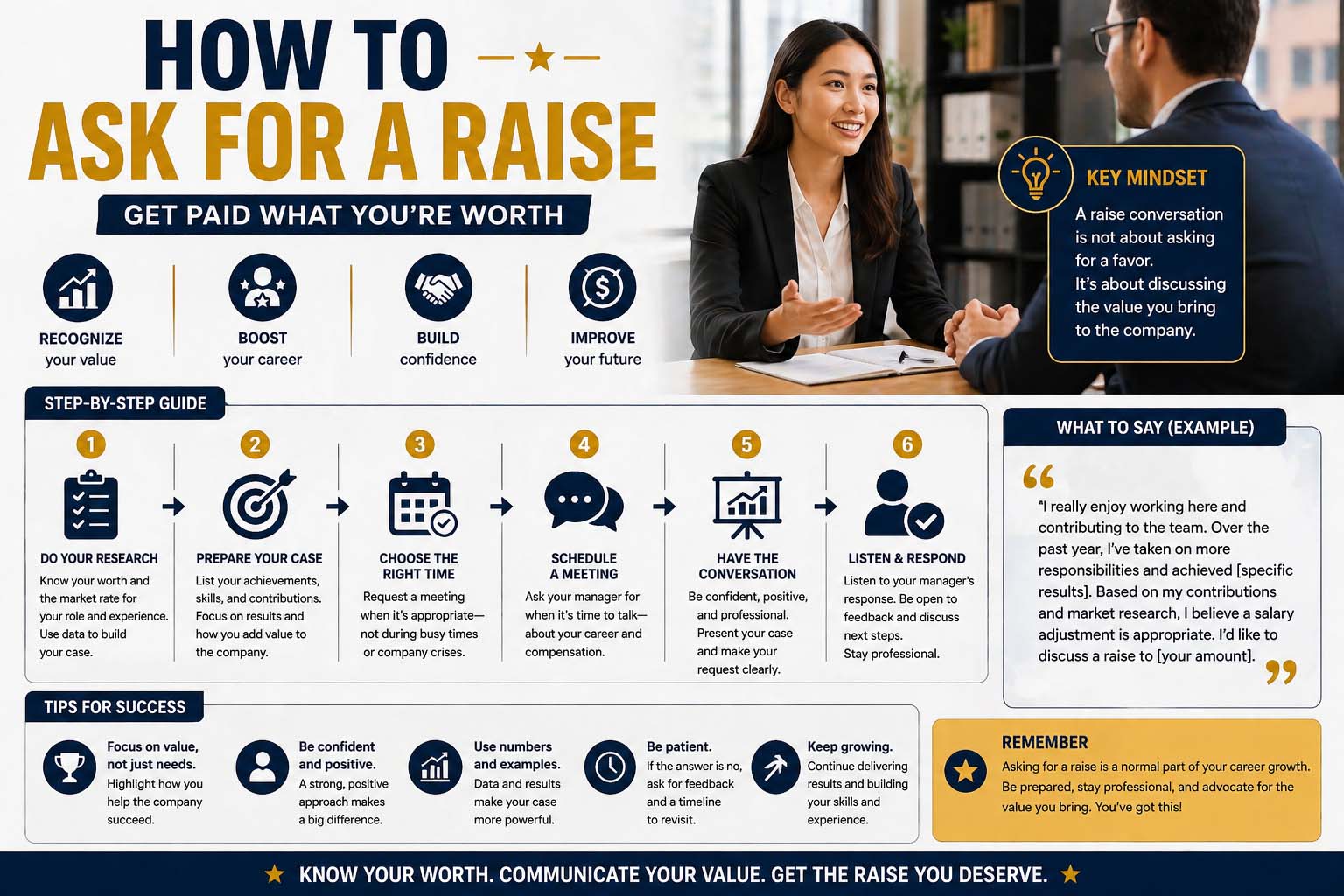
When considering, timing and preparation are everything. Start by choosing the right moment. Ideally, this should be during a performance review, after completing a major project, or when the company is performing well financially.
Preparation involves gathering evidence of your achievements. Document your accomplishments, including measurable results such as increased sales, improved efficiency, or successful project completions. Having concrete examples strengthens your case and shows your employer that your request is based on merit rather than emotion.
Additionally, research industry salary standards for your position. Knowing what others in similar roles earn can help you set realistic expectations and present a well-informed request. Confidence backed by data can make your argument more compelling.
How to Ask Your Boss for a Raise
Understanding how to ask your boss for a raise requires a thoughtful and respectful approach. Schedule a formal meeting instead of bringing it up casually. This ensures your boss has time to focus on the discussion and take your request seriously.
During the meeting, start by expressing appreciation for your role and the opportunities you’ve been given. Then, transition into your request by highlighting your contributions and achievements. Clearly state that you would like to discuss your salary based on your performance and growth within the company.
It’s important to remain calm and professional throughout the conversation. Avoid comparing yourself negatively to colleagues or making emotional arguments. Instead, focus on your value and how you contribute to the company’s success.
How to Ask Your Boss for a Raise Example
If you’re unsure how to phrase your request, here’s a simple example to guide you on how to ask your boss for a raise example:
You might begin by saying, “I appreciate the opportunities I’ve had to grow in my role and contribute to the team. Over the past year, I’ve taken on additional responsibilities and achieved [specific accomplishments]. Based on my performance and research on industry standards, I would like to discuss the possibility of a salary adjustment.”
This type of statement is clear, respectful, and focused on your achievements. It avoids sounding demanding while still communicating your expectations.
How to Professionally Ask for a Raise
Learning how to professionally ask for a raise is key to maintaining a positive relationship with your employer. Professionalism involves not only what you say but how you say it. Your tone, body language, and attitude all play a role in how your request is received.
Start by maintaining a positive and respectful tone. Even if you feel underpaid, avoid expressing frustration or dissatisfaction in a negative way. Instead, frame your request as a discussion about growth and future contributions.
Be prepared for different outcomes. Your employer may agree, ask for more time, or decline the request. If the answer is no, respond gracefully and ask for feedback on what you can do to qualify for a raise in the future. This shows maturity and a willingness to improve.
Common Mistakes to Avoid
While learning how to ask for a raise, it’s equally important to avoid common mistakes. One of the biggest errors is not preparing adequately. Going into the conversation without evidence of your achievements can weaken your case.
Another mistake is choosing the wrong timing. Asking during a stressful period or when the company is facing financial challenges may reduce your chances of success. Being mindful of timing shows awareness and consideration.
Avoid making ultimatums or threats, such as mentioning other job offers unless you are genuinely prepared to act on them. This can damage your relationship with your employer and create unnecessary tension.
Building Confidence Before the Conversation
Confidence plays a major role in successfully asking for a raise. Practice your talking points, rehearse your examples, and visualize a positive outcome. Preparation reduces anxiety and helps you communicate clearly.
It can also be helpful to seek advice from mentors or colleagues who have successfully negotiated raises. Their insights can provide valuable guidance and help you refine your approach.
After you’ve made your request, the next steps are just as important. If your raise is approved, express gratitude and continue to perform at a high level. This reinforces your employer’s decision and strengthens your professional reputation.
. Ask for constructive feedback and set clear goals for future improvement. Understanding what is required can help you prepare for your next opportunity to revisit the conversation.
Conclusion
Mastering how to ask for a raise is an essential skill that can have a significant impact on your career and financial well-being. By preparing thoroughly, choosing the right timing, and communicating professionally, you can approach the conversation with confidence and clarity.