
Types of Figurative Language
Figurative language is one of the most powerful tools in writing and communication. It helps writers create vivid images, express emotions, and make ideas more memorable for readers. Instead of using words in a literal way, figurative language gives deeper meaning through comparisons, exaggeration, symbolism, and creative expressions. Authors, poets, teachers, and even marketers use figurative language to make their content more engaging and impactful. Understanding the different forms of figurative language can improve reading comprehension and writing skills while making communication more creative and expressive.
Different Types of Figurative Language
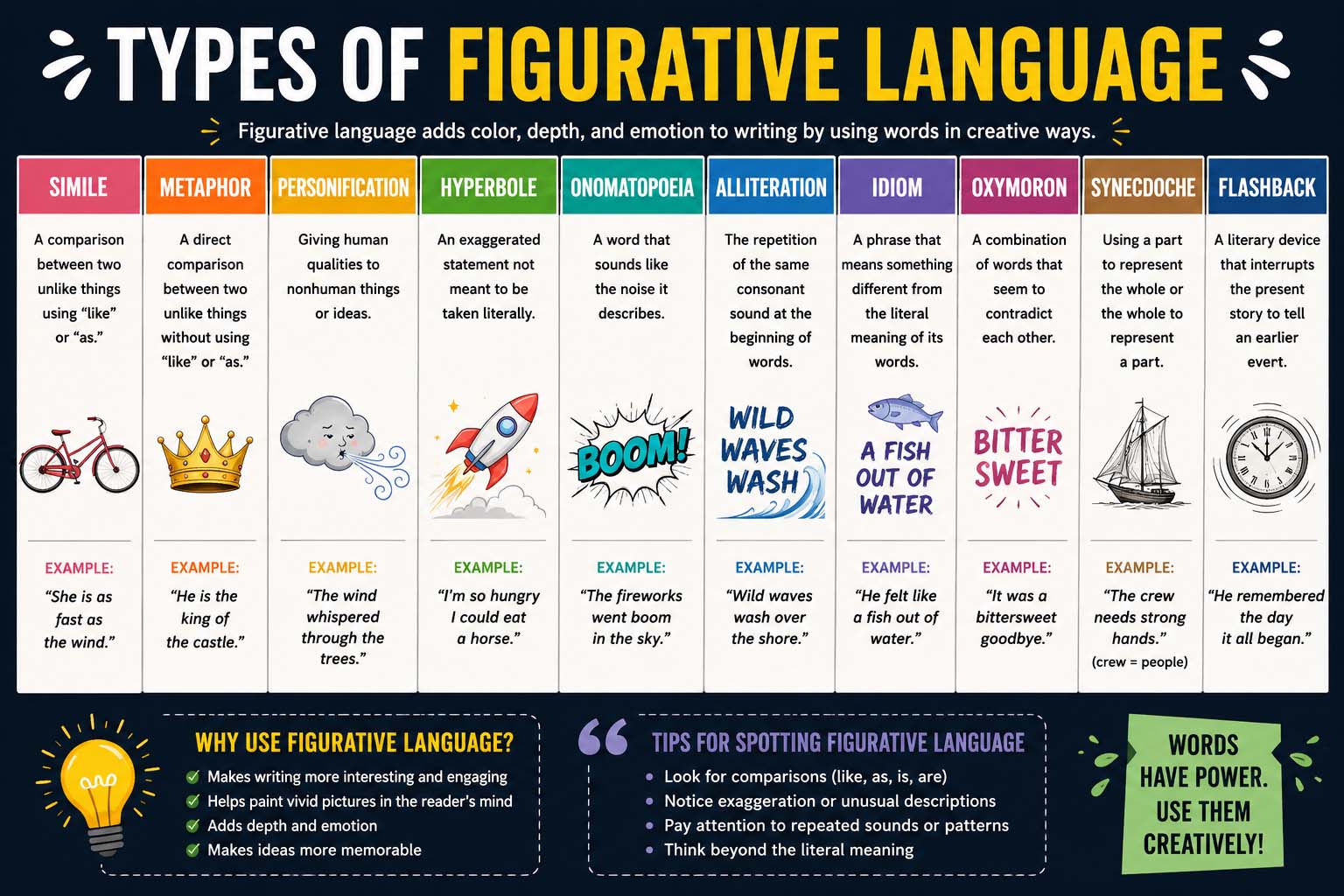
There are many different types of figurative language that writers use to create emotion and imagination in their work. One of the most common forms is the simile. A simile compares two things using the words “like” or “as.” For example, saying “her smile was as bright as the sun” creates a visual image that makes the description more powerful. Another common type is metaphor, which directly compares two things without using “like” or “as.” A sentence such as “time is a thief” suggests that time steals moments from our lives.
Personification is another important figure of speech that gives human qualities to non-human objects or ideas. A writer may say “the wind whispered through the trees,” which creates a calm and emotional image in the reader’s mind. Hyperbole is used for exaggeration to emphasize a point. Someone saying “I have told you a million times” is not being literal but using exaggeration for dramatic effect.
Writers also use symbolism to represent ideas through objects, colors, or actions. A dove often symbolizes peace, while darkness can symbolize fear or mystery. Imagery is another technique that appeals to the senses by describing sights, sounds, tastes, smells, or touch. Through vivid imagery, readers can feel more connected to the text and experience the scene more clearly.
All Types of Figurative Language
When exploring all types of figurative language, it becomes clear how creative and expressive language can be. Idioms are a popular example because they are phrases whose meanings differ from the literal definitions of the words. Expressions like “break the ice” or “spill the beans” are widely used in everyday conversation and writing. They add personality and cultural meaning to communication.
Another important form is alliteration, which involves repeating the same beginning sound in nearby words. Phrases like “Peter Piper picked” create rhythm and make language memorable. Writers often use alliteration in poetry, speeches, and advertising slogans because it captures attention and sounds pleasing to readers.
Onomatopoeia is also included among all types of figurative language. This technique uses words that imitate sounds, such as “buzz,” “bang,” or “sizzle.” These sound-based words help readers hear the action in their minds and make descriptions feel more realistic. Oxymorons combine opposite ideas together, such as “deafening silence” or “bittersweet memories,” creating dramatic and thought-provoking expressions.
Irony is another powerful literary device. Verbal irony happens when someone says the opposite of what they truly mean, while dramatic irony occurs when readers know more than the characters in a story. Situational irony appears when events happen differently than expected. These forms of irony make stories more engaging and emotionally impactful.
What Are the Types of Figurative Language
Many students and readers ask, “what are the types of figurative language?” because figurative language appears in literature, songs, speeches, and everyday communication. Similes and metaphors are often the first examples taught in schools because they help readers understand comparisons more clearly. Similes make comparisons using connecting words, while metaphors create direct symbolic meanings.
Personification remains one of the most effective techniques because it helps readers emotionally connect with nature, objects, and ideas. Describing the rain as “dancing on the roof” creates a more emotional and imaginative image than simply saying “it rained.” Hyperbole adds excitement and intensity by exaggerating situations or emotions.
Symbolism is frequently used in novels and poetry because it allows writers to communicate hidden meanings. A red rose may symbolize love, while a broken mirror may represent bad luck or loss. Symbolism encourages readers to think more deeply about the message behind the words.
Another important type is paradox, which combines contradictory ideas that may still reveal truth. Statements like “less is more” appear confusing at first but contain meaningful insight. Satire is also part of figurative language because it uses humor, exaggeration, or irony to criticize society or behavior.
What Are the Different Types of Figurative Language
People often wonder, “what are the different types of figurative language,” because there are so many creative ways to express ideas beyond literal meaning. Figurative language transforms ordinary sentences into memorable and emotional experiences. It allows writers to paint pictures with words and connect with readers on a deeper level.
Similes and metaphors are among the most widely recognized forms because they create comparisons that help explain ideas vividly. Personification makes stories feel alive by giving human traits to objects and nature. Hyperbole creates emphasis through exaggeration, while symbolism introduces hidden meanings and themes into literature.
Imagery is another important element because it appeals directly to the senses. Through descriptive language, writers help readers visualize scenes, hear sounds, and even imagine smells or tastes. This sensory experience makes writing more immersive and emotionally engaging.
Alliteration and onomatopoeia add sound effects and rhythm to language. These techniques are especially popular in poetry and children’s literature because they make words more enjoyable to read aloud. Idioms and euphemisms shape everyday communication and cultural expression, while irony and paradox add complexity and depth to storytelling. Developing new skills takes practice, whether you are learning how to roll a joint, mastering how to use a compass, or preparing how to ask for a raise professionally.
Conclusion
The study of types of figurative language reveals how powerful and creative words can be. From similes and metaphors to irony and symbolism, figurative language adds beauty, emotion, and imagination to communication. Writers use these techniques to entertain, persuade, inspire, and connect with readers on a deeper level. Whether found in poetry, novels, speeches, or everyday conversations, figurative language makes communication more meaningful and memorable.