

Duty Free Meaning: What It Is, How It Works and When It Actually Saves You Money
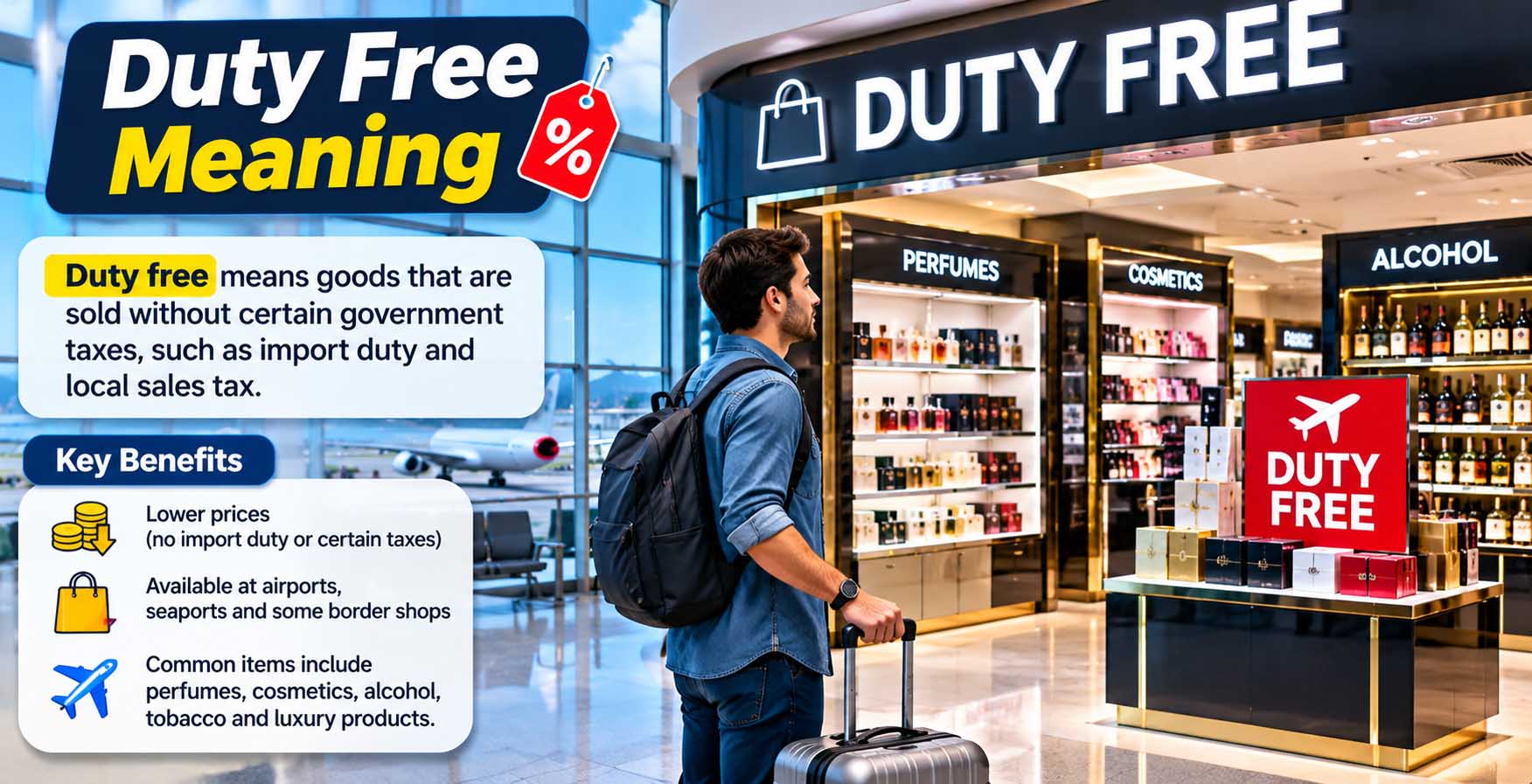
You are walking to your gate, and suddenly you are surrounded by perfume counters, giant chocolate bars and bottles of whiskey under bright “Duty Free” signs. So, what does that really mean? In short, the duty free meaning is simple: goods sold without certain local taxes and import duties, because you are taking them out of the country.
Still, “duty free” does not always mean “cheaper,” and it does not mean you can bring home unlimited goods. So, this guide explains how these shops work, who can use them, what you actually save and the customs limits that catch many travelers off guard.
Duty Free Meaning in Plain English
A “duty” is a tax a government charges on imported goods. Normally, stores include duties and sales taxes in their prices. However, duty-free stores can skip some of those taxes, since the products are meant to leave the country with you.
In other words, the government lets the store sell tax-free because you will not use the item locally. That is why most of these shops sit past security in international terminals, at border crossings, on cruise ships and on some international flights.
Duty Free Meaning at the Airport
At an airport, duty-free shops usually sit in the international departure area. Because of that, you typically need to be leaving the country to buy there.
Who Can Shop There
Generally, travelers on international flights can buy duty-free goods. On the other hand, people flying domestically usually cannot, although some airports have regular “duty paid” stores that look similar. Big hubs often have large shopping areas, and our guide to lax duty free shows what a major airport setup looks like.
Boarding Pass and Passport
When you pay, the cashier usually scans your boarding pass. Sometimes, they also ask for your passport. That way, the store can prove the goods are leaving the country.
Also, some airports hand over liquor and other liquids in special sealed bags. These tamper-evident bags help you get liquids through security if you have a connecting flight, as long as the bag stays sealed and you keep the receipt.
The Real Meaning of Duty Free: Which Taxes You Skip
Duty-free shopping can remove a few kinds of taxes, depending on the country:
- Import duties: These are taxes on goods brought in from abroad.
- Sales tax or VAT: Many countries skip value-added tax for departing travelers.
- Excise taxes: These special taxes often apply to alcohol, tobacco and fuel.
Because alcohol, tobacco and fragrances usually carry the highest taxes, they are where you are most likely to see real savings. In contrast, everyday items like snacks or souvenirs often carry little tax, so the savings are small or nonexistent.
Duty Free Shop Meaning: What These Stores Sell
A duty-free shop is a store allowed to sell goods without certain taxes to travelers leaving the country. Typically, they focus on high-tax and luxury items, such as:
- Alcohol: Spirits, wine and local specialties.
- Tobacco: Cigarettes and cigars.
- Fragrance and beauty: Perfume, skincare and makeup.
- Luxury goods: Watches, handbags, jewelry and sunglasses.
- Food and gifts: Chocolate, local treats and souvenirs.
- Electronics: Headphones, cameras and small gadgets.
In many ways, a big airport shop feels like a mini mall. If you are curious how this compares to traditional retail, our explainer on what is a department store covers how those stores organize brands and price their goods.
Is Duty Free Really Cheaper?
Sometimes yes, but not always. Here is the honest picture.
First, removing taxes lowers the price, especially on alcohol and tobacco. However, airport rents are high, so stores may add higher markups. As a result, some items cost about the same as at home, or even more.
Also, regular stores often run sales that beat duty-free prices. For example, a short what is a flash sale event at home can bring prices well below airport levels.
Meanwhile, some duty-free shops run their own deals, like bundle prices on liquor or “buy two” offers on chocolate. If you see these promotions, our guide on what is bogo explains how to tell when a multi-buy deal truly saves money.
So, compare prices on your phone before buying anything expensive. That one quick check can save you real money.
Duty Free Limits When You Get Home
This part surprises many shoppers. Duty-free goods are tax-free only in the country where you bought them. Then, when you arrive home, your own country’s customs rules still apply.
For U.S. residents, the personal exemption is generally $200, $800 or $1,600 depending on the countries you visited, according to U.S. Customs and Border Protection. Also, duty-free purchases count toward that limit. So, if your total goes over, you may owe duty on the extra amount.
Alcohol and tobacco also have quantity limits. For instance, the standard U.S. exemption includes set amounts of alcohol, cigarettes and cigars. Since rules change, check the official guidance before you travel.
Other countries set their own limits too. Therefore, look up your home country’s customs rules before you shop.
Pros and Cons of Duty-Free Shopping
Advantages
- Real savings on high-tax items like alcohol, tobacco and some perfumes.
- Convenient last-minute gifts before you fly.
- Access to travel-exclusive sizes and gift sets.
- Plus, some local products are easy to find in one place.
Disadvantages
- Prices are not always lower than regular stores.
- Customs limits still apply when you get home.
- Liquids may cause trouble on connecting flights if seals are broken.
- Also, returns and exchanges can be difficult once you leave.
Smart Duty-Free Shopping Tips
- Know home prices first. Check what the item costs online before you travel.
- Focus on high-tax items. Generally, alcohol, tobacco and fragrances offer the best savings.
- Watch your customs limit. Keep track of all purchases during your trip, not just duty-free ones.
- Keep receipts. You may need them at customs or security.
- Mind connecting flights. Ask staff if liquids will clear security at your layover airport.
- Check currency rates. Paying in local currency with a no-fee card often beats the store’s conversion rate.
Common Mistakes to Avoid
- Assuming everything in the shop is a bargain.
- Forgetting that duty-free purchases count toward customs limits.
- Opening sealed liquor bags before a connecting flight.
- Not declaring purchases at customs.
- Buying bulky items that will not fit in your carry-on.
Frequently Asked Questions
What is the duty free meaning on a cruise?
On cruise ships, onboard shops sell goods without local taxes while the ship is at sea. However, your home country’s customs limits still apply when you return.
Can I shop duty free on domestic flights?
Usually, no. Duty-free shopping is meant for international travelers, although some airports have regular tax-paid stores open to everyone.
Do I need to declare duty-free items?
Yes. In most countries, you must declare goods bought abroad, including duty-free purchases, on your customs form.
Can you buy duty free when arriving?
Some countries have arrival duty-free shops. Still, they are less common, and personal allowance limits apply.
Duty Free Meaning: Key Takeaways
To sum up, duty free means goods sold without certain local taxes because you are taking them out of the country. Generally, the biggest savings come on alcohol, tobacco and fragrances, while other items may cost the same or more than at home.
So, compare prices before you buy, keep track of your customs limits and hold on to your receipts. That way, you will enjoy real savings without any surprises when you land.
