
Types of Clothes: A Simple Guide for Smart Shoppers
Ever stood in a store, or scrolled endlessly online, and felt overwhelmed by all the categories? In fact, you’re far from alone. However, once you understand the basic types of clothes, shopping gets much easier. That’s because you can spot gaps in your closet, compare options faster and buy pieces that actually work together.
So in this guide, you’ll learn the main clothing categories and common fabrics. Also, you’ll see how to dress for different occasions and how to care for your wardrobe so it lasts.
Types of Clothes at a Glance
First of all, here’s a quick overview of the main categories and what they’re for.
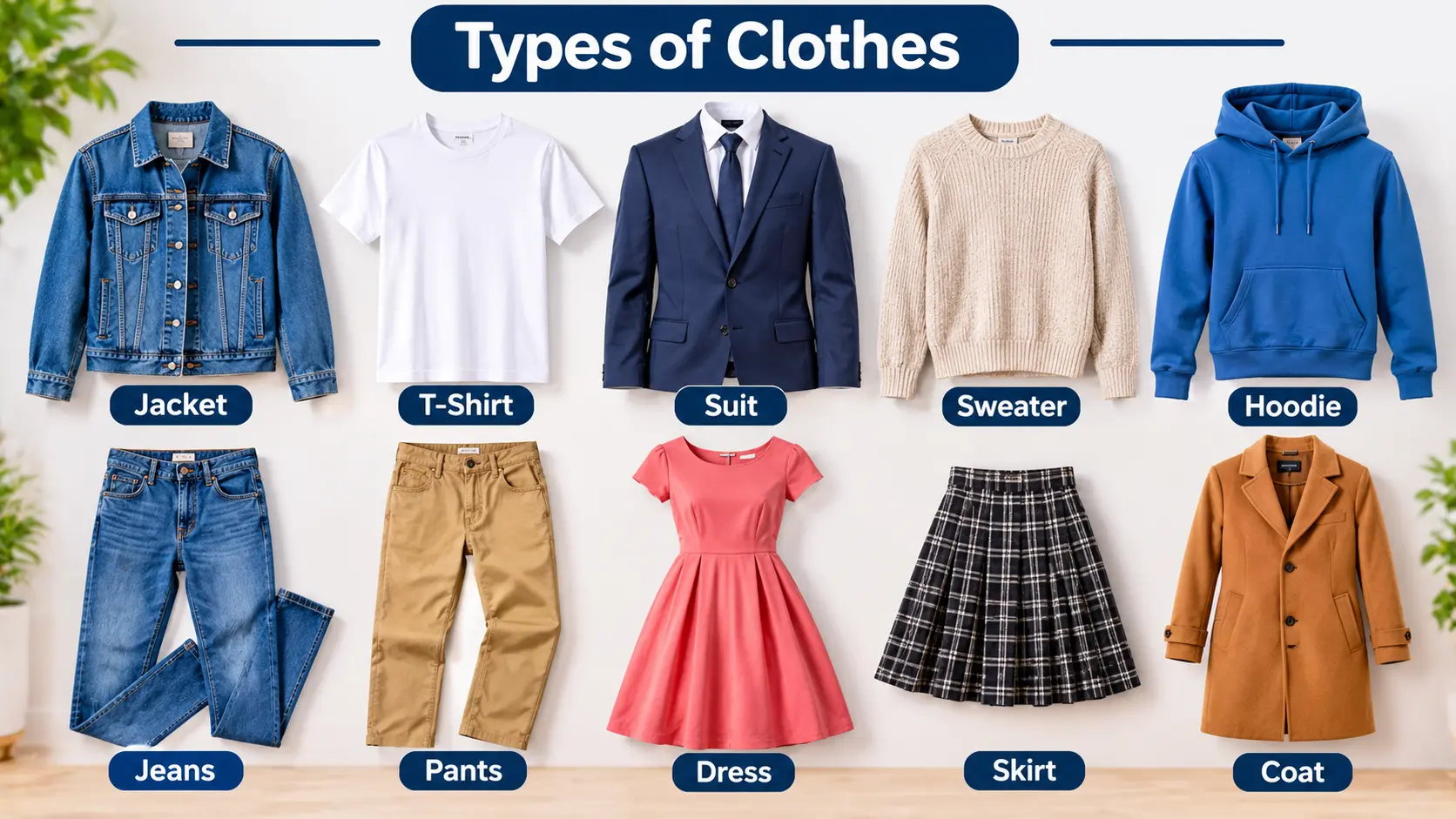
| Category | Examples | Main Purpose |
|---|---|---|
| Tops | T-shirts, blouses, sweaters | Everyday upper-body wear |
| Bottoms | Jeans, trousers, shorts | Lower-body wear |
| Dresses and skirts | Maxi dresses, A-line skirts | One-piece or flowing styles |
| Outerwear | Jackets, coats, vests | Warmth and weather protection |
| Activewear | Leggings, sports bras, joggers | Exercise and movement |
| Basics and sleepwear | Underwear, pajamas, robes | Comfort and layering |
| Footwear and accessories | Shoes, belts, scarves, pins | Finishing an outfit |
Main Types of Clothes by Category
Now let’s look at each group more closely, so you know what to look for when you shop.
Tops
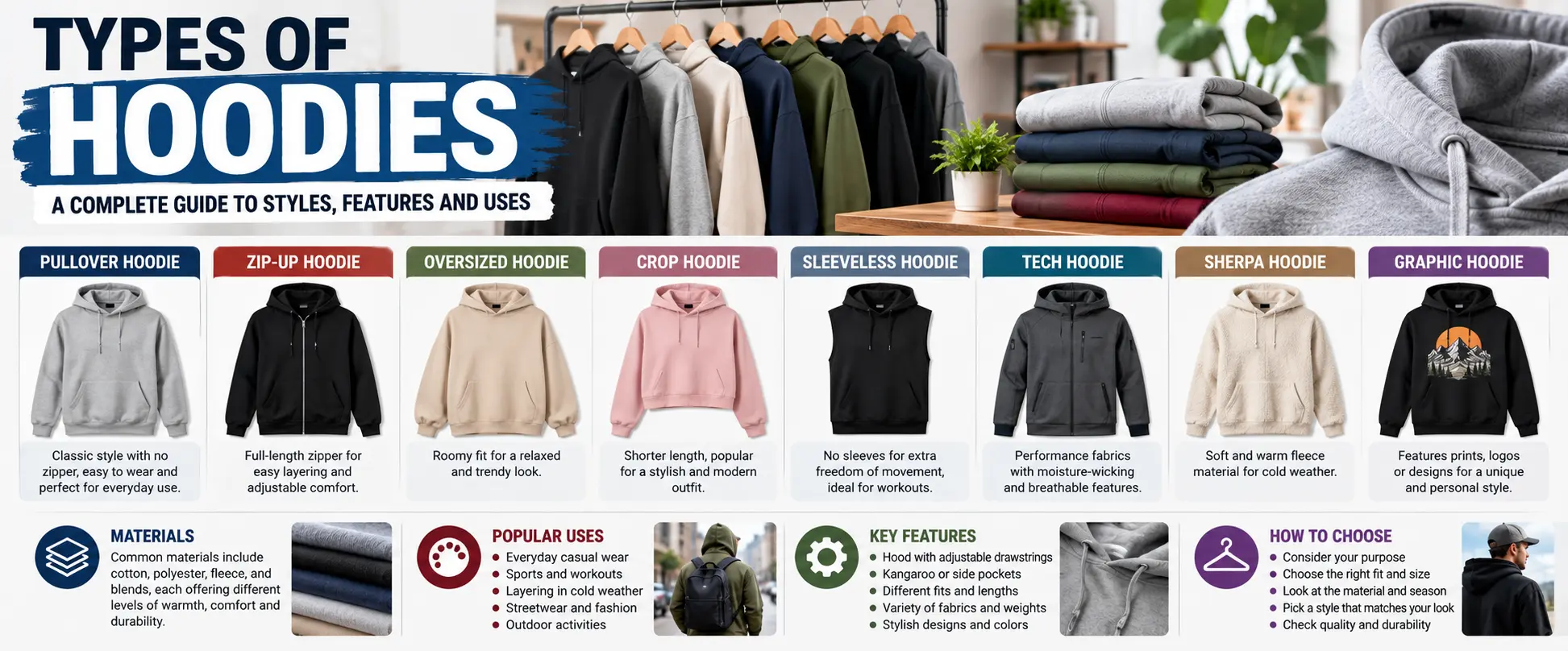
Generally, tops cover everything from casual tees to dressy blouses. For example, you’ll find T-shirts, tank tops, polos, button-downs, sweaters and hoodies. Because they come in so many styles, our guide to the main types of shirts helps you choose the right collar, sleeve and fit.
Buying tip: start with a few neutral basics in white, black or gray. Then, add colors and patterns once you have a solid base.
Bottoms
Similarly, bottoms include jeans, chinos, dress trousers, shorts, joggers and leggings. Here, fit matters most, since the wrong rise or inseam can make even nice pants uncomfortable.
If you’re shopping for women’s styles, our breakdown of types of pants for women explains wide-leg, straight, bootcut and other popular cuts.
Dresses and Skirts
Meanwhile, dresses give you an easy one-piece outfit. For instance, common styles include shift, wrap, maxi, midi and sheath dresses. Likewise, skirts range from short minis to flowing maxis.
So if you want help choosing a shape that suits your body and plans, our guide to the different types of skirts covers A-line, pencil, pleated and more.
Outerwear
When the weather changes, outerwear does the heavy lifting. For example, this group includes denim jackets, blazers, raincoats, puffers, parkas and wool coats. Since outerwear is often a bigger purchase, it’s worth investing in quality.
Before you buy, compare warmth, length and fabric in our guide to the main types of coats. As a result, you’ll pick one that fits your climate.
Activewear
Also, activewear has grown far beyond the gym. In fact, leggings, joggers and performance tees now work for workouts, errands and travel. So look for stretchy, moisture-wicking fabrics and flat seams that won’t rub.
Basics, Sleepwear and Loungewear
Finally, don’t overlook the pieces nobody sees. For instance, good underwear, socks, undershirts and pajamas affect your comfort all day and night. Because of this, soft cotton or modal blends are worth the small extra cost.
Types of Clothes Material: Fabrics Explained
Above all, fabric affects comfort, durability, care and price. So it helps to know the most common ones.
- Cotton: It’s soft and breathable, but it can shrink and wrinkle.
- Linen: It’s great for hot weather, although it wrinkles easily.
- Wool: It’s warm and naturally resists odors, while some types feel itchy.
- Silk: It’s smooth and elegant, but it’s delicate and often dry-clean only.
- Polyester: It’s durable and quick-drying, though it’s less breathable.
- Rayon or viscose: It drapes nicely, but it may shrink if washed hot.
- Spandex or elastane: Brands add it because it gives stretch and shape.
- Denim: It’s a sturdy cotton twill, so it works well for jeans and jackets.
Quick tip: check the fabric tag before buying. In many cases, blends combine the best of both, like cotton with a little stretch.
Types of Clothes for Every Occasion
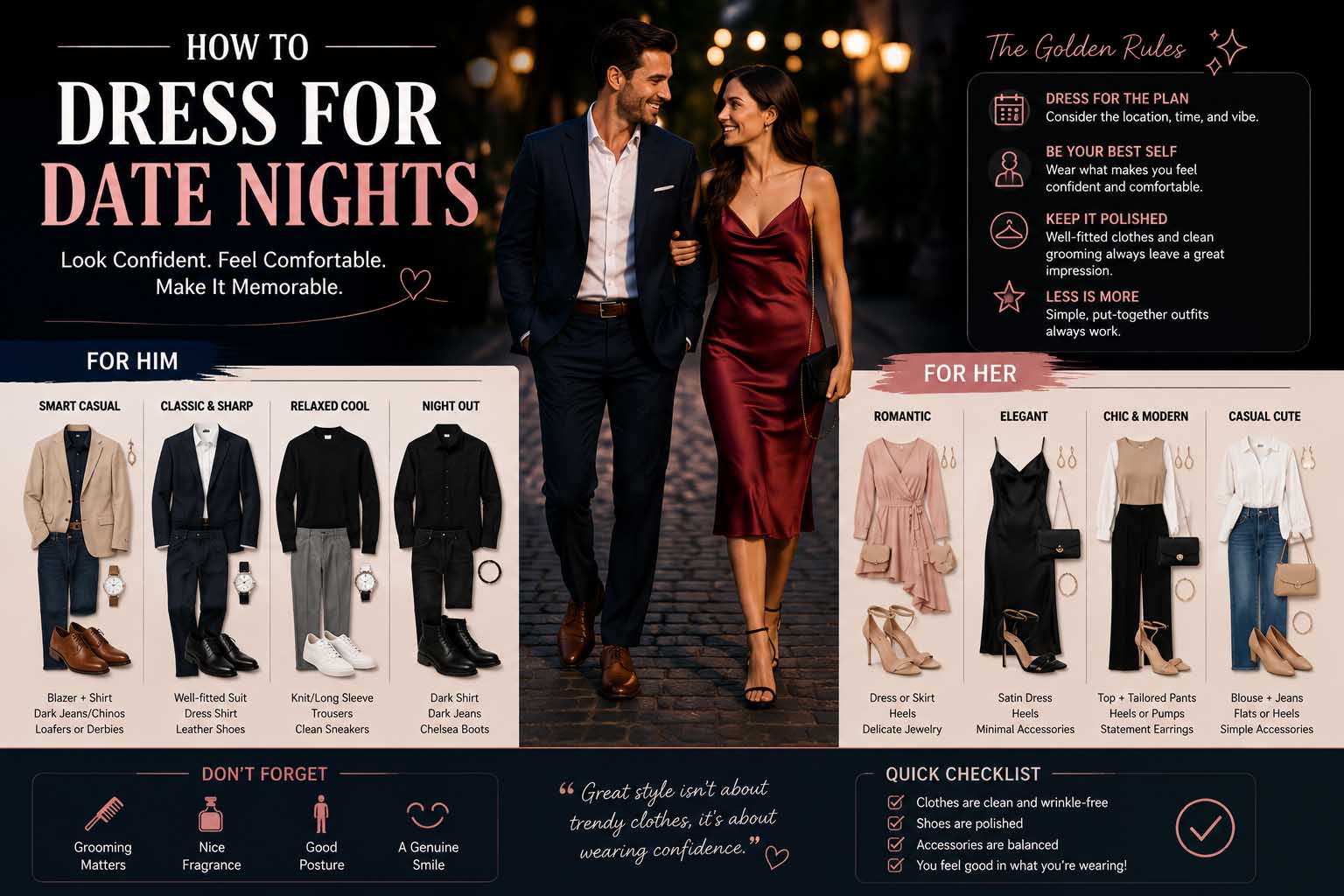
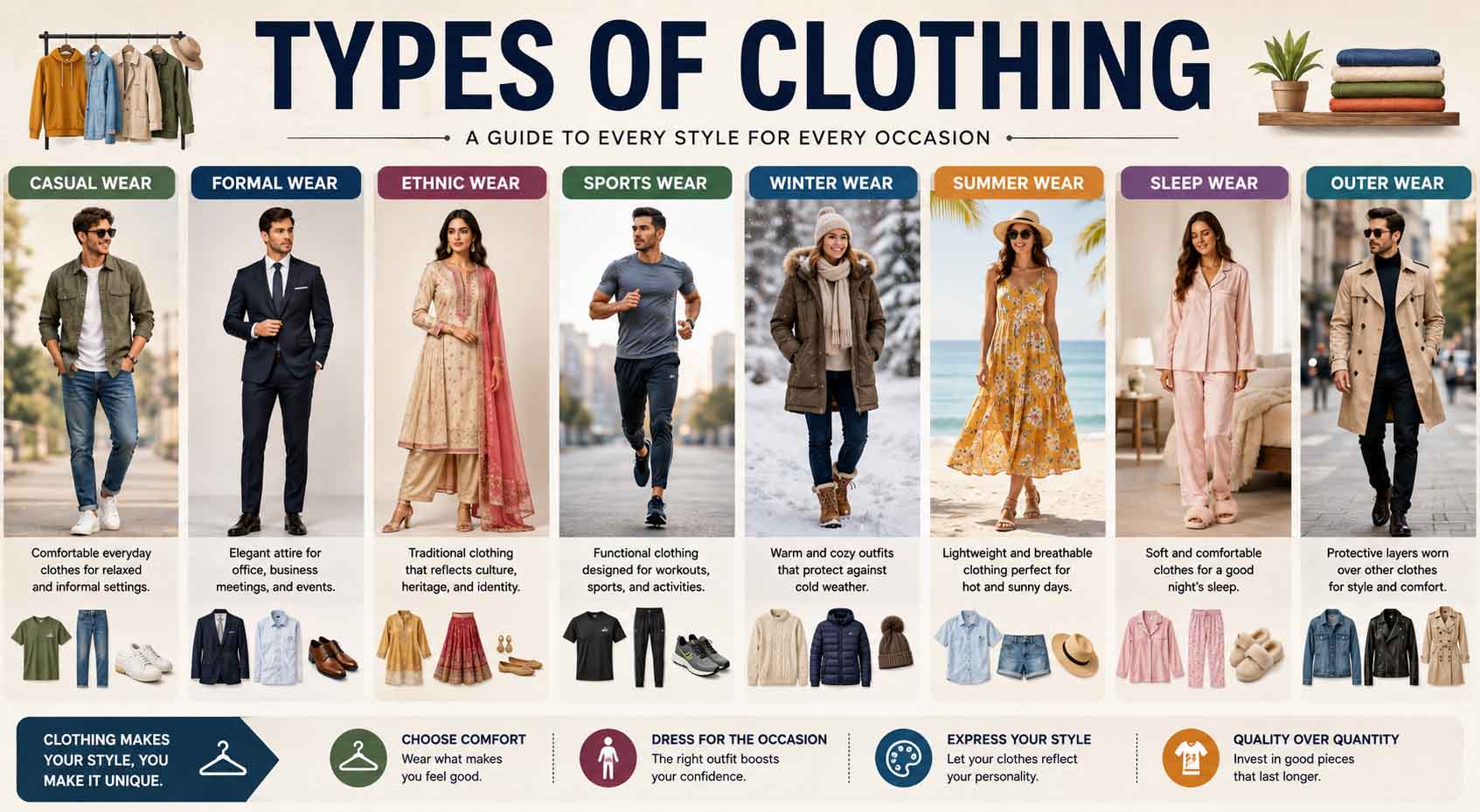
Next, think about where you’ll wear things. Overall, most outfits fall into these dress codes:
- Casual: Jeans, tees, sneakers and hoodies work because comfort comes first.
- Smart casual: Chinos, knit tops and simple dresses look neat but still relaxed.
- Business casual: Blouses, slacks, skirts and blazers fit offices where suits aren’t required.
- Formal: Suits, tuxedos and evening gowns suit weddings and galas, especially evening events.
- Active: Leggings, shorts and breathable tops help when you’re moving and sweating.
Of course, shoes can make or break the look. So for help pairing them, check our guide to the main types of footwear, from sneakers and loafers to boots and heels.
Build a Smart Starter Wardrobe
If you’re refreshing your closet, start with versatile pieces. For example, this simple checklist covers most needs:
- 3–5 basic tees or tops
- 1–2 button-down shirts or blouses
- 1 pair of well-fitting jeans
- 1 pair of dress pants or a skirt
- 1 versatile dress or smart outfit
- 1 lightweight jacket and 1 warm coat
- 1 pair of everyday sneakers and 1 pair of dressier shoes
Then, mix and match. As a result, even a small wardrobe gives you lots of outfits.
Sizing and Fit Tips
Unfortunately, sizes vary a lot between brands. Therefore, follow these tips:
- Check each brand’s size chart before buying online.
- Measure your chest, waist, hips and inseam, since your size can change over time.
- Read reviews, because buyers often note when items run small or large.
- Look for easy returns, especially for fitted pieces.
Caring for Your Wardrobe: Types of Stains on Clothes
To keep pieces looking new, follow the care label. According to the Federal Trade Commission, manufacturers and importers must attach care instructions to garments, so that tag is your best guide.
Also, different stains need different fixes. For instance, here are the main groups:
| Stain Type | Examples | Basic First Step |
|---|---|---|
| Protein | Blood, sweat, egg | Rinse in cold water |
| Oil-based | Grease, makeup, salad dressing | Dab with dish soap |
| Tannin | Coffee, tea, wine | Blot and rinse with cool water |
| Dye | Ink, marker, juice | Treat quickly with a stain remover |
| Combination | Lipstick, chocolate | Treat the oil first, then the color |
In general, avoid hot water on fresh stains, since heat can set them. Also, test any remover on a hidden spot first.
Small Extras: Types of Pins for Clothes
Sometimes, a tiny accessory solves a big problem. For example, pins can fix a wardrobe malfunction or add personality.
- Safety pins: They’re handy because they fix loose straps fast.
- Straight pins: Sewers use them while hemming or fitting.
- Brooches: They add sparkle to coats, scarves and dresses, especially for events.
- Lapel pins: They look sharp on blazers and suit jackets too.
- Collar and tie pins: They keep shirts and ties neat, so you look polished all day.
- Scarf or hijab pins: They hold fabric securely without snagging it.
Common Shopping Mistakes
- Buying trends only: Instead, balance trendy pieces with timeless basics.
- Ignoring fabric: Otherwise, you may end up with clothing that’s hot, itchy or hard to clean.
- Skipping the fit check: So always sit, bend and move in new pieces.
- Chasing low prices: Cheaper items can wear out faster, although prices vary by brand, store and season.
FAQs
How many types of clothes are there?
In fact, there’s no fixed number. However, most stores group clothing into tops, bottoms, dresses, outerwear, activewear, basics, footwear and accessories.
What’s the most versatile clothing item?
For most people, well-fitting dark jeans or a neutral blazer work in many settings, because they dress up or down easily.
Which fabric is best for hot weather?
In general, linen and lightweight cotton feel coolest, since they breathe well.
Shop Smarter From Here
To sum up, learning the main clothing categories helps you shop with a plan. So start with versatile basics, check fabric tags and measure yourself before buying online.
After that, care for each piece the way its label suggests. As a result, your wardrobe looks better, lasts longer and gives you more outfits for your money.