
Types of Cloaks: A Shopper’s Guide to Styles, Fabrics and Fit
Maybe you need something dramatic for a Renaissance fair, or maybe you just want a cozy layer that feels more interesting than a regular jacket. Either way, shopping gets confusing fast, because sellers use words like cloak, cape, mantle and capelet as if they all mean the same thing. Fortunately, once you understand the main types of cloaks, picking the right one becomes much easier.
In this guide, you will learn the key styles, which fabrics work best, how to get the right length and what to expect to pay.
What Is a Cloak, Exactly?
Simply put, a cloak is a loose outer garment that hangs from the shoulders and fastens at the neck. Unlike a coat, it usually has no fitted sleeves. Instead, it drapes over your body and arms, so it works over almost anything.
Historically, cloaks were everyday outerwear for travelers, soldiers and farmers. Today, though, they sit in a fun spot among the many types of clothing people wear for costumes, fashion and cold-weather comfort.
Types of Cloaks and Capes: What’s the Difference?
Before you shop, it helps to sort out the names. Although the terms overlap, most retailers follow these rough rules.
| Garment | Typical Length | Hood? | Arm Openings | Best For |
|---|---|---|---|---|
| Cloak | Hip to ankle | Often | Sometimes (slits) | Warmth, costumes, outdoor wear |
| Cape | Shoulder to knee | Rarely | Sometimes | Fashion, formal looks |
| Capelet | Shoulders to mid-chest | Sometimes | No | Light layering, evening wear |
| Coat | Varies | Sometimes | Full sleeves | Everyday cold-weather wear |
In practice, a cloak is usually longer and fuller than a cape. Meanwhile, if you need real sleeves and pockets for daily errands, browsing the main types of coats might suit you better.
Different Types of Cloaks Names You Should Know
Now let’s look at the styles you will see most often online and in costume shops.
Hooded Cloak
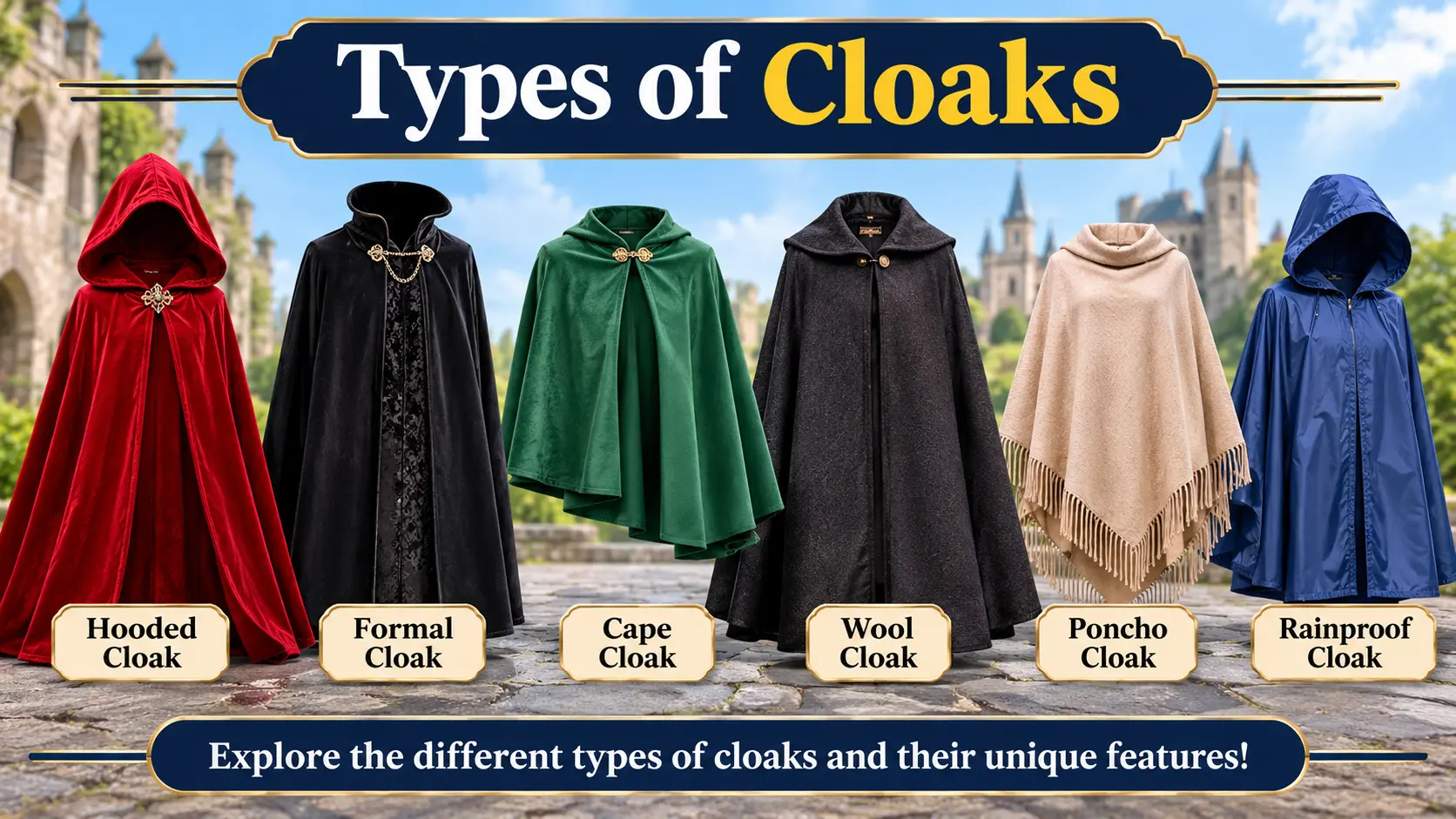
By far, this is the most popular style. As the name suggests, it comes with a large hood, and it usually falls to the calf or ankle. Because it covers so much, it works well for fairs, fantasy events and chilly evenings outdoors.
Who it suits: first-time buyers, cosplayers and anyone who wants maximum coverage.
Full-Circle and Half-Circle Cloaks
These names describe how the fabric is cut. On one hand, a full-circle cloak uses a lot of fabric, so it swirls dramatically and feels heavier. On the other hand, a half-circle cloak drapes more neatly and costs less to make.
Who it suits: full-circle for photos and stage wear; half-circle for comfort and easier movement.
Opera Cloak
Traditionally, people wore opera cloaks over evening clothes. Today, you will usually find them in velvet or satin, often with a high collar and silky lining. As a result, they look elegant rather than rugged.
Who it suits: formal events, Victorian-themed parties and vampire costumes.
Short Cloaks and Capelets
If a long cloak feels like too much, a short cloak or capelet is a great middle ground. Generally, it covers just the shoulders and upper body, so it is easy to wear over a dress or sweater.
Who it suits: people who want the look without the bulk.
Rain and Outdoor Cloaks
Finally, some modern cloaks focus on weather protection. For example, waxed cotton or treated wool cloaks can help shed light rain. Still, check the product details, since most costume cloaks are not waterproof at all.
Who it suits: hikers, campers and outdoor event-goers.
Types of Medieval Cloaks
If you want something with historical flavor, it helps to know the classic styles. Back then, cloaks were practical gear first and fashion second.
- Sagum: Originally, this was a rectangular wool cloak worn by Roman soldiers and pinned at the shoulder.
- Birrus: Similarly, this hooded wool cloak was worn in Britain and Gaul to keep off rain.
- Rectangular brooch cloak: Often linked with early medieval and Viking-style dress, it fastens with a metal pin at one shoulder.
- Mantle: Usually, this is a long, flowing cloak tied to ceremony and higher status.
- Cope: Meanwhile, this semicircular, full-length cloak is mostly associated with church ceremonies.
Interestingly, cloaks stayed in use for centuries after the Middle Ages. For instance, the Colonial Williamsburg collection holds a long brown silk cloak from around the late 1700s, lined and quilted for warmth.
So if you want historical accuracy for reenactment, look for natural wool, hand-finished seams and a metal brooch rather than a plastic clasp.
Best Fabrics for Different Types of Cloaks
Above all, fabric decides how warm, heavy and pricey your cloak will be. Here is a quick breakdown.
- Wool: Warm, durable and breathable. However, it can be heavy and needs gentle cleaning.
- Velvet: Rich and dramatic. Still, it is better for events than for rough outdoor use.
- Cotton: Light and easy to wash. Therefore, it is great for summer fairs.
- Polyester blends: Affordable and easy care, but they often trap heat and look less natural.
- Fleece or sherpa linings: Very cozy for cold weather.
If you see a “sherpa-lined” cloak and wonder what that means, a quick guide on what is sherpa explains why this fluffy fabric feels so warm while staying fairly light.
How to Choose the Right Length and Fit
Next, think about sizing. Since most cloaks are one-size-fits-most, length matters more than chest size.
| Cloak Length | Where It Falls | Best Use |
|---|---|---|
| Short (around 20–30 in.) | Hips | Layering, everyday wear |
| Mid (around 40–50 in.) | Knees to calves | Walking, festivals |
| Long (around 55–60 in.) | Ankles | Costumes, photos, cold nights |
To check your length, measure from the base of your neck to where you want the hem to land. Also, if you are short, avoid floor-length cloaks unless you plan to hem them, because they can drag and trip you up.
Similarly, look at the closure. For example, ties are simple, clasps look polished, and brooches feel the most historical.
What Different Types of Cloaks Cost
Of course, prices vary by brand, fabric, retailer, location and season. As a rough guide, here is what shoppers usually see:
- Budget costume cloaks: Typically thin polyester, best for one-off events.
- Mid-range cloaks: Usually cotton, velvet or wool blends with better stitching.
- Premium or handmade cloaks: Often pure wool, lined and custom-sized, so they cost the most but last for years.
Generally, if you will wear it often, spending more on fabric and seams pays off. On the flip side, a cheap cloak is fine for a single Halloween night.
Styling and Caring for Your Cloak
Today, cloaks fit into many looks. For instance, a dark wool cloak pairs well with dark academia, while a soft cream capelet fits cottagecore. If you are still finding your style, exploring different types of aesthetics can help you pick colors and fabrics that match.
For casual days, a short hooded cloak can stand in for your usual zip-up. That said, if you mainly want something easy to toss in the washer, the familiar types of hoodies may be more practical for daily wear.
When it comes to care, always follow the label. In general:
- Spot-clean wool and velvet instead of machine washing.
- Hang cloaks on a wide hanger so the shoulders keep their shape.
- Store wool with cedar to help keep moths away.
- Brush off dust and lint after each wear.
Quick Shopper Questions
Which types of cloaks are warmest?
Usually, long wool cloaks with a full hood and a lining keep you warmest. Also, a fleece or sherpa lining adds extra coziness.
Can you wear a cloak every day?
Yes, you can. However, shorter styles in wool or cotton feel more natural for daily life than long costume cloaks.
Is a cloak good as a gift?
Absolutely, especially for fantasy fans, cosplayers and history lovers. Just pick an adjustable closure and a mid length, since those fit the widest range of people.
Before You Click “Buy”
To sum up, start with how you will wear it. For events, choose drama; for daily use, choose comfort and easy care. Then, check the fabric, length and closure before you buy.
Finally, read reviews with photos from real buyers. That way, you will know how the cloak actually drapes, and you will end up with one you love wearing.