
Types of Cowboy Boots: A Simple Guide to Styles, Toes, Heels and Materials
You walk into a western store, and suddenly hundreds of boots are staring back at you. Some have sharp pointed toes, while others look almost square, and a few even have heels made for the dance floor. So, if you have been wondering how to choose, this guide to the types of cowboy boots will help you sort it all out before you spend a dollar.
First, we will cover the main styles. After that, we will look at toe shapes, heels, materials, sizing and price. That way, you can buy a pair that fits both your feet and your plans.
Different Types of Cowboy Boots by Style
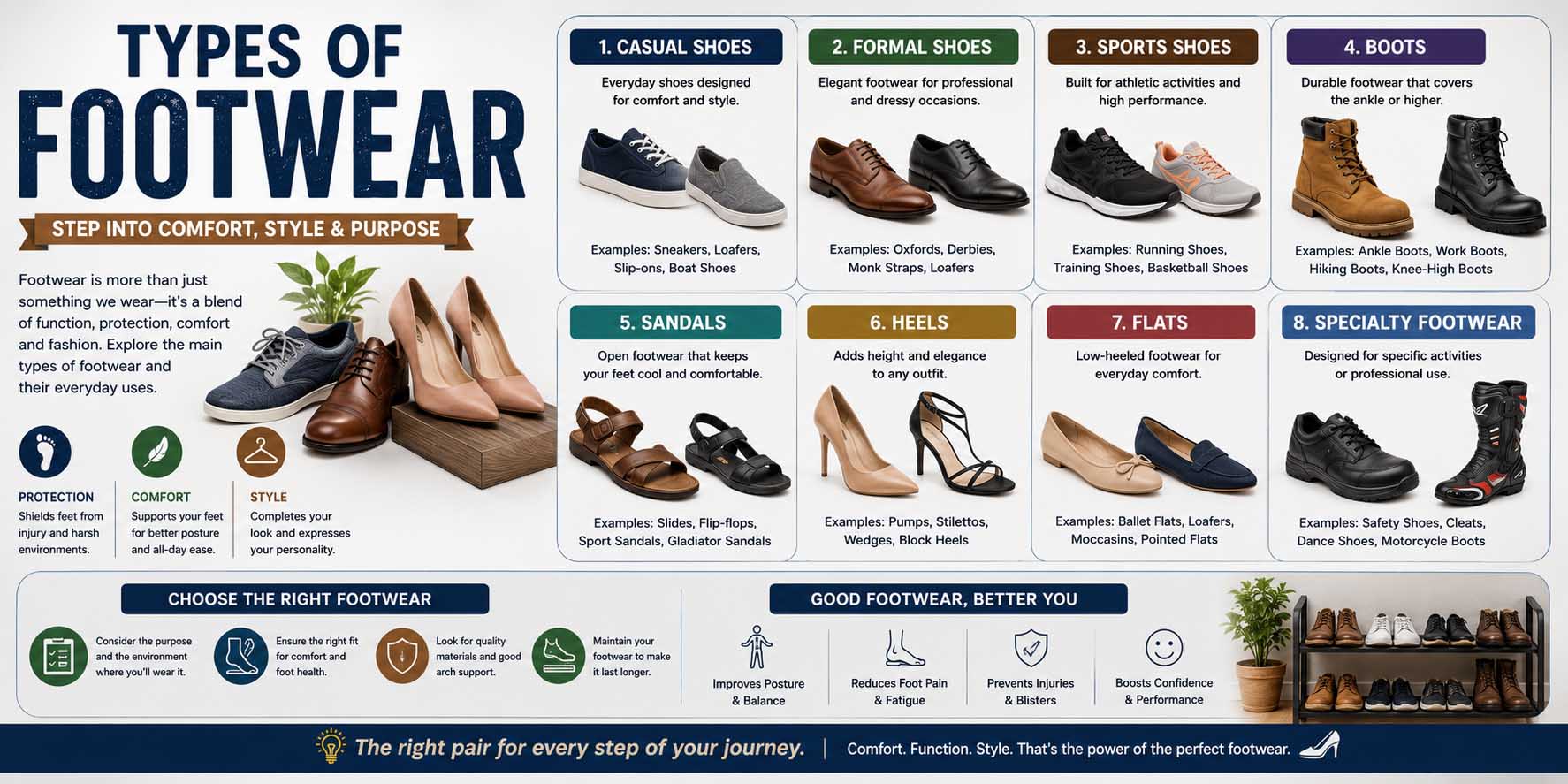
Cowboy boots started as working gear, so each design solved a real problem on the ranch. Even today, those small design choices still affect how comfortable a pair feels. In fact, cowboy boots are one of the most recognizable entries among all the types of footwear, yet many buyers do not realize how much the styles differ.
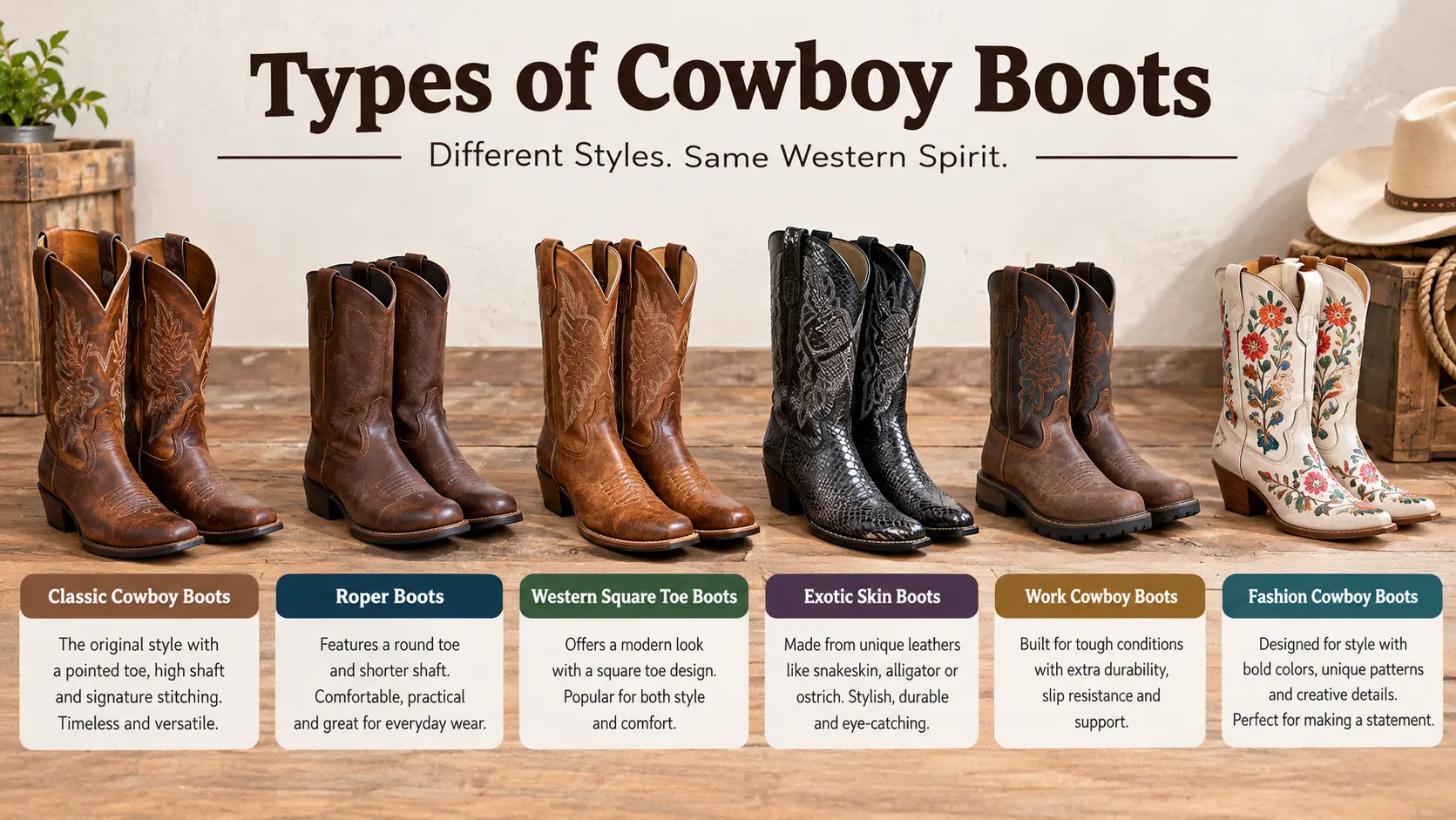
Traditional Western Boots
This is the boot most people picture first. Typically, it has a tall shaft of about 12 to 13 inches, a pointed or narrow toe and a slanted heel. The heel keeps your foot from sliding through the stirrup, while the tall shaft protects your legs from rubbing against the saddle.
However, these boots are not the easiest for long walks. So, if you plan to ride or simply want that classic western look, they are a great pick. On the other hand, if you mostly walk on pavement, you may prefer something with a lower heel.
Roper Boots
Ropers were first designed for calf roping, where cowboys jump off the horse and run. As a result, they have a short shaft, a low flat heel and usually a round toe. For this reason, they are one of the most comfortable everyday choices.
Because of that comfort, ropers also suit beginners well. Besides, they work nicely with jeans, since the shorter shaft sits neatly under the pant leg.
Western Work Boots
These look like cowboy boots, but they act like work boots. For example, many come with rubber soles, cushioned insoles, waterproof linings and sometimes safety toes. Therefore, if you spend long hours on your feet at a job site or farm, this style is worth checking.
Still, check the safety rating on the label when your job requires it. After all, not every western work boot has a composite or steel toe.
Buckaroo Boots
Buckaroos are the tallest of the bunch, and they often reach 14 inches or more. In addition, they usually have decorative stitching and a high riding heel. Because the tall shaft guards the legs, riders in rough, brushy areas tend to like them.
That said, they can feel warm in summer and also take longer to pull on. For that reason, they are best for people who ride often or simply love a bold look.
Stockman Boots
The stockman sits between a western boot and a roper. Specifically, its heel is a bit lower and wider than a riding heel, so you get better balance when walking. Consequently, many shoppers find it a good middle ground when they want one pair that does a little of everything.
Fashion Booties and Short Western Styles
Short western booties borrow the toe shapes and stitching of cowboy boots, but they drop the tall shaft. As a result, they pair easily with dresses, skirts and cropped jeans. Meanwhile, they are lighter and easier to wear all day in town.
When you are building a complete western outfit, your boots and hat should also share a similar mood. For instance, a clean dress boot looks sharp with a felt hat, whereas worn-in ropers match a straw style better. If you need help there, our guide to the types of cowboy hats can show you how to match the two without overthinking it.
Types of Cowboy Boots Toes Explained
The toe shape changes both the look and the feel of a boot. Unfortunately, many first-time buyers pick a toe for looks alone and then end up with cramped feet. So, here are the common style types of cowboy boots toes you will see in stores.
- Pointed (J-toe): This is the classic narrow toe. Although it looks dressy and helps the foot slip into a stirrup, it can pinch wider feet.
- Snip toe: This one is similar to pointed, but the very tip is cut flat. As a result, it gives a sharp, fashion-forward look.
- Round toe: This shape is soft and rounded, so it offers more toe room and suits everyday wear.
- Medium round toe: Basically, this is a slightly narrower round toe that balances style and comfort.
- Square toe: Because it is flat across the front, it gives your toes the most space, which is why many work boots use it.
- Broad square toe: This is an extra-wide square shape. However, some riders avoid it since it may not fit narrow stirrups.
In short, wider feet usually feel better in round or square toes. Meanwhile, narrow feet often handle pointed and snip toes without trouble.
Boot Heels and Why Height Matters
The heel controls how stable you feel and also how fast your legs tire. Much like the different types of heels on everyday shoes, cowboy boot heels range from tall and angled to low and flat.
- Riding (Cuban) heel: This heel is tall and angled, usually 1.5 to 2 inches. While it locks into the stirrup, it feels less steady on hard floors.
- Walking heel: This heel is slightly lower and less angled, so it works for people who ride sometimes but walk often.
- Roper heel: Because it is short and flat at around 1 inch, it feels close to a regular shoe.
- Stockman heel: This heel is wide and medium in height, so it offers a balance of grip and support.
If you are still not sure, start with a lower heel. Later, you can always try a taller one once you know how cowboy boots feel on your feet.
Different Types of Cowboy Boots Material
Material affects comfort and lifespan, and of course it also affects the price. So, here is a simple breakdown to help you decide.
- Cowhide: This leather is tough and widely available, and it also breaks in nicely over time. However, it can feel stiff at first.
- Goat or calfskin: These leathers are softer and lighter, so they feel comfortable sooner. On the downside, they scuff more easily.
- Suede or roughout: Since the surface is textured, it grips well and hides scratches. Still, it needs extra care in rain.
- Exotic leathers: Ostrich, caiman and snake look eye-catching and are often flexible. Nevertheless, they cost more, and trade in some species is controlled under CITES rules, so check local laws before buying or traveling with them.
- Synthetic or vegan leather: These options are budget-friendly and animal-free. Even so, they usually breathe less and often wear out sooner.
Next, look at the sole. Leather soles look traditional and slide nicely into stirrups, but they can be slippery on wet ground. Rubber soles, on the other hand, grip better, so they suit work or rainy days.
Construction matters too. For example, boots with a Goodyear welt can usually be resoled. Therefore, a good pair may last for years with proper care.
How to Choose the Right Cowboy Boots: A Buying Checklist
Now that you know the styles, use this quick checklist before you buy:
- First, decide on your main use. After all, riding, working, dancing and daily wear each point to different styles.
- Then, pick a toe that fits your foot width. In most cases, comfort beats looks if you plan to wear them often.
- Also, choose a heel height you can handle. Generally, beginners prefer roper or walking heels.
- Next, check the sole type. Go rubber for grip, or instead choose leather for riding and a classic feel.
- After that, look at construction. Usually, welted boots last longer and can be repaired.
- Finally, read the return policy. Since cowboy boots fit differently from sneakers, easy returns really help.
Sizing Tips for a Comfortable Fit
Because cowboy boots usually have no laces, fit is everything. So, here is what a good fit should feel like:
- Instep: It should feel snug, just like a firm handshake over the top of your foot, because this part does most of the holding.
- Heel slip: At first, a small lift of about a quarter to half an inch is normal. Over time, it often lessens as the sole bends.
- Toes: Likewise, they should not touch the end or feel squeezed.
- Ball of the foot: Similarly, it should sit at the widest part of the boot.
Keep in mind that many western brands run a bit differently from regular shoe sizes, so check each brand’s size chart. Also, try boots on in the afternoon, when feet are slightly larger. Plus, wear the same socks you plan to use with them.
What Cowboy Boots Cost
Prices vary widely depending on brand, retailer, location and time of year. Still, as a rough guide:
- Budget pairs: These often cost under $150 and are usually synthetic or entry-level leather.
- Mid-range pairs: These typically run from $150 to $350 and also tend to offer full leather with better construction.
- Premium and exotic pairs: These often start at $350, while handmade custom boots can cost much more.
For most beginners, then, a mid-range leather boot gives the best mix of comfort and lifespan. Besides, watching for seasonal sales can help you save on a quality pair.
Common Mistakes to Avoid
Even careful shoppers slip up sometimes. So, watch out for these:
- Buying a size too big to avoid heel slip, which then leads to blisters later.
- Choosing a tall riding heel even though you will walk all day.
- Picking a pointed toe for wide feet just because it looks good.
- Skipping the return policy when you order online.
- Ignoring sole type and, as a result, slipping on wet surfaces.
Caring for Your Boots
Good care keeps leather boots looking great for a long time. First, brush off dirt after each wear. Next, wipe them with a damp cloth and then let them air dry away from heaters. After that, condition smooth leather every few months so it does not crack. For suede, however, use a suede brush and protector spray instead. Finally, store them upright with boot shapers or rolled paper so the shafts do not sag.
Frequently Asked Questions
Which type of cowboy boot is most comfortable?
Many people find ropers or western work boots the most comfortable because they have low heels and roomy round or square toes.
Can beginners wear pointed-toe cowboy boots?
Yes, especially if they have narrow feet. Still, beginners with wider feet usually feel better in a round or square toe.
How long does it take to break in cowboy boots?
It depends on the leather. For example, soft leathers may feel good within a few days, whereas thick cowhide can take a few weeks of regular wear.
Are cowboy boots good for walking?
Some are, of course. In particular, boots with low heels, rubber soles and cushioned insoles handle walking much better than tall riding styles.
Picking Your First Pair: Final Advice
If this is your first pair, keep it simple. For example, start with a leather roper or stockman boot that has a round or medium round toe and a lower heel. That way, you get a boot that works for errands, casual outfits and even light outdoor work.
Once you know how cowboy boots feel, you can then explore taller shafts, pointed toes or exotic leathers. And if you are curious about where this footwear came from, the history of the cowboy boot is a fun read too. Above all, choose fit first and style second, because a boot that feels good is the one you will reach for again and again.