
What Is a Department Store? Complete Shopping Guide for Smart Buyers in 2026
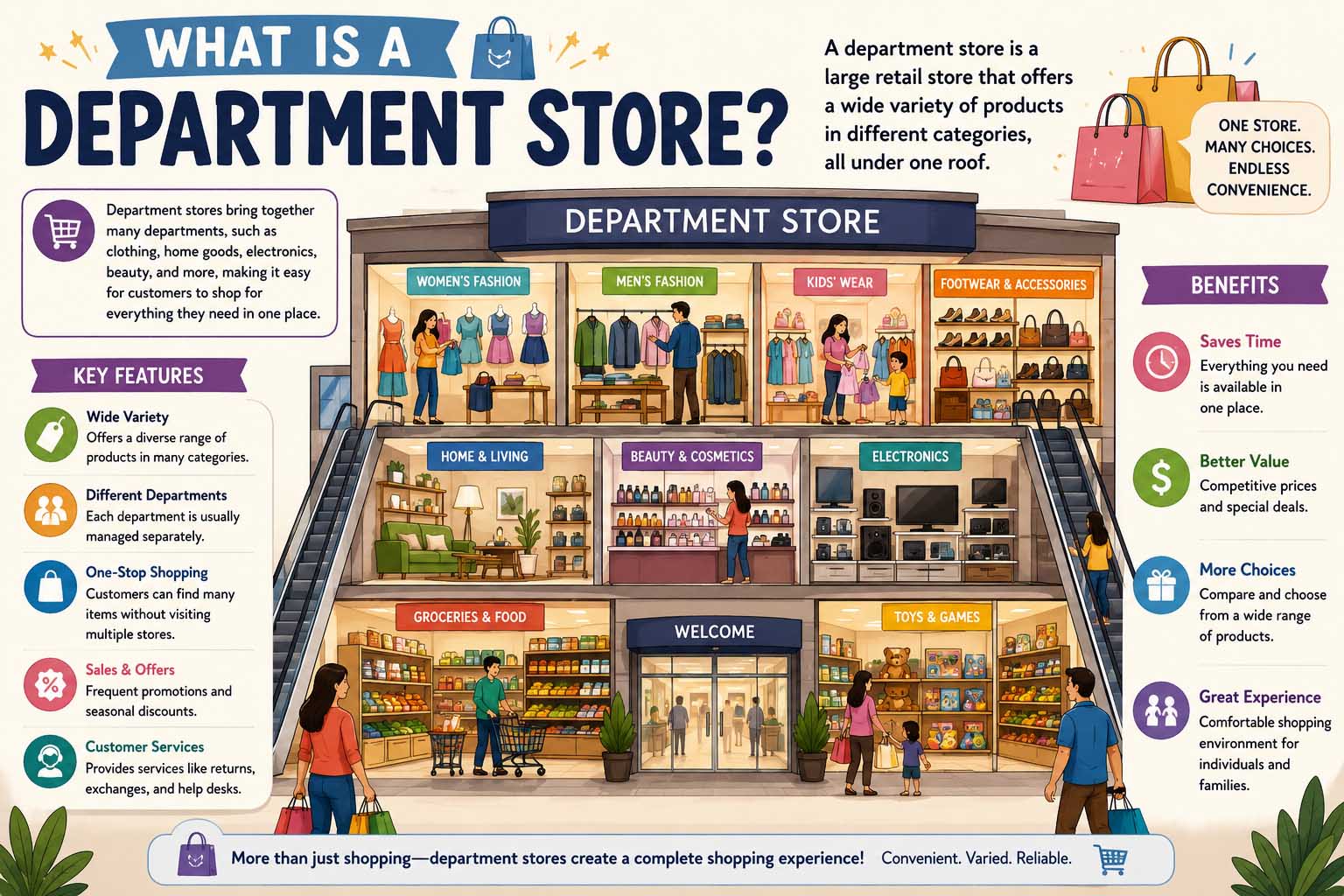
Many shoppers search for what is a department store when they want to understand the difference between department stores, supermarkets, malls, and specialty retailers. A department store is a large retail business that sells several categories of merchandise through separate departments. Shoppers may find clothing, beauty products, home furnishings, jewelry, toys, and other general merchandise in one location.
Department stores focus on convenience, variety, and a broad shopping experience. Therefore, customers can compare products and brands while completing several types of purchases during one visit.
Unlike a specialty retailer that focuses on one main category, a department store divides merchandise into distinct sections. As a result, shoppers can move between departments based on what they need. Meanwhile, people comparing retail formats may also ask what is a boutique.
What Is a Department Store and How Does It Work?
A retailer generally qualifies as a department store when it sells a broad range of general merchandise through separate departments, with no single merchandise line dominating the business.
The U.S. Census Bureau’s department store classification describes establishments that sell general lines of new merchandise, such as apparel, jewelry, home furnishings, and toys, through separate departments.
Common departments may include:
- Fashion and apparel
- Shoes and accessories
- Beauty and cosmetics
- Jewelry
- Home furnishings
- Kitchen products
- Toys
- Other general merchandise
Therefore, the defining feature is not simply the size of the building. Instead, the combination of multiple merchandise categories and separate departments distinguishes this retail format from many specialty stores.
Department Store vs. Other Retail Formats
Different retail formats serve different shopping needs. For instance, supermarkets primarily focus on groceries and household food-related purchases, while specialty stores concentrate on a narrower product category.
| Store Type | Main Focus | Product Variety | Shopping Experience |
|---|---|---|---|
| Department Store | Multiple merchandise categories | High | Broad, in-person shopping |
| Supermarket | Groceries and food | Moderate | Everyday convenience |
| Specialty Store | Specific category | Limited | Category-focused |
| Discount Store | Value-oriented merchandise | High | Price-focused |
| Online Marketplace | Multiple categories | Very high | Digital shopping |
| Shopping Mall | Multiple independent retailers | Very high | Multi-store shopping |
A shopping mall is therefore different from a department store. A department store operates as one retail business with multiple departments, whereas a mall contains several separate retailers and other businesses within one property.
Examples of Department Stores
Well-known department store examples include Macy’s, Nordstrom, Kohl’s, and JCPenney in the United States.
These retailers sell products across several categories rather than concentrating exclusively on one type of merchandise. For example, shoppers may find apparel, accessories, beauty products, home goods, and other merchandise during the same visit.
However, the exact departments and products vary by retailer and location. A department store may also change its merchandise mix over time based on customer demand, season, and business strategy.
Why Do People Shop at Department Stores?
Department stores remain useful because they combine variety with the convenience of shopping in one location. Although online shopping has changed consumer habits, physical stores still offer several practical advantages.
One-Stop Department Store Shopping
First, shoppers can purchase products from multiple categories without visiting several separate retailers.
For example, someone may buy clothing, beauty products, home accessories, and gifts during one visit. Therefore, this format can save time when a shopping list covers several categories.
In-Person Shopping and Product Comparison
Another advantage is the ability to inspect merchandise before purchasing it.
For instance, customers can check clothing sizes, compare materials, examine home goods, and assess the appearance of products in person. As a result, physical shopping can help when online images do not provide enough information.
Department Store Sales and Promotions
Department stores commonly run seasonal sales, clearance events, holiday promotions, and loyalty offers.
However, shoppers should compare prices rather than assuming every sale provides the best value. Likewise, buyers interested in promotional shopping may want to understand what is a flash sale or what is bogo.
Department Store Customer Services
Some department stores offer services such as customer-service desks, loyalty programs, pickup options, alterations, or flexible return policies.
These services vary by retailer. Therefore, shoppers should check the current policies of the store they plan to use rather than assuming every department store offers the same benefits.
Benefits and Drawbacks of Department Stores
The department-store model offers convenience, but it also has limitations. Understanding both sides can help shoppers decide when this format makes sense.
Benefits of Department Stores
Department stores can provide:
- Several product categories in one location
- Multiple brands and price points
- Opportunities to inspect products in person
- Seasonal sales and clearance events
- Loyalty rewards at participating retailers
- Convenient pickup or return services at some stores
In addition, shoppers can often compare several brands without traveling between multiple specialty retailers.
Drawbacks of Department Stores
On the other hand, department stores do not always offer the lowest prices.
Online retailers, discount stores, and specialty sellers may have better prices on particular products. Therefore, buyers should compare prices before making expensive purchases.
Large stores can also become crowded during major sales and holiday periods. Consequently, shoppers who prefer a quieter experience may want to visit during less busy times.
How to Shop Smarter at Department Stores
A few simple habits can make department-store shopping more efficient and budget-friendly.
Compare Department Store Prices Before Buying
First, check the regular price and compare it with current prices from other retailers. A sale label does not automatically mean that an item costs less than elsewhere.
For expensive products, compare the exact model, size, material, or package quantity. Otherwise, two products that look similar may not offer the same value.
Use Department Store Loyalty Programs Carefully
Some retailers offer points, coupons, member discounts, or early access to promotions.
Frequent customers may benefit from these programs. However, occasional shoppers should consider whether the rewards justify signing up and sharing additional personal information.
Use Department Store Apps
Many retailers connect their physical stores with mobile apps and websites. Depending on the retailer, an app may provide:
- Digital coupons
- Reward tracking
- Product availability
- Order pickup
- Shopping lists
- Account management
As a result, shoppers can often research products before visiting the store.
Choose Less Busy Shopping Times
Finally, visiting during quieter periods can make it easier to compare products and ask employees for assistance.
For example, weekday mornings may be less crowded than weekends at some locations. However, shopping patterns vary by store, location, and season.
What Is a Department Store Credit Card?
A department store credit card is a retail-focused payment card connected to a particular retailer or retail group. Depending on the card, customers may receive store-specific rewards or promotional benefits.
Common offers can include:
- Store discounts
- Reward points
- Birthday offers
- Promotional financing
- Early access to selected sales
However, card benefits and terms vary. Therefore, shoppers should review interest rates, fees, rewards, and payment terms before applying.
Should You Use a Department Store Credit Card?
A store credit card may suit a frequent customer who regularly shops at the issuing retailer. Nevertheless, it is not automatically the best option for every shopper.
Potential Benefits of Store Credit Cards
Frequent customers may receive rewards or discounts on purchases they already planned to make. In some cases, promotional offers can also provide short-term savings.
Potential Drawbacks of Store Credit Cards
On the other hand, interest charges can quickly reduce the value of store rewards if a balance remains unpaid.
Therefore, compare the card’s costs and benefits before applying. More importantly, avoid spending extra simply to earn a reward.
Best Times to Shop at Department Stores
Retail prices and promotions change throughout the year. Consequently, shoppers may find better value by timing certain purchases carefully.
Post-Holiday Department Store Clearance
After major holiday shopping periods, retailers may reduce prices on selected seasonal inventory. Therefore, shoppers who can wait may find useful clearance opportunities.
Back-to-School Shopping
Clothing, school supplies, electronics, and other categories may receive special promotions during the back-to-school period.
However, compare prices because a promotional label does not necessarily mean the lowest available price.
Black Friday and Cyber Monday Sales
These major promotional periods can include discounts across many product categories. Nevertheless, shoppers should compare prices before assuming an advertised deal represents significant savings.
End-of-Season Department Store Sales
Fashion departments often reduce selected seasonal merchandise as new collections arrive.
As a result, shoppers who are flexible about styles or timing may find lower prices on outgoing inventory.
Online vs. Physical Department Stores
Modern retailers increasingly connect online and in-store shopping. However, each channel offers different advantages.
Online Department Store Shopping
Online stores allow shoppers to browse from almost anywhere. In addition, customers can quickly search for products, compare prices, read available product information, and arrange delivery or pickup when those services are offered.
Physical Department Store Shopping
Physical stores let customers see, touch, and sometimes try products before purchasing them.
Therefore, many shoppers use both channels. For example, a customer might research prices online before visiting a store to inspect a product in person.
This approach combines the convenience of online research with the hands-on experience of physical shopping.
How Department Store Layout Affects Shopping
Department stores arrange merchandise to make browsing easier and to expose shoppers to related products.
For example, promotional displays may appear near entrances or major walkways. Likewise, stores may place related products close together to encourage comparison.
Consequently, shoppers may discover products they did not originally plan to buy. However, this can also encourage impulse purchases.
Therefore, budget-conscious customers may benefit from entering the store with a clear shopping list and a spending limit.
Budget Shopping Tips for Department Stores
Department stores can work well for budget-conscious shoppers when purchases are planned carefully. Alternatively, buyers comparing other retail formats may want to learn what is a thrift store or what is a flea market.
Create a Department Store Shopping List
First, decide what you actually need before entering the store. As a result, you may find it easier to avoid unnecessary purchases.
Compare Department Store Prices Online
Next, check comparable products online when practical. Even during an in-store promotion, another retailer may offer a better price.
Check Department Store Clearance Sections
Clearance areas may contain discontinued, seasonal, or remaining inventory at reduced prices.
However, a lower price does not automatically make an item useful. Consider quality, condition, size, and whether you genuinely need it.
Use Store Rewards Strategically
Finally, use loyalty rewards for purchases you already intended to make. Otherwise, spending extra to earn points can defeat the purpose of saving money.
Frequently Asked Questions About Department Stores
What Is a Department Store?
A department store is a retailer that sells multiple lines of general merchandise through separate departments. Common categories include clothing, jewelry, beauty products, home furnishings, and toys.
What Makes a Retailer a Department Store?
Generally, the retailer must carry several general merchandise lines and organize them into separate departments rather than focusing on one dominant product category.
What Are Some Department Store Examples?
Macy’s, Nordstrom, Kohl’s, and JCPenney are familiar examples in the United States. However, department store brands vary by country and region.
How Is a Department Store Different From a Supermarket?
A department store primarily sells broad categories of general merchandise. In contrast, a supermarket primarily focuses on groceries and everyday food-related purchases.
Are Department Stores and Shopping Malls the Same?
No. A department store is one retail business with several merchandise departments. In contrast, a shopping mall contains multiple separate retailers and other businesses within one larger property.
Understanding How Department Stores Work
Understanding the department-store format makes it easier to distinguish it from supermarkets, specialty stores, malls, and online marketplaces. Department stores bring several merchandise categories together and organize them into separate departments, giving customers a broad shopping experience in one business.
However, smart shopping still requires planning. Therefore, buyers should compare prices, evaluate promotions carefully, use rewards strategically, and choose between online and physical shopping based on the product they need.
Department stores continue to adapt to changing shopping habits. At the same time, their defining feature remains straightforward: they bring multiple categories of general merchandise together through distinct departments under one retail operation.