
Types of Clothing: A Complete Guide for Every Wardrobe
Shopping for clothes seems simple until you realize just how many types of clothing are available. From everyday basics and office wear to seasonal outerwear and formal outfits, each clothing category serves a different purpose. Understanding these options makes it easier to build a practical wardrobe, shop confidently, and avoid buying pieces you rarely wear.
Whether you’re refreshing your closet, shopping for a new job, or simply learning more about fashion, this guide explains the most common clothing categories, popular styles, materials, and buying tips to help you make smarter purchases.
Why Understanding Types of Clothing Matters
Some pieces prioritize comfort, while others focus on protection, performance, or appearance.
Knowing the different types of clothing helps you:
- Build a versatile wardrobe
- Shop more efficiently
- Dress appropriately for different occasions
- Reduce unnecessary purchases
- Mix and match outfits more easily
Instead of buying trendy items that may only be worn once, you’ll be able to choose clothing that fits your lifestyle.
Types of Clothing by Category
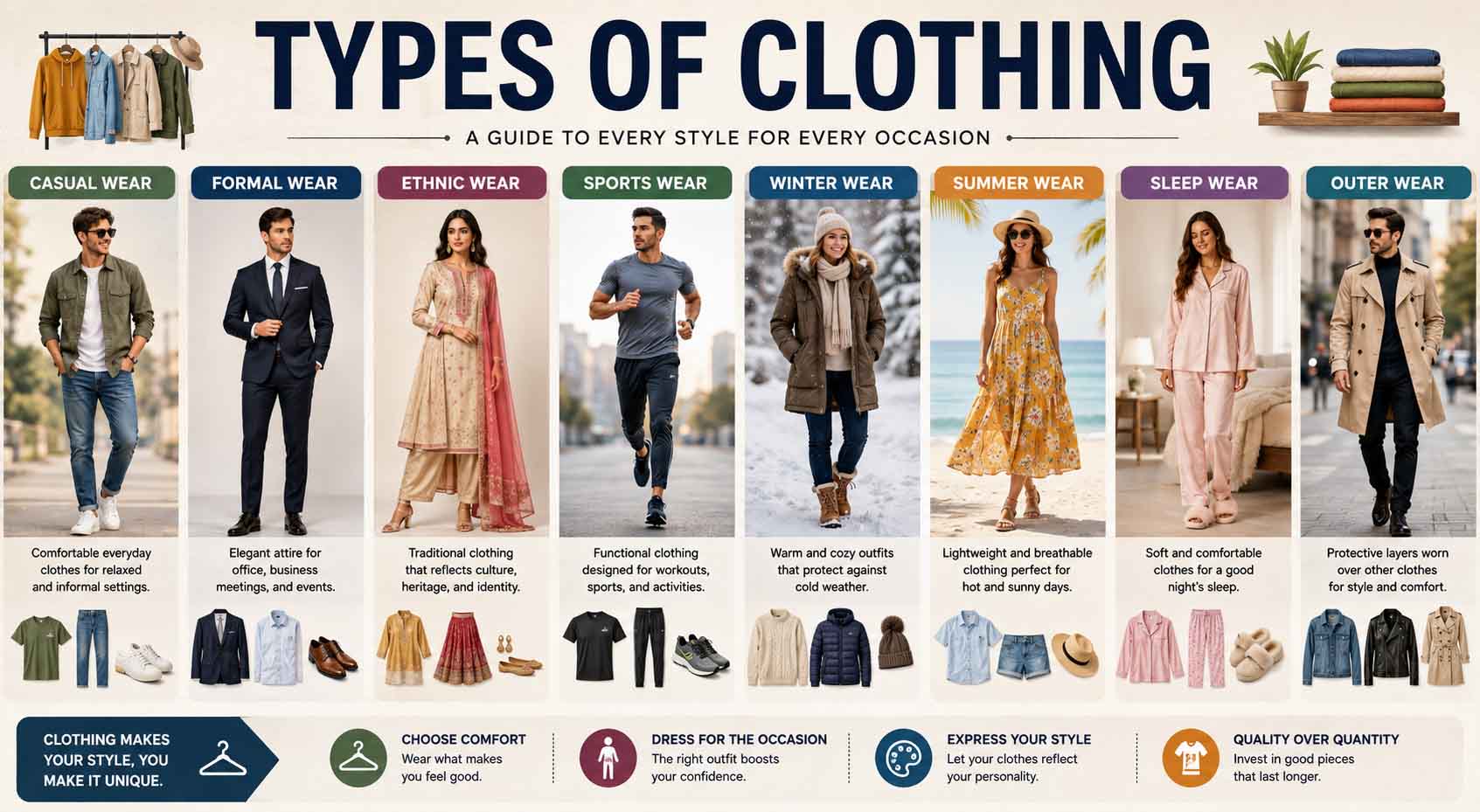
The easiest way to understand clothing is by dividing it into major categories.
Tops
Tops form the foundation of most wardrobes.
Common examples include:
- T-shirts
- Polo shirts
- Blouses
- Button-down shirts
- Sweaters
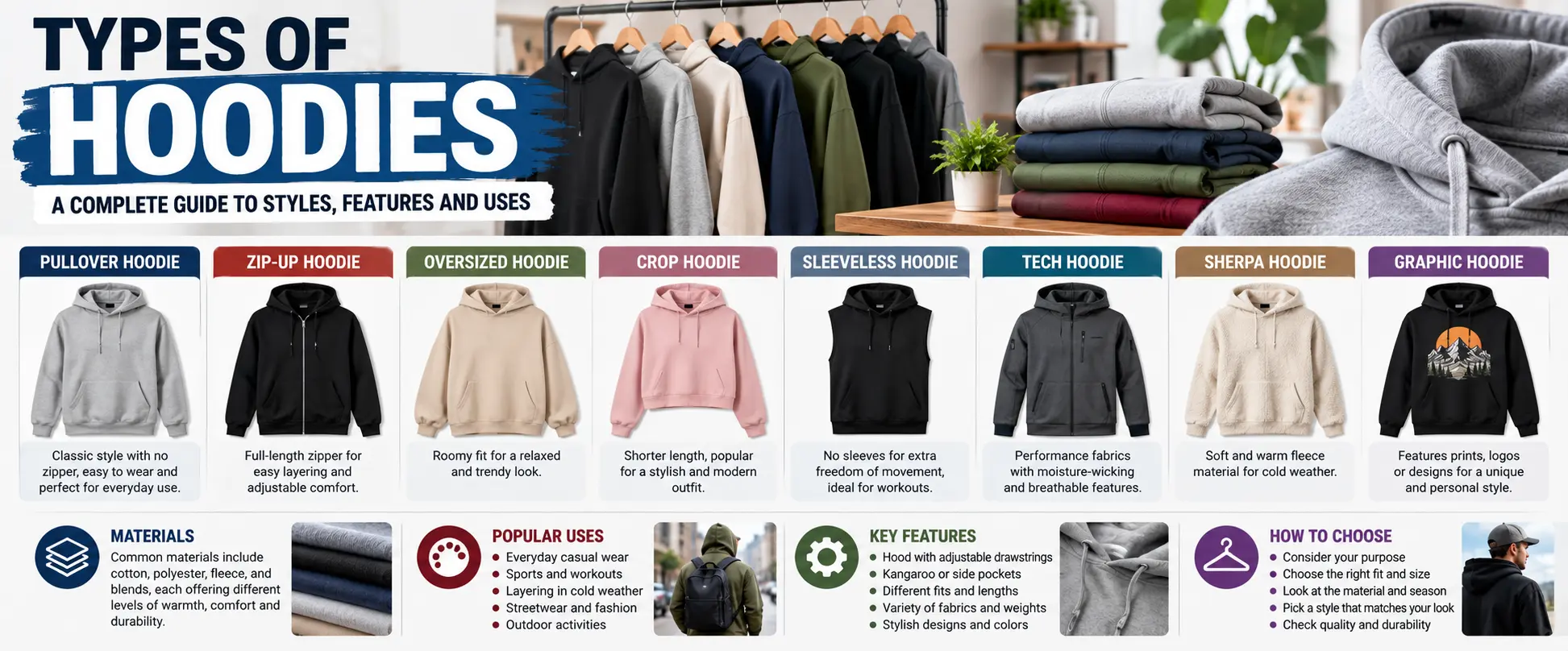
- Hoodies
- Tank tops
If you’re comparing styles, our guide to types of shirts explains the differences between popular shirt designs and when each works best.
Bottoms
Bottoms are available in countless cuts and styles.
Popular choices include:
- Jeans
- Chinos
- Trousers
- Shorts
- Leggings
- Joggers
- Skirts
For shoppers looking to expand their wardrobe, learning about different types of skirts can make it easier to choose styles for casual, business, or formal occasions.
Dresses
Dresses combine a top and skirt into one garment.
Popular styles include:
- Maxi dresses
- Midi dresses
- Mini dresses
- Wrap dresses
- Shirt dresses
- Bodycon dresses
- A-line dresses
Choosing the right dress often depends on the event, climate, and personal style.
Outerwear
Outerwear protects against weather while adding style.
Common options include:
- Jackets
- Parkas
- Blazers
- Raincoats
- Puffer jackets
- Trench coats
- Wool coats
If you’re shopping for colder weather, understanding the various types of coats can help you select one that suits your local climate and daily needs.
Activewear
Designed for movement and comfort, activewear includes:
- Sports bras
- Compression wear
- Running shorts
- Performance shirts
- Yoga pants
- Athletic jackets
Performance fabrics often improve moisture management during exercise.
Sleepwear
Sleepwear focuses on comfort.
Examples include:
- Pajama sets
- Nightgowns
- Sleep shirts
- Robes
- Lounge pants
Soft, breathable fabrics generally provide the best sleeping comfort.
Underwear
Essential undergarments include:
- Briefs
- Boxers
- Bras
- Camisoles
- Undershirts
- Socks
Proper sizing improves both comfort and clothing fit.
Types of Clothing Styles
Besides clothing categories, shoppers often compare types of clothing styles based on appearance and lifestyle.
Popular styles include:
Casual
Casual clothing emphasizes comfort and versatility.
Typical pieces include:
- Jeans
- T-shirts
- Sneakers
- Hoodies
Business Casual
Business casual blends professional and relaxed clothing.
Common items include:
- Chinos
- Button-up shirts
- Loafers
- Blazers
- Knit sweaters
Formal
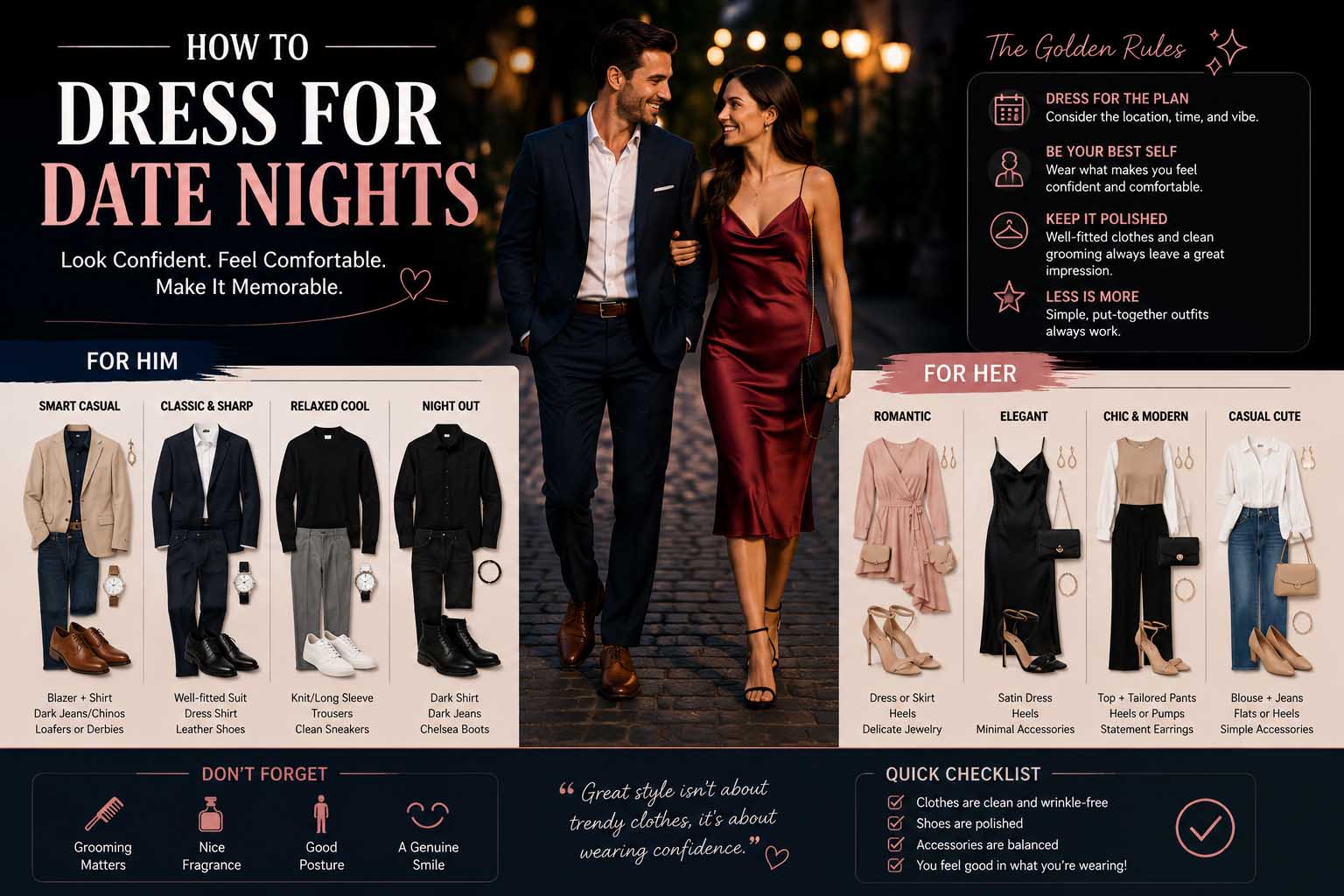
Formal clothing is designed for weddings, galas, and upscale events.
Examples include:
- Evening gowns
- Tuxedos
- Dress shirts
- Formal shoes
Streetwear
Streetwear often combines oversized fits, graphic prints, sneakers, and designer influences.
Athleisure
Athleisure mixes athletic clothing with everyday fashion.
Popular choices include:
- Leggings
- Joggers
- Performance hoodies
- Stylish sneakers
These different types of clothing styles allow shoppers to express personality while meeting practical needs.
Types of Clothing Material
Fabric has a major impact on comfort, durability, maintenance, and price.
Understanding types of clothing material helps you choose garments that suit your climate and lifestyle.
| Material | Best For | Characteristics |
|---|---|---|
| Cotton | Everyday wear | Soft, breathable |
| Linen | Hot weather | Lightweight, airy |
| Wool | Cold weather | Warm and insulating |
| Polyester | Activewear | Durable and wrinkle-resistant |
| Rayon | Casual clothing | Soft and lightweight |
| Silk | Formal wear | Smooth and luxurious |
| Denim | Jeans and jackets | Durable and long-lasting |
| Nylon | Outdoor clothing | Strong and quick-drying |
Natural fibers usually feel more breathable, while synthetic fabrics often provide greater durability and stretch.
Different Types of Clothing for Different Occasions
Building a wardrobe becomes easier when you shop based on where you’ll actually wear the clothes.
Everyday Clothing
Ideal choices include:
- T-shirts
- Jeans
- Casual sneakers
- Sweatshirts
Office Clothing
Professional wardrobes often include:
- Dress pants
- Blouses
- Button-up shirts
- Blazers
- Loafers
Women looking to refresh their work wardrobe may also benefit from exploring types of shirts for women, since different cuts and necklines create very different professional looks.
Travel Clothing
Travel-friendly clothing should be:
- Comfortable
- Lightweight
- Easy to layer
- Wrinkle-resistant
Outdoor Clothing
Outdoor apparel often focuses on weather protection through waterproof materials, insulation, and breathable fabrics.
How to Choose the Right Clothing
Before purchasing new clothes, ask yourself a few practical questions.
Consider Your Lifestyle
Buy clothing that matches your daily routine.
Someone working from home may need more casual wear, while office workers often require business attire.
Prioritize Fit
Even expensive clothing looks less appealing if it doesn’t fit properly.
Check:
- Shoulder width
- Sleeve length
- Waist fit
- Overall comfort
Trying on clothes whenever possible remains one of the best ways to ensure a good fit.
Think About Versatility
Choose pieces that pair well with several items already in your wardrobe.
Neutral colors often create more outfit combinations.
Focus on Quality
Look for:
- Strong stitching
- Even seams
- Durable buttons
- Quality zippers
- Consistent fabric
Higher-quality clothing often lasts longer, making it a better long-term value.
Clothing Price Guide
Prices vary depending on the brand, material, craftsmanship, and retailer.
Here’s a general overview:
| Clothing Type | Typical Price Range* |
| Basic T-shirts | $10–$40 |
| Jeans | $30–$150 |
| Dresses | $40–$250+ |
| Jackets | $50–$300+ |
| Winter coats | $100–$600+ |
| Athletic wear | $20–$120 |
*Prices vary by brand, retailer, location, seasonal sales, and product quality.
Common Shopping Mistakes
Many shoppers end up with overflowing closets because they buy without a plan.
Avoid these common mistakes:
- Shopping only because of discounts
- Ignoring fabric quality
- Buying the wrong size
- Choosing trends over versatility
- Forgetting care instructions
- Purchasing duplicate items unintentionally
Creating a shopping list before visiting stores can reduce impulse purchases.
Clothing Care Tips
Taking care of your clothing helps protect your investment.
Simple habits include:
- Follow garment care labels.
- Wash similar colors together.
- Avoid excessive dryer heat.
- Store seasonal clothing properly.
- Fold heavy knitwear instead of hanging it.
- Repair loose buttons before they become bigger problems.
Good clothing care can significantly extend the life of your wardrobe.
Don’t Forget the Right Footwear
Even the best outfit feels incomplete without appropriate shoes.
Choosing suitable types of footwear depends on both the occasion and comfort needs. Casual sneakers, dress shoes, sandals, boots, and athletic shoes all serve different purposes, so it’s worth matching footwear to your activities rather than focusing only on appearance.
Frequently Asked Questions
What are the main types of clothing?
The major categories include tops, bottoms, dresses, outerwear, activewear, sleepwear, underwear, and accessories.
Which clothing material is best?
There isn’t one perfect material. Cotton is excellent for everyday comfort, linen works well in warm weather, wool provides insulation, and polyester offers durability for active lifestyles.
How many clothing styles are there?
Fashion includes dozens of styles, including casual, business casual, formal, streetwear, minimalist, vintage, sporty, and many others.
How can I build a versatile wardrobe?
Focus on quality basics, neutral colors, clothing that fits well, and pieces that can be mixed with multiple outfits.
Should I buy trendy or classic clothing?
A balanced wardrobe usually works best. Invest in timeless basics first, then add a few trend-driven pieces each season if they match your personal style.
Smart Shopping Starts with Understanding Your Wardrobe
Knowing the different types of clothing makes shopping far less overwhelming. Instead of buying items based only on trends, think about how each piece fits your lifestyle, climate, and existing wardrobe. Prioritize comfort, quality, and versatility, and you’ll create a collection of clothing that works well for years rather than just one season.
Whether you’re replacing essentials or updating your style, making thoughtful choices today can save money and help you enjoy getting dressed every day.