
Types of Hoodies: Popular Styles, Materials, and Fits Explained
Shopping for a hoodie sounds simple until you see how many types of hoodies are available. Pullover, zip-up, oversized, fitted, cropped, fleece, lightweight, and performance designs can all serve different purposes. Therefore, choosing the right hoodie depends on more than color or brand. Fit, fabric, warmth, layering, pockets, and how you plan to wear it can make a noticeable difference.
Some hoodies work best as everyday casual clothing, while others suit workouts, travel, cold weather, or fashion-focused outfits. Likewise, a thick fleece hoodie may feel great in winter but become uncomfortable during mild weather.
So, before buying one, it helps to understand the major hoodie styles and what each offers.
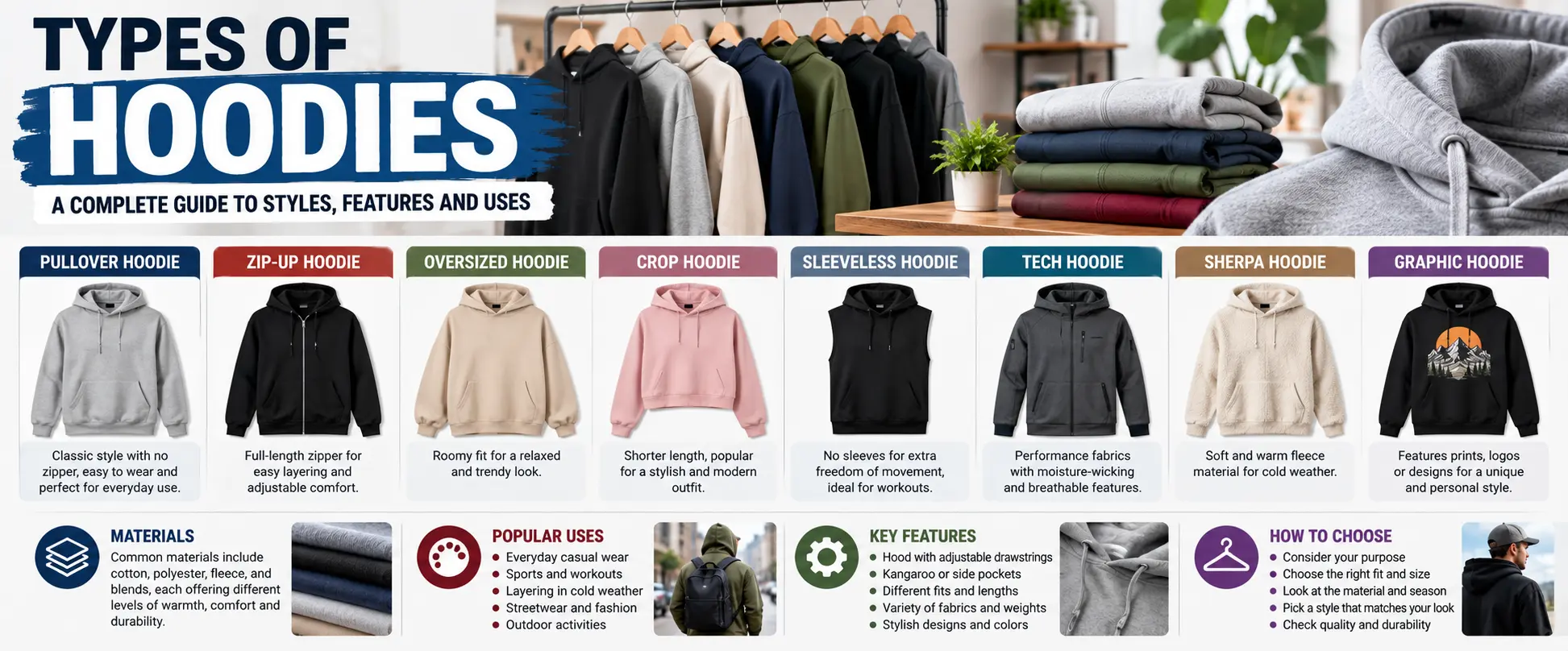
Types of Hoodies at a Glance
Although brands use slightly different product names, most hoodies fit into a few recognizable categories.
| Hoodie Type | Main Feature | Good For |
|---|---|---|
| Pullover | No front zipper | Everyday wear and warmth |
| Zip-up | Full front zipper | Layering and temperature control |
| Half-zip | Partial front zipper | Casual and sporty outfits |
| Oversized | Loose, roomy fit | Relaxed styling and layering |
| Fitted | Closer body fit | Cleaner, streamlined outfits |
| Cropped | Shorter body length | Fashion-focused styling |
| Sleeveless | No sleeves | Gym and layered outfits |
| Fleece | Soft insulated interior | Cooler weather |
| Lightweight | Thin fabric | Mild weather and layering |
| Performance | Technical fabric | Exercise and active use |
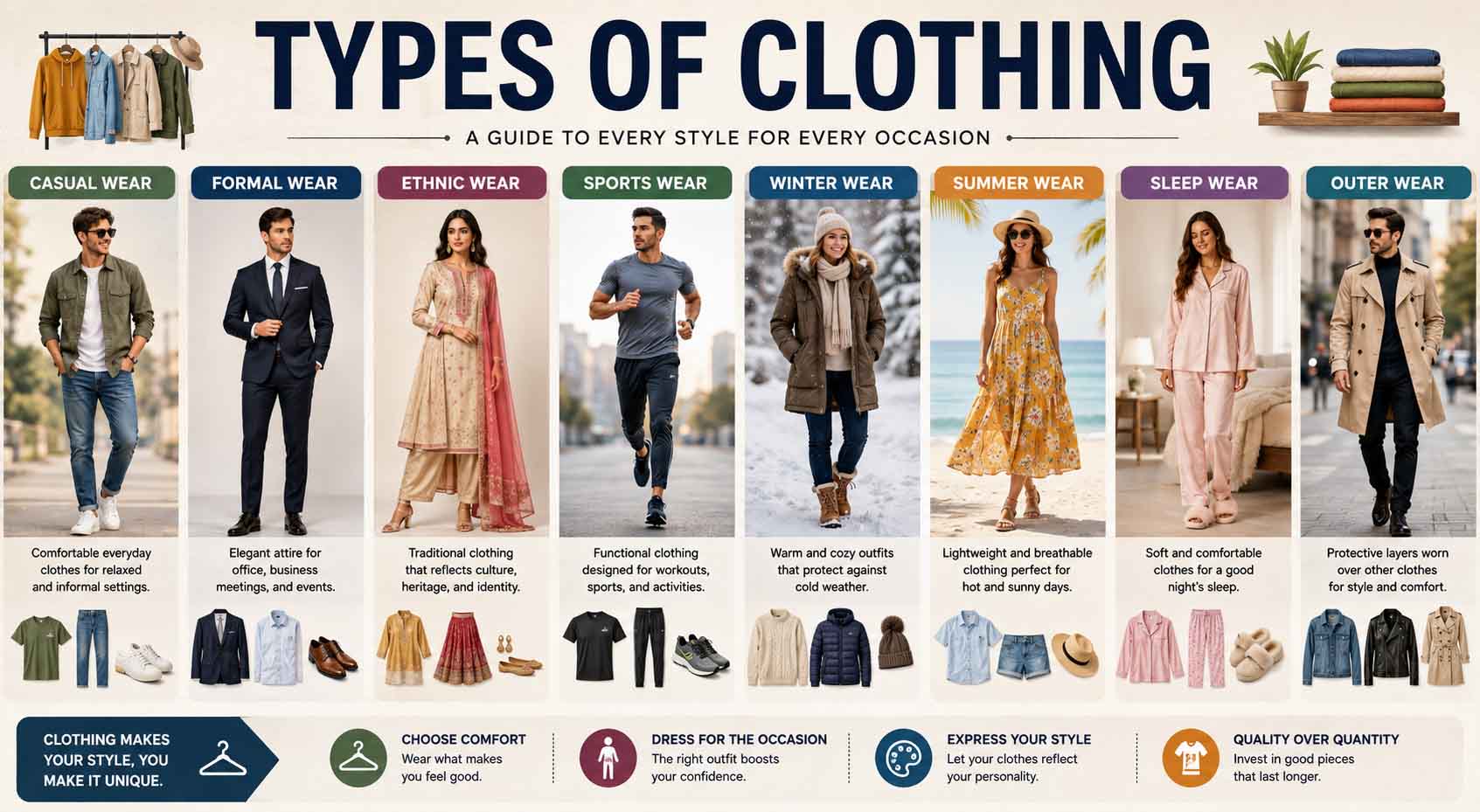
Because hoodies belong to the broader family of types of clothing, the same basic shopping factors apply: consider fit, material, season, comfort, and intended use before focusing on appearance.
Meanwhile, individual designs can combine categories. For example, you might find an oversized zip-up fleece hoodie or a fitted lightweight pullover.
1. Pullover Hoodies
A pullover is probably the style most people picture when they hear the word hoodie.
It has no full-length front zipper, so you put it on over your head. Usually, it also includes a drawstring hood and a large kangaroo pocket across the front.
Because there is no zipper splitting the front, pullovers can provide a simple, cozy feel. They also work well with jeans, joggers, shorts, and casual trousers.
However, temperature control is less convenient. If you become too warm, you generally need to remove the entire hoodie rather than simply unzip it.
Choose a pullover if you value simplicity, warmth, and an easy casual look.
2. Zip-Up Hoodies
As a result, they are especially useful for layering.
You can wear one open over a T-shirt when the weather is mild. Then, when temperatures fall, simply zip it closed.
Likewise, zip-ups are convenient when moving between indoor and outdoor environments. Instead of repeatedly removing your hoodie, you can adjust the zipper.
On the other hand, the zipper adds hardware and creates a different look from the uninterrupted front of a pullover.
For shoppers who prioritize versatility, however, a full-zip hoodie is one of the easiest styles to wear throughout the year.
3. Oversized Hoodies
Oversized hoodies feature a deliberately loose silhouette. Depending on the design, they may have dropped shoulders, wider sleeves, and extra room through the body.
Because the fit is intentionally relaxed, shoppers should distinguish an oversized design from simply buying a standard hoodie several sizes too large. A purpose-made oversized hoodie usually maintains intentional proportions.
This style pairs naturally with leggings, loose jeans, cargo pants, or casual shorts. Meanwhile, its extra room can make layering easier.
Oversized hoodies also fit comfortably into many different types of aesthetics, including streetwear, minimalist casual looks, skater-inspired outfits, and relaxed athleisure.
Still, check the garment measurements before ordering. One brand’s oversized medium can fit very differently from another’s.
4. Fitted and Slim-Fit Hoodies
A fitted hoodie sits closer to the body than a regular or oversized style.
Because there is less excess fabric, the overall appearance can look cleaner and more structured. Consequently, fitted hoodies can work well under coats and jackets where bulky layers might feel uncomfortable.
However, a slim fit should not restrict your shoulders or arms.
When shopping online, compare your chest measurement with the brand’s size chart. Also, check whether reviews mention that the garment runs small.
If you prefer a neat silhouette rather than a relaxed streetwear fit, a fitted hoodie may suit you better.
5. Cropped Hoodies
Cropped hoodies have a shorter body length, often ending around the waist or above it.
They are commonly paired with high-waisted jeans, leggings, skirts, and shorts. As a result, they tend to serve a stronger fashion role than traditional full-length hoodies.
However, cropped lengths vary significantly. Some styles end only slightly above a standard hoodie, while others are much shorter.
Therefore, check the listed garment length rather than relying entirely on product photos.
Cropped hoodies can also work as light layers over some types of tank tops, particularly during transitional weather when a full-length heavy sweatshirt would feel excessive.
6. Half-Zip and Quarter-Zip Hoodies
Half-zip and quarter-zip hoodies sit between pullovers and full-zip designs.
Instead of extending to the hem, the zipper covers only the upper portion of the garment. Therefore, you retain much of the pullover look while gaining some ventilation around the neck and chest.
These hoodies often have a sporty or outdoor-inspired appearance.
Some designs also feature higher collars around the hood opening, which can change how they sit around the neck when fully zipped.
If you like pullovers but want slightly more temperature control, this style offers a practical middle ground.
7. Sleeveless Hoodies
Sleeveless hoodies remove the traditional long sleeves while retaining the hooded sweatshirt shape.
They are often used for gym outfits, casual layering, or fashion styling. For instance, you can wear one over a T-shirt or workout top without adding as much fabric around the arms.
However, sleeveless hoodies provide less weather protection than standard versions. Therefore, they should not be treated as substitutes for warm outer layers.
Instead, consider them when mobility, layering, or appearance matters more than full coverage.
8. Fleece Hoodies
Fleece hoodies are designed with warmth and softness in mind.
Many use cotton-polyester blends with a brushed interior, while others may use polyester fleece or similar insulating materials. Because construction varies, however, the word “fleece” alone does not tell you exactly how warm a hoodie will be.
Check the fabric weight and product description when possible.
A heavyweight fleece hoodie can work as a substantial cool-weather layer. Meanwhile, a lighter brushed-fleece version may be comfortable during fall or spring.
For colder conditions, hoodies can also be worn beneath suitable types of coats, provided the combination leaves enough room for comfortable movement.
9. Lightweight Hoodies
Lightweight hoodies are useful when you want coverage without heavy insulation.
Manufacturers may use lightweight cotton, cotton blends, polyester, jersey, or performance fabrics to create these styles.
As a result, they can work well during cool evenings, travel, mild seasons, or air-conditioned indoor environments.
They are also easier to pack than bulky heavyweight sweatshirts.
Still, lightweight does not automatically mean breathable. Fabric composition and construction affect airflow, so check the material details if you plan to wear the hoodie in warmer conditions.
10. Performance and Athletic Hoodies
Performance hoodies are made with movement in mind.
Depending on the product, they may use stretch fabrics, lightweight synthetic materials, ventilated panels, or moisture-management construction.
Some also include practical details such as thumbholes, zippered pockets, reflective elements, or streamlined hoods.
Nevertheless, not every athletic hoodie offers the same features. Therefore, match the garment to your actual activity rather than buying based solely on sporty styling.
For running, for example, lightweight construction and secure pockets may matter more than a thick brushed interior. For warm-ups, however, extra insulation might be useful.
11. Graphic Hoodies
Graphic hoodies use printed, embroidered, or appliqué designs as their main visual feature.
Designs range from small logos to large illustrations, band graphics, sports branding, artwork, and typography.
Consequently, these hoodies often function as statement pieces rather than basic layers.
Before buying, look at how the graphic is applied. Embroidery, screen printing, heat-transfer graphics, and other methods can feel and age differently.
Also, check the care instructions. Certain decorative finishes may require washing inside out or avoiding high dryer temperatures.
12. Hoodie T-Shirts
A hoodie T-shirt combines elements of a lightweight shirt with a hood.
Usually, the material is considerably thinner than standard sweatshirt fabric. Therefore, this style is better suited to mild weather, layering, or casual fashion than serious cold-weather use.
Some versions have long sleeves, while others use short sleeves.
If you enjoy experimenting with casual tops, comparing hooded tees with other types of shirts can help you decide whether you want sweatshirt-like warmth or simply the visual effect of a hood.
Types of Hoodies for Men
The main types of hoodies for men include pullovers, full-zips, oversized designs, athletic hoodies, heavyweight fleece styles, and lightweight hooded tops.
However, shoppers do not need to limit themselves strictly by gender labels. Fit and garment measurements are often more useful indicators.
For example, someone who wants a streetwear outfit may prefer a boxy oversized hoodie. Meanwhile, someone who plans to layer under a jacket might choose a regular or slim fit.
Men shopping for gym clothing may prefer lightweight performance designs, while buyers seeking everyday winter comfort may lean toward heavyweight fleece.
Therefore, start with how and where you will wear the hoodie. Then, compare the fit and material.
Understanding Hoodie Materials
Material affects comfort, warmth, weight, durability, stretch, and care requirements.
Cotton
Cotton usually feels soft and familiar. However, the fabric’s weight and knit construction can significantly change how a cotton hoodie performs.
Polyester
Polyester is common in hoodies because manufacturers can use it in durable, quick-drying, and fleece-style fabrics. Still, texture and breathability vary among products.
Cotton-Polyester Blends
Blends combine characteristics of both fibers. As a result, they are extremely common in everyday hoodies.
French Terry
French terry typically has a smooth outer face and looped inner surface. Consequently, it often feels lighter than heavily brushed fleece and works well for transitional weather.
Rather than judging quality by fiber name alone, consider fabric weight, stitching, construction, and how you plan to use the garment.
How to Choose Between Different Types of Hoodies
First, decide when you expect to wear the hoodie.
For cold weather, look at heavier fleece or heavyweight sweatshirt fabrics. In contrast, mild conditions may call for French terry or lightweight jersey.
Next, consider fit.
An oversized hoodie gives you more room, whereas a slim design creates a closer silhouette. Meanwhile, a regular fit sits somewhere between the two.
Then, think about convenience. A zip-up provides easy temperature adjustment, while a pullover offers a simpler front and traditional hoodie appearance.
Finally, examine practical details such as:
- Pocket size and placement
- Hood depth
- Drawstrings
- Zipper quality
- Ribbed cuffs and hem
- Fabric composition
- Garment measurements
- Washing instructions
Price matters too, but higher cost does not automatically mean the hoodie will suit you better. Prices can vary widely by material, construction, brand, retailer, location, and time.
Common Hoodie Buying Mistakes
One frequent mistake is choosing a size based only on the letter printed on the label.
A medium from one brand may have different measurements from a medium sold elsewhere. Therefore, use the size chart whenever possible.
Another mistake is buying solely for appearance.
A heavyweight hoodie might look great online, yet it could be too warm for your climate. Likewise, a thin fashion hoodie may not provide the warmth you expected.
Shoppers also sometimes overlook care instructions. For example, some fabrics or graphics may respond poorly to high heat.
Finally, avoid assuming every oversized hoodie requires sizing up. If the manufacturer already designed the garment with an oversized cut, your usual size may provide the intended appearance.
Types of Hoodies Names Shoppers Should Remember
If you simply want to name types of hoodies before shopping, start with these core terms:
- Pullover
- Full-zip
- Half-zip or quarter-zip
- Oversized
- Slim-fit
- Cropped
- Sleeveless
- Fleece
- Lightweight
- Performance
- Graphic
- Hoodie T-shirt
These types of hoodies names cover most of the categories you are likely to encounter while browsing clothing stores.
However, retailers may combine terms. For instance, “oversized fleece pullover hoodie” tells you about the fit, material or construction, and closure style at the same time.
Once you understand those descriptors, product listings become much easier to compare.
FAQs About Hoodie Styles
What is the most versatile type of hoodie?
A regular-fit pullover or full-zip hoodie is usually easy to incorporate into casual wardrobes. However, the best option depends on your climate, preferred fit, and layering needs.
Is a zip-up hoodie better than a pullover?
Neither is automatically better. Zip-ups offer easier temperature adjustment and layering, whereas pullovers provide a simple design and continuous front.
What type of hoodie is best for cold weather?
Look for heavyweight fabrics, fleece interiors, good coverage, and a comfortable hood. Still, a hoodie may need to be combined with suitable outerwear in genuinely cold conditions.
What is the difference between fleece and French terry hoodies?
Fleece hoodies commonly have a soft brushed interior, whereas French terry usually has loops on the inside. Consequently, French terry often feels lighter, although actual warmth depends on fabric weight and construction.
Should I size up for an oversized hoodie?
Not necessarily. If the product already has an oversized cut, buying your normal size may produce the intended fit. Therefore, check the garment measurements and brand guidance before sizing up.
Pick a Hoodie for How You Will Actually Wear It
The many types of hoodies make it easier to find a style for almost any casual wardrobe, but they also make shopping more complicated. Instead of choosing only by appearance, start with your intended use.
For easy layering, consider a full-zip. For a classic casual look, a pullover is hard to overlook. Meanwhile, oversized and cropped hoodies offer more fashion-focused silhouettes, while fleece and performance designs address specific comfort or activity needs.
Most of all, compare actual measurements, fabric construction, weight, pockets, and care instructions before buying. Once those details match your needs, choosing the color and design becomes the easy part.