
Types of Pants for Women: A Practical Guide to Styles, Fits, and Occasions
Shopping for pants can become confusing once you start comparing cuts, rises, fabrics, and leg shapes. The good news is that understanding the main types of pants for women makes it much easier to choose styles that suit your wardrobe, comfort preferences, and everyday activities. From tailored trousers for work to relaxed cargo pants for weekends, each style serves a slightly different purpose.
Rather than buying whatever happens to be trending, consider where you plan to wear the pants, how you prefer them to fit, and which tops and shoes you already own. A versatile pair that works with several outfits often provides better value than a fashionable style you rarely wear.
Different Types of Pants for Women at a Glance
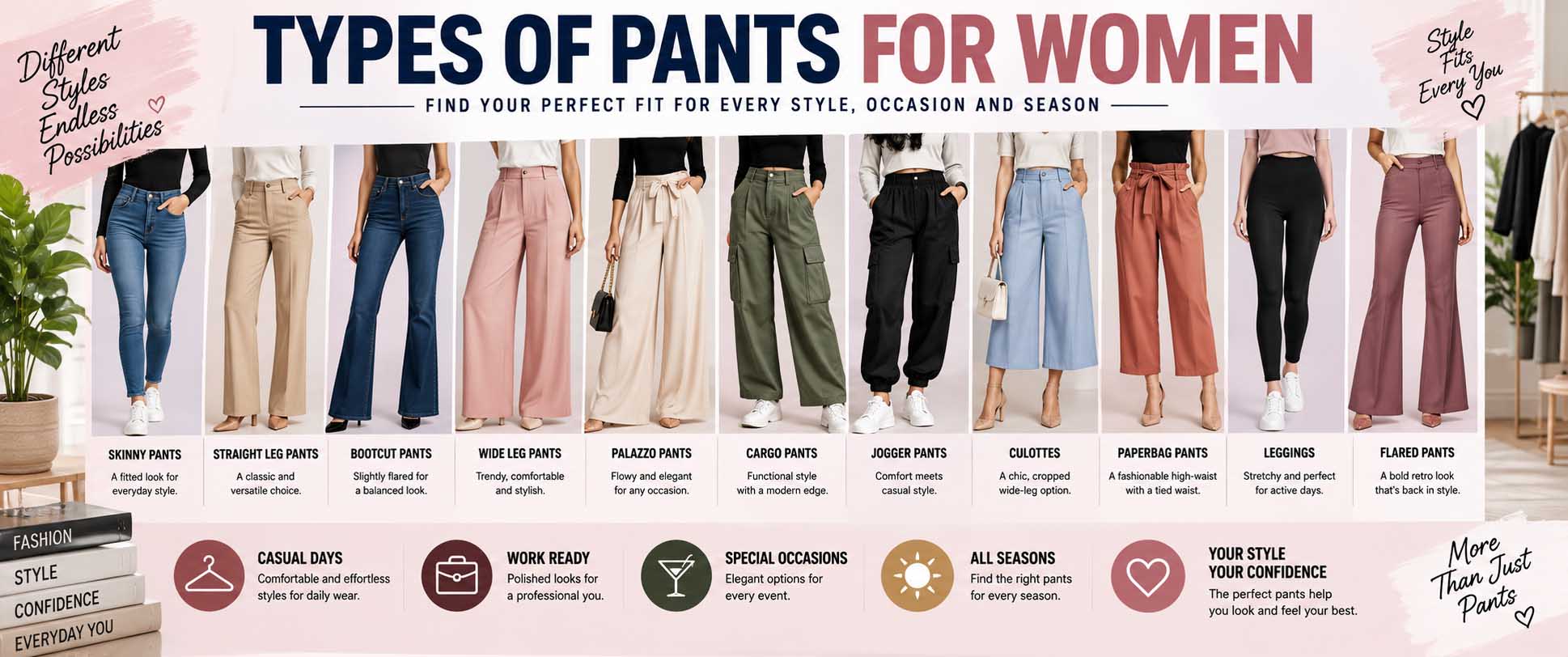
Women’s pants vary mainly by leg shape, fabric, rise, construction, and intended use. Some styles work across several settings, while others make more sense for specific occasions.
Here is a quick overview:
| Pants Style | Typical Fit | Best For |
|---|---|---|
| Straight-leg pants | Straight from hip to hem | Everyday wear, work |
| Wide-leg pants | Loose throughout the leg | Smart and casual outfits |
| Bootcut pants | Slight flare below knee | Casual and polished looks |
| Flared pants | Noticeably wider below knee | Fashion-focused outfits |
| Palazzo pants | Very wide and flowing | Warm weather, relaxed dressing |
| Cigarette pants | Slim and ankle-length | Office and smart casual |
| Cargo pants | Relaxed with utility pockets | Casual wear |
| Joggers | Relaxed with gathered ankles | Travel and leisure |
| Dress pants | Tailored | Work and formal settings |
| Leggings | Close-fitting and stretchy | Casual wear and layering |
| Culottes | Wide and cropped | Smart casual outfits |
Because sizing and terminology vary among brands, always check the actual garment measurements instead of relying entirely on the style name.
Types of Pants for Women for Everyday Wear
Everyday pants should balance comfort with versatility. Ideally, they should work with several tops and shoes so you can create different outfits without buying an entirely new wardrobe.
Straight-Leg Pants
Straight-leg pants maintain a relatively consistent width from the thigh toward the ankle. As a result, they offer a clean silhouette without fitting as closely as skinny pants or spreading as widely as flared styles.
They are one of the easiest options to style. For example, you can pair them with T-shirts, sweaters, button-downs, loafers, sneakers, or ankle boots.
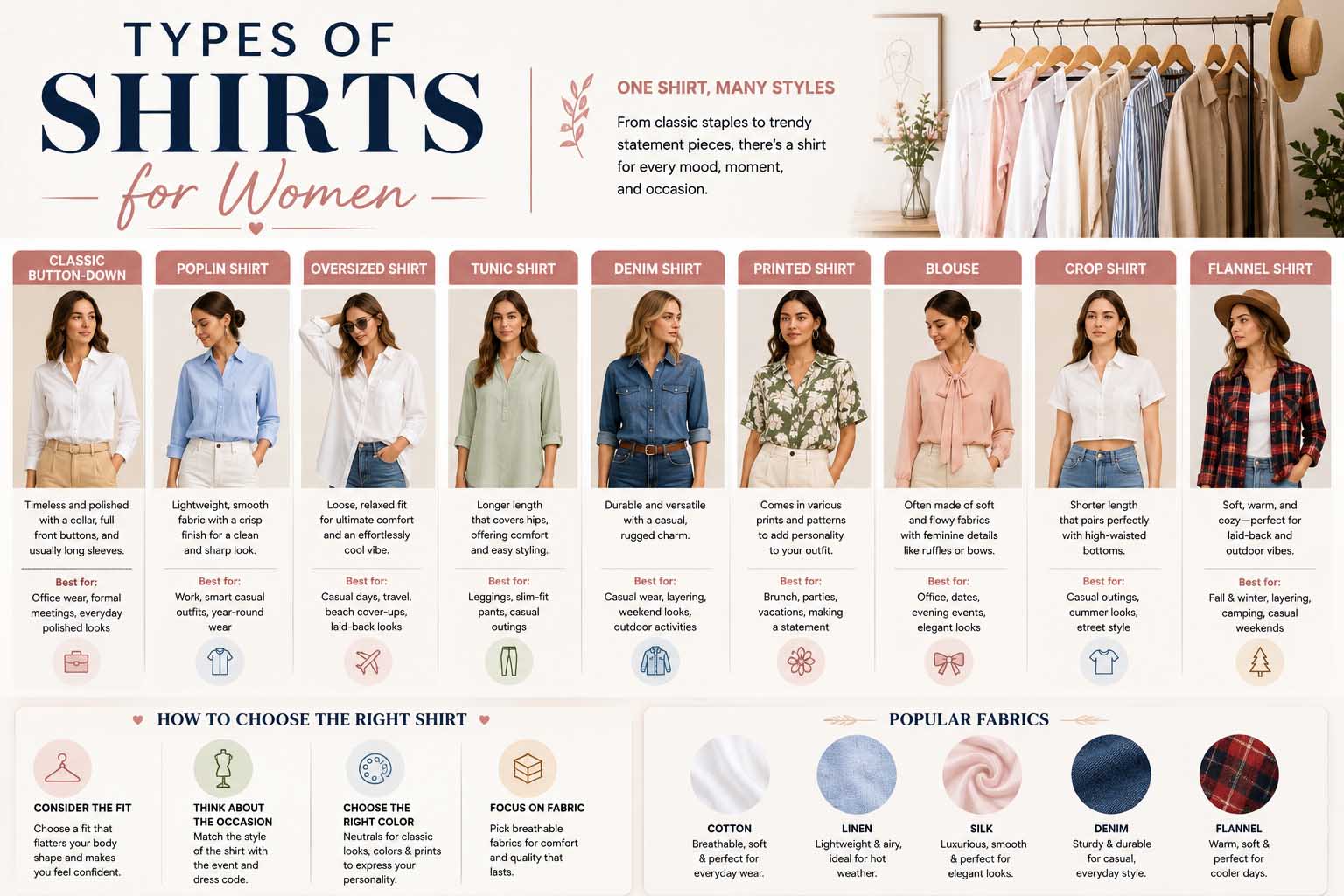
When building a versatile wardrobe, understanding types of shirts for women can also make pairing different pant silhouettes with suitable tops much easier.
Wide-Leg Pants
Wide-leg pants provide extra room through the legs and usually create a flowing silhouette. Depending on the fabric, they can look casual, professional, or dressy.
For instance, lightweight linen-blend wide-leg pants work well for warm-weather casual outfits. Meanwhile, structured wool-blend or crepe versions can suit office environments.
Pay attention to length when shopping. Since wide legs contain more fabric, a hem that is too long can drag on the floor.
Bootcut Pants
Bootcut pants fit relatively close through the hips and thighs before widening slightly below the knee. Although the style traditionally allows room for boots, it can also work with other footwear.
The flare is usually subtle, so bootcut pants can be easier to wear than dramatic flares. Therefore, shoppers who want a slightly shaped silhouette without an exaggerated hem may prefer this option.
Flared, Palazzo, and Culotte Styles
Some pants use volume as their defining feature. However, not every wide silhouette fits or moves in the same way.
Flared Pants
Flared pants become wider from around the knee downward. The amount of flare varies considerably, so some pairs look understated while others create a strong retro-inspired shape.
Before buying, check the inseam carefully. Since the hem is wide, tailoring the length can sometimes change the intended proportions of the flare.
Palazzo Pants
Palazzo pants have very wide legs that usually flow from near the waist or hip. Soft, lightweight fabrics create the loose movement associated with this style.
Consequently, palazzo pants can be comfortable during warmer weather. They also pair naturally with more fitted tops when you want to balance the volume of the lower half.
Culottes
Culottes combine a cropped length with a wide-leg shape. Depending on their construction, they may fall around mid-calf or lower.
Because the proportions are distinctive, footwear can noticeably change the outfit. Sneakers create a casual appearance, while loafers, boots, flats, or heels can make the same pants look more polished.
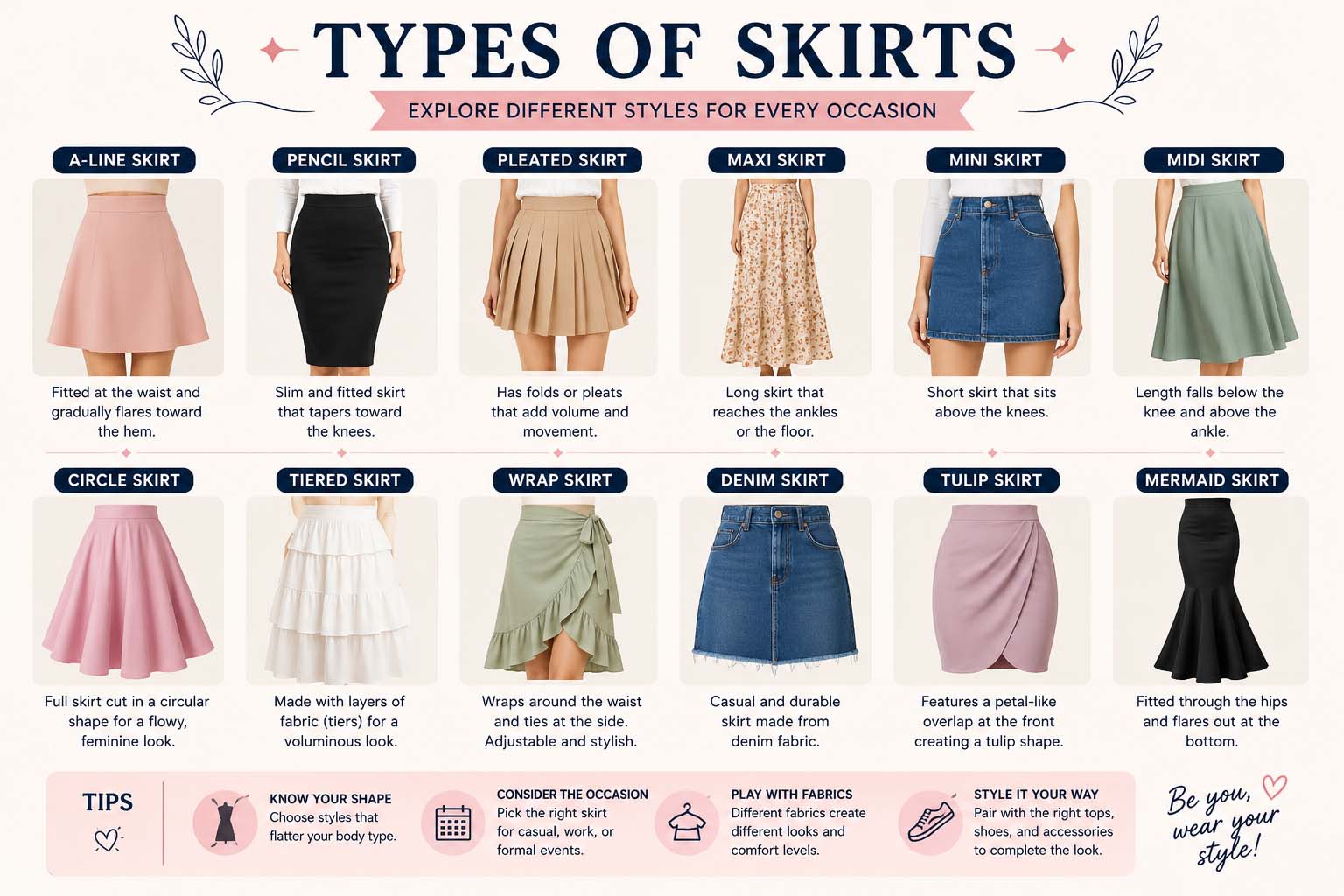
If you enjoy experimenting with different lower-body silhouettes, types of skirts can provide similar options for playing with length, volume, and occasion.
Types of Dress Pants for Women
The best types of dress pants for women usually combine a polished fabric with clean tailoring. However, “dress pants” describes a category rather than one specific cut.
Tailored Trousers
Tailored trousers often feature structured waistbands, pressed creases, darts, pleats, or neatly finished pockets. Straight, tapered, and wide-leg versions are all common.
Before purchasing, inspect the fabric composition and construction. A little stretch can improve comfort, while structured fabrics may hold their shape better throughout the day.
Cigarette Pants
Cigarette pants have a slim, relatively straight silhouette and commonly finish near the ankle. Their neat proportions make them useful for offices, dinners, and smart-casual occasions.
However, the calf and ankle measurements matter. A pair that fits comfortably at the waist may still feel restrictive through the lower leg, so check the size chart when shopping online.
Pleated Trousers
Pleated trousers include folds near the waistband that add shape and extra fabric through the upper portion of the pants. Depending on the cut, they may have tapered, straight, or wide legs.
Pleats can make trousers more comfortable when sitting because they provide additional room. Still, the effect depends heavily on fabric and construction.
Types of Work Pants for Women
Different workplaces have different dress expectations. Therefore, the right types of work pants for women depend on whether your workplace is formal, business casual, creative, or physically active.
For a traditional office, tailored straight-leg trousers, cigarette pants, and structured wide-leg pants are common options. Meanwhile, a more relaxed workplace may allow chinos, dark denim, or other casual styles.
If your workplace has a flexible dress code, guides to business casual women can help clarify how polished pants fit into a complete professional wardrobe without making the outfit overly formal.
What to Check Before Buying Work Pants
First, consider comfort while sitting. Pants that look perfect while standing may pull at the waistband or thighs after several hours at a desk.
Next, check pocket placement, fabric opacity, closures, and wrinkle resistance. These small details can make a noticeable difference during regular wear.
Finally, think about your existing wardrobe. Neutral trousers that coordinate with several blouses, knit tops, jackets, and shoes may offer more outfit combinations than a difficult-to-match statement pair.
Cargo Pants and Utility Styles
Cargo pants are recognizable by their utility-inspired design and prominent pockets, often positioned on the thighs. Modern versions range from loose casual designs to cleaner, more streamlined cuts.
Cotton and cotton-blend versions can work well for everyday outfits. Meanwhile, lightweight technical fabrics may suit travel or outdoor-inspired styling.
However, consider whether you will actually use the pockets. Large pockets add visual volume, so shoppers who prefer a cleaner silhouette may want a style with flatter utility pockets.
Types of Sports Pants for Women
The term types of sports pants for women covers several garments designed around movement, comfort, or athletic use.
Leggings
Leggings fit closely from the waist through the ankle. Everyday leggings and performance leggings may look similar, yet their fabrics and construction can differ.
For workouts, look for features suited to the activity, such as stretch, secure waistbands, appropriate coverage, and useful pockets. Meanwhile, casual leggings may prioritize softness over technical performance.
Joggers
Joggers generally have a relaxed fit and gathered or elasticized ankles. Some use soft fleece or jersey, while others use lightweight woven materials.
As a result, they can work for lounging, travel, casual errands, or certain activities depending on the fabric and construction.
Track Pants
Track pants are traditionally sportswear pieces, although many modern versions are worn casually. They may include elastic waists, side stripes, zippered pockets, or lightweight synthetic materials.
When shopping, decide whether you need actual performance clothing or simply like the sports-inspired appearance. That distinction can help you avoid paying for technical features you do not need.
Jeans and Denim Pants
Jeans deserve a place in any discussion of women’s pants because denim comes in many of the same silhouettes as trousers.
Straight, skinny, wide-leg, bootcut, flare, cropped, and relaxed jeans are widely available. Therefore, choosing denim involves both the leg shape and the fabric.
Rigid denim tends to feel firmer and may soften with wear. Stretch denim usually feels more flexible from the beginning, although the amount of stretch varies.
Check the rise as well. High-rise, mid-rise, and low-rise jeans position the waistband differently, which can affect both comfort and how tops sit over or inside the waistband.
Choosing the Right Rise and Fit
A pant style can look completely different depending on its rise.
High-rise pants sit higher on the torso, while mid-rise styles sit closer to the natural middle area between the hips and waist. Low-rise pants sit lower toward the hips.
There is no universally “best” rise. Instead, choose according to comfort, torso proportions, styling preferences, and the tops you plan to wear.
The same principle applies across types of clothing: a label such as small, medium, or large provides only a starting point because garment measurements and cuts vary between manufacturers.
Therefore, compare your measurements with each brand’s size chart whenever possible.
Fabric Matters More Than Many Shoppers Expect
Fabric affects appearance, comfort, durability, movement, and care requirements.
Cotton is common in chinos, cargos, and casual trousers because it can provide a comfortable, structured feel. Linen and linen blends are popular for warm-weather pants because of their light, airy character, although they tend to wrinkle.
Wool and wool blends commonly appear in tailored trousers, especially for cooler weather or professional wardrobes. Meanwhile, polyester, viscose, nylon, and elastane are often blended with other fibers to adjust drape, stretch, durability, or performance.
Rather than judging a fabric solely by its fiber name, read the complete composition and care label.
How to Shop for Women’s Pants Online
Online shopping becomes easier when you ignore the size number for a moment and focus on measurements.
Start with your waist and hip measurements. Then, compare them with the retailer’s chart.
Next, check the inseam. This measurement is particularly useful for full-length straight, wide-leg, bootcut, and flared pants.
Product descriptions can also reveal whether the fabric stretches and whether the fit is slim, regular, or oversized. Meanwhile, customer reviews may provide useful context about sizing, although individual experiences can vary.
If you’re shopping for professional outfits, learning how to dress business casual can also help you decide whether a particular pair of pants will coordinate with the rest of your work wardrobe.
Common Pants-Shopping Mistakes
Buying only by size is one of the most common mistakes. Since sizing differs among brands and even between styles from the same retailer, measurements provide better guidance.
Another mistake is ignoring fabric care. A beautiful pair of trousers may become inconvenient if its cleaning requirements do not match your routine.
Likewise, shoppers sometimes focus on trends without considering their existing wardrobe. Before buying, imagine at least three outfits you could create with the pants. If nothing in your closet works with them, the purchase may require several extra items.
Finally, remember the shoes. Hem length and leg shape can interact strongly with footwear, especially with wide-leg, bootcut, and flared designs.
Frequently Asked Questions
What are the most versatile types of pants for women?
Straight-leg trousers, jeans, and simple wide-leg pants are versatile because they can work with many tops and shoes. However, the best option depends on your lifestyle and usual dress code.
Which women’s pants are best for work?
Tailored straight-leg, tapered, cigarette, and structured wide-leg trousers can work well in many offices. Still, workplace dress codes vary, so choose a style appropriate for your specific environment.
What is the difference between wide-leg and palazzo pants?
Both have wide legs, but palazzo pants typically have a very loose, flowing silhouette and are often made from softer fabrics. Wide-leg trousers can be more structured and vary considerably in width.
Are cargo pants only casual?
Traditional cargo pants are generally casual, although modern streamlined versions can look more polished. Fabric, pocket design, fit, and the rest of the outfit determine the overall effect.
How many pairs of pants does a woman need?
There is no ideal number. Instead, consider your routine. Someone working in a formal office may need several tailored pairs, while someone with a casual lifestyle may rely more heavily on jeans, relaxed trousers, or activewear.
Build Your Pants Wardrobe Around Real Life
The wide range of types of pants for women gives shoppers plenty of choice, but you do not need every style. Instead, start with the situations that appear most often in your week.
Choose dependable everyday pants first, then add work, active, dressy, or fashion-focused styles as needed. Meanwhile, pay attention to measurements, fabric, rise, inseam, care requirements, and the clothes already in your wardrobe.
A pair that fits comfortably, coordinates easily, and suits your actual routine will usually earn far more wear than one purchased only because it is currently fashionable.