
Types of Metal Roofing: Materials, Styles, Costs, and How to Choose
Replacing a roof is a major home improvement decision, and choosing the right material can affect your home’s appearance, maintenance needs, and long-term expenses. Among the available options, the different types of metal roofing have become popular because of their durability, design flexibility, and relatively low maintenance requirements.
However, not all metal roofs are the same.
Some use interlocking panels with concealed fasteners, while others feature exposed screws or traditional shingle-style designs. Likewise, manufacturers offer several metals, including steel, aluminum, copper, and zinc.
Each option has advantages, limitations, and different installation requirements.
Therefore, understanding the available materials and panel styles can help you avoid paying for features your property doesn’t need.
This guide explains common metal roofing systems, their materials, approximate costs, maintenance requirements, and the key details to compare before buying.
What Are the Main Types of Metal Roofing?
Metal roofing systems generally fall into several categories based on their panel design, fastening method, and appearance.
Although many products look similar from a distance, their installation methods can differ considerably.
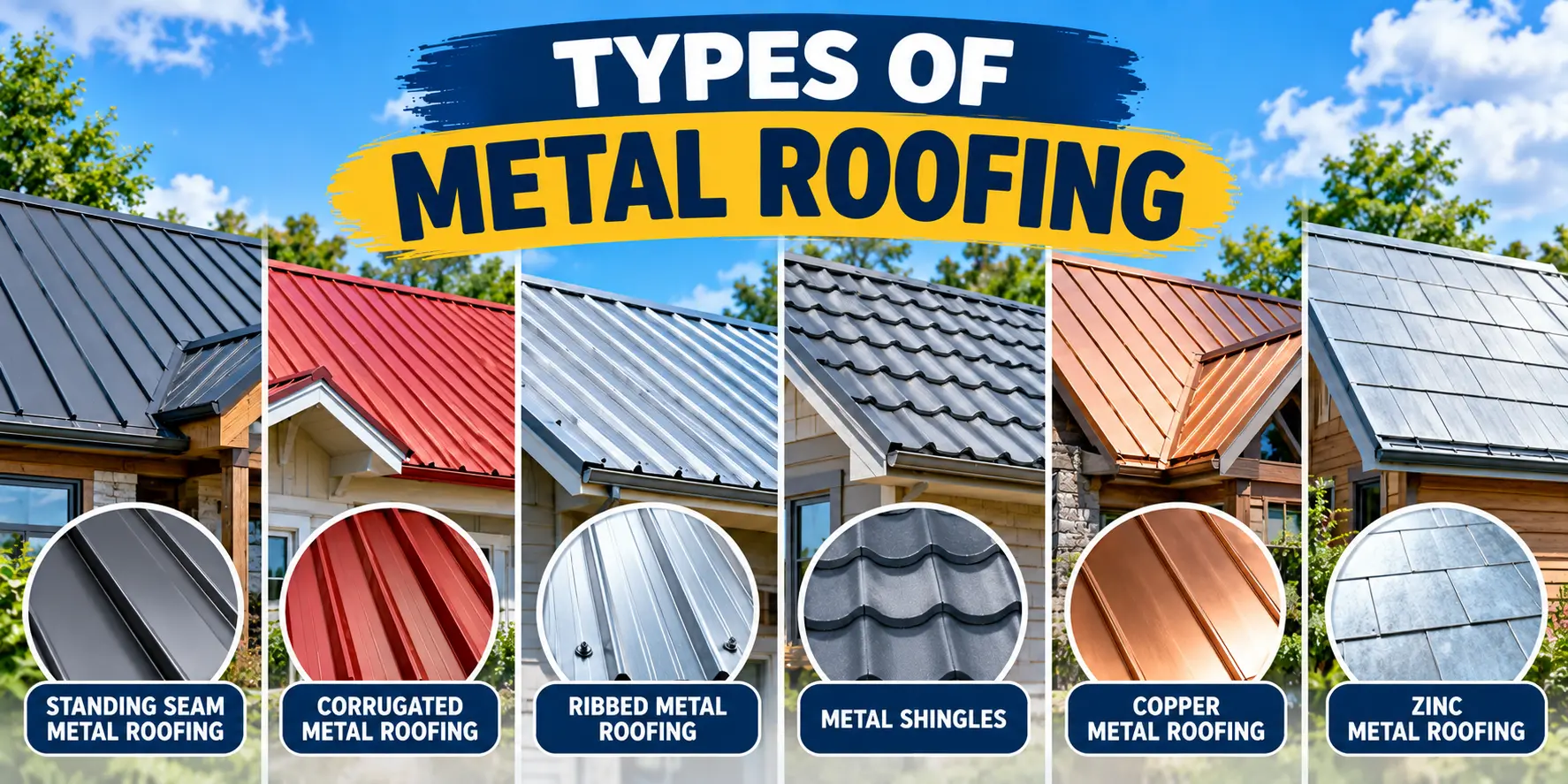
1. Standing Seam Metal Roofing
Standing seam roofing uses long metal panels connected by raised vertical seams.
Typically, the fasteners remain concealed beneath the panel connections.
As a result, the finished roof has a clean, modern appearance with fewer exposed fastening points.
Advantages:
- Attractive, streamlined design
- Concealed fastening system
- Available in several metal materials
- Suitable for many residential and commercial buildings
Disadvantages:
- Higher installation costs
- Requires experienced installers
- Not every system suits low roof slopes
Standing seam is often a good choice for homeowners prioritizing appearance and long-term performance.
2. Corrugated Metal Roofing
Corrugated roofing features repeating wave-shaped ridges that strengthen relatively thin metal sheets.
Because these panels are widely available, they are commonly used for sheds, workshops, agricultural buildings, and some homes.
Many corrugated systems use exposed fasteners.
Consequently, screws and sealing washers require periodic inspection.
Corrugated roofing is generally more affordable than premium standing seam systems.
However, installation quality and suitable coatings strongly influence performance.
3. Ribbed Metal Roofing Panels
Ribbed panels have raised rectangular or trapezoidal sections rather than rounded waves.
Common profiles include R-panel and PBR-panel designs.
These products are frequently used on commercial buildings, garages, and residential structures.
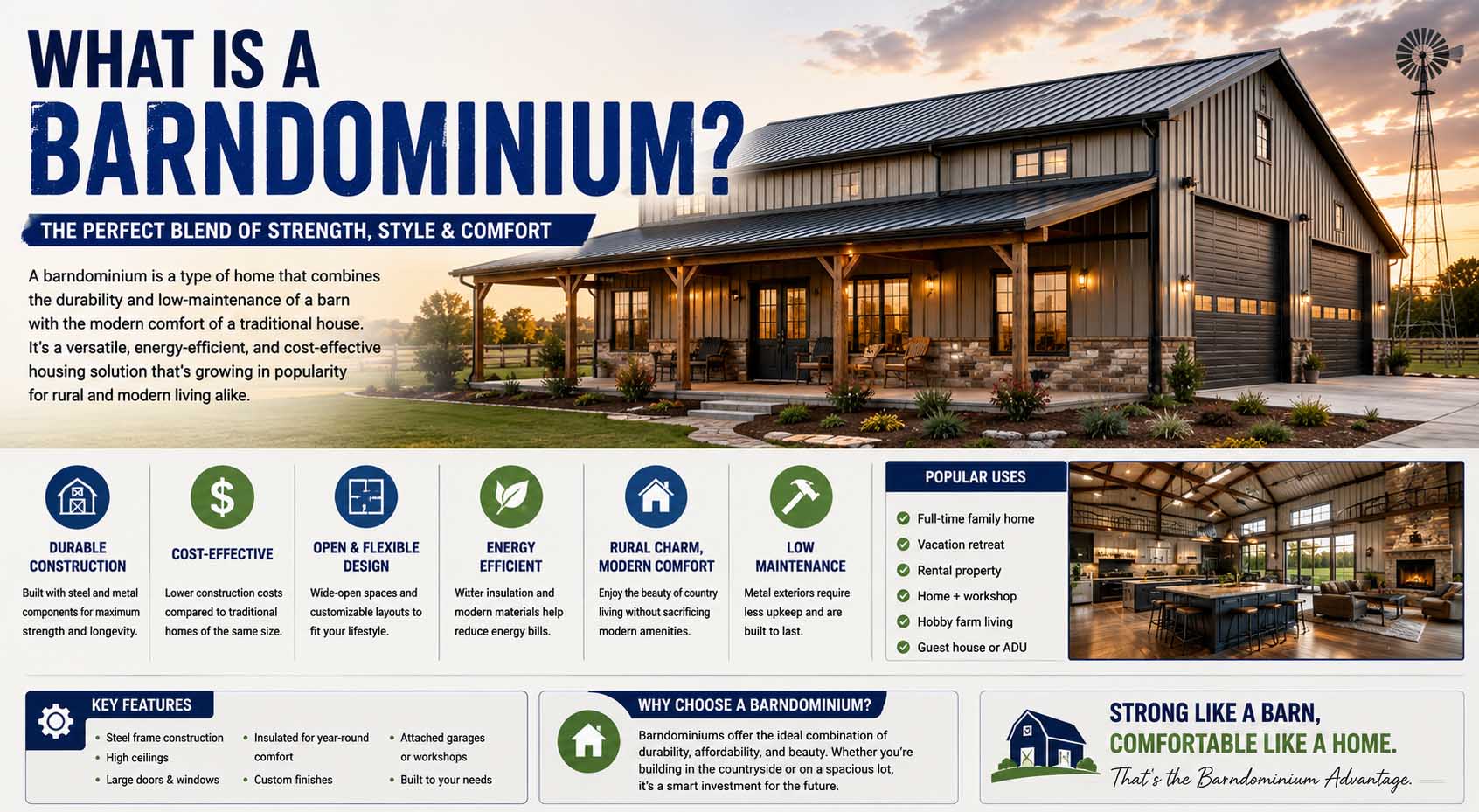
For example, metal roofing is common on certain barn-inspired houses. If you’re exploring that architectural style, understanding what is a barndominium can help you see why ribbed metal panels are often selected for these buildings.
However, buyers should confirm whether the chosen profile is approved for their roof slope and building application.
4. Metal Shingles
Metal shingles resemble traditional asphalt shingles but use formed metal pieces.
They are available in several colors and textures.
Because they offer a familiar appearance, metal shingles can suit homeowners who want metal roofing without long visible panels.
However, installation involves numerous individual components.
Therefore, labor costs may be higher than expected.
5. Metal Tiles and Shakes
Metal tiles imitate traditional clay or concrete roofing tiles.
Meanwhile, metal shakes reproduce the textured appearance of wood shakes.
Both styles offer decorative alternatives to conventional roofing materials.
However, product quality, coating durability, and installation details vary between manufacturers.
Before purchasing, request physical samples to compare appearance and finish.
Types of Metal Roofing Materials Explained
Besides panel design, the underlying metal plays a major role in durability, weight, corrosion resistance, and price.
Here are the most common metal roofing materials homeowners encounter.
Galvanized Steel Roofing
Galvanized steel has a protective zinc coating designed to reduce corrosion.
It is widely used because it balances strength, availability, and affordability.
However, damaged coatings and exposed cut edges may require attention.
Galvalume Steel Roofing
Galvalume is steel coated with an aluminum-zinc alloy.
It offers corrosion resistance in many environments and is commonly used for metal roof panels.
However, suitability depends on environmental exposure and manufacturer guidance.
Aluminum Roofing
Aluminum is lightweight and naturally resistant to rust.
Therefore, it can be attractive for coastal properties where salt exposure is a concern.
However, aluminum may dent more easily than some steel products of comparable design.
Copper Roofing
Copper offers a distinctive appearance and develops a natural patina over time.
It is commonly used for premium residential roofs and architectural details.
However, copper is expensive and requires compatible installation materials to avoid unwanted galvanic corrosion.
Zinc Roofing
Zinc is valued for its appearance, longevity potential, and naturally developing protective surface.
However, it requires suitable detailing, ventilation, and installation practices.
Consequently, zinc is generally best suited to projects with experienced roofing contractors.
Metal Roofing Materials Comparison
| Material | Main Advantage | Main Limitation | Typical Buyer |
|---|---|---|---|
| Galvanized steel | Affordable and widely available | Protective coating can deteriorate | Budget-conscious homeowners |
| Galvalume steel | Good corrosion resistance in suitable conditions | Environmental restrictions may apply | Residential and commercial buyers |
| Aluminum | Lightweight and rust-resistant | Can dent under impact | Coastal homeowners |
| Copper | Distinctive appearance | High material cost | Premium architectural projects |
| Zinc | Attractive natural finish | Specialized installation | High-end residential projects |
Although material matters, the roof’s overall performance also depends on its coating, profile, fasteners, flashing, and installation.
Different Types of Metal Roofing Panels: What Matters Most?
When comparing metal roofing panels, buyers should look beyond appearance.
Instead, focus on how the panels attach to the roof and manage water.
Concealed Fastener Panels
Concealed fastener systems hide most fasteners beneath seams or interlocking sections.
As a result, fewer fastening points remain directly exposed to weather.
However, these systems generally cost more and require careful installation.
Exposed Fastener Panels
Exposed fastener systems use screws installed through the roofing panels.
They are often less expensive and relatively straightforward to install.
However, sealing washers can age, and fasteners may require maintenance.
Therefore, exposed fastener roofing may involve more ongoing inspection than some concealed systems.
Panel Thickness and Gauge
Metal thickness affects stiffness, dent resistance, and handling.
For steel, lower gauge numbers generally indicate thicker material.
For example, 24-gauge steel is thicker than 26-gauge steel.
However, gauge conventions differ by material, and nominal measurements may vary.
Therefore, compare actual thickness specifications rather than assuming every product uses identical standards.
How Much Does Metal Roofing Cost?
Metal roofing prices vary considerably depending on material, roof design, location, and installation complexity.
For general budgeting, the following are broad approximate U.S. installed price ranges.
| Roofing Option | Approximate Installed Cost per Sq. Ft. |
|---|---|
| Corrugated steel | $4–$9 |
| Exposed-fastener ribbed steel | $4–$10 |
| Standing seam steel | $8–$16 |
| Aluminum roofing | $7–$15 |
| Metal shingles | $7–$14 |
| Copper roofing | $15–$30+ |
| Zinc roofing | $12–$25+ |
These figures are general estimates, not live contractor quotations. Actual costs vary by brand, supplier, location, project size, labor rates, and purchase date.
Roof pitch, removal of existing materials, underlayment, flashing, and ventilation work can also increase the final price.
Therefore, request detailed written estimates from multiple qualified contractors.
How to Choose the Right Metal Roof for Your Home
Choosing between the different types of metal roofing depends on your budget, local climate, roof design, and preferred appearance.
The best roofing system depends on your budget, climate, roof design, and preferred appearance.
Before buying, consider these factors.
Climate and Weather Exposure
Homes in coastal environments may benefit from roofing materials and coatings designed for salt exposure.
Meanwhile, properties in hail-prone areas should prioritize products with suitable impact-resistance ratings.
In snowy regions, roof slope, snow retention, and drainage details deserve careful attention.
However, no roofing material is completely resistant to every weather condition.
Roof Slope and Drainage
Different roofing profiles have different minimum slope requirements.
Therefore, confirm that the manufacturer approves the system for your roof’s pitch.
Also, inspect drainage details around valleys, chimneys, and roof penetrations.
Properly designed flashing and roof-edge components help direct water away from vulnerable areas.
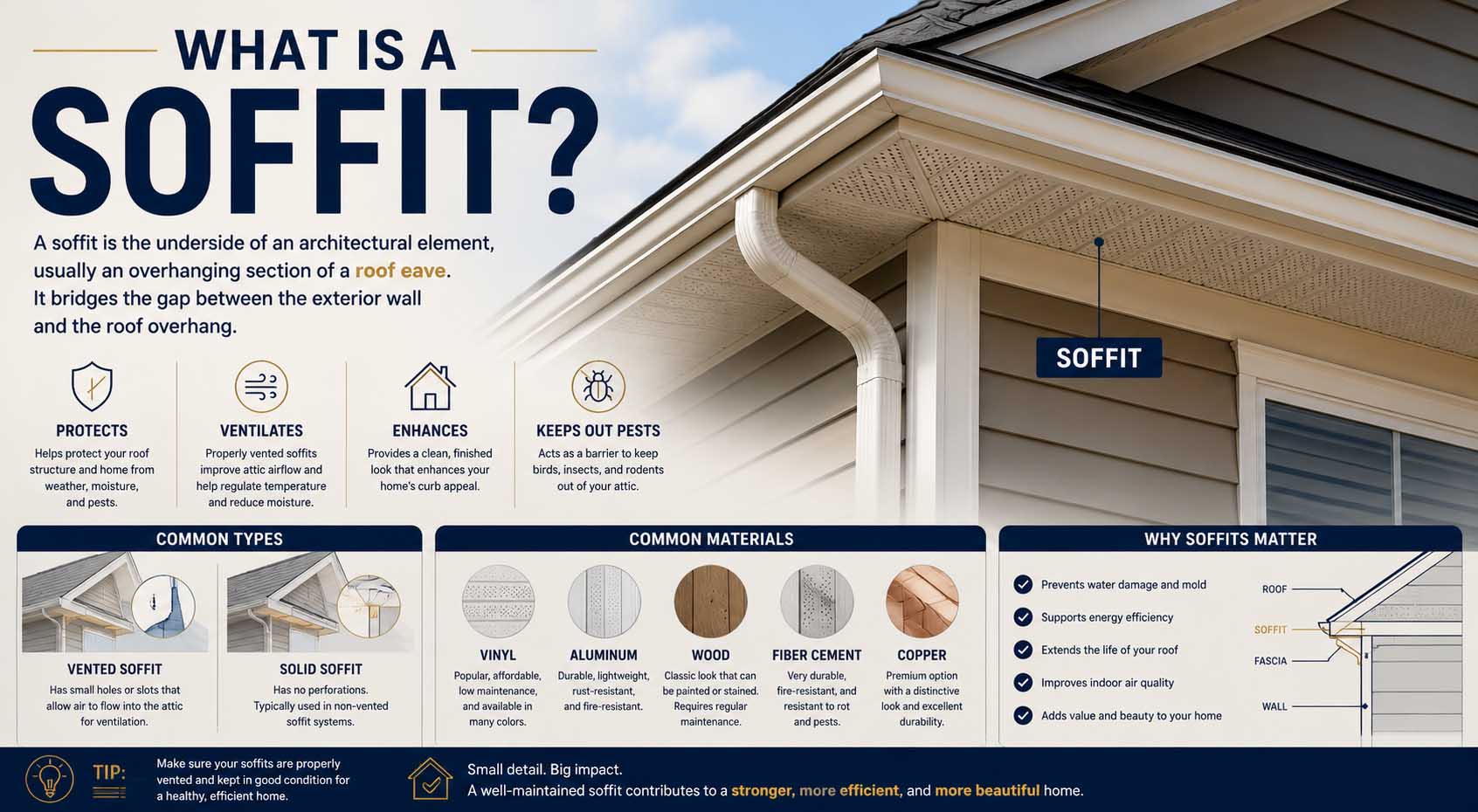
For example, homeowners researching what is a soffit can better understand how roof overhangs and ventilation components work alongside the roofing system.
Appearance and Architectural Style
Standing seam roofing often complements contemporary houses.
Meanwhile, metal shingles can suit traditional residential designs.
Corrugated and ribbed panels may work well on industrial-inspired or agricultural-style buildings.
Before deciding, compare samples under natural daylight.
Energy Efficiency and Roof Color
Roof color and surface reflectance can influence how much solar heat a roof absorbs.
For example, some reflective metal roofing products help reduce heat absorption during sunny weather.
According to the U.S. Department of Energy’s guidance on cool roofs, reflective roofing materials can help keep roof surfaces cooler under suitable conditions.
However, actual energy performance also depends on climate, insulation, ventilation, and the complete roof assembly.
Therefore, compare tested solar reflectance ratings when energy efficiency is a priority.
Warranty Coverage
Roofing warranties may cover different issues, including material defects, coating performance, or installation workmanship.
However, coverage varies significantly.
Therefore, review exclusions, maintenance requirements, transferability, and installation conditions before purchasing.
Advantages and Disadvantages of Metal Roofing
Metal roofing offers several benefits, but it isn’t the right choice for every homeowner.
Advantages
- Durability: Properly selected and installed systems can provide long service life.
- Design flexibility: Buyers can choose from numerous colors, materials, and profiles.
- Lower weight: Many metal systems weigh less than traditional concrete or clay tile roofing.
- Recyclability: Many metal roofing products contain recyclable materials.
- Maintenance: Certain concealed fastener systems may require less fastener-related maintenance than exposed fastener designs.
Disadvantages
- Higher upfront cost: Premium systems often cost more than basic asphalt shingles.
- Noise concerns: Rain noise can be noticeable depending on roof assembly and insulation.
- Dent potential: Some metals and panel designs can dent from hail or falling objects.
- Installation requirements: Complex metal roofing systems require skilled contractors.
- Thermal movement: Metal expands and contracts with temperature changes, requiring suitable installation details.
Metal Roofing Maintenance Tips
Although metal roofing is often described as low-maintenance, periodic inspections remain worthwhile.
For example, inspect the roof after severe storms when it is safe to do so.
Look for visible damage, loose components, blocked gutters, and deteriorating sealants.
In addition, remove accumulated leaves and debris from drainage areas.
For exposed fastener systems, follow the manufacturer’s recommendations for inspecting screws and washers.
However, avoid walking on the roof without appropriate training and safety equipment.
Professional inspections are usually safer, especially on steep or slippery surfaces.
Common Metal Roofing Buying Mistakes
A roofing project can become expensive when buyers overlook installation details.
Therefore, avoid these mistakes.
- Choosing only by price: The cheapest quote may exclude essential materials or preparation work.
- Ignoring roof slope: Some panels are unsuitable for low-slope applications.
- Comparing materials without coatings: Paint systems and protective finishes affect long-term appearance and corrosion resistance.
- Hiring inexperienced installers: Incorrect fastening or flashing can compromise performance.
- Overlooking ventilation: Roof assemblies need appropriate moisture and ventilation design.
- Skipping written warranties: Verbal promises may not match actual product coverage.
Instead, compare complete roofing systems and installation proposals.
Frequently Asked Questions About Metal Roofing
What Are the Most Common Types of Metal Roofing?
The most common options include standing seam panels, corrugated sheets, ribbed panels, metal shingles, and metal tiles.
Steel and aluminum are widely used materials, while copper and zinc are more specialized choices.
Which Metal Roofing Material Lasts the Longest?
Copper and zinc can offer long service lives under suitable conditions.
However, actual durability depends on climate, installation quality, maintenance, and product specifications.
Therefore, no single material guarantees the longest lifespan in every environment.
Is Metal Roofing Better Than Asphalt Shingles?
Metal roofing may offer longer service life and different aesthetic options.
However, asphalt shingles generally have lower initial installation costs.
The better choice depends on your budget, climate, and long-term plans.
What Are the Names of Different Metal Roofing Sheets?
Common sheet and panel names include corrugated panels, standing seam panels, R-panels, PBR-panels, and metal shingles.
People searching for metal roof types of roofing sheets names are often comparing these profiles rather than different metal materials.
Does Metal Roofing Make a House Hotter?
Not necessarily.
Roof temperature depends on factors such as color, solar reflectance, insulation, ventilation, and the overall roof assembly.
Some reflective metal roofing products can help reduce solar heat absorption.
Can Metal Roofing Be Installed Over Existing Shingles?
Some roofing systems allow installation over existing shingles under suitable conditions.
However, local building codes, roof condition, structural requirements, and manufacturer instructions determine whether this is appropriate.
Which Type of Metal Roofing Should You Choose?
For homeowners seeking a balance between affordability and durability, coated steel roofing is often worth comparing first.
Meanwhile, standing seam systems may appeal to buyers who prefer concealed fasteners and a modern appearance.
Aluminum can be attractive in suitable coastal environments, while copper and zinc are generally premium architectural choices.
Before purchasing, compare material thickness, protective coatings, roof slope requirements, installation methods, and warranty coverage.
Most importantly, choose a complete roofing system that matches your property rather than focusing only on the panel material.
A well-informed purchase, combined with qualified installation and routine maintenance, can help you get lasting value from your new roof.