
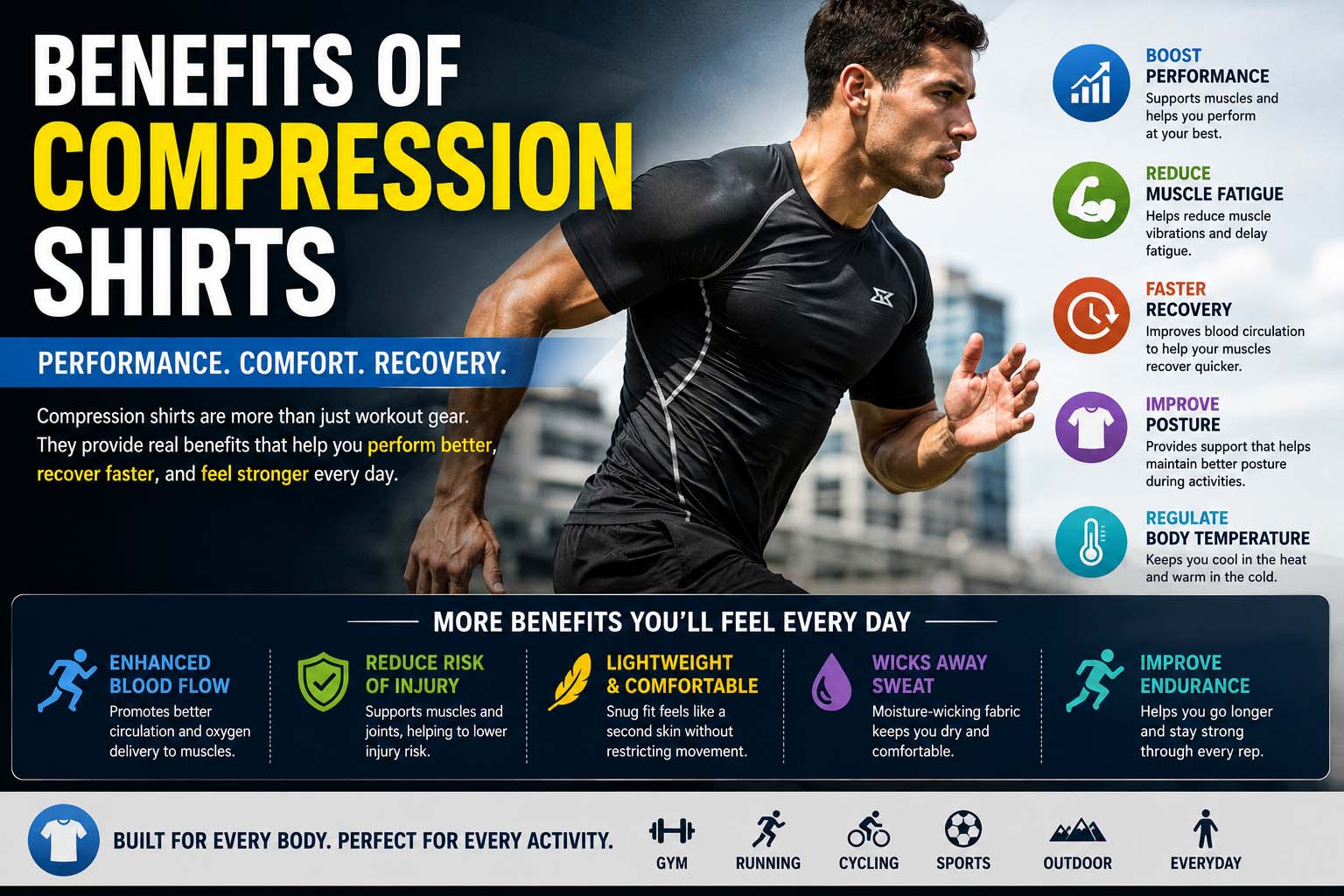
Benefits of Compression Shirts
The benefits of compression shirts include a snug, supportive fit, effective sweat management, reduced fabric movement, and comfortable layering during exercise. Whether you’re running, lifting weights, cycling, or hiking, these close-fitting garments can make physical activity more comfortable.
Walk into almost any gym or watch a marathon, and you’ll notice athletes wearing compression clothing. However, many shoppers wonder whether these shirts offer meaningful advantages or simply represent another fitness trend.
For many people, their practical value comes from thoughtful fabric design rather than dramatic performance improvements. A well-fitting shirt stays in place, moves with your body, and helps manage perspiration.
Nevertheless, compression clothing cannot replace proper training, recovery, or medical treatment.
This guide explains how compression shirts work, their advantages and limitations, and what to consider before buying one.
What Is a Compression Shirt?
A compression shirt is a close-fitting performance garment that uses stretchy materials to maintain gentle pressure against the upper body.
Manufacturers commonly combine synthetic fibers such as polyester, nylon, and elastane to create flexible athletic clothing.
Unlike loose cotton T-shirts, compression shirts fit closely without excess fabric.
However, a properly sized shirt should still allow comfortable movement and breathing.
People commonly wear them for:
- Running
- Weightlifting
- Cycling
- Team sports
- Hiking
- Fitness classes
- Outdoor work
- Everyday layering
Some designs target competitive athletes. Meanwhile, others prioritize comfort during recreational exercise or daily activities.
How Do Compression Shirts Work?
Compression shirts rely on flexible fabrics that stretch around the torso, shoulders, and arms.
Their close fit helps prevent fabric from shifting excessively during movement.
In addition, many designs include moisture-wicking materials that spread perspiration across the fabric surface to encourage evaporation.
As a result, the shirt may feel more comfortable during exercise than a heavy cotton top that retains moisture.
Gentle Pressure and a Secure Fit
Compression clothing provides a close, consistent fit.
For example, runners may appreciate a shirt that stays in place instead of bunching around the waist.
However, the garment should never feel painfully tight or restrict breathing.
Moisture-Wicking Technology
Many athletic fabrics help move sweat away from the skin.
Therefore, they can reduce the damp feeling associated with prolonged exercise.
However, moisture management depends on the fabric blend, construction, and surrounding conditions.
Stretch and Breathability
Four-way stretch allows the material to move with your body.
Meanwhile, mesh ventilation panels may improve airflow in areas that collect heat and perspiration.
Together, these features make compression shirts practical for different types of physical activity.
What Are the Benefits of Compression Shirts?
The main advantages involve comfort, moisture management, reduced fabric movement, and convenient layering.
However, individual experiences vary depending on fit, material quality, and activity.
Comfortable Support During Movement
Compression shirts maintain a snug fit around the upper body.
For example, some athletes prefer this secure feeling during running, basketball, or strength training.
In addition, the fitted design reduces loose fabric that might shift during exercise.
However, this sensation of support does not necessarily mean the shirt improves muscle strength or prevents injury.
Better Sweat Management
One of the most practical advantages is moisture control.
Quality performance fabrics can:
- Spread perspiration across the material
- Encourage faster drying
- Reduce the feeling of damp clothing
- Improve comfort during long workouts
For instance, a moisture-wicking shirt may feel more comfortable than a cotton T-shirt during an intense indoor cycling session.
Nevertheless, fabric performance varies between products.
Less Chafing From Loose Fabric
Repeated movement can cause clothing to rub against the skin.
Because compression shirts fit closely, they may reduce friction caused by shifting fabric.
This feature can be useful during:
- Running
- Cycling
- Hiking
- Rowing
- Team sports
However, seams or an excessively tight fit can still cause irritation.
Therefore, smooth stitching and accurate sizing matter.
Convenient Layering
Compression shirts work well beneath jerseys, jackets, and other athletic clothing.
Their slim design adds little bulk.
For example, a football player may wear one beneath a uniform, while a hiker may use it as a lightweight base layer.
In addition, some people prefer compression shirts beneath work clothing.
Benefits of Wearing Compression Shirts During Exercise
The benefits of compression shirts during exercise are most noticeable when clothing comfort, moisture management, and freedom of movement matter. For example, runners may appreciate reduced fabric movement, while weightlifters often prefer a secure fit that stays comfortable throughout training.
Many people notice the advantages of fitted athletic clothing during activities that involve repeated movement.
However, different workouts place different demands on clothing.
Compression Shirts for Running
Runners often prioritize lightweight fabrics, ventilation, and reduced fabric movement.
A properly fitted shirt may help prevent bunching during longer runs.
In addition, moisture-wicking materials can improve comfort when perspiration increases.
Compression Shirts for Weightlifting
During strength training, a compression shirt can remain close to the body through different exercises.
For example, it may feel less distracting during squats, presses, and pulling movements.
However, a shirt should allow unrestricted shoulder and arm movement.
Compression Shirts for Cycling
Cyclists often appreciate clothing that stays in place.
A fitted shirt may also work comfortably beneath a cycling jacket.
Meanwhile, breathable fabrics can help manage sweat during extended rides.
Compression Shirts for Team Sports
Athletes in football, basketball, and other team sports may wear compression tops beneath their uniforms.
These garments can provide a consistent base layer without adding excessive bulk.
However, comfort and league clothing requirements should guide the choice.
Exercise Clothing and Sports Nutrition
Workout clothing is only one part of an active lifestyle.
In addition, adequate nutrition, hydration, and rest contribute to training and recovery.
If you use protein supplements, you may also find is whey gluten free helpful when comparing products for specific dietary needs.
Nevertheless, compression clothing and nutrition products serve different purposes.
Benefits of Compression Shirts for Men
Men often choose compression shirts for gym workouts, outdoor sports, and physically demanding activities.
Their main advantages include:
- A close, consistent fit
- Reduced loose fabric
- Comfortable layering
- Moisture management
- Flexible movement
For example, a fitted shirt may stay securely beneath a work uniform throughout the day.
Meanwhile, recreational athletes may prefer the streamlined appearance during exercise.
However, these benefits are not exclusive to men. Women and people of different body types can also benefit from appropriately fitted performance clothing.
The most important factors are comfort, fabric quality, and correct sizing.
Health Benefits of Compression Shirts: What to Expect
Some shoppers expect compression clothing to improve circulation, reduce soreness, or increase athletic performance.
However, the evidence for these outcomes varies by garment type, compression level, and activity.
Research on compression garments does not establish that every ordinary compression shirt provides meaningful physiological benefits.
Can Compression Shirts Improve Performance?
A close-fitting shirt may improve comfort and reduce distractions.
However, that does not guarantee better speed, strength, or endurance.
For example, feeling comfortable during a run is useful, but it should not be confused with a measurable increase in running performance.
Do Compression Shirts Reduce Muscle Soreness?
Some studies have examined compression garments and post-exercise recovery.
However, results vary, and findings from compression tights, sleeves, or specialized garments do not automatically apply to ordinary shirts.
Therefore, avoid buying a compression top solely because a brand promises faster recovery.
Are Compression Shirts Medical Devices?
Ordinary athletic compression shirts are not substitutes for prescribed medical compression garments.
For example, medical compression products may have specific pressure ratings and clinical purposes.
The Cleveland Clinic’s information about compression clothing provides further context about potential benefits and limitations.
If you have a circulation condition, skin problem, or other medical concern, ask a healthcare professional before using tight garments for therapeutic purposes.
Who Should Wear Compression Shirts?
The benefits of compression shirts extend beyond professional athletes. Fitness beginners, runners, cyclists, gym members, and outdoor workers may appreciate their comfortable fit, moisture-wicking materials, and versatility during physical activity.
Compression shirts are suitable for many people who enjoy fitted athletic clothing.
Potential users include:
- Fitness beginners
- Regular gym members
- Runners
- Cyclists
- Hikers
- Team sport athletes
- Outdoor workers
- People who prefer fitted base layers
However, not everyone enjoys tight clothing.
If you prefer a relaxed fit, a standard moisture-wicking athletic shirt may be more comfortable.
Compression Shirts for Physically Demanding Jobs
Some workers wear performance shirts beneath uniforms or protective clothing.
For example, lightweight fabrics may help manage perspiration during active work.
Readers exploring physically demanding occupations may also find what is a blue collar worker useful for understanding jobs that often require practical, durable clothing.
Nevertheless, workplace safety requirements should always take priority over clothing preferences.
Important Features to Look for in a Compression Shirt
Choosing the right garment becomes easier when you understand which features affect comfort and durability.
Fabric Blend
Most compression shirts use a combination of synthetic fibers.
| Material | Main Benefit |
|---|---|
| Polyester | Lightweight fabric and moisture management |
| Nylon | Durability and a smooth feel |
| Spandex | Stretch and flexibility |
| Elastane | Elasticity and shape retention |
Spandex and elastane are names for the same type of elastic fiber.
Therefore, their appearance on different product labels does not necessarily indicate different materials.
The overall fabric blend and construction determine how the shirt performs.
Breathability
If you exercise in warm conditions, prioritize lightweight fabrics and ventilation.
For example, mesh panels can improve airflow in areas that trap heat.
However, a close-fitting shirt may still feel warmer than loose clothing in some environments.
Flatlock Seams
Flatlock stitching creates relatively smooth seams.
As a result, it can reduce rubbing during repeated movement.
This feature is particularly useful for runners and cyclists.
Four-Way Stretch
Four-way stretch allows movement in multiple directions.
For example, the shirt should move comfortably when you lift your arms or rotate your shoulders.
In addition, quality elastic fibers help the garment maintain its shape after repeated use.
How to Choose the Right Compression Shirt Fit
A compression shirt should feel snug without causing pain or restricting movement.
However, sizing varies between manufacturers.
Before buying:
- Measure your chest according to the manufacturer’s instructions.
- Compare your measurements with the official size chart.
- Check whether the product offers light, moderate, or firm compression.
- Avoid choosing a smaller size simply to increase tightness.
- Read reviews for comments about sizing and comfort.
Signs of a Proper Fit
A well-fitting shirt should:
- Stay in place during movement
- Allow normal breathing
- Permit full shoulder and arm movement
- Feel secure without painful pressure
- Avoid excessive bunching
For example, you should be able to raise both arms comfortably.
Signs That a Shirt Is Too Tight
A shirt may be too tight if it causes:
- Painful pressure
- Numbness or tingling
- Skin irritation
- Restricted movement
- Difficulty breathing comfortably
If these problems occur, remove the garment and reconsider the fit.
Compression Shirts vs. Regular Athletic Shirts
Both compression shirts and regular athletic shirts can work well for exercise.
However, they offer different fits and wearing experiences.
| Feature | Compression Shirt | Regular Athletic Shirt |
|---|---|---|
| Fit | Close-fitting | Usually relaxed |
| Moisture management | Depends on fabric | Depends on fabric |
| Fabric movement | Usually minimal | More movement possible |
| Layering | Low-bulk base layer | Depends on cut |
| Flexibility | Typically high | Varies by design |
| Best use | Fitted training and layering | General exercise and casual wear |
For example, someone who dislikes loose fabric may prefer a compression shirt.
On the other hand, someone who values airflow and a relaxed feel may choose a standard athletic top.
Neither option is automatically better for every workout.
Buying Guide: Choosing a Compression Shirt
Before purchasing, focus on your intended activity, fabric preferences, and budget.
Match the Shirt to Your Activity
Different activities benefit from different clothing features.
For example:
- Running: Lightweight fabric and smooth seams
- Weightlifting: Stretch and comfortable shoulder movement
- Hiking: Breathability and suitable coverage
- Cycling: A secure fit and moisture management
- Team sports: Comfortable layering beneath uniforms
Therefore, choose features that match how you plan to use the shirt.
Select the Right Sleeve Length
Compression shirts usually come in short-sleeve and long-sleeve designs.
Short sleeves often work well for indoor gyms and warm-weather training.
Meanwhile, long sleeves may suit cooler conditions or provide extra skin coverage.
However, sleeve length alone does not determine warmth or sun protection.
Consider UV Protection
Some outdoor performance shirts offer an ultraviolet protection factor (UPF) rating.
For example, a UPF-rated long-sleeve shirt can provide additional coverage during hiking or cycling.
Nevertheless, exposed skin still needs appropriate sun protection.
Compare Quality and Price
Compression shirts range from basic budget models to specialized premium garments.
| Price Category | Typical Features |
|---|---|
| Budget | Basic stretch fabric and simple construction |
| Mid-range | Improved stitching, comfort, and fabric options |
| Premium | Specialized materials, ventilation, or technical features |
However, a higher price does not automatically mean better performance.
Instead, compare fabric composition, fit, stitching, care instructions, and intended use.
How to Care for Compression Shirts
Proper care can help preserve elasticity and fabric performance.
For best results:
- Wash with cold or lukewarm water.
- Use mild detergent.
- Turn the shirt inside out before washing.
- Avoid bleach unless the care label permits it.
- Skip fabric softener when the manufacturer recommends doing so.
- Air-dry when practical.
- Follow the garment’s care instructions.
For example, excessive heat can damage some elastic fibers.
In addition, repeated exposure to harsh cleaning products may reduce fabric longevity.
Therefore, the manufacturer’s instructions should guide your washing routine.
Can You Wear Compression Shirts Every Day?
Yes, many people wear light-compression shirts outside the gym.
For example, they may use them:
- During travel
- Beneath work uniforms
- While hiking
- As winter base layers
- During outdoor activities
However, comfort matters more than wearing compression throughout the day.
If a shirt causes irritation or uncomfortable pressure, choose a looser garment.
Wearing Compression Shirts Under Everyday Clothing
A lightweight compression top may work as a base layer beneath casual or professional outfits.
For example, some people prefer a fitted undershirt that does not bunch beneath other garments.
If you’re planning practical work outfits, the business casual women guide offers ideas for combining comfortable layers with professional clothing.
Nevertheless, choose an undershirt that suits the temperature, outer clothing, and dress requirements.
Alternatives to Compression Shirts
Compression shirts aren’t necessary for every workout.
Depending on your preferences, consider:
- Moisture-wicking athletic T-shirts
- Loose-fit training tops
- Performance base layers
- Thermal undershirts
- Lightweight running shirts
For example, a loose moisture-wicking shirt may provide excellent comfort during a casual gym session.
Meanwhile, a thermal base layer may be more suitable for cold-weather hiking.
Therefore, the best choice depends on your activity and comfort preferences.
Common Mistakes When Buying Compression Shirts
Avoiding a few purchasing mistakes can help you find a garment that fits properly and lasts longer.
Buying the Wrong Size
A shirt that’s too tight can restrict movement or irritate the skin.
Meanwhile, one that’s too loose may not provide the intended fitted feel.
Therefore, check the manufacturer’s size chart before ordering.
Choosing Cotton for Intense Workouts
Cotton absorbs moisture and can remain damp during vigorous exercise.
In contrast, many synthetic performance fabrics dry more quickly.
However, cotton may still feel comfortable during light activity or everyday wear.
Ignoring Weather Conditions
A thick long-sleeve shirt may feel uncomfortable during hot-weather exercise.
Similarly, a very thin garment may provide insufficient warmth in cold conditions.
Therefore, consider temperature, humidity, and activity intensity.
Focusing Only on Brand Names
Recognizable brands may offer reliable products.
However, a logo cannot guarantee comfort or durability.
Instead, evaluate material quality, construction, sizing, and customer feedback.
Expecting Guaranteed Athletic Improvements
Some marketing claims suggest that compression clothing automatically improves performance.
However, comfort benefits do not guarantee measurable improvements in strength, speed, or recovery.
Therefore, prioritize realistic product features rather than exaggerated promises.
Are Compression Shirts Worth Buying?
For many people, the benefits of compression shirts make them a practical addition to an athletic wardrobe. Their close fit, moisture-wicking fabrics, and convenient layering can improve comfort during workouts and everyday activities. However, their value depends on your personal preferences, activity level, and budget.
For many people, compression shirts are a practical addition to an athletic wardrobe.
They may be worth considering if you:
- Exercise regularly
- Prefer fitted clothing
- Want effective sweat management
- Participate in sports involving repeated movement
- Need a lightweight base layer
- Enjoy outdoor activities
For example, a runner who experiences fabric bunching may appreciate a close-fitting performance shirt.
However, someone who exercises occasionally may find a regular athletic T-shirt perfectly adequate.
Therefore, choose based on comfort, activity, and budget rather than assuming compression is essential.
Frequently Asked Questions About Compression Shirts
What Are the Main Benefits of Compression Shirts?
Compression shirts offer a snug fit, moisture management, reduced loose fabric movement, and convenient layering.
In addition, some people find them more comfortable during repetitive exercise.
However, these practical advantages do not guarantee improved athletic performance.
Do Compression Shirts Help During Workouts?
They can improve comfort by staying close to the body and helping manage sweat.
For example, runners may appreciate reduced fabric movement.
However, results depend on fit, material quality, and personal preference.
Can Beginners Wear Compression Shirts?
Yes. Beginners can wear them during workouts or everyday activities.
However, choosing the correct size matters more than selecting an expensive model.
Are Compression Shirts Good for Running?
They can be useful for runners who prefer fitted clothing.
For example, moisture-wicking fabric and smooth seams may improve comfort during longer sessions.
Nevertheless, a regular technical running shirt can also work well.
Can You Wear a Compression Shirt Every Day?
Yes, provided the garment remains comfortable and does not cause irritation or restricted movement.
For all-day use, many people prefer lighter compression.
How Long Do Compression Shirts Last?
Durability depends on fabric quality, frequency of use, washing methods, and overall construction.
For example, gentle washing and air-drying may help preserve elasticity.
However, replace a shirt when it loses its fit or develops significant fabric damage.
Are Expensive Compression Shirts Better?
Not always.
Mid-range products may provide the comfort and durability you need.
Therefore, compare features and fit rather than relying on price alone.
Choosing the Right Compression Shirt for Your Needs
The benefits of compression shirts come primarily from their close fit, moisture-wicking fabrics, flexible construction, and convenient layering.
For example, runners may appreciate reduced fabric movement, while gym members may prefer the secure feel during exercise. In addition, outdoor enthusiasts can use suitable compression tops as lightweight base layers.
However, compression shirts are not guaranteed to improve athletic performance or prevent injuries.
Before buying, compare the fabric blend, fit, sleeve length, stitching, and intended use. Then, choose a garment that feels comfortable without restricting movement.
With the right fit and proper care, a compression shirt can become a useful part of your workout and everyday clothing collection.