

How to Frame a Canvas: Easy Guide for Paintings and Prints
A canvas can look finished on its own, but the right frame often gives it a cleaner, more polished appearance. If you are wondering how to frame a canvas, the process starts with measuring the artwork correctly, choosing a frame that fits the canvas depth, and deciding whether you want a traditional frame or a modern floating frame. You can buy a ready-made canvas frame, order a custom one, or build a simple wooden frame yourself.
The best choice depends on your canvas size, budget, decorating style, and DIY experience. Therefore, before buying materials, it helps to understand how each framing method works and which option suits your artwork.
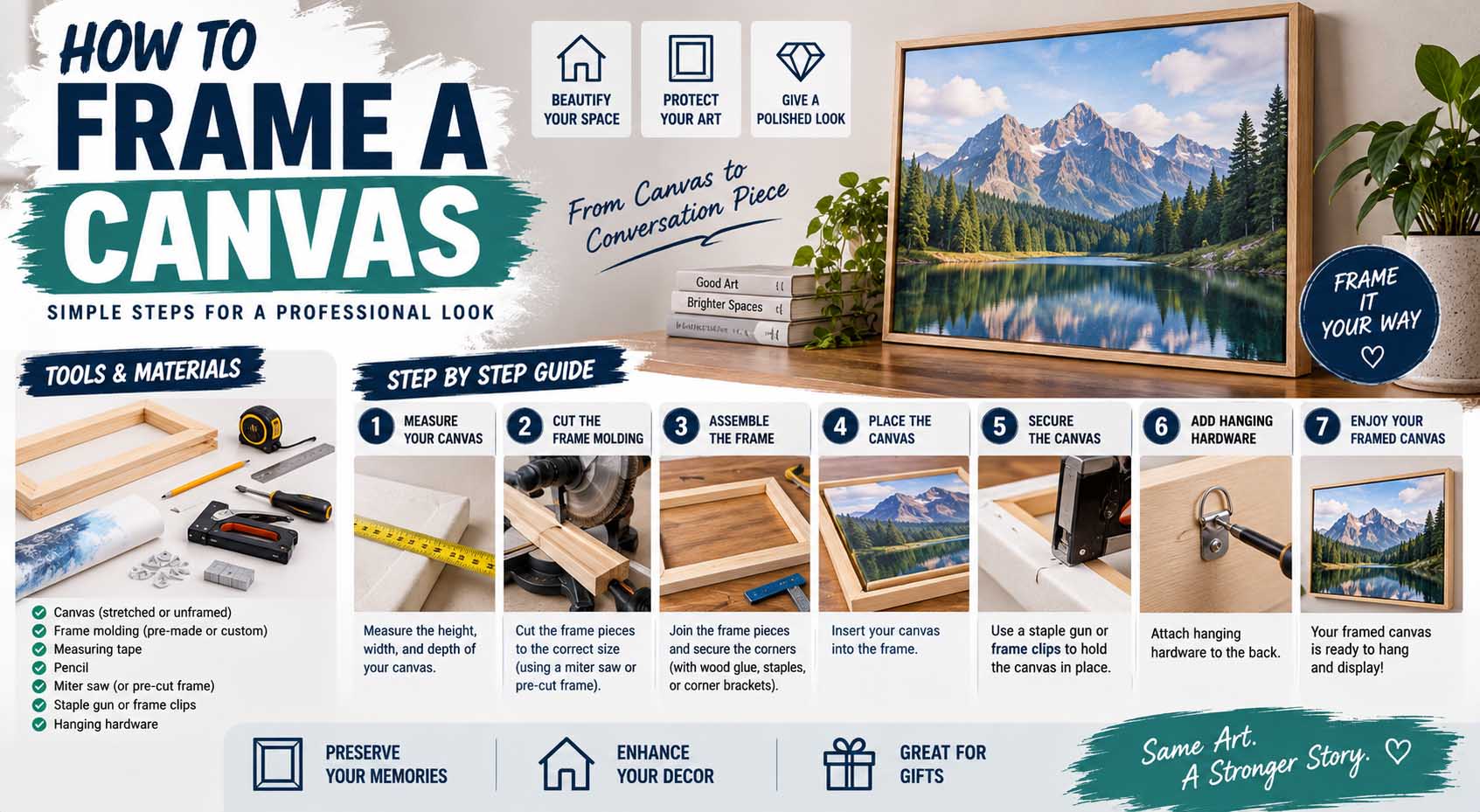
How to Frame a Canvas Step by Step
Framing a stretched canvas is usually easier than framing paper artwork because the canvas already has structural support from its stretcher bars. However, you still need accurate measurements and compatible hardware.
Start by measuring the canvas from outer edge to outer edge. Measure both its width and height, then measure its depth.
Next, choose a frame designed to accommodate that depth. Standard picture frames may be too shallow for thick gallery-wrapped canvases, so check the frame specifications before ordering.
Then, place the canvas inside the frame from the back. Depending on the frame design, secure it using canvas clips, offset clips, screws, or another manufacturer-recommended fastening system.
Finally, attach suitable hanging hardware and check that the artwork sits straight before putting it on the wall.
If you plan to paint or customize a wooden frame, learning about different types of paint can also help you choose a finish that works well with the frame material and your room’s style.
Choosing the Right Frame for Your Canvas
The frame should support the artwork without overpowering it. Therefore, consider the painting’s colors, subject, size, and the room where you plan to display it.
Meanwhile, decorative frames can complement traditional paintings, portraits, and classic interiors.
Floating frames are another popular option. These frames leave a narrow visible gap between the canvas and the surrounding frame, which creates the impression that the artwork is floating.
However, appearance is not the only consideration. You also need to check the frame’s internal dimensions and depth.
A frame advertised for an 18-by-24-inch canvas should generally correspond to the artwork dimensions it is designed to hold, but manufacturers can use different sizing methods. Therefore, always check the actual internal measurements before buying.
How to Frame a Canvas Painting
Learning how to frame a canvas painting starts with deciding whether the artwork actually needs a frame. Gallery-wrapped paintings often have finished edges and can be displayed without one. Still, adding a frame can create a stronger visual boundary between the artwork and the wall.
For an original painting, avoid choosing a frame purely because it matches the furniture. Instead, consider how its material and finish interact with the artwork itself.
For instance, a natural wood frame may complement landscapes and warm-toned paintings. In contrast, a slim black frame can work nicely with modern abstract art.
Meanwhile, ornate frames can suit certain traditional pieces, although they may look too heavy around minimalist artwork.
Older artwork requires another consideration. If you are buying or framing secondhand pieces, understanding the difference between antique and vintage items can help you evaluate the age and style of both the artwork and potential decorative frames.
For valuable original artwork, professional framing may be safer than experimenting with a DIY installation. A professional framer can recommend mounting methods that avoid unnecessary damage while helping you select an appropriate frame.
How to Make a Canvas Frame Yourself
If standard frames do not fit your canvas or you prefer a custom appearance, learning how to make a canvas frame can be a practical DIY option.
For a basic project, you will typically need wood strips, a measuring tape, saw, wood glue, suitable fasteners, sandpaper, and your preferred finishing product.
First, measure the outside dimensions of your stretched canvas. Then, decide how much clearance you want around it.
Next, cut four frame pieces according to your chosen design. Many decorative frames use 45-degree mitered corners. However, simple butt joints can be easier for beginners when the design allows them.
After cutting, dry-fit all four pieces before applying glue. This step helps you spot sizing problems before permanently joining the frame.
Once everything fits correctly, glue and secure the corners. Then, allow the frame to set according to the adhesive instructions before sanding and applying paint, stain, or another suitable finish.
Finally, position the canvas and secure it from the back with appropriate hardware.
What Wood Should You Choose?
Solid wood is a popular framing material because it is attractive, easy to customize, and available in many finishes. Pine, poplar, oak, and other woods can work depending on your budget and desired appearance.
However, not every wood-based frame uses solid lumber. Some ready-made products use composite materials.
If you encounter this terminology while shopping, understanding what is engineered wood can make product descriptions easier to evaluate. Engineered wood products are made by combining wood fibers, veneers, particles, or other wood components using manufacturing processes.
For shoppers, the key point is to check the actual frame construction rather than assuming every wood-look product is solid wood.
Likewise, listings may use terms such as MDF or manufactured wood. Knowing what is manufactured wood can help you compare lower-cost frames with solid-wood alternatives based on appearance, weight, durability, and price.
How to Make a Frame for a Canvas With a Floating Effect
If you want a modern gallery-style appearance, learning how to make a frame for a canvas with a floating gap is worth considering.
A floating frame surrounds the artwork without covering its front edges. Instead, a small gap remains visible around the canvas.
Start by measuring your canvas carefully. Then, decide how wide you want the visible gap to be. A small, consistent gap usually creates the cleanest effect.
Next, build the outer frame slightly larger than the canvas. Depending on the design, you may also need an inner support structure that holds the artwork in position.
Centering matters here. Therefore, measure the spacing on all four sides before permanently attaching the canvas.
Floating frames are especially attractive for gallery-wrapped canvases because they allow the painted or finished edges to remain visible.
However, this style requires greater measurement accuracy than a frame that overlaps the artwork slightly. Even a small alignment difference can become noticeable because the surrounding gap provides a clear visual reference.
How to Frame a Canvas Print
The method for how to frame a canvas print depends on whether the print has already been stretched.
If the print arrives stretched over wooden bars, you can usually treat it much like a canvas painting. Measure the outside dimensions and depth, then choose a compatible frame.
However, an unstretched canvas print needs extra preparation. In that situation, you may need to have the canvas stretched onto stretcher bars before using a standard canvas frame.
Some shoppers also consider placing canvas behind glazing. However, stretched canvas is commonly displayed without glass because its surface and construction differ from paper prints.
If a framing design does require glazing, there are different types of glass and acrylic products available for artwork. The best option depends on factors such as clarity, weight, protection requirements, budget, and the specific artwork being displayed.
For valuable, delicate, or sentimental pieces, ask a professional framer which materials are appropriate rather than selecting glazing based only on price.
Ready-Made vs. Custom vs. DIY Canvas Frames
Each framing approach has advantages, so your best option depends on the artwork and your priorities.
| Frame Option | Best For | Main Advantage | Main Drawback |
|---|---|---|---|
| Ready-made | Standard canvas sizes | Convenient and affordable | Limited sizes and styles |
| Custom-made | Unusual or valuable artwork | Precise fit and more choices | Usually more expensive |
| DIY frame | Budget projects and customization | Flexible design | Requires tools and time |
| Floating frame | Modern stretched canvases | Clean gallery appearance | Accurate sizing is essential |
Ready-made frames make sense when your canvas has common dimensions and you want a straightforward solution.
Custom framing is usually worth considering when the artwork has unusual dimensions, significant financial value, or sentimental importance.
Meanwhile, DIY framing works well for people who already own basic woodworking tools and want control over the material, width, and finish.
What to Check Before Buying a Canvas Frame
Do not order a frame based only on the dimensions printed on the front of the canvas. Instead, check several measurements first.
Then, compare those measurements with the frame’s internal opening and depth specifications.
Also, check whether mounting hardware comes with the frame. Some products include clips and hanging hardware, while others require you to purchase them separately.
Material matters as well. Solid wood can provide a classic appearance, while composite materials may offer a more affordable option. Metal frames can create a slimmer contemporary look.
Finally, check the frame weight and hanging requirements. A large canvas combined with a heavy frame may need stronger wall anchors or mounting hardware than a lightweight print.
Prices can vary widely depending on size, material, finish, brand, customization, retailer, and location. Therefore, compare the complete cost, including mounting and hanging hardware, rather than looking only at the frame price.
Common Canvas Framing Mistakes
Incorrect measurements cause many framing problems. Even when the canvas has a standard advertised size, measure the actual piece before ordering because small variations can occur.
Another mistake is ignoring canvas depth. A frame may have the correct width and height but still be too shallow to hold the artwork properly.
Likewise, avoid attaching screws or clips without checking their length. Hardware that is too long could extend into areas where it may damage the canvas or stretcher structure.
DIY builders should also avoid permanently joining the frame before performing a dry fit. A quick test assembly can reveal incorrect cuts while they are still easier to fix.
Finally, do not choose a frame solely because it looks attractive by itself. Instead, consider the artwork and frame together. The frame should enhance the piece rather than compete for attention.
Frequently Asked Questions
Can you put a frame around a stretched canvas?
Yes. Many frames are specifically designed for stretched canvases. However, check the canvas dimensions and depth before buying because standard photo frames may not provide enough space.
Does a canvas painting need glass?
Usually, stretched canvas paintings are displayed without traditional glass. However, conservation needs vary, especially for valuable or delicate artwork. Therefore, seek professional advice when preservation is a major concern.
Can I frame a canvas myself?
Yes. Ready-made canvas frames can make the process beginner-friendly, while a DIY wooden frame is manageable if you can measure and cut materials accurately.
What frame looks best around canvas art?
The best style depends on the artwork. Natural wood works well in many warm or casual interiors, while black or metal frames often complement contemporary art. Meanwhile, floating frames provide a clean gallery-inspired appearance.
Can I use a regular picture frame for canvas?
Sometimes, but only when the frame has enough depth and suitable mounting space. Since many picture frames are designed for thin photos or paper prints, they may not accommodate stretched canvas.
Make the Frame Fit the Artwork, Not Just the Wall
Once you understand how to frame a canvas, choosing between ready-made, custom, and DIY options becomes much easier. Start with accurate width, height, and depth measurements, then choose a frame style that complements the artwork without distracting from it.
For standard-size prints, a ready-made frame may provide the best balance of convenience and cost. Meanwhile, a floating frame can give stretched canvas a modern gallery appearance. If you enjoy woodworking, building your own frame gives you greater control over dimensions, materials, and finish.
However, valuable or irreplaceable artwork deserves extra care. In those cases, professional framing can be a sensible investment because the right materials and mounting method matter just as much as appearance.