
Is Whey Gluten Free
Many people following a gluten-free diet ask, is whey gluten free? Whey protein is a popular supplement among athletes, fitness enthusiasts, and people who want to increase their daily protein intake. However, individuals with celiac disease, gluten sensitivity, or wheat allergies need to examine supplement ingredients carefully before using them.
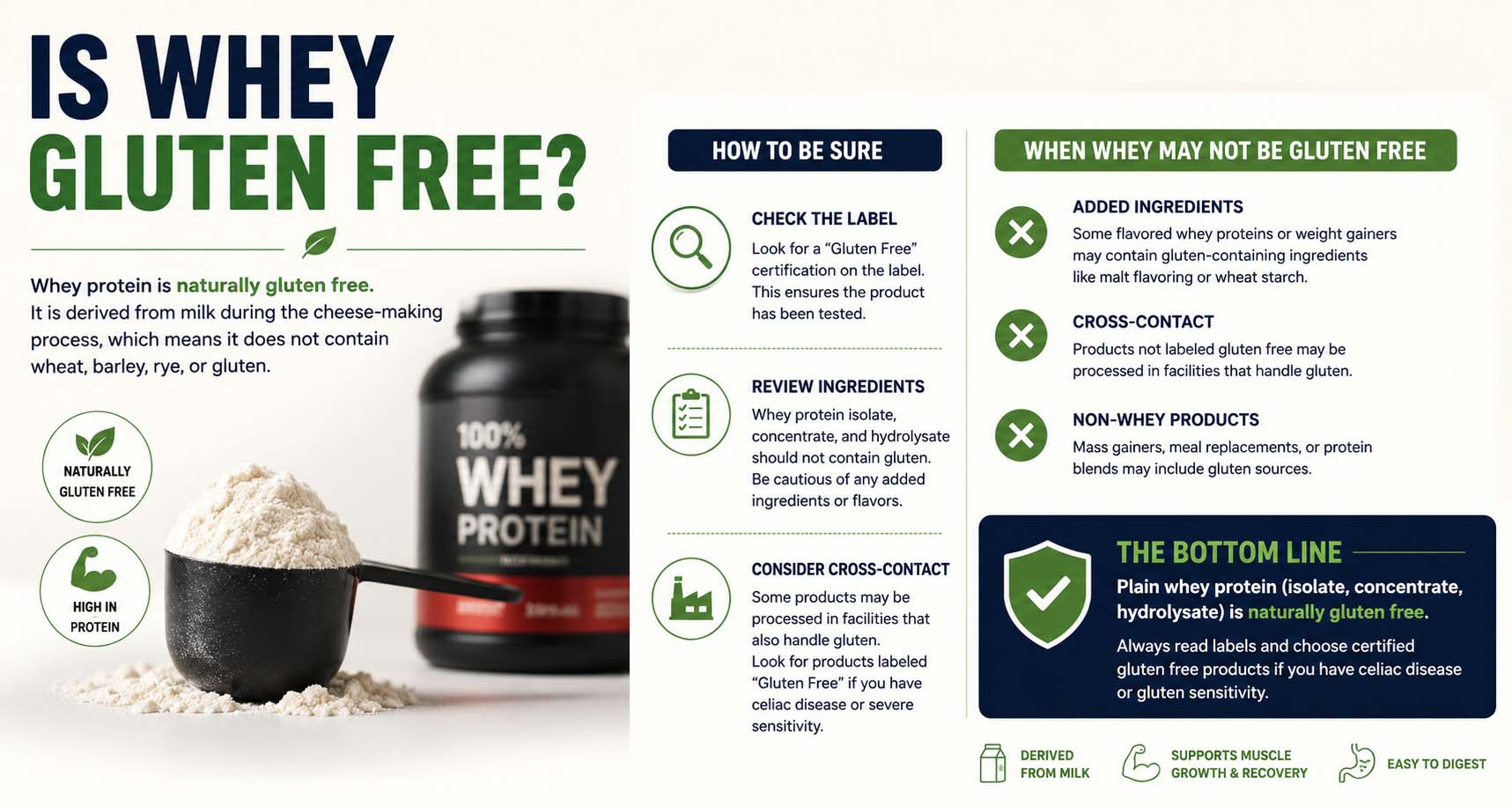
Pure whey is naturally gluten free because it comes from milk rather than wheat, barley, or rye. However, some commercial whey products contain additional ingredients that may introduce gluten. Therefore, checking labels and manufacturing information helps consumers choose suitable supplements.
Whey protein comes in several forms, including concentrate, isolate, and flavored protein powder. Although these products share the same dairy origin, their ingredients and processing methods can differ.
Understanding these differences helps people make informed purchasing decisions. Similarly, reviewing ingredient labels is useful when evaluating other packaged products, such as a margarita in a can.
Understanding Whey and Its Gluten Content
Whey is the liquid portion of milk that separates from curds during cheese production. Manufacturers process this liquid to create whey protein concentrates, isolates, and other dairy ingredients.
Because milk does not naturally contain gluten, pure whey does not contain gluten either.
Gluten is a group of proteins that occurs naturally in wheat, barley, and rye. Therefore, dairy products and gluten-containing grains belong to different food categories.
However, manufacturers sometimes combine whey with flavorings, thickeners, or other ingredients. These additions can affect whether the final product is suitable for someone following a strict gluten-free diet.
Why Pure Whey Does Not Contain Gluten
Whey contains milk proteins rather than grain proteins.
Its main protein components include beta-lactoglobulin and alpha-lactalbumin. Neither is gluten.
Consequently, unflavored whey with no gluten-containing additives is generally compatible with a gluten-free diet.
Nevertheless, consumers should distinguish between pure whey as an ingredient and a finished protein supplement containing several ingredients.
Is Whey Protein Gluten Free?
Pure whey protein does not naturally contain gluten. Manufacturers obtain it from milk and process it into a concentrated protein ingredient.
Whey protein supplies essential amino acids that support normal body functions and muscle protein synthesis. As a result, many people use it to help meet their protein requirements.
However, commercial whey protein supplements may contain additional ingredients.
For example, manufacturers sometimes add:
- Cookie or biscuit pieces.
- Barley malt ingredients.
- Wheat-containing flavoring components.
- Cereal-based inclusions.
- Other ingredients that may introduce gluten.
Therefore, consumers should examine the complete ingredient list rather than assume every whey supplement is gluten free.
How to Identify Gluten-Free Whey Protein
Start by checking the product packaging for a gluten-free claim.
Next, review the ingredient list for wheat, barley, rye, malt ingredients, and other potential gluten sources.
For people with celiac disease, third-party gluten-free certification can provide additional assurance about the manufacturer’s testing and control procedures.
In the United States, the FDA establishes requirements for foods that carry a gluten-free label. Its gluten-free food labeling guidance explains the applicable standards, including the requirement that gluten levels remain below 20 parts per million.
A gluten-free claim does not mean a product contains absolutely zero detectable gluten. Instead, it must satisfy the applicable labeling requirements.
Is Whey Powder Gluten Free?
Whey powder is generally gluten free when manufacturers produce it from milk without introducing gluten-containing ingredients.
However, consumers should understand that whey powder and whey protein powder are not always identical products.
Ordinary whey powder may contain substantial amounts of lactose and other milk solids. Meanwhile, whey protein powders undergo processing to increase their protein concentration.
Ingredients That May Affect Gluten Safety
Manufacturers sometimes combine whey powder with additional ingredients to improve flavor, texture, or functionality.
For example, flavored mixes may contain sweeteners, stabilizers, cereal ingredients, or other additives.
Although many additives are gluten free, consumers should not assume every ingredient is suitable without checking its source.
In addition, manufacturing cross-contact can occur when equipment handles gluten-containing materials.
Therefore, people who need strict gluten avoidance should select products with reliable labeling and appropriate manufacturing controls.
Using Whey Powder in Recipes
People often add whey powder to smoothies, pancakes, baked goods, and homemade protein snacks.
However, a recipe is only gluten free when all its ingredients meet the necessary requirements.
For example, adding gluten-free whey powder to regular wheat flour does not make the finished food gluten free.
Likewise, shared utensils and preparation surfaces can introduce gluten into food.
Careful ingredient checks matter in many nutrition-related discussions, including questions such as can dogs eat black beans.
Whey Protein Isolate and Gluten-Free Diets
Whey protein isolate is a highly concentrated form of whey protein.
Manufacturers use additional processing to reduce much of the fat and lactose found in whey concentrate. As a result, isolate generally contains a higher proportion of protein by weight.
However, this processing does not automatically guarantee that every finished whey isolate supplement is gluten free.
Does Extra Filtration Remove Gluten?
Whey isolate processing primarily separates milk proteins from other milk components.
Because pure whey does not naturally contain gluten, gluten removal is not the main purpose of this filtration.
Instead, gluten concerns usually arise from added ingredients or cross-contact during production.
Therefore, a flavored whey isolate can still contain gluten even though its underlying protein ingredient comes from milk.
Whey Isolate and Lactose Intolerance
Whey isolate typically contains less lactose than whey concentrate.
Consequently, some people with lactose intolerance may tolerate certain isolate products better.
However, lactose tolerance varies between individuals, and whey isolate is not necessarily lactose free.
More significantly, whey remains a milk-derived ingredient. People with a milk protein allergy should not assume whey isolate is safe simply because it contains little lactose or no gluten.
Gluten intolerance, lactose intolerance, and milk allergy are different conditions. Each requires attention to different food components.
Choosing a Safe Whey Protein Powder
Protein powders come in many varieties, including unflavored, chocolate, vanilla, and dessert-inspired products.
Although the whey ingredient itself does not contain gluten, the finished formula may include ingredients from several sources.
For example, cookies-and-cream protein powder might contain actual cookie pieces or flavoring ingredients that require closer examination.
However, a dessert-inspired flavor name alone does not prove that a product contains gluten. The complete ingredient list and reliable labeling provide better information.
Check Ingredient Labels Carefully
When evaluating a protein supplement, look for:
- A clear gluten-free claim on the packaging.
- Third-party gluten-free certification when available.
- A complete ingredient list.
- Wheat, barley, rye, and malt-derived ingredients.
- Relevant manufacturing or cross-contact information.
- Milk allergen declarations when milk allergy is a concern.
In addition, check the exact product variety. Different flavors from the same brand may contain different ingredients.
This attention to ingredients is useful in other food-related questions, including can dogs have peanuts.
Understand Manufacturing Cross-Contact
Cross-contact happens when gluten from one product unintentionally enters another product during manufacturing, storage, or preparation.
For instance, a facility may process both gluten-containing nutrition bars and whey protein powders.
Shared equipment does not automatically mean the whey powder contains gluten. However, manufacturers need suitable controls to prevent contamination.
Therefore, people with celiac disease may prefer products with clear gluten-free labeling and independent certification.
Whey Concentrate vs. Whey Isolate: Gluten Safety
Whey concentrate and whey isolate both come from milk. Consequently, neither naturally contains gluten.
However, they differ in protein concentration, lactose content, and processing.
| Feature | Whey Concentrate | Whey Isolate |
|---|---|---|
| Main source | Milk whey | Milk whey |
| Naturally gluten free | Yes | Yes |
| Protein concentration | Generally lower | Generally higher |
| Lactose content | Usually higher | Usually lower |
| Additional processing | Less extensive | More extensive |
| Gluten risk in flavored products | Depends on added ingredients and manufacturing | Depends on added ingredients and manufacturing |
Neither type automatically offers better gluten safety.
Instead, the final product’s ingredients, labeling, and manufacturing controls determine whether it is suitable for a strict gluten-free diet.
Can People With Celiac Disease Use Whey Protein?
Many people with celiac disease can include suitable whey protein products in their diets because pure whey does not contain gluten.
However, celiac disease requires careful gluten avoidance. Even small amounts of gluten can cause intestinal injury in affected individuals.
Therefore, choosing a product with a reliable gluten-free label is particularly important.
Gluten Sensitivity and Wheat Allergy
People with non-celiac gluten sensitivity may also need to avoid gluten-containing ingredients.
Meanwhile, wheat allergy involves an immune reaction to wheat proteins. It is not the same condition as celiac disease.
A product labeled gluten free may still require careful evaluation by someone with a wheat allergy, particularly if it contains wheat-derived ingredients that meet gluten-free requirements but may retain other wheat proteins.
Similarly, people with milk allergies need to avoid whey itself because it contains milk proteins.
Individuals with diagnosed food allergies or celiac disease should follow guidance from their healthcare professionals when choosing supplements.
Common Mistakes When Buying Whey Supplements
Consumers sometimes make avoidable mistakes when selecting protein products.
Assuming Every Whey Product Is Gluten Free
Pure whey does not contain gluten, but finished supplements may include gluten-containing ingredients.
Therefore, check each product individually.
Confusing Gluten With Lactose
Gluten comes from certain grains, while lactose is a sugar found in milk.
A low-lactose whey isolate is not automatically safer from gluten than whey concentrate.
Ignoring Different Product Flavors
A brand may offer a gluten-free unflavored powder alongside another formula with different ingredients.
Consequently, consumers should review the exact flavor and product version they intend to purchase.
Relying Only on Marketing Claims
Descriptions such as natural, clean, or high-protein do not establish gluten-free status.
Instead, look for specific gluten-free labeling and supporting certification where appropriate.
Conclusion
So, is whey gluten free? Yes. Pure whey naturally contains no gluten because it comes from milk rather than wheat, barley, or rye.
Whey concentrate, whey isolate, and ordinary whey powder are naturally gluten free in their pure forms. However, commercial supplements may contain additional ingredients or encounter gluten cross-contact during manufacturing.
Therefore, consumers should check product labels, review ingredient lists, and consider certified gluten-free options when strict gluten avoidance is necessary.
For people with celiac disease, gluten sensitivity, or food allergies, understanding the difference between pure whey and finished protein products helps support safer purchasing decisions.