
Difference Between Polarized and Non Polarized Sunglasses
Shopping for sunglasses can be confusing when every brand offers both polarized and non-polarized lenses. If you’re wondering about the difference between polarized and non polarized sunglasses, you’re not alone. Many shoppers assume polarized lenses are always the better choice, but that’s not necessarily true. The right option depends on how and where you plan to wear them.
Both lens types protect your eyes from harmful UV rays when they include proper UV protection. The biggest difference is how they handle glare. Understanding that distinction will help you choose sunglasses that match your lifestyle, activities, and budget.
Difference Between Polarized and Non Polarized Sunglasses Explained
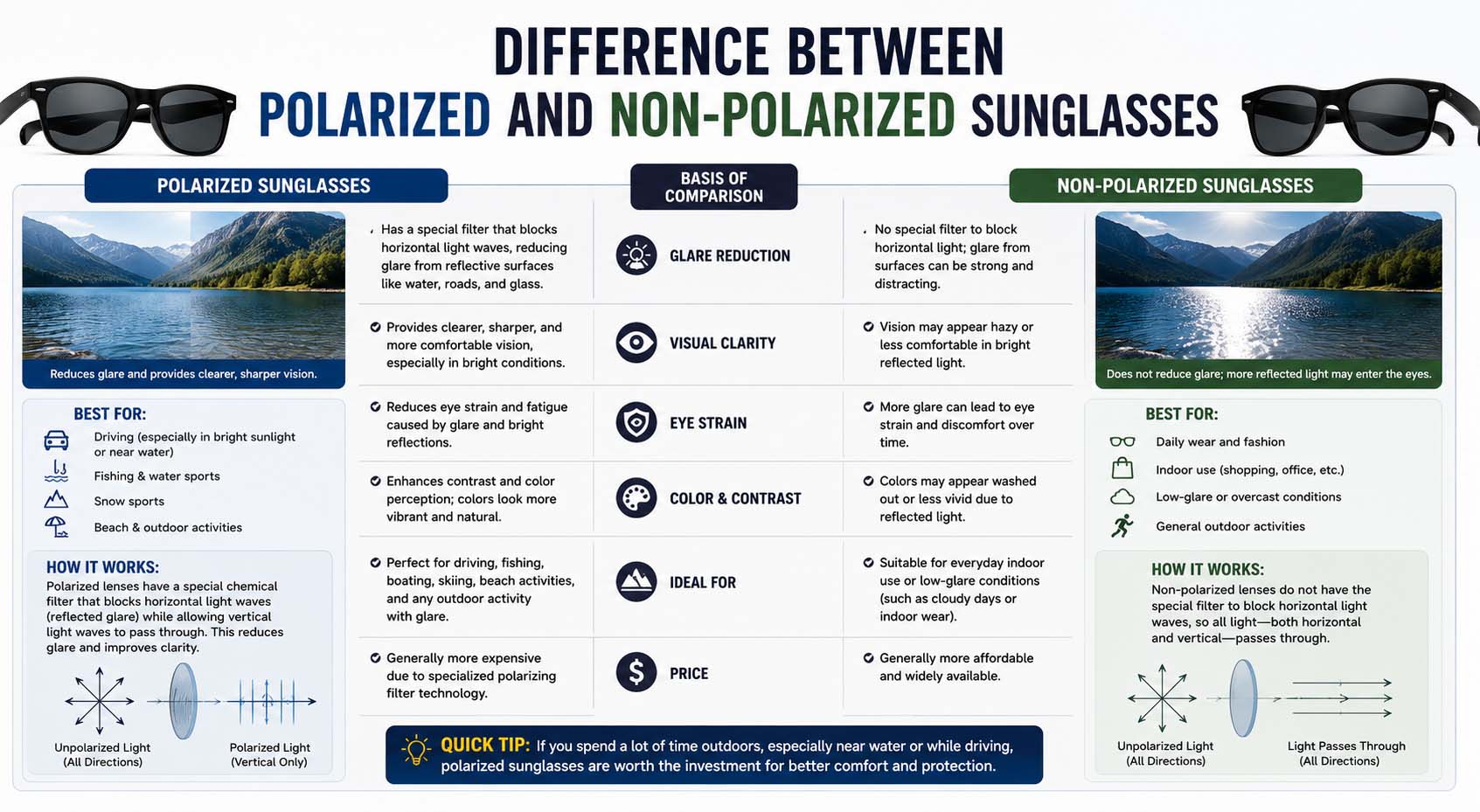
The easiest way to understand the difference between polarized and non polarized sunglasses is to look at how each lens treats reflected light.
Non-polarized sunglasses reduce overall brightness by tinting the lens. Everything appears darker, but reflections from roads, water, snow, or glass remain visible.
Polarized sunglasses include a special chemical filter that blocks horizontally reflected light. As a result, they significantly reduce glare while keeping your vision clear and comfortable.
| Feature | Polarized Sunglasses | Non-Polarized Sunglasses |
|---|---|---|
| Reduces glare | Yes | No |
| UV protection | Available | Available |
| Visual comfort | Excellent in bright conditions | Good |
| Best for water and driving | Yes | Limited |
| Digital screen visibility | Sometimes reduced | Normal |
| Usually costs | Higher | Lower |
If you’re interested in learning more about how glare reduction improves visual comfort, our guide on the benefits of polarized sunglasses explains the technology and its everyday advantages in greater detail.
How Polarized Sunglasses Work
Polarized lenses contain a microscopic filter aligned vertically.
Sunlight naturally travels in many directions. When light reflects from flat surfaces such as roads, lakes, windshields, or wet pavement, much of it becomes horizontally polarized. This creates intense glare that makes it harder to see.
The filter inside polarized lenses blocks most of this horizontal light while allowing useful vertical light to pass through.
Instead of making the world darker, polarized sunglasses make it appear clearer by reducing distracting reflections.
Common Sources of Glare
Polarized sunglasses perform especially well around:
- Water
- Snow
- Wet roads
- Vehicle windshields
- Glass buildings
- Sand
- Boat decks
Reducing glare can make outdoor activities more comfortable and less tiring for your eyes.
How Non-Polarized Sunglasses Work
Non-polarized sunglasses use tinted lenses to reduce the amount of visible light entering your eyes.
Rather than filtering reflected light, they simply decrease brightness.
This means reflections remain visible, although everything appears darker overall.
For everyday walking, casual fashion, or indoor-to-outdoor use, non-polarized sunglasses may provide all the protection many people need.
What Is the Difference Between Polarized and Non Polarized Sunglasses?
Many shoppers ask, what is the difference between polarized and non polarized sunglasses before deciding which pair to buy.
The answer comes down to glare control.
Polarized lenses reduce reflected glare while maintaining clear vision.
Non-polarized lenses mainly reduce brightness without removing reflected light.
Both can include 100% UVA and UVB protection, so UV safety depends on the lens quality rather than whether the lens is polarized.
That distinction surprises many buyers because polarization and UV protection are often confused.
Everyday Situations Where Polarized Sunglasses Shine
Polarized lenses make the biggest difference when reflections interfere with your vision.
Driving
Road glare is one of the most common sources of eye strain during daytime driving.
Polarized sunglasses reduce reflections from:
- Asphalt
- Vehicle hoods
- Windshields
- Wet roads
Many drivers find that road markings become easier to see in bright sunlight.
Fishing and Boating
Water creates intense glare, especially around midday.
Polarized lenses allow many anglers to see beneath the water’s surface more easily because surface reflections are greatly reduced.
This is one reason they’re so popular among fishermen, boaters, and other water sports enthusiasts.
Hiking and Outdoor Sports
Whether you’re hiking a mountain trail or cycling through open countryside, glare from rocks, snow, and reflective surfaces can become distracting.
Polarized lenses improve contrast and help reduce eye fatigue during long days outdoors.
When Non-Polarized Sunglasses Are a Better Choice
Although polarized sunglasses receive much of the attention, non-polarized lenses remain an excellent option for many buyers.
They work well for:
- Everyday casual wear
- Walking around town
- Fashion accessories
- Cloudy conditions
- Indoor-outdoor transitions
They’re also often more affordable, making them attractive for shoppers who simply want dependable UV protection without paying extra for polarization.
Pros and Cons at a Glance
Choosing between these two lens types becomes easier when you compare their strengths and limitations.
Polarized Sunglasses
Pros
- Excellent glare reduction
- Improved visual comfort
- Better visibility near water
- Reduced eye strain
- Ideal for bright outdoor environments
Cons
- Usually cost more
- May make some LCD screens harder to read
- Not always recommended for certain aviation applications
Non-Polarized Sunglasses
Pros
- Lower price
- Compatible with digital displays
- Suitable for general everyday use
- Wide variety of styles
Cons
- Do not reduce glare
- Less comfortable in highly reflective environments
- Eyes may tire more quickly in bright conditions
What’s the Difference Between Polarized and Non-Polarized Sunglasses for Driving?
One of the most common shopping questions is, what’s the difference between polarized and non-polarized sunglasses when driving?
For most daytime drivers, polarized lenses offer a noticeable improvement because they minimize reflections from the road and surrounding vehicles. This can make long trips feel less tiring, especially on sunny days.
That said, some vehicle dashboard displays and older LCD screens may appear darker or slightly distorted when viewed through polarized lenses. Modern digital displays have improved considerably, but it’s still worth trying a pair before purchasing if you rely heavily on in-car screens.
For shoppers who spend hours behind the wheel, this benefit often outweighs the occasional display issue.
Buying Guide: Which Sunglasses Should You Choose?
If you’re still deciding between polarized and non-polarized sunglasses, think about how you’ll use them most often. Your daily activities matter more than simply choosing the more expensive option.
Choose polarized sunglasses if you:
- Drive frequently during the day
- Spend time boating or fishing
- Enjoy hiking or cycling
- Live in an area with bright sunshine
- Want to reduce glare and eye strain
Choose non-polarized sunglasses if you:
- Mainly wear sunglasses for casual outings
- Need to view digital displays regularly
- Prefer a lower-priced option
- Want fashionable eyewear for everyday use
There isn’t a universal winner. The best choice depends on your lifestyle, budget, and personal preferences.
Lens Materials to Consider
Polarization is only one part of the buying decision. Lens material also affects comfort, durability, and optical clarity.
Polycarbonate Lenses
Polycarbonate is one of the most popular choices because it’s lightweight and highly impact-resistant.
These lenses are ideal for:
- Sports
- Children’s sunglasses
- Outdoor activities
- Travel
Glass Lenses
Glass lenses often provide outstanding optical clarity and excellent scratch resistance.
On the other hand, they are heavier than plastic alternatives and can break if dropped or struck with enough force.
Plastic Lenses
Standard plastic lenses are lightweight and affordable.
Many fashion sunglasses use plastic lenses, making them a practical option for everyday wear when impact resistance isn’t the top priority.
Choosing the Right Frame
A quality lens won’t perform well if the frame doesn’t fit properly.
Look for sunglasses that:
- Sit comfortably on your nose
- Stay secure while moving
- Cover your eyes completely
- Block light entering from the sides
- Feel balanced without creating pressure points
If you’re comparing different eyewear designs before buying, understanding the various types of glasses can make it easier to choose frames that suit your face shape, lifestyle, and comfort preferences.
Price Range: What Should You Expect?
Sunglasses are available at almost every price point.
Here’s a general guide:
| Price Range | What You Can Expect |
|---|---|
| Budget | Basic UV protection, non-polarized lenses, simple frames |
| Mid-range | Better frame quality, optional polarized lenses, improved durability |
| Premium | Advanced lens coatings, premium materials, lightweight frames, brand-specific technologies |
Prices vary depending on the brand, lens material, frame construction, retailer, and location. Paying more doesn’t always guarantee better performance, so compare features instead of focusing only on price.
Common Buying Mistakes
Many shoppers make the same mistakes when purchasing sunglasses. Avoiding them can help you find a pair you’ll enjoy wearing for years.
Assuming Polarized Means UV Protection
Polarization reduces glare, while UV protection blocks harmful ultraviolet rays.
Always check that your sunglasses provide 100% UVA and UVB protection regardless of whether they’re polarized.
Buying Based Only on Style
A fashionable frame may look great, but comfort and fit are just as important.
Poorly fitting sunglasses can slide down your nose, let sunlight enter from the sides, or become uncomfortable during long periods of wear.
Ignoring Your Daily Activities
Someone who spends weekends fishing has different needs than someone who mostly wears sunglasses while shopping or commuting.
Think about where you’ll wear them most before making a purchase.
Choosing the Cheapest Option
Low-cost sunglasses aren’t automatically poor quality, but some inexpensive models lack durable hinges, quality lenses, or reliable UV protection.
Reading product specifications is usually more helpful than judging by price alone.
How to Care for Your Sunglasses
Taking care of your sunglasses helps preserve both the lenses and the frame.
Follow these simple tips:
- Store them in a protective case.
- Clean lenses with a microfiber cloth.
- Rinse away sand or dust before wiping.
- Avoid leaving them on a hot car dashboard.
- Use lens cleaner designed for coated eyewear.
Proper care reduces scratches and helps maintain clear vision over time.
Frequently Asked Questions
What’s the difference between polarized and non polarized sunglasses?
The main difference is glare reduction. Polarized lenses filter reflected light from surfaces like water and roads, while non-polarized lenses simply reduce overall brightness.
Are polarized sunglasses worth the extra cost?
For many people, yes. Drivers, anglers, boaters, and outdoor enthusiasts often appreciate the improved comfort and reduced glare. If you mainly wear sunglasses casually, non-polarized models may offer everything you need.
Can polarized sunglasses make screens harder to see?
Yes. Some LCD screens, dashboard displays, and older devices may appear darker or show rainbow-like patterns when viewed through polarized lenses.
Are non-polarized sunglasses bad?
Not at all. Quality non-polarized sunglasses still provide excellent UV protection when properly rated. They simply don’t reduce glare as effectively.
Which option is better for everyday use?
That depends on your routine. If you’re frequently outdoors in bright sunlight, polarized lenses often improve comfort. For casual wear, shopping, or occasional use, non-polarized sunglasses are a practical choice.
Making the Right Choice
Understanding the difference between polarized and non polarized sunglasses makes shopping much easier because you can focus on the features that actually matter.
If glare from roads, lakes, snow, or bright pavement regularly affects your vision, polarized sunglasses are usually the better investment. They improve visual comfort and can make outdoor activities more enjoyable.
If your priority is everyday wear, fashion, or staying within a budget, non-polarized sunglasses remain an excellent option. Just be sure they provide certified UV protection and fit comfortably.
Instead of choosing based on marketing alone, consider where you’ll wear your sunglasses most often. Matching the lens type to your daily activities is the simplest way to find a pair you’ll be happy to use for years.