
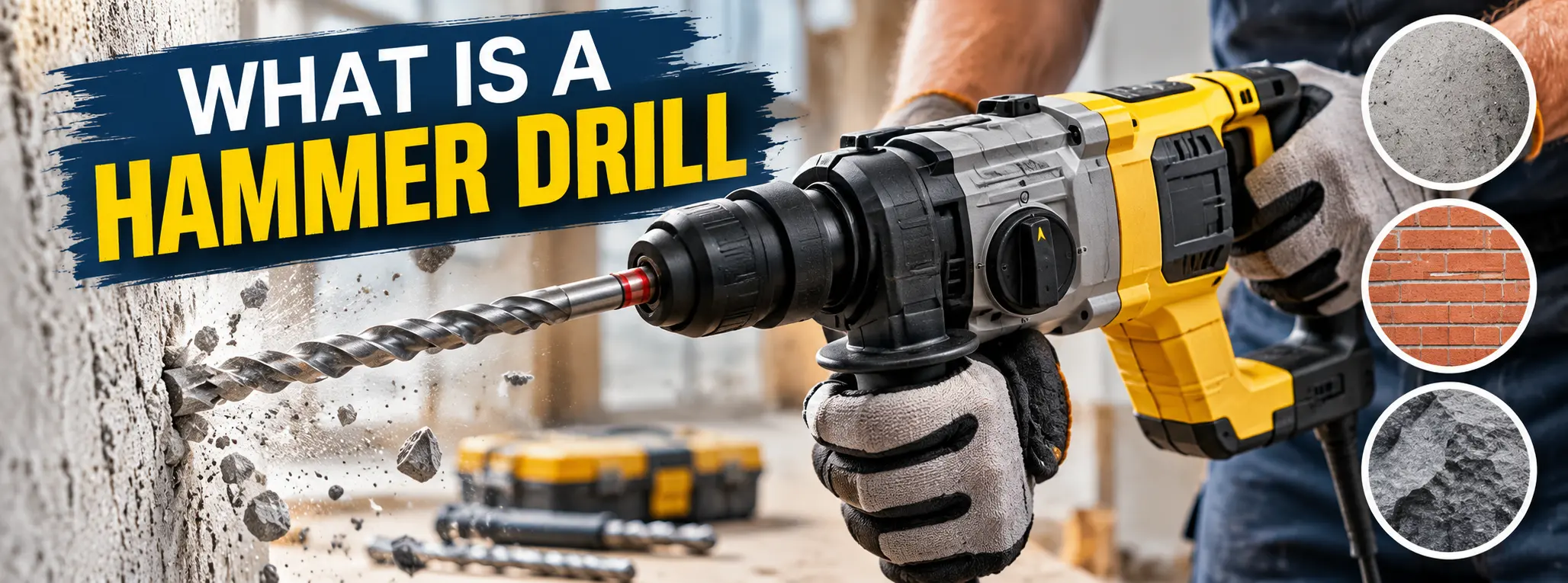
What Is a Hammer Drill? Uses, Types, and Buying Guide for Beginners
What is a hammer drill, and do you really need one for your home improvement projects? If you have ever tried drilling into brick or concrete with a regular drill, you probably noticed how difficult the job can become. A hammer drill solves this problem by combining normal drilling rotation with a rapid hammering action.
Unlike a standard drill, which mainly rotates the drill bit, a hammer drill delivers repeated forward impacts while the bit spins. As a result, it can drill into hard masonry materials more effectively.
However, not every homeowner needs this tool. Your decision should depend on the materials you work with, how often you drill masonry, and whether a regular drill can already handle your projects.
This guide explains how hammer drills work, their common uses, different types, essential features, and what to consider before buying one.
What Is a Hammer Drill and How Does It Work?
A hammer drill is a power tool designed to drill holes in hard materials such as brick, concrete, and masonry.
It looks similar to a conventional electric drill. However, its internal mechanism creates rapid forward-and-backward movement while rotating the drill bit.
This combination helps the bit break through masonry more efficiently.
Understanding the Hammering Mechanism
Most conventional hammer drills use a mechanical percussion system.
Inside the tool, two specially shaped surfaces interact to create repeated impacts as the chuck rotates.
Consequently, the drill bit experiences small forward movements that help break apart hard material.
The user still applies controlled forward pressure, while the rotating bit removes loosened debris from the hole.
Many models also allow users to turn off the hammering function.
Therefore, one tool can handle both ordinary drilling and light masonry work.
Why a Regular Drill Works Differently
A standard drill primarily uses rotational force.
Although this works well for wood, plastic, and many metals, it becomes less effective when drilling hard concrete.
A hammer drill adds impact action to improve penetration.
However, its performance depends on motor power, bit quality, and the hardness of the material.
What Is a Hammer Drill Used For?
Hammer drills are especially useful for household repairs, renovations, and construction projects involving masonry.
For example, homeowners commonly use them when installing shelves, brackets, and outdoor fixtures.
Drilling Into Brick Walls
Brick is one of the most common materials drilled with a hammer drill.
For instance, you might need holes for wall anchors when installing outdoor lights or decorative fixtures.
A suitable masonry bit helps the tool cut through the brick.
However, some older or fragile bricks may crack under aggressive hammering.
Therefore, use the appropriate drilling technique for the specific material.
Making Holes in Concrete
Concrete is harder than many common building materials.
Nevertheless, a hammer drill can handle smaller holes in suitable concrete surfaces.
For example, it may work for installing lightweight brackets or anchors.
For larger holes or frequent drilling into dense concrete, a rotary hammer is usually a better choice.
Installing Wall Fixtures
Hammer drills can also help with installing curtain brackets, wall-mounted storage, and other fixtures on masonry walls.
However, drilling into drywall usually does not require hammer mode.
For homeowners learning how to patch drywall, understanding the difference between drywall and masonry is helpful because these surfaces require different drilling methods, anchors, and repair techniques.
Which Materials Can You Drill With a Hammer Drill?
Hammer drills work best on certain hard building materials.
However, the correct operating mode matters just as much as the material itself.
| Material | Hammer Mode Recommended? | Important Consideration |
|---|---|---|
| Brick | Usually yes | Use a suitable masonry bit |
| Concrete | Usually yes | Dense concrete may need a rotary hammer |
| Mortar | Sometimes | Avoid excessive force on weak joints |
| Concrete blocks | Often yes | Hollow blocks may crack |
| Wood | No | Use normal drilling mode |
| Metal | No | Use a suitable metal-cutting bit |
| Plastic | No | Use controlled speed without hammering |
| Ceramic tiles | Generally no | Start with an appropriate tile bit and technique |
Although hammer mode improves masonry drilling, using it on the wrong surface can cause damage.
For example, hammering ceramic tiles may crack their glazed surfaces.
Similarly, hammer action is unnecessary when drilling ordinary wood.
Hammer Drill vs. Regular Drill: What’s the Difference?
The main difference between these tools is their drilling action.
A regular drill rotates its bit, while a hammer drill can combine rotation with repeated impacts.
As a result, hammer drills offer greater versatility for homeowners who occasionally work with masonry.
Quick Comparison
| Feature | Regular Drill | Hammer Drill |
|---|---|---|
| Main function | Standard drilling | Standard and percussion drilling |
| Wood drilling | Excellent | Good with hammer mode off |
| Metal drilling | Excellent with correct bit | Good with hammer mode off |
| Brick drilling | Limited | Better suited |
| Concrete drilling | Difficult | Suitable for some smaller holes |
| Weight | Often lighter | May be heavier |
| Typical cost | Often lower | May cost more |
If you mostly assemble furniture or install hardware in wood, a regular drill may be sufficient.
However, occasional brick or concrete projects can make a hammer drill worth buying.
What Is a Rotary Hammer Drill?
A rotary hammer is a heavier-duty power tool designed primarily for demanding masonry and concrete work.
Although its name sounds similar, it operates differently from a conventional hammer drill.
Instead of relying on the same mechanical percussion mechanism, a rotary hammer typically uses an electro-pneumatic impact system.
This allows it to deliver stronger impacts with less reliance on the user pressing hard against the surface.
Hammer Drill vs. Rotary Hammer
Conventional hammer drills are generally better suited to occasional, smaller masonry holes.
Meanwhile, rotary hammers are often more efficient for repeated drilling into concrete.
Many rotary hammers also support chiseling functions.
For example, a suitable model may help remove tiles or break away small sections of masonry.
However, these tools are usually larger, heavier, and more expensive.
Therefore, occasional DIY users may not need the extra capability.
What Is a Hammer Drill Bit?
A hammer drill bit is a cutting accessory designed to withstand the impact and rotation involved in masonry drilling.
Unlike ordinary wood bits, masonry bits commonly feature carbide cutting tips.
These tips help break and remove hard material during drilling.
Choosing the Right Drill Bit
The correct bit depends on the material, hole diameter, and drill type.
For example, conventional hammer drills commonly accept round-shank masonry bits in their standard chucks.
Rotary hammers, however, often use SDS-plus or SDS-max accessories.
These systems are not automatically interchangeable.
Therefore, always check your tool’s chuck or bit-holder compatibility before purchasing accessories.
Why Bit Quality Matters
Low-quality or worn bits may drill slowly and overheat.
Meanwhile, an appropriately selected bit can improve drilling efficiency and produce cleaner holes.
For best results, follow the bit manufacturer’s guidance on speed, cooling, and suitable materials.
Corded vs. Cordless Hammer Drills
One of the biggest shopping decisions involves choosing between corded and cordless models.
Both designs can perform well, although their advantages differ.
Corded Hammer Drills
Corded models receive continuous power from an electrical outlet.
As a result, they can be practical for longer drilling sessions near an available power source.
They also eliminate concerns about battery charging.
However, the power cord limits mobility and may require suitable extension-cord arrangements.
Cordless Hammer Drills
Cordless models operate using rechargeable batteries.
Therefore, they are convenient for outdoor work, quick repairs, and locations without nearby outlets.
Many modern cordless hammer drills provide enough performance for typical household masonry projects.
However, runtime depends on battery capacity, tool efficiency, and workload.
Before buying, check whether the package includes a battery and charger.
Some manufacturers sell bare tools separately.
How to Choose the Best Hammer Drill for Your Needs
The best hammer drill is not necessarily the most powerful or expensive model.
Instead, choose one that matches your projects and working conditions.
Consider Motor Power and Performance
For corded drills, manufacturers commonly describe electrical input using watts or amps.
Meanwhile, cordless models often advertise battery voltage.
However, these numbers alone do not reveal actual drilling performance.
Therefore, compare manufacturer-rated drilling capacities and independent performance reviews.
Check Chuck Size and Compatibility
Common hammer drills use chucks designed for specific maximum shank diameters.
For example, some models feature 10 mm or 13 mm chucks.
A larger chuck may accommodate larger compatible accessories, although it does not automatically mean the drill is more powerful.
Before purchasing, confirm that your intended masonry bits fit the tool.
Look for Adjustable Speed
Variable-speed control helps users start holes more accurately.
For example, slower speeds may provide better control when positioning the bit.
Meanwhile, the appropriate operating speed depends on the material and accessory.
Evaluate Comfort and Weight
A heavy drill can become tiring during extended work.
Therefore, consider grip design, balance, and overall weight.
A side handle can also improve control, especially when drilling harder materials.
Compare Safety Features
Useful features may include electronic overload protection, a mechanical safety clutch, and auxiliary handles.
However, availability varies by model.
A clutch can help limit sudden tool rotation if the bit binds, although it does not eliminate injury risks.
How Much Does a Hammer Drill Cost?
Hammer drill prices vary by brand, power source, features, and included accessories.
For general shopping guidance, approximate U.S. price ranges may look like this:
| Category | Illustrative Price Range | Best For |
|---|---|---|
| Basic corded hammer drill | $40–$100 | Occasional household masonry work |
| Midrange cordless hammer drill | $80–$200 | General DIY and portable use |
| Premium cordless hammer drill kit | $200–$400+ | Frequent use and demanding projects |
| Rotary hammer | $100–$500+ | Heavier concrete drilling |
These are broad estimates rather than verified current retailer prices. Actual costs may differ by location, brand, retailer, and purchase date.
Also, compare complete kits rather than tool-only prices.
A lower-priced cordless drill may become more expensive once you purchase compatible batteries and a charger.
Common Hammer Drill Buying Mistakes
Shoppers sometimes purchase a tool that is either too powerful or unsuitable for their projects.
For example, buying a heavy rotary hammer for occasional brick drilling may create unnecessary expense.
Likewise, choosing a basic hammer drill for frequent large concrete holes may lead to disappointing performance.
Another mistake involves overlooking accessory compatibility.
Before buying, confirm whether your preferred drill bits fit the chuck or SDS holder.
Finally, consider your complete tool collection.
Different types of saws handle cutting tasks, while drills create holes and drive suitable fasteners. Therefore, choosing tools based on their actual functions helps avoid unnecessary purchases.
How to Use a Hammer Drill Safely
Proper operation helps protect both the user and the material being drilled.
Before starting, read the tool manufacturer’s instructions and inspect the work area.
Then follow these general steps:
- Select a suitable masonry bit and confirm compatibility.
- Check the drilling location for hidden electrical wiring, plumbing, and other hazards.
- Wear appropriate eye and hearing protection.
- Use suitable respiratory protection and dust controls when required.
- Secure the workpiece when applicable.
- Select the correct operating mode and drilling speed.
- Hold the drill securely, using the auxiliary handle when provided.
- Apply controlled pressure without forcing the tool.
Drilling concrete, brick, or mortar can generate hazardous respirable crystalline silica dust. Therefore, use appropriate dust extraction and follow applicable workplace safety requirements.
For more information, review OSHA’s guidance on respirable crystalline silica in construction.
Also, avoid touching the drill bit immediately after use because it may be hot.
How to Maintain Your Hammer Drill
Basic maintenance can help keep the tool operating reliably.
First, clean dust from ventilation openings according to the manufacturer’s instructions.
Next, inspect the chuck, power cord, battery connections, and accessories for damage.
Replace worn drill bits rather than continuing to use them.
For cordless models, store batteries according to the manufacturer’s temperature and charging recommendations.
Finally, keep the tool in a dry storage area away from excessive moisture.
Frequently Asked Questions
Can a Hammer Drill Be Used as a Regular Drill?
Yes. Many conventional hammer drills include a standard drilling mode. With hammer action switched off and the correct bit installed, they can drill wood, metal, and other suitable materials.
Can a Hammer Drill Break Concrete?
A conventional hammer drill is primarily designed to create holes, not demolish concrete. For breaking or chiseling concrete, a suitable rotary hammer or demolition tool is generally more appropriate.
Do I Need a Hammer Drill for Brick?
A hammer drill is often helpful for drilling brick, especially when installing masonry anchors. However, fragile or older brick may require a more cautious approach.
Is a Hammer Drill Worth Buying for Home Use?
It can be worthwhile if you regularly install fixtures into brick, concrete, or masonry. However, a standard drill may be enough if most projects involve wood, drywall, or furniture assembly.
Can I Use Normal Drill Bits in a Hammer Drill?
Many conventional hammer drills accept ordinary compatible drill bits when hammer mode is switched off. However, masonry drilling requires suitable masonry bits, and rotary hammers may use different bit-holder systems.
Choosing the Right Hammer Drill for Your Next Project
A hammer drill is a practical addition to a homeowner’s toolkit when projects involve brick, concrete, or masonry.
However, the right purchase depends on how frequently you need its hammering function.
For occasional home improvements, a versatile cordless hammer drill may provide a useful balance of portability and performance.
Meanwhile, a corded model can make sense for users who prefer continuous electrical power.
If you regularly drill large holes into dense concrete, consider a rotary hammer instead.
Before purchasing, compare drilling capacity, accessory compatibility, comfort, safety features, and the total kit price.
By matching the tool to your actual projects, you can avoid unnecessary spending and choose equipment that remains useful for years.