
Types of Glasses: A Complete Buying Guide for Every Style and Purpose
Shopping for types of glasses can feel overwhelming at first. From prescription eyewear and sunglasses to drinkware designed for wine and cocktails, the word “glasses” covers many products with different purposes. Knowing how each type is used makes it much easier to choose the right option for your lifestyle.
Whether you’re replacing your everyday eyewear, updating your personal style, or buying glassware for your home, this guide explains the most common options in simple, practical terms.
Understanding the Different Types of Glasses
The phrase different types of glasses usually refers to two main categories:
- Eyewear for vision, protection, or fashion
- Drinking glasses designed for specific beverages
Although they serve different purposes, both categories come in a wide variety of shapes, sizes, and materials.
Before shopping, think about how you’ll use your glasses most often.
Types of Glasses for Everyday Eyewear
Eyewear has evolved beyond simple vision correction. Today’s glasses combine comfort, function, and personal style.
Prescription Glasses
Prescription glasses correct vision problems such as nearsightedness, farsightedness, and astigmatism.
When choosing prescription eyewear, pay attention to:
- Lens quality
- Frame weight
- Bridge fit
- Temple length
- Lens coatings
A properly fitted pair feels comfortable throughout the day and helps reduce eye strain.
Reading Glasses
Reading glasses magnify nearby objects, making books, phones, and computer screens easier to see.
Many over-the-counter reading glasses work well for people with mild age-related vision changes. However, prescription reading glasses may provide better comfort if your eyesight differs between each eye.
Sunglasses
Sunglasses protect your eyes from bright sunlight while improving visual comfort outdoors.
Lens color affects appearance but doesn’t necessarily indicate better protection.
If you spend a lot of time driving, fishing, or hiking, learning about the benefits of polarized sunglasses can help you decide whether polarized lenses are worth the extra cost.
Safety Glasses
Safety glasses are designed for workplaces, workshops, laboratories, and home improvement projects.
Unlike standard fashion eyewear, they use impact-resistant materials to help reduce the risk of eye injuries.
Many modern safety glasses are lightweight enough for extended use.
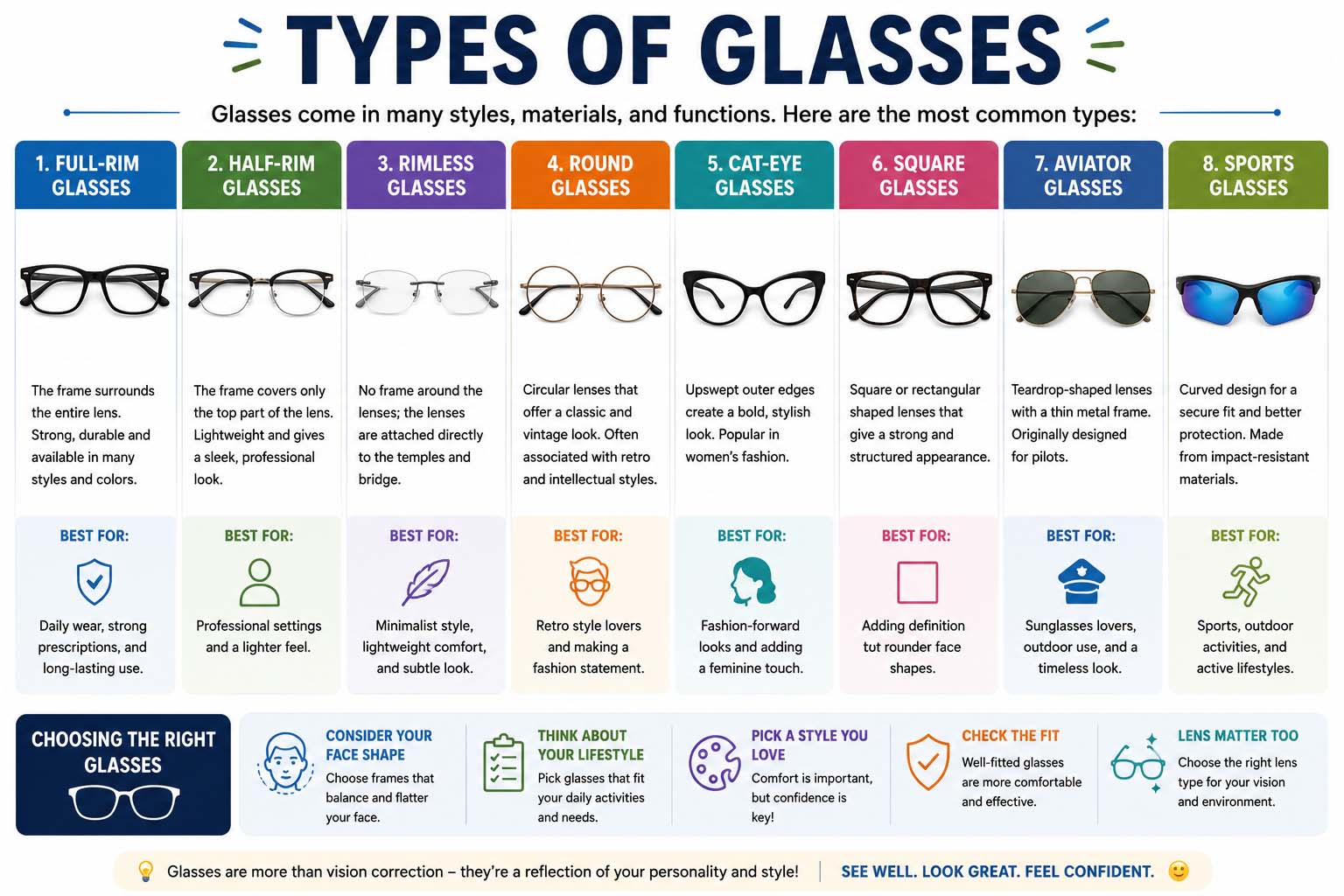
Types of Glasses Frames
Choosing among the many types of glasses frames is just as important as selecting the right lenses.
The frame affects comfort, durability, and overall appearance.
Full-Rim Frames
Full-rim frames surround the entire lens.
These frames:
- Offer excellent durability
- Protect lenses well
- Suit most prescription strengths
- Come in many materials and colors
They’re often recommended for first-time buyers because they balance strength and style.
Half-Rim Frames
Half-rim frames support only part of each lens.
They provide a lighter appearance while maintaining a professional look.
Many office workers choose this style because it pairs well with business attire. If you’re updating your wardrobe too, style guides for business casual women can help you coordinate eyewear with workplace outfits.
Rimless Glasses
Rimless glasses attach directly to the lenses without a surrounding frame.
Advantages include:
- Lightweight feel
- Minimalist appearance
- Wide field of vision
On the other hand, they may require more careful handling than full-rim designs.
Round Frames
Round glasses remain popular thanks to their classic appearance.
They often complement:
- Square faces
- Angular facial features
- Vintage-inspired fashion
Frame size matters just as much as shape, so try several options before making a decision.
Rectangle Frames
Rectangle frames create clean, modern lines.
Many people choose them because they:
- Look professional
- Suit round or oval faces
- Work well with larger lenses
This timeless design continues to be one of the most widely available styles.
Frame Materials to Consider
The material affects comfort, durability, flexibility, and price.
Common options include:
Plastic
Plastic frames are lightweight, affordable, and available in countless colors.
They’re a good choice for casual everyday wear.
Metal
Metal frames often provide a thinner, more refined appearance.
Popular materials include:
- Stainless steel
- Titanium
- Aluminum
Many shoppers appreciate their durability and sleek design.
Titanium
Titanium frames are lightweight yet very strong.
Although they usually cost more than standard metal frames, many buyers find the extra durability worthwhile.
Acetate
Acetate is a premium plastic known for vibrant colors and polished finishes.
Many designer frames use acetate because it offers greater flexibility in style and texture.
When browsing independent eyewear collections, you’ll often notice acetate frames displayed in stores that fit the description of what is a boutique, where carefully selected products take priority over large inventories.
How to Choose the Right Pair
The best glasses depend on your needs rather than current trends.
Before buying, ask yourself:
- Will I wear them every day?
- Do I need prescription lenses?
- Will I use them mostly indoors or outdoors?
- Is comfort more important than fashion?
- What’s my budget?
Answering these questions narrows your choices quickly.
Shopping Checklist for Glasses
Use this checklist before placing an order:
| Feature | Why It Matters |
|---|---|
| Correct prescription | Provides clear vision |
| Comfortable fit | Prevents pressure and slipping |
| Frame material | Affects durability and weight |
| Lens coatings | Reduce glare and scratches |
| UV protection | Helps protect eyes outdoors |
| Warranty | Adds peace of mind |
| Return policy | Makes exchanges easier if the fit isn’t right |
Comparing these features often leads to a better purchase than choosing based on appearance alone.
Budget and Price Expectations
Glasses are available at many price points.
Entry-level options may suit occasional use, while premium models often include upgraded materials, advanced lens coatings, and longer-lasting construction.
Prices vary depending on the brand, retailer, prescription complexity, frame material, and location. Rather than focusing only on cost, compare the overall value, including comfort, durability, and warranty coverage.
Types of Wine Glasses
Choosing the right glass can improve both the aroma and the drinking experience. While you can certainly enjoy wine from almost any glass, types of wine glasses are designed to suit different varieties.
Red Wine Glasses
Red wine glasses usually have a larger bowl.
The extra space allows the wine to interact with more air, which can help release aromas. Popular styles include Bordeaux and Burgundy glasses.
White Wine Glasses
White wine glasses have a smaller bowl than red wine glasses.
Their shape helps maintain cooler temperatures while directing delicate aromas toward the nose.
Sparkling Wine Glasses
Champagne flutes and tulip glasses are common choices for sparkling wines.
Their tall, narrow shape helps preserve bubbles longer than wide glasses.
Universal Wine Glasses
If you prefer a single set for many occasions, universal wine glasses are a practical choice.
They work well with most red, white, and rosé wines without taking up extra cabinet space.
Types of Cocktail Glasses
If you enjoy entertaining guests, understanding the types of cocktail glasses can help you serve drinks in a way that matches their presentation.
Some of the most common options include:
- Martini glass: Wide bowl with a long stem for martinis and similar cocktails.
- Highball glass: Tall and narrow for mixed drinks with ice.
- Lowball (rocks) glass: Short and sturdy for whiskey and spirit-forward cocktails.
- Coupe glass: Rounded bowl often used for classic cocktails.
- Hurricane glass: Curved shape designed for tropical beverages.
- Margarita glass: Wide rim that makes it easy to add salt or sugar garnishes.
While the right glass enhances presentation, it isn’t essential for enjoying your favorite drink. Choose pieces that match your entertaining style and storage space.
Comparing Common Types of Glasses
The table below provides a quick overview of popular options.
| Type | Best For | Key Benefit |
|---|---|---|
| Prescription glasses | Everyday vision correction | Clear, customized vision |
| Reading glasses | Close-up tasks | Magnifies small text |
| Sunglasses | Outdoor use | UV protection and comfort |
| Safety glasses | Work and DIY projects | Impact resistance |
| Wine glasses | Wine service | Enhances aroma and presentation |
| Cocktail glasses | Mixed drinks | Designed for specific beverages |
This comparison makes it easier to identify which style best suits your needs before shopping.
Caring for Your Glasses
Proper care helps both eyewear and drinkware last longer.
Eyewear Care
Follow these simple habits:
- Clean lenses with a microfiber cloth.
- Use lens cleaner instead of household glass cleaners.
- Store glasses in a protective case.
- Avoid placing lenses face down.
- Tighten loose screws when needed.
Taking a few moments to care for your glasses can help prevent scratches and extend their lifespan.
Glassware Care
For drinking glasses:
- Wash delicate pieces by hand when recommended.
- Avoid sudden temperature changes.
- Dry with a lint-free towel.
- Store stemware securely to reduce the risk of chips.
Always check the manufacturer’s care instructions, as some glassware is dishwasher safe while others require hand washing.
Common Shopping Mistakes
Buying glasses is easier when you know what to avoid.
Choosing Style Over Comfort
A fashionable frame isn’t a good purchase if it feels uncomfortable after an hour of wear.
Always prioritize fit along with appearance.
Ignoring Frame Size
Frame width, bridge size, and temple length all affect comfort.
Even attractive frames may not fit properly if the measurements are wrong.
Buying Without Considering Lifestyle
Someone who spends most of the day outdoors has different needs than someone working in an office.
Think about where and how you’ll use your glasses before making a decision.
Overlooking Material Quality
Premium materials often cost more, but they may offer better durability and comfort over time.
Compare construction quality instead of focusing only on price.
Vintage-inspired frames can also be appealing, but understanding the difference between antique and vintage can help you shop with more confidence if you’re considering older or retro-style eyewear.
Choosing Glasses That Match Your Style
Glasses are both functional and fashionable, so it’s worth thinking about how they’ll fit into your wardrobe.
Neutral frame colors like black, tortoiseshell, gray, and clear are easy to pair with many outfits. If you enjoy changing your look, having more than one pair can be practical.
For example, many shoppers coordinate their eyewear with different types of shirts, choosing classic frames for formal clothing and bolder styles for casual outfits.
Frequently Asked Questions
What are the main types of glasses?
The most common categories include prescription glasses, reading glasses, sunglasses, safety glasses, wine glasses, and cocktail glasses.
Which frame material is the most durable?
Titanium is known for being lightweight, strong, and resistant to corrosion. Stainless steel and quality acetate are also durable choices for everyday wear.
Are expensive glasses always better?
Not necessarily. Higher-priced glasses often include premium materials or advanced lens options, but the best choice depends on your prescription, comfort, budget, and intended use.
Can one pair of glasses work for every situation?
Some people use a single pair every day, while others prefer separate glasses for reading, computer work, sports, or outdoor activities. Your lifestyle should guide your decision.
How often should glasses be replaced?
There’s no fixed schedule. Replace them when your prescription changes, the frames become damaged, or the lenses show wear that affects vision or comfort.
Make Your Choice with Confidence
Understanding the types of glasses helps you shop more confidently, whether you’re buying eyewear for daily use or glassware for entertaining. By comparing frame styles, materials, intended uses, and overall value, you can narrow your options without feeling overwhelmed.
Take your time, compare features instead of focusing only on price, and choose glasses that suit your lifestyle. A thoughtful purchase is more likely to provide comfort, durability, and satisfaction for years to come.