
Types of Diamonds: A Complete Guide to Diamond Types, Cuts, and Buying
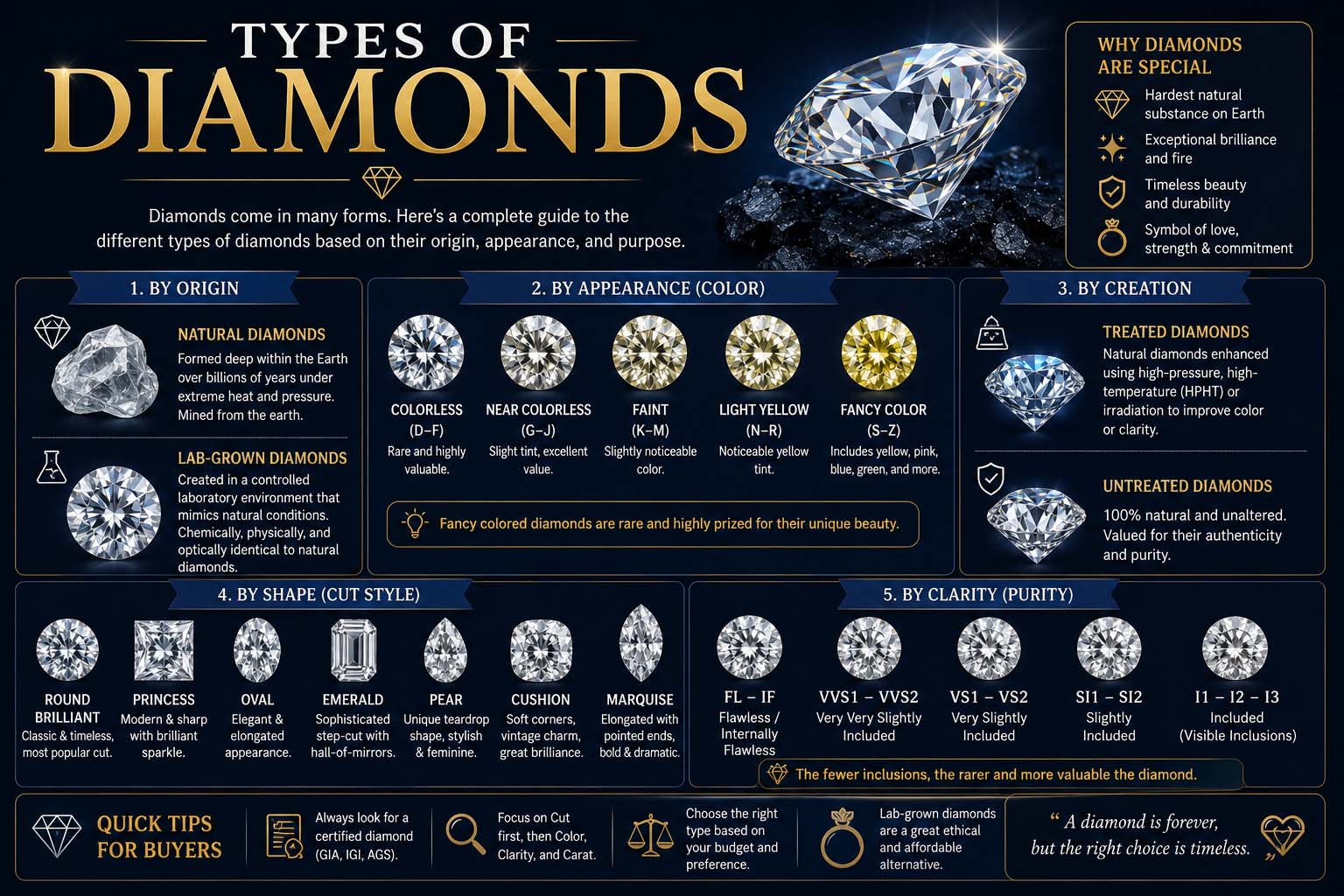
Understanding the different types of diamonds can make jewelry shopping easier, especially when comparing natural diamonds, lab-grown stones, colored diamonds, and popular shapes. Each option has distinctive characteristics that influence its appearance, price, and suitability for different jewelry styles.
However, diamond terminology can initially seem confusing. For example, jewelers use terms such as cushion cut, clarity grade, carat weight, and fancy color to describe different features.
Fortunately, you don’t need extensive gemstone knowledge to make an informed decision. Once you understand the differences, you can compare options based on your budget, preferences, and intended use.
This guide explains diamond varieties, popular shapes, cushion cuts, quality factors, pricing considerations, and practical buying tips.
Types of Diamonds: Quick Comparison
Diamonds can be classified by origin, color, and treatment. However, these categories are not mutually exclusive. For example, a lab-grown diamond may also be colored or treated.
| Diamond Type | Best For | Typical Price Level | Main Characteristic |
|---|---|---|---|
| Natural Diamond | Traditional jewelry | Generally higher | Forms naturally within the Earth |
| Lab-Grown Diamond | Value-conscious shoppers | Generally lower | Grows in a laboratory |
| Colored Diamond | Distinctive jewelry | Varies widely | Displays noticeable color |
| Treated Diamond | Certain budget-conscious purchases | Often lower than comparable untreated stones | Appearance changes through treatment |
Although this comparison provides a starting point, individual diamond prices depend on several additional factors.
Types of Diamonds: What Are They and How Are They Classified?
Diamonds are gemstones composed of carbon atoms arranged in a distinctive crystal structure. Natural diamonds form deep within the Earth under high pressure and temperature.
Because of their exceptional hardness and attractive appearance, diamonds are popular in many jewelry designs.
Common uses include:
- Engagement rings
- Wedding bands
- Earrings
- Necklaces
- Bracelets
- Luxury watches
Although diamonds share the same basic crystal structure, their appearance and value can differ considerably.
For example, origin, color, clarity, cut quality, and carat weight all influence how buyers compare individual stones.
Therefore, understanding diamond classifications helps shoppers make more meaningful comparisons.
Different Types of Diamonds by Origin and Appearance
Jewelry buyers commonly encounter natural, laboratory-grown, colored, and treated diamonds.
However, each category describes a different characteristic.
Natural Diamonds: Earth-Formed Gemstones
Natural diamonds form through geological processes deep within the Earth. After mining, manufacturers typically cut and polish the rough stones before jewelers offer them for sale.
Potential advantages include:
- Natural geological origin
- Traditional appeal
- An established resale market
- Availability through many jewelry retailers
However, natural diamonds generally cost more than comparable laboratory-grown diamonds.
In addition, environmental and social considerations can vary according to mining practices and sourcing arrangements.
For buyers who value geological origin and traditional jewelry, natural diamonds remain a popular choice.
Lab-Grown Diamonds: Laboratory-Created Stones
Laboratory-grown diamonds develop in controlled environments using technologies that support diamond crystal growth.
Unlike diamond simulants, these stones have essentially the same chemical composition and fundamental physical properties as natural diamonds.
Potential advantages include:
- Generally lower purchase prices
- Larger stones within certain budgets
- Availability across different quality grades
- Controlled production conditions
However, laboratory-grown diamonds may have different resale characteristics from natural stones.
In addition, some buyers prefer natural diamonds because of their geological origin.
Specialized gemological equipment can distinguish natural diamonds from laboratory-grown stones.
Colored Diamonds: Fancy-Color Varieties
Not every diamond appears colorless.
In fact, diamonds can display a wide range of colors, including:
- Yellow
- Pink
- Blue
- Green
- Brown
- Black
Some diamonds develop their colors naturally. Meanwhile, treatments can also change a diamond’s appearance.
Certain natural fancy-color diamonds are exceptionally rare. As a result, their prices may be significantly higher than those of more common stones.
However, color alone does not determine value. Color intensity, origin, size, quality, and rarity also matter.
Treated Diamonds: Enhanced Gemstones
Some diamonds undergo treatments that change their color or improve the appearance of particular clarity characteristics.
These treatments may influence:
- Color
- Visible inclusions
- Overall appearance
- Maintenance requirements
For example, certain treatments can make an otherwise less desirable stone appear more attractive.
However, not all treatments have the same durability or care requirements.
Therefore, buyers should ask sellers to disclose any treatments before purchasing.
Types of Diamonds by Shape and Cut
Diamond shape and diamond cut are related, but they describe different characteristics.
Shape refers to the stone’s visible outline, such as round, oval, or pear.
Cut quality describes how effectively the diamond’s proportions, facets, symmetry, and finish interact with light.
For example, two round diamonds may have the same general shape but display different levels of brilliance because of their cutting quality.
Round Brilliant Diamonds
The round brilliant is one of the most recognizable diamond shapes.
Its facet arrangement aims to produce strong brilliance and attractive light performance.
Therefore, buyers frequently choose it for:
- Classic engagement rings
- Traditional jewelry
- Designs that emphasize sparkle
Although round brilliant diamonds are widely available, individual stones still vary in quality.
Princess-Cut Diamonds
Princess-cut diamonds typically feature square or rectangular outlines with pointed corners.
Their angular appearance makes them suitable for modern jewelry designs.
In addition, their brilliant-style faceting can create noticeable sparkle.
However, their pointed corners need appropriate protection in jewelry settings.
Oval-Cut Diamonds
Oval diamonds combine an elongated outline with brilliant-style faceting.
As a result, they can create an elegant, lengthening appearance when worn in a ring.
They also appeal to buyers who want a distinctive alternative to round diamonds.
However, some oval stones display a noticeable dark bow-tie pattern across the center. Therefore, inspect individual stones before purchasing.
Emerald-Cut Diamonds
Emerald-cut diamonds usually have rectangular outlines and step-cut facets.
Unlike brilliant-cut stones, emerald cuts emphasize broad flashes of light and clean geometric lines.
Their main characteristics include:
- Rectangular proportions
- Step-cut faceting
- A distinctive hall-of-mirrors appearance
- Elegant, understated styling
Because the facet arrangement can make inclusions more noticeable, buyers often pay close attention to clarity.
Types of Diamonds: Pear Shape
Pear-shaped diamonds combine a rounded end with a pointed tip.
This combination creates a recognizable teardrop outline.
For example, jewelers use pear diamonds in rings, pendants, and earrings.
However, the pointed end needs suitable protection to reduce the risk of damage.
Types of Diamonds: Marquise Cut
Marquise diamonds feature elongated outlines with pointed ends.
Their proportions can create a relatively large face-up appearance compared with certain other shapes of similar carat weight.
In addition, the elongated outline can create a lengthening visual effect.
However, buyers should examine symmetry and ensure that the setting protects both pointed ends.
Types of Diamonds: Radiant Cut
Radiant-cut diamonds combine angular outlines with brilliant-style faceting.
They commonly appear in square or rectangular proportions.
Therefore, they suit buyers who prefer geometric designs without sacrificing noticeable sparkle.
Types of Diamonds: Heart Shape
Heart-shaped diamonds have a distinctive romantic appearance.
For example, they are popular in:
- Anniversary jewelry
- Pendants
- Romantic gifts
- Personalized rings
However, symmetry is especially important because uneven proportions can affect the recognizable heart outline.
Types of Diamonds With Cushion Cuts
Cushion-cut diamonds typically feature rounded corners and square or rectangular outlines.
Although cushion cuts share a recognizable shape, their facet arrangements can produce different visual effects.
Therefore, buyers should compare individual cushion diamonds rather than assuming that every stone looks alike.
Standard Cushion Brilliant
A cushion brilliant uses a facet arrangement designed to produce attractive light reflections.
It can work particularly well in:
- Engagement rings
- Halo settings
- Traditional jewelry designs
However, brilliance depends on the individual diamond’s proportions and craftsmanship.
Cushion Modified Brilliant
Modified cushion diamonds use variations in their facet arrangements.
As a result, they may display a different pattern of light reflections from traditional cushion brilliant diamonds.
Some examples produce a more fragmented sparkle pattern.
Therefore, visual comparison can help buyers choose their preferred appearance.
Antique Cushion Cut
Antique and antique-inspired cushion diamonds often feature larger facets and softer patterns of light.
Because of their vintage character, they appeal to shoppers who prefer traditional jewelry designs.
However, antique stones can vary considerably in proportions and cutting style.
Elongated Cushion Cut
An elongated cushion has a more rectangular outline while retaining rounded corners.
Its proportions can create a lengthening appearance on the finger.
In addition, elongated cushions offer an alternative to oval and radiant shapes.
Diamond Quality: Understanding the Four Cs
Shape and origin are only part of a diamond-buying decision.
The Four Cs—cut, color, clarity, and carat weight—provide a widely recognized framework for comparing diamond quality.
For a detailed explanation, consult the Gemological Institute of America’s Diamond 4Cs guide.
Cut Quality
Cut quality affects how a diamond interacts with light.
For example, proportions, symmetry, and polishing can influence brilliance and overall appearance.
Therefore, buyers should not focus on carat weight alone.
A well-cut stone may look more attractive than a larger diamond with weaker light performance.
Diamond Color
For diamonds graded on the standard D-to-Z scale, D represents the colorless end.
As the scale progresses toward Z, diamonds generally display increasing amounts of yellow or brown coloration.
However, fancy-color diamonds follow different grading considerations.
Therefore, compare stones within the appropriate color category.
Clarity Grades
Clarity describes internal characteristics called inclusions and external characteristics called blemishes.
Some characteristics are difficult to see without magnification.
As a result, shoppers should consider both the clarity grade and the stone’s actual appearance.
For example, two diamonds with the same clarity grade may have inclusions in different locations.
Carat Weight
Carat measures a diamond’s weight rather than its visible dimensions.
Therefore, two stones with identical carat weights may look different in size.
Shape, depth, and proportions can influence how large a diamond appears when viewed from above.
Types of Diamonds: Natural vs. Lab-Grown
Natural and laboratory-grown diamonds are common alternatives for engagement rings and other fine jewelry.
Although both are diamonds, their origins and market characteristics differ.
| Feature | Natural Diamond | Lab-Grown Diamond |
|---|---|---|
| Origin | Forms within the Earth | Grows in a laboratory |
| Material | Diamond | Diamond |
| Hardness | 10 on the Mohs scale | 10 on the Mohs scale |
| Typical Purchase Price | Generally higher | Generally lower |
| Resale Market | More established | Can be more limited |
| Identification | Professional testing | Professional testing |
Both categories can provide attractive jewelry.
However, buyers should consider origin, grading documentation, price, and personal preferences.
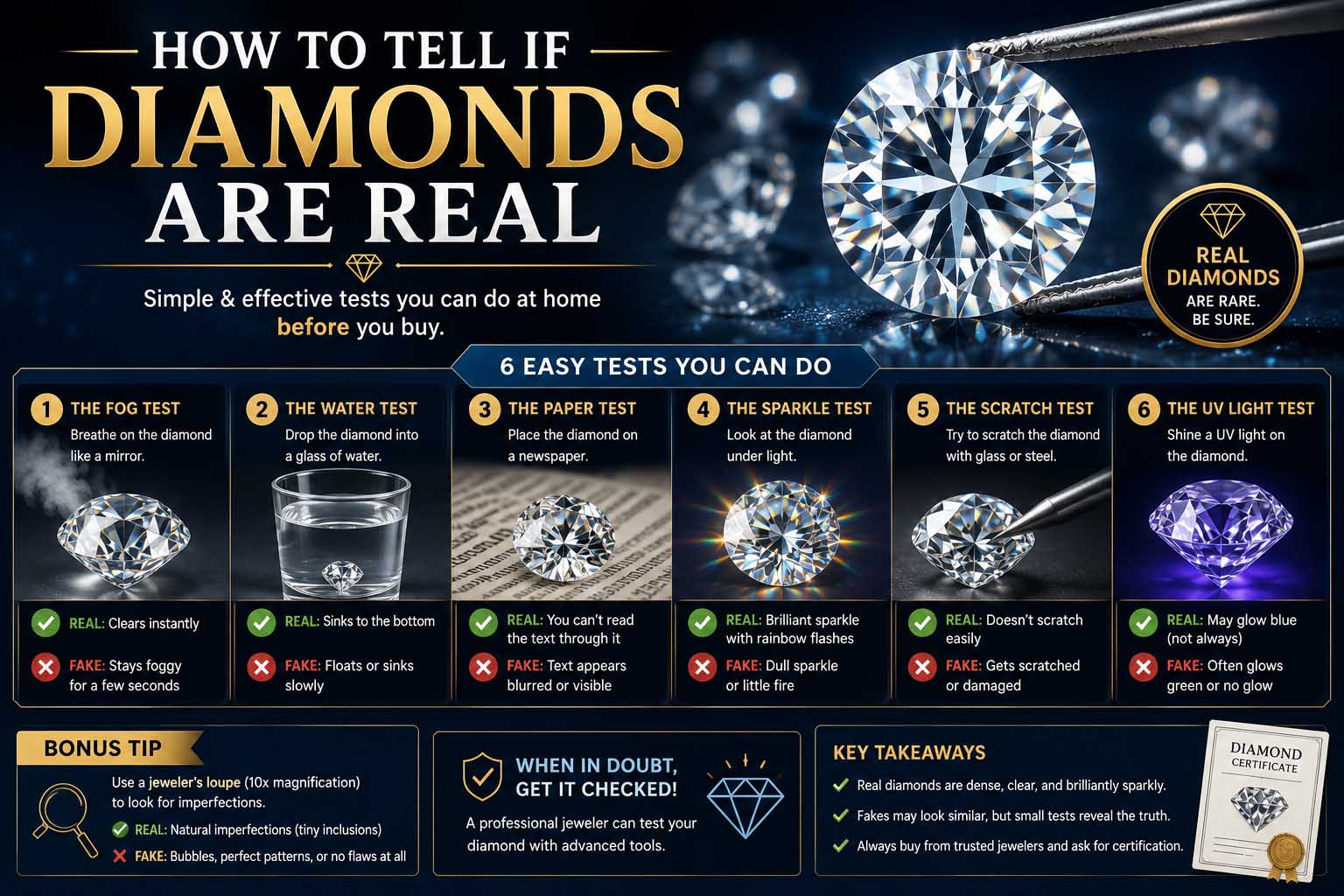
If you’re uncertain about authenticity, our guide on how to tell if a diamond is real explains important identification considerations.
For further guidance, learn how to tell if diamonds are real before making a significant purchase.
Which Types of Diamonds Should You Choose?
The best choice depends on your budget, preferred appearance, intended use, and personal priorities.
Rather than assuming one category is automatically superior, compare the characteristics that matter most to you.
Choose Natural Diamonds for Traditional Appeal
Natural diamonds may suit buyers who value:
- Geological origin
- Traditional fine jewelry
- An established diamond market
- Long-term personal ownership
However, their generally higher prices may limit the size or quality available within a particular budget.
Choose Lab-Grown Diamonds for Purchase Value
Laboratory-grown diamonds may appeal to buyers who prioritize:
- Lower initial purchase prices
- Larger carat weights within a fixed budget
- Modern production methods
- Diamond material without natural geological origin
For example, a buyer may be able to choose a larger laboratory-grown stone instead of a smaller natural diamond at a similar price.
However, resale expectations should remain realistic.
Choose Colored Diamonds for Distinctive Jewelry
Colored diamonds suit shoppers who prefer unusual gemstone appearances.
For example, yellow, pink, or blue stones can create striking jewelry designs.
However, naturally colored and color-treated diamonds are not equivalent categories.
Therefore, verify color origin and treatment disclosures before purchasing.
How Types of Diamonds Affect Prices
Diamond prices can vary substantially, even between stones with similar appearances.
Several factors influence pricing:
- Natural or laboratory-grown origin
- Carat weight
- Cut quality
- Color
- Clarity
- Shape
- Treatment status
- Rarity
- Grading documentation
For example, a rare natural fancy-color diamond may cost considerably more than a common colorless diamond.
Meanwhile, laboratory-grown diamonds often offer lower purchase prices than comparable natural stones.
However, a lower price does not automatically indicate poor quality.
Instead, compare diamonds with similar specifications to understand their relative value.
Shopping Tips for Different Types of Diamonds
Buying a diamond can involve a significant financial commitment.
Therefore, take time to compare stones, review documentation, and understand what influences their appearance.
Ask for a Diamond Grading Report
For significant purchases, check whether the stone has a grading report from a recognized independent gemological laboratory.
Depending on the stone and laboratory, reports may describe:
- Carat weight
- Color
- Clarity
- Measurements
- Cut information where applicable
- Identifying characteristics
As a result, grading reports can help buyers compare stones using consistent information.
However, a grading report is not the same as an appraisal or a guarantee of future resale value.
Prioritize Cut Quality
Cut quality can strongly influence a diamond’s visual appeal.
For example, a smaller stone with attractive proportions may look more brilliant than a larger stone with weaker light performance.
Therefore, avoid choosing solely by carat weight.
Compare Multiple Diamonds
Before purchasing, examine several stones with similar characteristics.
Compare:
- Sparkle
- Shape
- Cut quality
- Color
- Clarity
- Price
- Grading documentation
In addition, inspect diamonds under different lighting conditions when possible.
This comparison can help you recognize differences that may not be obvious from grading information alone.
Think About Everyday Wear
Consider how frequently the jewelry will be worn.
For example, someone who works with their hands may prefer a secure, protective ring setting.
In addition, comfort and maintenance requirements should influence your decision.
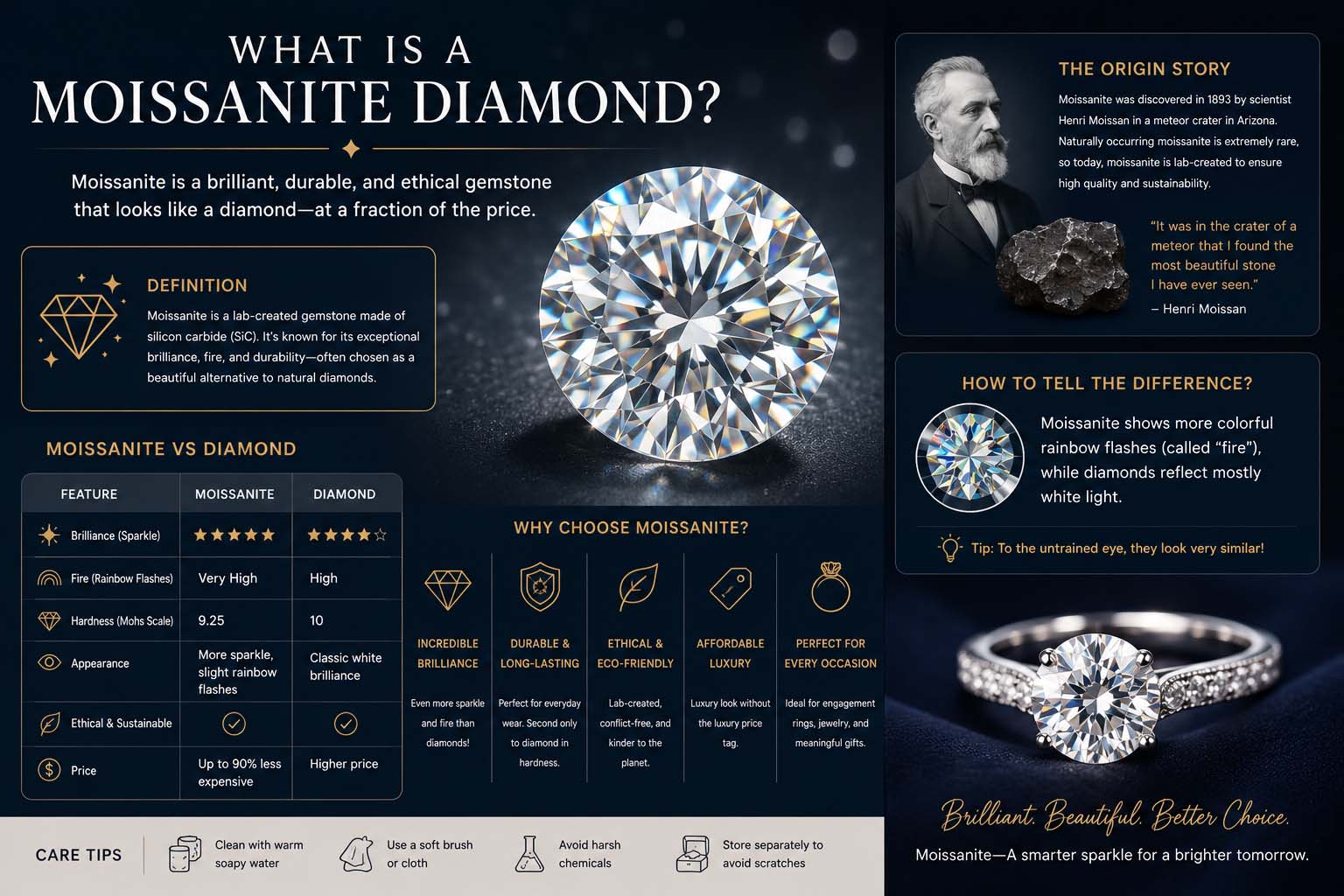
If you’re considering another gemstone option, read our guide explaining what is a moissanite diamond.
Despite the common wording, moissanite is a different gemstone from diamond.
Common Mistakes When Buying Different Types of Diamonds
Understanding diamond categories is helpful. However, avoiding common shopping mistakes can be equally valuable.
Focusing Only on Carat Weight
A larger diamond isn’t automatically more attractive or higher quality.
Instead, consider cut, color, clarity, proportions, and overall appearance.
Ignoring Cut Quality
Cut quality influences how a diamond interacts with light.
Therefore, a higher carat weight should not automatically take priority over attractive proportions and craftsmanship.
Forgetting Grading Documentation
Without reliable grading information, comparing expensive stones can become more difficult.
For this reason, review available documentation and verify relevant details before purchasing.
Buying Without Comparing Prices
Diamond prices can differ between retailers and individual stones.
Therefore, compare similar specifications rather than assuming that the first quoted price represents good value.
Following Trends Instead of Personal Style
Jewelry trends change over time.
However, an important jewelry purchase should reflect the wearer’s preferences.
For example, someone who prefers understated designs may enjoy an emerald cut more than a trend-driven shape.
Caring for Different Diamond Types
Diamonds are exceptionally hard, but diamond jewelry still requires proper care.
Although diamonds resist scratching well, they can chip under certain impacts. In addition, settings and surrounding metals can become damaged.
Oils, cosmetics, and dirt may also reduce visible sparkle.
Basic care includes:
- Cleaning jewelry with methods appropriate for the stone and setting
- Using a soft brush when suitable
- Storing jewelry separately
- Removing rings during potentially damaging activities
- Having valuable settings inspected periodically
However, treated diamonds may require special precautions.
Therefore, ask your jeweler about treatment-specific cleaning instructions before using ultrasonic cleaners, steam, or other cleaning methods.
If your jewelry includes precious metals, you may also want to learn how to tell if gold is real.
Similarly, our guide on how to tell if silver is rea explains ways to evaluate silver authenticity.
Frequently Asked Questions About Types of Diamonds
What Are the Main Types of Diamonds?
The main categories shoppers commonly encounter include natural diamonds, lab-grown diamonds, colored diamonds, and treated diamonds.
However, diamonds can also be classified by shape, cut, color, clarity, and carat weight.
Are Lab-Grown Diamonds Real?
Yes. Laboratory-grown diamonds are genuine diamonds that develop in controlled production environments.
Although their origin differs from natural diamonds, they share the fundamental crystal structure and physical properties of diamond.
Which Diamond Shape Has the Most Sparkle?
The round brilliant is designed to produce strong brilliance through its facet arrangement.
However, actual light performance depends on the individual diamond’s cutting quality.
Are Cushion-Cut Diamonds Popular?
Yes. Cushion cuts are widely available for engagement rings and other fine jewelry.
Their rounded corners and varied proportions make them suitable for both traditional and modern settings.
Are Natural Diamonds Worth the Higher Price?
That depends on your priorities.
For example, some buyers value natural geological origin and traditional appeal.
Meanwhile, others prefer the generally lower purchase prices of laboratory-grown diamonds.
What Should I Check Before Buying a Diamond?
Review the stone’s origin, cut, color, clarity, carat weight, grading documentation, appearance, and price.
In addition, check for disclosed treatments and examine the quality of the jewelry setting.
Therefore, avoid basing your decision on size alone.
Choosing the Right Types of Diamonds
Understanding the types of diamonds helps you compare jewelry options with greater confidence. Natural, lab-grown, colored, and treated stones each offer different characteristics.
First, identify your preferred origin and appearance. Next, compare cut quality, color, clarity, and carat weight.
Then, review grading documentation and consider how the jewelry will be worn.
Although price matters, the most expensive diamond isn’t necessarily the best choice for your needs.
Instead, choose a stone that matches your budget, personal style, lifestyle, and intended use.