

How to Tell If Diamonds Are Real
Buying a diamond can be exciting, but it can also feel risky if you’re not sure what you’re getting. Whether you’ve inherited a ring, found a great deal online, or are shopping for an engagement ring, knowing how to tell if diamonds are real can help you shop with confidence.
While no home test is 100% accurate, several simple methods can give you useful clues. However, if you’re planning to spend a significant amount of money, professional testing is always the safest choice.
Overall, this guide explains easy home tests, common mistakes, professional verification methods, and smart shopping tips to help you make an informed purchase.
Quick Reference Guide
| Method | Can Be Done at Home? | Accuracy | Best For |
|---|---|---|---|
| Fog test | Yes | Moderate | Quick first check |
| Water test | Yes | Low to Moderate | Loose diamonds |
| Loupe inspection | Yes | Good | Checking imperfections |
| Newspaper test | Yes | Moderate | Loose stones |
| UV light | Yes | Moderate | Extra clue only |
| Diamond tester | Yes | High | Home verification |
| Professional jeweler | No | Excellent | Final confirmation |
What Makes a Real Diamond Different?
Natural and lab-grown diamonds share the same physical properties. Therefore, both are real diamonds.
What most buyers want to avoid are imitation stones such as:
- Cubic zirconia
- Glass
- Crystal
- White sapphire
- Moissanite (a separate gemstone)
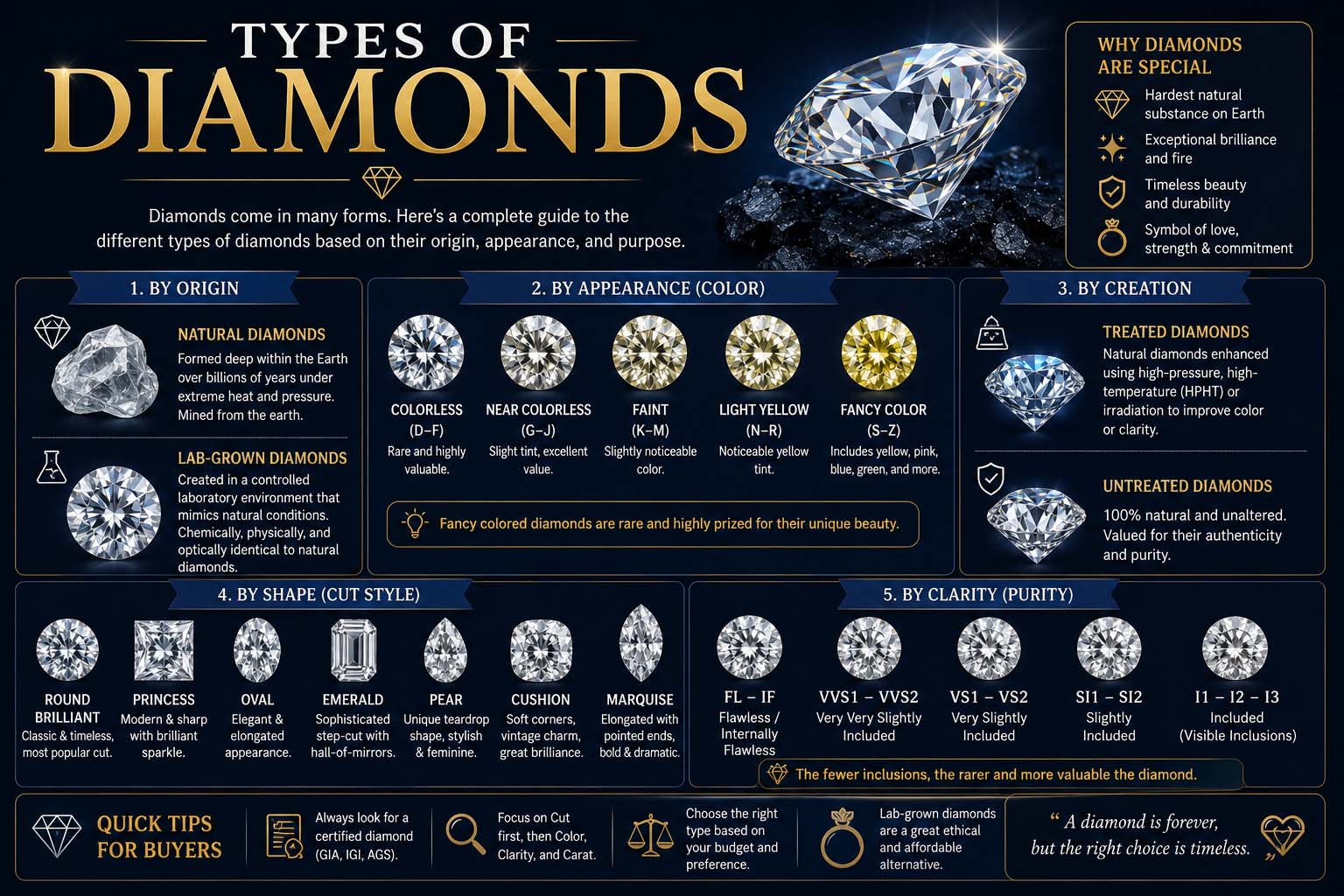
These materials may look similar at first glance but behave differently under testing. Likewise, shoppers comparing stones may explore the different types of diamonds or ask what is a moissanite diamond.
How to Tell If Diamonds Are Real at Home
Many shoppers first search for how to tell if diamonds are real at home because they already own a piece of jewelry.
Here are several simple tests you can try.
Try the Fog Test
Diamonds disperse heat quickly.
First, hold the stone close to your mouth and breathe on it like you’re fogging a mirror.
A real diamond should clear almost immediately.
If the fog stays for several seconds, the stone may not be a diamond.
However, keep in mind that settings, dirt, or moisture can affect this test.
Perform the Water Test
This works only with loose stones.
- Fill a clear glass with water.
- Drop the stone inside.
Because a real diamond is dense, it should sink straight to the bottom.
However, some fake stones may also sink, so this test alone isn’t enough for verification.
Use a Jeweler’s Loupe
A 10x jeweler’s loupe is inexpensive and one of the most useful tools for buyers.
Look for:
- Tiny natural inclusions
- Sharp facet edges
- Minor imperfections
Perfectly flawless stones are rare and usually expensive.
In contrast, many fake stones appear overly smooth or bubble-filled.
Check the Sparkle
Diamonds reflect both white and colored light.
Instead of producing rainbow flashes everywhere, real diamonds usually show:
- Bright white sparkle
- Small rainbow flashes
- Sharp reflections
If the stone displays excessive rainbow colors, it could be another gemstone like cubic zirconia.
How to Tell If Diamonds Are Real Without a Tester
Many people wonder how to tell if diamonds are real without a tester because they don’t own professional equipment.
Several visual checks can help.
Read-Through Test
Place a loose diamond upside down on a newspaper or printed page.
If you can clearly read the letters through the stone, it’s probably not a real diamond.
Because real diamonds bend light so strongly, printed text usually becomes unreadable.
However, this test doesn’t work well with mounted diamonds.
Inspect the Setting
High-value diamonds are usually mounted in quality metals.
Look for markings such as:
- 10K
- 14K
- 18K
- Platinum
- 950 Pt
A genuine diamond is less likely to be set in cheap metal.
While this isn’t proof, it’s another helpful clue. In addition, jewelry buyers may want to learn how to tell if gold is real or how to tell if silver is real.
Look for Wear
Fake stones often develop:
- Scratches
- Cloudy surfaces
- Dull spots
Diamonds are among the hardest natural materials and resist scratching under normal wear.
How to Tell If Your Diamonds Are Real?
Determining whether a diamond is real can be challenging, especially since modern diamond simulants closely resemble natural diamonds.
If You Purchased It New
Check whether it includes:
- Diamond grading report
- Purchase receipt
- Warranty
- Certificate number
Therefore, these documents make verification much easier.
If It Was Inherited
Older jewelry may not have paperwork.
A jeweler can examine:
- Stone quality
- Cut
- Mounting
- Weight
- Authenticity
Generally, many jewelry stores offer inspections for a reasonable fee.
How to Tell If Diamonds Are Real in a Ring
Mounted diamonds are slightly harder to test.
If you’re wondering how to tell if diamonds are real in a ring, try these methods.
Examine the Prongs
Luxury rings usually have secure, well-made prongs.
In contrast, poor craftsmanship may indicate imitation jewelry.
Clean the Stone First
Soap residue and skin oils reduce sparkle.
Before testing:
- Wash with warm water.
- Use mild dish soap.
- Brush gently with a soft toothbrush.
As a result, a clean stone is much easier to inspect.
Check for Loose Settings
Movement inside the setting doesn’t necessarily mean the diamond is fake.
Instead, it simply means the ring may need repair.
Therefore, have a jeweler inspect loose stones promptly. For more guidance on a single stone, buyers may also learn how to tell if a diamond is real.
Professional Tests That Give Better Answers
Home methods provide clues.
However, professional equipment provides confidence.
Diamond Tester
Electronic diamond testers measure thermal conductivity.
Benefits include:
- Fast results
- Beginner-friendly
- Portable
- Affordable
In addition, some advanced models separate diamonds from moissanite.
Laboratory Certification
The best proof of authenticity comes from respected grading laboratories.
A grading report usually includes:
- Carat weight
- Color grade
- Clarity
- Cut quality
- Measurements
- Laser inscription (if applicable)
Therefore, if you’re buying an expensive diamond, always ask for certification.
Common Diamond Imitations
Knowing what you’re comparing helps during shopping.
| Stone | Looks Like Diamond | Hardness | Value |
|---|---|---|---|
| Natural diamond | Yes | Very high | Highest |
| Lab-grown diamond | Yes | Very high | Lower than natural |
| Moissanite | Very similar | High | Moderate |
| Cubic zirconia | Similar | Medium | Low |
| Glass | Somewhat | Low | Very low |
| White sapphire | Similar | High | Moderate |
Each material reflects light differently.
Ultimately, professional testing can distinguish them accurately.
Shopping Tips Before Buying a Diamond
Buying smart reduces the chances of receiving an imitation.
Choose a Reputable Seller
Buy from retailers with:
- Clear return policies
- Good customer reviews
- Transparent grading information
- Professional customer service
Avoid sellers who refuse to answer questions.
Ask for Certification
Certification gives buyers peace of mind.
Specifically, it verifies that the stone has been professionally examined.
Compare Similar Diamonds
Don’t buy the first diamond you see.
Compare:
- Price
- Cut
- Clarity
- Color
- Carat
- Warranty
Even small differences affect appearance and value.
Buying Checklist
Before purchasing, make sure you can answer “yes” to these questions.
- ✔ Is the seller reputable?
- ✔ Does the diamond include certification?
- ✔ Is there a return policy?
- ✔ Is the price reasonable compared with similar diamonds?
- ✔ Is the setting made from quality metal?
- ✔ Has the diamond been professionally graded?
- ✔ Are the product photos clear and detailed?
Home Tests: Pros and Cons
| Test | Pros | Cons |
|---|---|---|
| Fog test | Free and easy | Not fully reliable |
| Water test | Quick | Only for loose stones |
| Loupe inspection | Useful for buyers | Requires practice |
| Newspaper test | Simple | Doesn’t work on rings |
| Diamond tester | Highly accurate | Requires purchase |
| Professional appraisal | Most reliable | Costs more |
Common Mistakes Buyers Make
Many people accidentally rely on outdated advice.
Avoid these mistakes:
- Trusting only one home test
- Buying without certification
- Assuming expensive means genuine
- Ignoring return policies
- Buying from unknown online sellers
- Confusing moissanite with fake diamonds
- Believing every viral internet “hack”
Overall, using several verification methods gives better results.
Caring for a Real Diamond
Once you’ve confirmed your diamond is genuine, proper care helps maintain its appearance.
Simple maintenance includes:
- Dry with a lint-free cloth.
- Store separately from other jewelry.
- Have settings inspected once a year.
- Avoid harsh chemicals when possible.
Ultimately, regular cleaning keeps diamonds sparkling their best.
Frequently Asked Questions
Can fake diamonds pass the fog test?
Yes. Some imitation stones may clear quickly, so the fog test should not be your only method.
Are lab-grown diamonds real?
Yes. Lab-grown diamonds have the same chemical and physical properties as natural diamonds.
Can I scratch glass with a real diamond?
A real diamond can scratch glass, but this test isn’t recommended because it can damage both the glass and the jewelry.
Do all real diamonds sparkle the same way?
No. Sparkle varies depending on cut quality, cleanliness, lighting, and viewing angle.
Is a diamond tester worth buying?
If you regularly buy or collect jewelry, a quality diamond tester can be a worthwhile investment.
Can jewelers tell if a diamond is real?
Yes. Professional jewelers use specialized tools that are much more reliable than home tests.
Final Buying Advice
Learning how to tell if diamonds are real starts with simple observation, but smart buyers don’t stop there. Home tests like the fog test, loupe inspection, and newspaper test can provide useful clues, especially when you’re checking a loose stone or an older piece of jewelry.
For valuable purchases, ask for certification, buy from trusted sellers, and consider having the diamond inspected by a professional jeweler. Ultimately, taking a little extra time before you buy can help you avoid costly mistakes and feel confident that your diamond is exactly what you paid for.