
What Is the Best Robot Vacuum? A Complete Buyer’s Guide
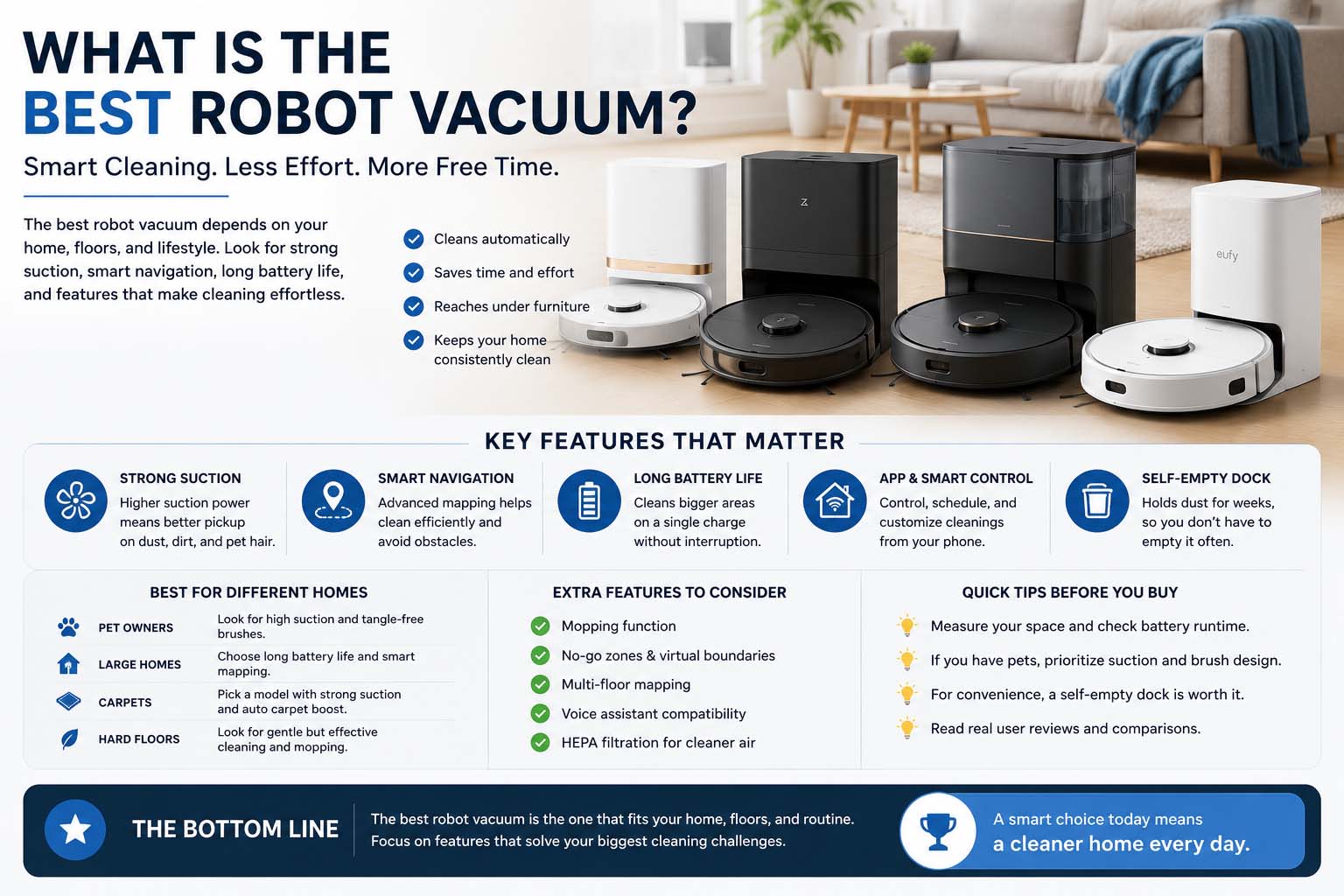
If you’re wondering what is the best robot vacuum, the answer depends on your flooring, home size, pets, cleaning habits, and budget. A robot vacuum that works well in a small apartment may not provide enough cleaning power or battery life for a large home with carpets and multiple pets.
Robot vacuums have evolved from luxury gadgets into practical household cleaning tools. Today, many models offer smart navigation, stronger suction, self-emptying docks, and built-in mopping.
However, not every household needs expensive features. For example, a simple model with reliable navigation may be enough for a small home with mostly hard floors.
Therefore, understanding the most useful features can help you avoid unnecessary spending while choosing a machine that makes everyday cleaning easier.
This guide explains how to compare robot vacuums, which features matter most, and how to select the right option for your home.
What Is the Best Robot Vacuum for Your Home?
The best robot vacuum is one that cleans your floors effectively, handles your household’s common debris, and fits your budget.
Instead of searching for a single model that suits everyone, start by identifying your cleaning priorities.
For example, pet owners may need anti-tangle brushes, while larger households may benefit from automatic recharging and self-emptying stations.
Here’s a quick comparison.
| Home Type | Recommended Robot Vacuum Features |
|---|---|
| Small apartment | Compact design, reliable navigation, scheduling |
| Large home | Smart mapping, recharge-and-resume, self-emptying dock |
| Pet owners | Anti-tangle brushes, effective carpet cleaning, larger dust capacity |
| Hardwood floors | Gentle brushes, adjustable suction, suitable mopping |
| Mixed flooring | Carpet detection, adjustable suction, mop lifting |
| Busy families | Scheduling, obstacle avoidance, automatic emptying |
Although premium models offer more automation, a mid-range machine may provide everything your household needs.
Therefore, prioritize actual cleaning performance over unnecessary extras.
Why Robot Vacuums Are Becoming Popular
Robot vacuums help homeowners maintain cleaner floors without manually vacuuming every day.
Because they can follow scheduled cleaning routines, they are particularly convenient for busy households.
Common benefits include:
- Automatic daily floor cleaning
- Reduced dust and debris buildup
- Scheduled cleaning sessions
- Less frequent manual vacuuming
- Smartphone app control
- Cleaning while you’re away
- Convenient maintenance between deeper cleaning sessions
For example, you can schedule a robot vacuum to clean your living room each morning.
As a result, crumbs, pet hair, and everyday dirt may accumulate more slowly.
However, robot vacuums don’t completely replace traditional vacuums. Most households still need occasional deep cleaning around furniture, stairs, and other difficult areas.
Important Features to Compare Before Buying
Understanding robot vacuum features helps you compare models more effectively.
Although manufacturers advertise many specifications, some features have a greater impact on everyday cleaning than others.
Strong Suction and Cleaning Performance
Suction helps a robot vacuum collect:
- Dust
- Pet hair
- Food crumbs
- Dirt
- Small debris
Homes with thick carpets generally need stronger carpet-cleaning performance than homes with smooth flooring.
However, suction numbers alone don’t tell the whole story.
Brush design, airflow, navigation, and cleaning efficiency also influence results.
Therefore, compare real-world cleaning performance rather than relying only on advertised suction ratings.
Smart Navigation and Mapping
Modern robot vacuums may use cameras, lasers, or other sensors to navigate rooms.
Smart mapping can provide:
- More organized cleaning routes
- Better room coverage
- Fewer missed areas
- Room-specific cleaning
- Virtual no-go zones
For example, a mapped robot vacuum can clean the kitchen without repeatedly covering the same hallway.
In addition, some models recognize obstacles such as shoes and furniture.
However, obstacle avoidance varies considerably between products. Small cables, pet toys, and other objects can still cause problems.
Battery Life and Recharge Features
Battery life becomes more important in larger homes.
The following ranges offer general shopping guidance rather than strict requirements.
| Home Size | Suggested Runtime |
|---|---|
| Small apartment | 60–90 minutes |
| Medium home | 90–120 minutes |
| Large home | 150 minutes or recharge-and-resume |
Actual runtime depends on suction settings, floor type, battery condition, and cleaning mode.
Fortunately, many mapping models can return to their charging docks and continue cleaning afterward.
Therefore, recharge-and-resume functionality may matter more than maximum battery runtime alone.
Dustbin Capacity and Self-Emptying
A small dustbin may require frequent emptying, especially in homes with pets.
Self-emptying docks transfer collected debris into a larger container or bag.
As a result, you can reduce how often you handle dust and dirt.
However, self-emptying stations increase the purchase price and may require replacement bags.
What Is the Best Robot Vacuum Cleaner for Everyday Use?
If you’re comparing robot vacuum cleaners for routine household cleaning, focus on reliability and practical features.
A useful everyday model should offer:
- Effective cleaning on your floor types
- Reliable navigation
- Automatic charging
- Convenient scheduling
- Easy-to-clean brushes
- Accessible replacement parts
- Straightforward maintenance
In addition, a clear mobile app can make scheduling and room selection easier.
However, some households may prefer simple physical controls over complicated smart features.
Therefore, consider how you’ll actually use the vacuum rather than choosing the model with the longest feature list.
What Is the Best Robot Vacuum for Pet Hair?
Pet owners often need a robot vacuum that handles loose fur, dander, and debris without constant maintenance.
If you’re asking what is the best robot vacuum for pet hair, look beyond advertised suction power.
Brush design, carpet performance, and dust capacity can make a significant difference.
Effective Pet Hair Pickup
Pet hair can collect along baseboards, beneath furniture, and inside carpets.
Therefore, choose a robot vacuum that performs well on the surfaces where your pets spend the most time.
For example, a home with thick carpets may need stronger brush agitation than a home with tile flooring.
Anti-Tangle Brushes
Long hair and pet fur can wrap around traditional brush rollers.
However, some robot vacuums use rubber rollers or specially designed brushes to reduce tangling.
These designs may lower maintenance requirements, although occasional cleaning remains necessary.
Large Dustbin or Self-Emptying Dock
Homes with several pets may fill a small dustbin quickly.
As a result, a larger container or self-emptying dock can make routine cleaning more convenient.
Filtration for Dust and Pet Dander
Filtration is another consideration, especially when your household contains pets.
Look for models with well-designed filtration systems and properly sealed dust containers.
However, don’t assume every advertised filter provides the same performance.
The U.S. Environmental Protection Agency’s guide to air cleaners in the home explains the role of filtration in managing indoor airborne particles.
A robot vacuum can collect settled dust and pet hair, but it shouldn’t replace other appropriate cleaning and air-quality measures.
For additional furniture-cleaning advice, read our guide on how to remove pet hair from couch.
What Is the Best Robot Vacuum and Mop?
Many shoppers prefer one machine that handles both vacuuming and light floor mopping.
If your home has mostly tile, vinyl, or other suitable hard flooring, a vacuum-and-mop combination may provide extra convenience.
However, mopping performance varies significantly between models.
Useful features include:
- Adjustable water flow
- Separate clean-water and dirty-water tanks on compatible docks
- Smart room mapping
- Carpet detection
- Automatic mop lifting
- Washable or replaceable mop pads
- Mop washing and drying on advanced models
For example, a robot vacuum with automatic mop lifting can help prevent wet mop pads from contacting carpets.
Nevertheless, you should check the manufacturer’s flooring recommendations before using a mopping function.
Excessive moisture may damage certain wood or laminate floors.
Is a Robot Vacuum Mop Combo Worth Buying?
A robot vacuum mop combo combines vacuuming and light mopping in one device.
Compared with a standard robot vacuum, it can reduce the number of separate floor-cleaning tasks.
Here’s how the two categories compare.
| Standard Robot Vacuum | Robot Vacuum Mop Combo |
|---|---|
| Vacuums floors | Vacuums and mops suitable floors |
| Usually simpler maintenance | Requires additional mop maintenance |
| Often costs less | May cost more |
| Suitable for carpet-focused cleaning | Useful for homes with hard flooring |
| No water system | Includes a mopping system |
However, not every combination model delivers the same mopping quality.
Basic designs may drag a damp pad across the floor, while advanced models use rotating or vibrating pads.
Therefore, consider whether you need occasional surface wiping or more effective routine mopping.
Best Robot Vacuum Features for Different Homes
Every household has different cleaning requirements.
As a result, the ideal robot vacuum depends on your living space and flooring.
Small Apartments
For smaller homes, prioritize:
- Compact dimensions
- Reliable navigation
- Convenient scheduling
- Moderate battery capacity
- Quiet operation
A compact robot vacuum can work well when the floor plan is simple.
However, check whether it can move under your furniture and reach narrow spaces.
Large Homes
Larger homes benefit from:
- Smart mapping
- Recharge-and-resume
- Multi-floor map storage
- Self-emptying docks
- Efficient cleaning routes
For example, a mapping robot can clean several rooms systematically instead of repeatedly covering the same areas.
Homes With Pets
Pet-friendly features include:
- Effective fur pickup
- Anti-tangle brushes
- Convenient dust disposal
- Good carpet cleaning
- Accessible filters and replacement parts
In addition, obstacle avoidance can be useful in homes where pet toys frequently remain on the floor.
Homes With Mostly Hard Floors
A vacuum-and-mop combo may provide a practical solution for hard flooring.
However, choose a model with water controls suitable for your floor material.
For example, tile may tolerate cleaning methods that aren’t appropriate for moisture-sensitive wood flooring.
Homes With Carpets
Carpet-focused households should prioritize:
- Strong carpet pickup
- Effective brush rollers
- Carpet detection
- Reliable navigation
- Easy brush maintenance
If carpets are your main concern, our guide to the best vacuum for carpet explains additional features worth considering.
Smart Robot Vacuum Features Worth Paying For
Premium robot vacuums often include technology that reduces manual work.
Popular features include:
- Smartphone app control
- Voice assistant compatibility
- Scheduled cleaning
- Room-specific cleaning
- Virtual no-go zones
- Multi-floor mapping
- Obstacle avoidance
- Automatic dirt detection
However, not every smart feature is essential.
For example, scheduled cleaning may provide more everyday value than voice control if you rarely use smart speakers.
Similarly, advanced obstacle avoidance can be helpful in homes with children or pets.
Therefore, focus on features that solve problems you regularly encounter.
Budget vs. Premium Robot Vacuums
The best robot vacuum isn’t necessarily the most expensive model.
Budget options can handle basic floor maintenance, while premium machines usually offer more automation.
| Budget Robot Vacuums | Premium Robot Vacuums |
|---|---|
| Simpler navigation | More advanced mapping |
| More manual maintenance | Greater automation |
| Basic scheduling | Detailed room controls |
| Often smaller feature sets | More advanced cleaning options |
| Lower purchase prices | Higher purchase prices |
However, individual models vary, and some affordable robot vacuums offer features previously limited to premium products.
Therefore, compare actual specifications and independent cleaning results before making a decision.
How Much Should You Spend on a Robot Vacuum?
Robot vacuum prices vary by brand, cleaning performance, navigation technology, and dock features.
The following ranges are broad budgeting examples rather than current retailer quotes.
| Budget | Features You May Find |
|---|---|
| Under $200 | Basic vacuuming and simpler navigation |
| $200–$400 | Improved navigation, scheduling, and selected mapping features |
| $400–$700 | More advanced mapping, cleaning, and dock options |
| $700+ | Premium automation, advanced mopping, and sophisticated docks |
However, price alone doesn’t guarantee better cleaning performance.
For example, an affordable vacuum designed for hard floors may suit your home better than a costly mop-focused model.
In addition, remember to account for replacement brushes, filters, bags, and mop pads.
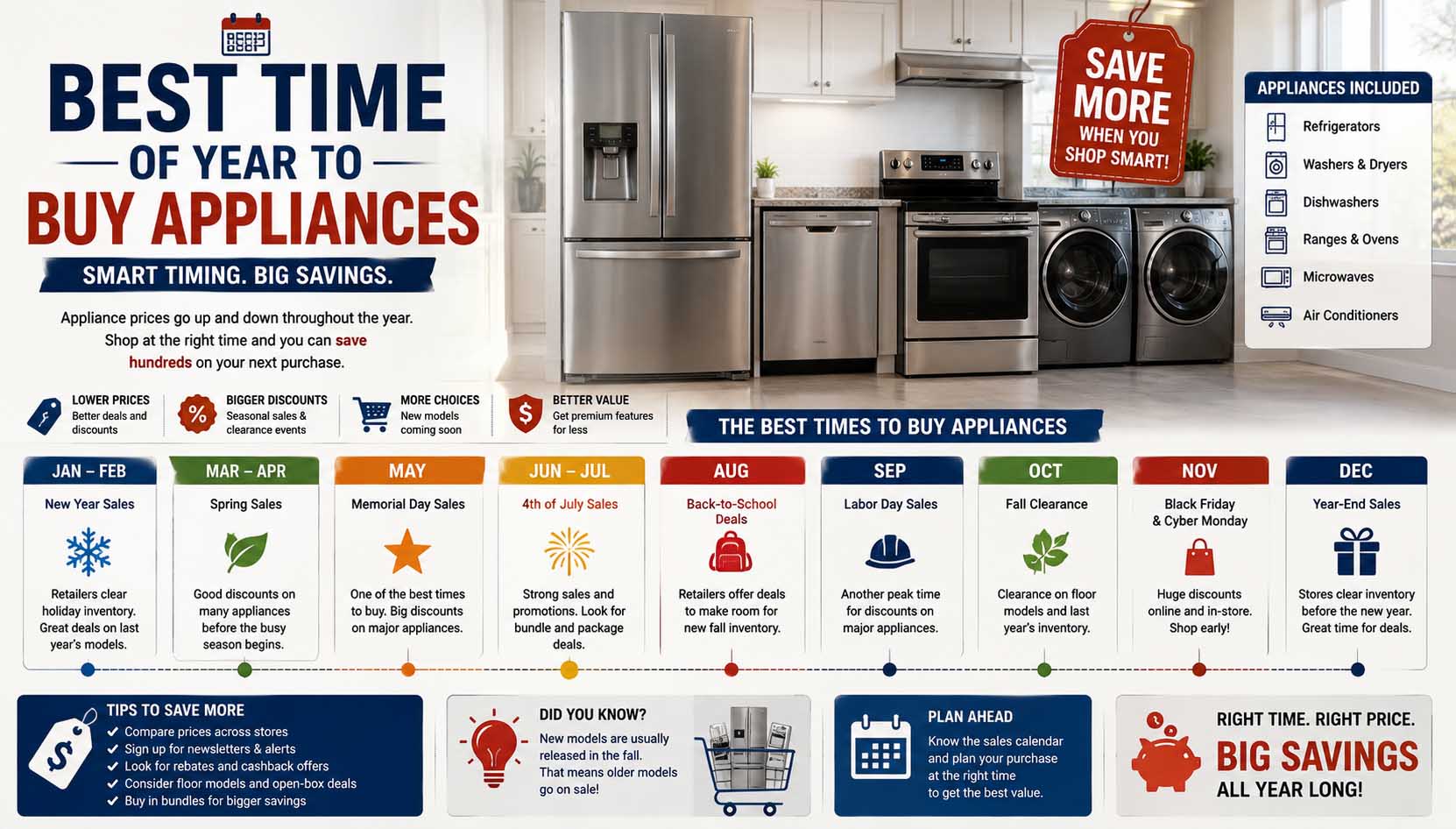
If you’re planning a purchase around seasonal promotions, our guide to the best time of year to buy appliances explains when shoppers may find better deals.
Robot Vacuum Maintenance Tips
Regular maintenance helps a robot vacuum maintain cleaning performance.
Although some premium models automate several tasks, every robot vacuum still needs occasional attention.
Empty the Dustbin
First, empty the dustbin according to the manufacturer’s instructions.
If your vacuum uses a self-emptying dock, check the dock’s bag or collection container regularly.
Clean the Brushes
Next, inspect the main roller and side brushes for tangled hair.
Removing debris can help the brushes rotate properly.
Maintain the Filters
Clean or replace filters according to the manufacturer’s instructions.
However, never wash a filter unless the manufacturer specifically identifies it as washable.
Wipe the Sensors
Dust and debris can interfere with navigation sensors.
Therefore, gently clean accessible sensors using the recommended method.
Maintain the Mopping System
For vacuum-and-mop combinations:
- Empty dirty-water containers
- Refill clean-water tanks
- Wash or replace mop pads
- Clean the docking station
- Follow approved cleaning-solution instructions
As a result, routine maintenance can help prevent odors and support consistent cleaning.
Common Robot Vacuum Buying Mistakes
Avoiding a few common mistakes can help you make a better purchase.
Ignoring Floor Types
Different floors require different cleaning approaches.
For example, a model that performs well on tile may struggle with thick carpet.
Therefore, check performance on the flooring you actually have.
Choosing Only by Price
A low price may seem attractive.
However, an inexpensive model that frequently gets stuck or misses debris may create more work.
Instead, compare cleaning performance, reliability, and maintenance requirements.
Forgetting Replacement Costs
Filters, brushes, bags, batteries, and mop pads can increase ownership costs.
As a result, check the availability and price of replacement parts before purchasing.
Overlooking Navigation
Poor navigation may cause repeated cleaning or missed areas.
Therefore, consider mapping features when you have multiple rooms or a complicated floor plan.
Ignoring Furniture Clearance
Some robot vacuums cannot fit beneath low sofas or beds.
Before buying, measure the clearance beneath furniture you want the robot to clean.
Assuming Every Robot Vacuum Avoids Obstacles
Obstacle detection differs between models.
Even advanced machines may struggle with cables, socks, or small objects.
Therefore, keeping floors reasonably clear can improve cleaning reliability.
Is a Robot Vacuum Worth Buying?
For many households, a robot vacuum can be a useful investment.
It may be particularly convenient for:
- Busy professionals
- Families
- Pet owners
- Older adults
- Households with mostly accessible floors
- Anyone who wants less frequent manual vacuuming
For example, scheduling daily cleaning can help manage crumbs and loose pet hair between deeper cleaning sessions.
However, a robot vacuum may offer less value if your floors contain many obstacles, thick rugs, or difficult transitions.
In addition, stairs, upholstery, and certain corners still require other cleaning tools.
Therefore, think of a robot vacuum as a convenient maintenance cleaner rather than a complete replacement for every household cleaning task.
Frequently Asked Questions About Robot Vacuums
What Is the Best Robot Vacuum for Everyday Cleaning?
The best choice is a reliable model that handles your floor types and everyday debris.
For example, smart mapping, convenient scheduling, and easy maintenance can be more useful than expensive extras.
Can a Robot Vacuum Replace a Traditional Vacuum?
Not completely.
Although robot vacuums handle routine floor cleaning, traditional vacuums remain useful for stairs, upholstery, corners, and deeper carpet cleaning.
Are Robot Vacuums Safe for Hardwood Floors?
Many robot vacuums can clean hardwood floors safely when used according to the manufacturer’s instructions.
However, avoid unsuitable brushes, excessive moisture, and unapproved cleaning solutions.
How Often Should I Run a Robot Vacuum?
Many households benefit from daily or every-other-day cleaning.
However, the ideal schedule depends on pets, foot traffic, and how quickly debris accumulates.
Are Robot Vacuum Mop Combos Worth It?
They can be worthwhile for homes with substantial hard flooring.
For example, a combination model may reduce the need for separate light mopping sessions.
However, you’ll still need to maintain the mop pads and water system.
Do Robot Vacuums Work on Carpets?
Yes, many models clean carpets.
However, results depend on carpet thickness, brush design, suction, and navigation.
How Long Does a Robot Vacuum Usually Last?
A well-maintained robot vacuum may provide several years of service.
However, lifespan varies depending on build quality, usage, battery condition, and replacement-part availability.
Should I Choose a Self-Emptying Robot Vacuum?
A self-emptying model may be worthwhile if you have pets, a large home, or limited time for maintenance.
However, a standard model can still work well if you don’t mind emptying its dustbin manually.
Final Buying Advice: Choosing the Right Robot Vacuum
When deciding what is the best robot vacuum, focus on the cleaning challenges in your home rather than searching for a single model that suits everyone.
For example, pet owners should prioritize fur pickup and anti-tangle brushes, while households with hard flooring may benefit from a reliable vacuum-and-mop combination.
Meanwhile, larger homes often benefit from smart mapping, recharge-and-resume functionality, and self-emptying docks.
Before buying, compare cleaning performance, navigation, maintenance costs, and replacement-part availability.
Finally, choose a model that fits your budget and daily routine.
A well-chosen robot vacuum can make routine cleaning easier, help control everyday dust and debris, and give you more time for other activities.