
What Is a Moissanite Diamond? Complete Buyer’s Guide
A moissanite diamond is a popular diamond alternative made from silicon carbide, known for its brilliant sparkle and durability. Although moissanite is not technically a diamond, it has a similar appearance and can be used in engagement rings, wedding bands, earrings, and other jewelry. Moissanite is highly resistant to scratches and often costs less than a natural diamond, making it an attractive option for people looking for beautiful and affordable jewelry. When asking “what is a moissanite diamond,” it is important to understand that moissanite is a separate gemstone with its own unique characteristics.
This guide explains what is a moissanite diamond, its value, advantages, disadvantages, and how it compares with natural and lab-grown diamonds. Whether you are shopping on a budget or simply exploring alternatives, this article will help you make an informed buying decision.
What Is a Moissanite Diamond?
A moissanite diamond is actually not a diamond at all.
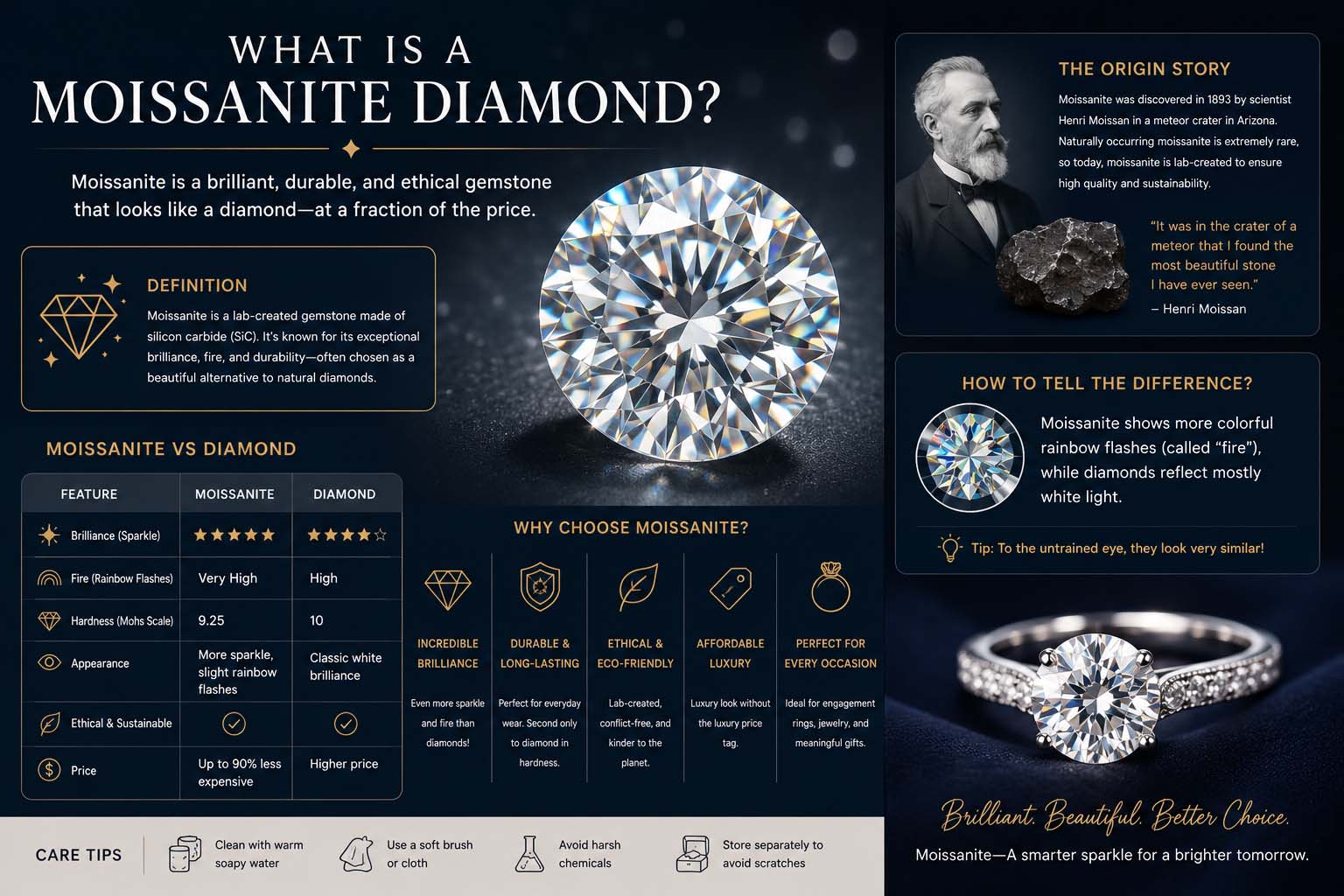
It was originally discovered by French scientist Henri Moissan in 1893 inside a meteor crater. Because natural moissanite is extremely rare, nearly all moissanite gemstones available today are created in laboratories.
Although moissanite is a different material from diamond, it closely resembles a diamond in appearance, making it one of the most popular diamond alternatives in the jewelry market.
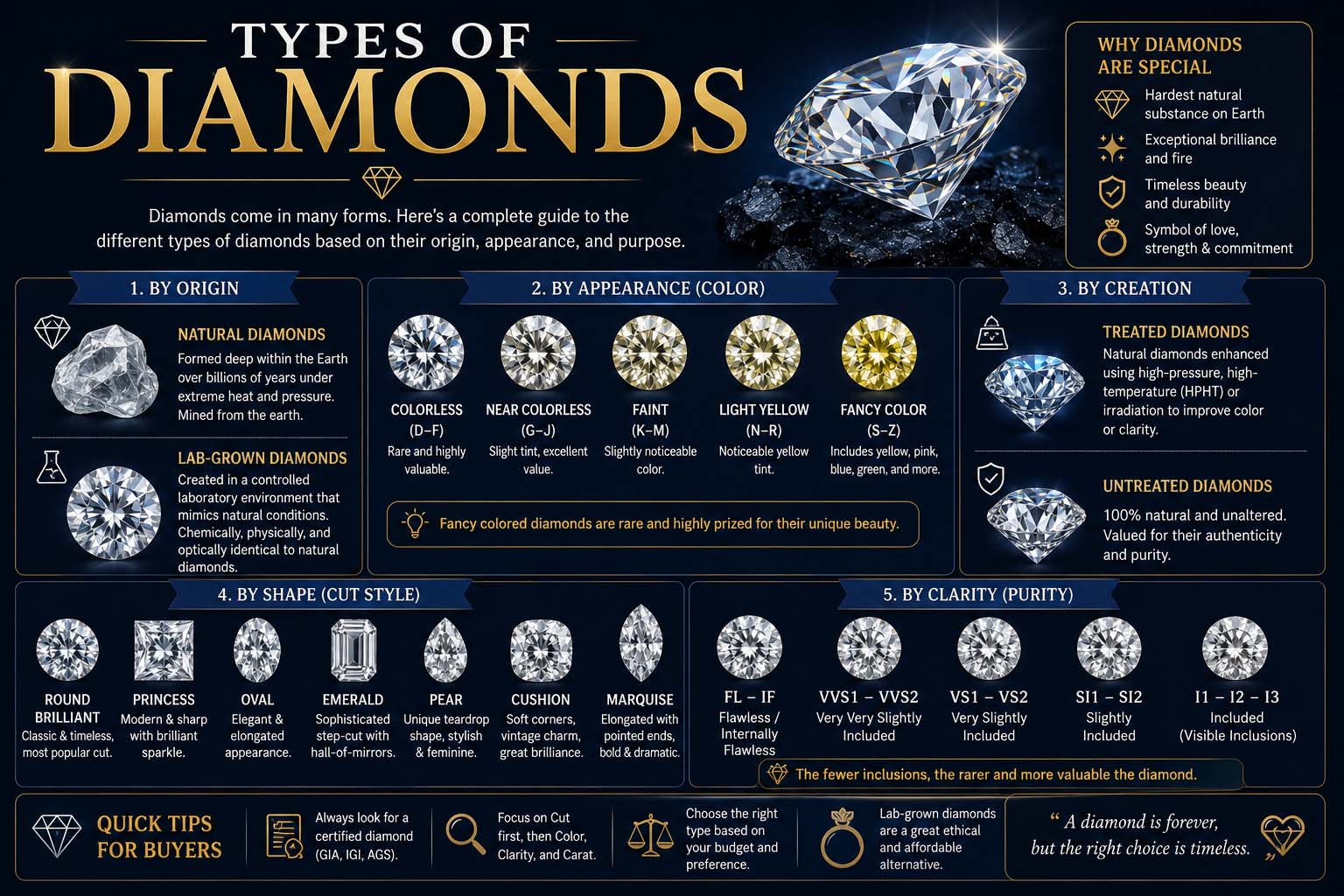
Therefore, many consumers choose moissanite because it offers exceptional brilliance while costing significantly less than a traditional diamond. Likewise, buyers comparing gemstone options may explore the different types of diamonds.
Quick Comparison: Moissanite vs Diamond
| Feature | Moissanite | Natural Diamond |
|---|---|---|
| Composition | Silicon Carbide | Carbon |
| Hardness | 9.25 Mohs | 10 Mohs |
| Sparkle | Very High | High |
| Price | Lower | Higher |
| Durability | Excellent | Excellent |
| Lab Created | Usually Yes | Natural or Lab-Grown |
| Popular For | Budget-Friendly Rings | Luxury Jewelry |
Overall, this comparison highlights why many shoppers consider moissanite when looking for affordable engagement rings.
What Is the Difference Between a Diamond and Moissanite?
One of the most common questions buyers ask is: what is the difference between a diamond and moissanite?
Sparkle and Fire
Moissanite reflects light differently than diamonds.
Specifically, it produces more colorful flashes of light, often called “fire.” While some buyers love this extra sparkle, others prefer the more subtle brilliance of a diamond.
Hardness
Diamonds are the hardest natural material on Earth, scoring 10 on the Mohs hardness scale.
Meanwhile, moissanite scores approximately 9.25, making it extremely durable and suitable for everyday wear.
Cost
Price is one of the biggest differences.
In fact, a moissanite stone of similar size can cost a fraction of what a comparable diamond costs.
Rarity
Natural diamonds are mined from the earth, while most moissanite stones are lab-created.
As a result, this difference influences both price and perceived exclusivity. In addition, shoppers assessing gemstones may want to learn how to tell if a diamond is real.
What Is a Moissanite Diamond Worth?
Many shoppers wonder: what is a moissanite diamond worth?
Unlike natural diamonds, moissanite is generally not purchased as an investment.
Its value comes primarily from:
- Beauty
- Durability
- Affordability
- Jewelry craftsmanship
Because moissanite is manufactured in controlled environments, it does not typically appreciate in value like rare natural diamonds can.
However, many buyers consider moissanite an excellent value because they can purchase a larger, more brilliant stone while spending significantly less money.
Therefore, for someone focused on appearance rather than long-term resale value, moissanite often offers outstanding value for the price.
What Is a Moissanite Diamond Ring?
A moissanite diamond ring is a ring that features a moissanite gemstone as the center stone instead of a traditional diamond.
These rings have become increasingly popular for:
- Engagement rings
- Wedding rings
- Anniversary gifts
- Fashion jewelry
- Everyday wear
Modern moissanite rings are available in virtually every style, including:
- Solitaire settings
- Halo settings
- Vintage designs
- Three-stone rings
- Hidden halo styles
In fact, many people cannot distinguish a high-quality moissanite ring from a diamond ring without specialized equipment.
Pros of Buying Moissanite
Affordable Price
Buyers can often purchase a larger stone while staying within budget.
Exceptional Sparkle
Moissanite is known for its brilliant light performance and eye-catching appearance.
Durable for Daily Wear
With a hardness rating of 9.25, moissanite is suitable for everyday jewelry.
Ethical and Sustainable
Most moissanite gemstones are lab-created, eliminating concerns associated with some mining practices.
Larger Stone for Less Money
Many shoppers choose moissanite because they can afford a larger center stone without increasing their budget significantly.
Cons of Buying Moissanite
Different Optical Appearance
Although beautiful, moissanite does not look exactly like a diamond.
In particular, its rainbow-like flashes can be more noticeable.
Lower Resale Value
Moissanite typically has less resale value than natural diamonds.
Not a Natural Diamond
Some buyers specifically want a natural gemstone and may prefer a diamond regardless of price.
Limited Prestige
Certain luxury buyers value the exclusivity and prestige associated with natural diamonds.
What Is a Lab-Grown Diamond vs Moissanite?
Another common shopping question is what is a lab grown diamond vs moissanite?
While both are often marketed as diamond alternatives, they are very different products.
Lab-Grown Diamond
A lab-grown diamond is a real diamond created in a laboratory.
It has:
- The same chemical composition
- The same hardness
- The same appearance
- The same physical properties
as a natural diamond.
Moissanite
Moissanite is a completely different gemstone made from silicon carbide.
Although it resembles a diamond, it has different optical characteristics and composition.
Which Is Better?
Ultimately, the answer depends on your priorities.
Choose a lab-grown diamond if you want:
- A genuine diamond
- Traditional diamond characteristics
- Better resale perception
Choose moissanite if you want:
- Maximum size for your budget
- Exceptional sparkle
- Lower overall cost
Buyer Guide: Should You Buy Moissanite?
Buy Moissanite If:
- You want the best value for money.
- You prioritize appearance over resale value.
- You prefer a larger stone.
- You are shopping within a specific budget.
Consider a Diamond If:
- You want a natural gemstone.
- Resale value matters to you.
- You prefer traditional luxury jewelry.
- You value rarity and prestige.
For many modern shoppers, moissanite represents an excellent balance between beauty and affordability.
How to Choose a High-Quality Moissanite
When shopping for moissanite jewelry, consider:
Cut Quality
A well-cut stone creates maximum brilliance and sparkle.
Certification
Look for reputable sellers that provide quality documentation.
Setting Quality
The beauty of the ring depends not only on the gemstone but also on the craftsmanship.
Metal Type
Popular options include:
- Platinum
- White Gold
- Yellow Gold
- Rose Gold
Therefore, choose a metal that matches your style and budget. Additionally, buyers evaluating precious-metal settings may learn how to tell if gold is real or compare the different types of silver.
Is Moissanite Good for Engagement Rings?
Absolutely.
Many couples choose moissanite engagement rings because they offer:
- Durability
- Beauty
- Affordability
- Ethical sourcing
With proper care, a moissanite engagement ring can last for decades while maintaining its brilliance.
FAQ
Is moissanite a real diamond?
No. Moissanite is a separate gemstone made from silicon carbide.
Can people tell the difference between moissanite and diamond?
Most people cannot tell the difference without specialized tools, especially in everyday situations.
Does moissanite lose its sparkle?
No. Moissanite maintains its brilliance over time with proper cleaning and care.
Is moissanite durable enough for daily wear?
Yes. Its hardness makes it highly resistant to scratches and suitable for everyday use.
Is moissanite cheaper than diamonds?
Yes. Moissanite generally costs significantly less than natural and lab-grown diamonds of similar size.
Conclusion
Understanding what is a moissanite diamond can help you make a smarter jewelry purchase. Although moissanite is not a true diamond, it offers exceptional brilliance, excellent durability, and remarkable affordability.