

How to Remove Pet Hair From Couch: Easy Methods That Work
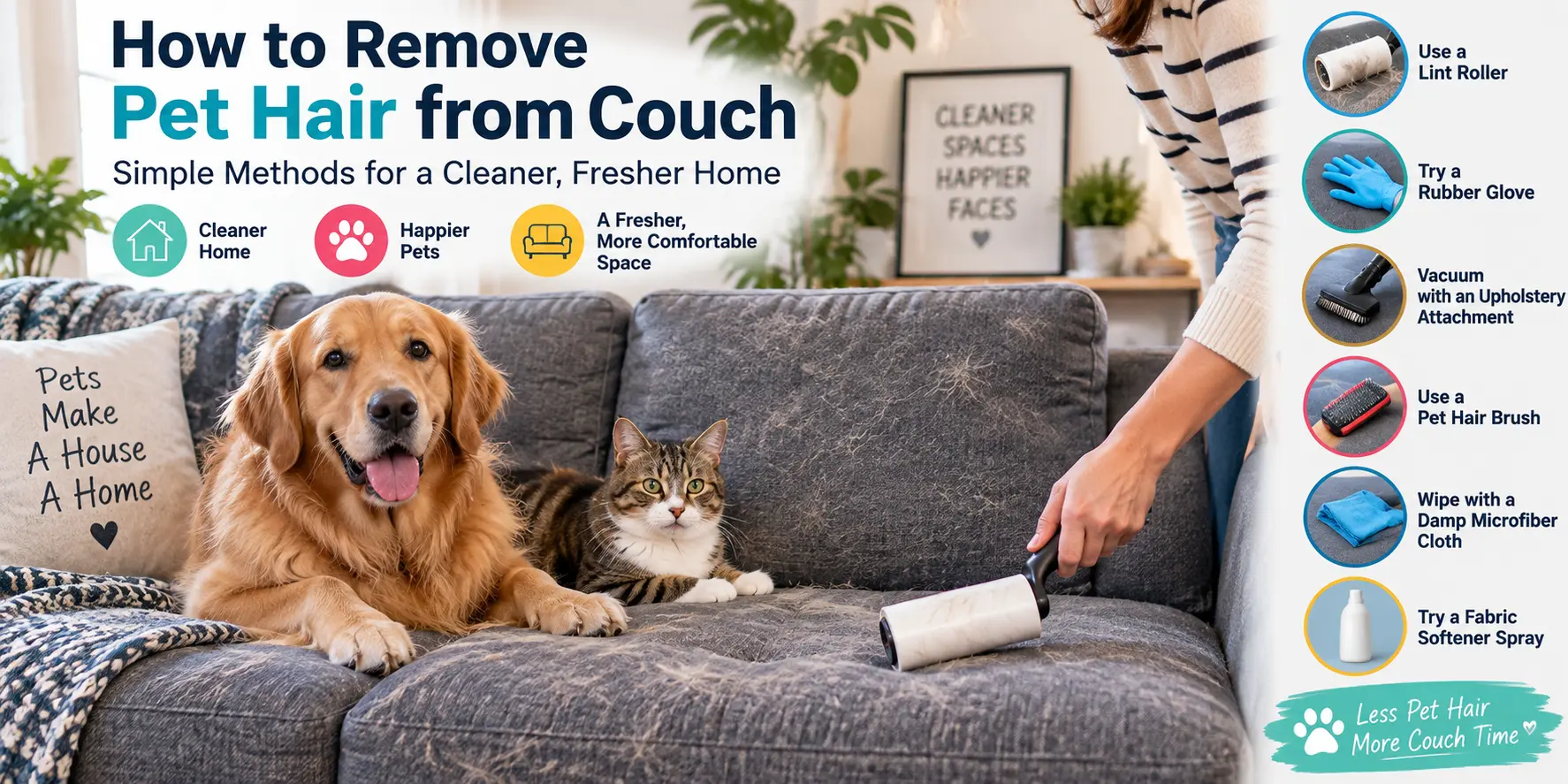
Knowing how to remove pet hair from couch cushions can save a surprising amount of cleaning time, especially if your dog or cat treats the sofa as a favorite sleeping spot. Loose fur often comes off with a vacuum or lint roller, while hair trapped between fibers may need a rubber tool, upholstery brush, or slightly damp cloth. However, the best method depends on your couch material and how deeply the hair has become embedded.
Instead of repeatedly vacuuming the same spot, start by loosening the fur and then collect it. This two-step approach usually works better because pet hair can cling to upholstery through friction and static electricity.
Why Does Pet Hair Stick to a Couch?
Pet hair does not always sit loosely on top of upholstery.
Instead, movement across the sofa can push individual hairs between woven fibers. Static can also make lightweight fur cling to fabric, while longer hairs may become tangled in textured upholstery.
Consequently, simply running your hand over the cushion may remove very little.
Fabric type matters as well. Smooth, tightly woven upholstery generally releases fur more easily than highly textured fabrics. Meanwhile, seams, cushion edges, piping, and spaces underneath cushions often collect the most hair.
Therefore, inspect the whole couch before you start cleaning rather than concentrating only on the visible seating surface.
How to Remove Pet Hair From Couch Upholstery
For most fabric couches, a combination of loosening and vacuuming works well.
First, remove throw pillows, blankets, and removable cushions. Then, use a rubber pet-hair tool, upholstery brush, or another fabric-safe method to gather loose hair into small piles.
Next, vacuum those piles using an upholstery attachment.
Work slowly because quick passes may leave embedded hair behind. Likewise, change the direction of your strokes because hairs can become trapped at different angles.
If you regularly clean other soft surfaces in a pet-friendly home, choosing the best vacuum for carpet can also be useful because pet hair commonly moves between sofas, rugs, and carpeting.
Finally, use a crevice attachment around seams and underneath cushions. These areas can hold much more fur than they appear to at first glance.
Best Tools for Removing Pet Hair From a Couch
You do not necessarily need an expensive cleaning machine. In fact, several inexpensive products can work well when matched to the right upholstery.
| Tool | Best Use | Main Advantage | Limitation |
|---|---|---|---|
| Upholstery vacuum attachment | Routine cleaning | Removes hair and loose debris | May struggle with embedded fur |
| Rubber pet-hair remover | Fabric upholstery | Gathers stubborn hair quickly | Test on delicate fabrics |
| Lint roller | Small areas | Fast and convenient | Replacement sheets create ongoing cost |
| Reusable lint brush | Frequent cleaning | No disposable sheets needed | Effectiveness varies by fabric |
| Slightly damp microfiber cloth | Light surface hair | Inexpensive and simple | Not suitable for every upholstery type |
| Crevice attachment | Seams and edges | Reaches narrow spaces | Slow for large surfaces |
When shopping, consider how frequently you need to clean.
For occasional fur, a lint roller may be enough. However, homes with several shedding pets may benefit from a reusable hair remover and a vacuum with a dedicated upholstery tool.
Also, check the manufacturer’s care instructions before using any tool aggressively. Delicate upholstery can snag or develop visible changes if scrubbed too hard.
How to Remove Embedded Pet Hair From Couch Fibers
Learning how to remove embedded pet hair from couch fabric requires a little more effort because a vacuum alone may pass over hairs trapped between fibers.
Start with a dry couch.
Then, use a rubber upholstery tool or fabric-safe pet-hair brush with short strokes. Rather than brushing randomly, work in one direction so the hair gradually collects into visible clumps.
Once you loosen the fur, vacuum it immediately.
For stubborn areas, change direction and repeat the process. However, avoid pressing excessively hard because aggressive rubbing can damage some upholstery.
A slightly damp rubber glove can also collect hair from certain durable fabrics. Run your gloved hand gently across the surface, then remove the gathered hair as it forms.
Still, moisture is not appropriate for every couch. Therefore, check the upholstery cleaning code and manufacturer’s directions before using water.
How to Remove Pet Hair From Microfiber Couch Surfaces
If you are researching how to remove pet hair from microfiber couch upholstery, begin with the gentlest dry method.
Microfiber has very fine synthetic fibers, and pet hair can cling tightly to the surface. However, a clean rubber glove, rubber hair-removal tool, or suitable upholstery vacuum attachment can often lift the fur effectively.
First, vacuum loose debris.
Next, move a rubber tool gently across the upholstery in short strokes. As the fur gathers, pick it up or vacuum it away.
For remaining hairs, a lint roller can work well on small areas.
However, microfiber couches can have different cleaning requirements. Therefore, check the furniture’s care label before using water, cleaning solutions, or homemade sprays.
This becomes especially relevant when buying furniture. A sofa may look attractive in a showroom, yet its fabric can affect how much maintenance it needs once pets start using it.
How to Remove Pet Hair From Suede Couch Upholstery
People searching for how to remove pet hair from suede couch surfaces should be more cautious because suede and suede-like materials can require different care.
Begin by checking whether you have genuine suede, microsuede, or another synthetic upholstery that resembles suede.
Then, consult the manufacturer’s cleaning instructions.
For loose pet hair, gentle vacuuming with an appropriate upholstery attachment may be the safest starting point. A soft upholstery brush may also help, provided the manufacturer permits it.
Avoid automatically using water or household cleaning mixtures.
Genuine suede can react differently from synthetic microsuede, while excess moisture may affect appearance or texture. Therefore, test any permitted cleaning method in an inconspicuous area first.
When in doubt, professional upholstery cleaning may be safer than experimenting with an expensive sofa.
Can a Robot Vacuum Help With Couch Hair?
A robot vacuum cannot normally clean the upholstery itself. However, it can reduce some of the loose pet hair circulating around the room before that fur reaches your furniture.
Pet hair often collects on floors and rugs, then transfers to socks, clothing, blankets, and furniture.
Therefore, frequent floor cleaning can support your couch-cleaning routine.
If automated floor cleaning interests you, understanding what is the best robot vacuum for your household starts with factors such as floor type, pet-hair pickup, brush design, navigation, maintenance needs, and how easily the dustbin and rollers can be cleaned.
Still, you will generally need a separate tool for the couch.
A handheld vacuum, full-size vacuum with an upholstery attachment, or reusable pet-hair remover is usually more practical for sofa surfaces.
Should You Buy a Pet Hair Vacuum?
A dedicated pet-focused vacuum can make sense if your pets shed heavily and you clean upholstered furniture frequently.
However, the word “pet” on the box does not automatically mean the vacuum will perform better on your particular couch.
Instead, examine the included tools.
A useful upholstery vacuum should be comfortable to maneuver across cushions and capable of reaching seams. Some models include motorized or powered upholstery tools designed to agitate hair from fabric.
Also, consider maintenance.
Pet hair can wrap around brush rolls, so an easy-to-clean brush design may save time. Likewise, washable or easily replaceable filters can simplify long-term ownership.
Cordless handheld models offer convenience for quick sofa cleaning, while larger corded vacuums may provide longer uninterrupted cleaning sessions.
Therefore, choose based on your home, furniture, pets, and cleaning habits rather than marketing labels alone.
Protecting Different Couch Materials From Pet Hair
Furniture material can make a noticeable difference in day-to-day maintenance.
For example, tightly woven fabrics may be easier to clean than deep textures where hair becomes trapped. Meanwhile, smooth leather or faux leather often allows loose fur to be wiped away, although those materials have their own care requirements.
Color also matters visually.
Light pet hair becomes obvious on dark upholstery, while dark fur stands out against pale fabric.
For instance, someone considering a green velvet couch in a pet-friendly home may want to think about both the visual appeal of velvet and the extra attention textured upholstery can require when fur accumulates.
Therefore, shoppers with heavy-shedding pets should consider cleanability before purchasing a new sofa.
Removable, washable covers can also make maintenance easier, provided the manufacturer specifically states that they can be machine washed.
A Simple Weekly Pet-Hair Cleaning Routine
You can prevent heavy buildup by cleaning small amounts of fur regularly.
First, remove blankets and cushions.
Next, collect surface hair with a reusable rubber tool or lint brush. Then, vacuum the main seating areas, back cushions, armrests, seams, and underneath removable cushions.
Afterward, inspect the couch from different angles because hair can blend into patterned or textured upholstery.
Finally, clean nearby floors.
This routine may take only a short time when performed regularly. In contrast, waiting until fur becomes heavily embedded can turn the same job into a much longer cleaning session.
During heavy seasonal shedding, you may need to clean more often.
Ways to Reduce Pet Hair on the Couch
Removing existing fur helps, but reducing future buildup saves more time.
Regular pet grooming can capture loose hair before some of it reaches your furniture. However, use grooming tools appropriate for your animal’s coat and follow veterinary or professional grooming advice when needed.
A washable pet blanket can also protect the area where your pet normally sleeps.
Instead of cleaning the entire sofa every few days, you can remove and wash the cover according to its care instructions.
Furniture covers are another option, especially for households with multiple pets.
When shopping, look for a cover that fits securely, can be cleaned easily, and does not create a slipping hazard during normal use.
Most of all, clean small amounts of fur before they become packed into the upholstery.
Common Pet-Hair Removal Mistakes
One common mistake is scrubbing upholstery aggressively.
Although hard scrubbing may remove some hair, it can also disturb fabric fibers or change the appearance of delicate materials.
Another mistake is applying water without checking the couch’s cleaning instructions.
Likewise, homemade sprays may contain ingredients unsuitable for a particular fabric, dye, or finish. Therefore, do not assume a cleaning method is safe simply because it uses common household ingredients.
People also forget hidden areas.
Hair accumulates behind cushions, under the sofa, along seams, and around the back of furniture. Consequently, cleaning only the visible seat can leave a large amount of fur behind.
Finally, do not expect one tool to work equally well on every material. A rubber remover that performs beautifully on one fabric may be unsuitable for another.
Frequently Asked Questions
What is the fastest way to remove pet hair from a couch?
For many durable fabric couches, start with a rubber pet-hair remover to gather loose fur and then vacuum the collected hair with an upholstery attachment. However, always follow your couch manufacturer’s care instructions.
How do you remove dog hair that is stuck in fabric?
Use short strokes with a fabric-safe rubber tool or upholstery brush to loosen embedded hairs. Then, vacuum the area slowly. You may need to repeat the process from another direction.
Can I use a lint roller on my couch?
Usually, a lint roller works well for small areas and surface hair. However, check the upholstery care guidance first, especially for delicate or unusual fabrics.
Can I use a damp cloth to remove pet hair?
A slightly damp microfiber cloth can help on some materials because the hair gathers together as you wipe. However, not every upholstery fabric tolerates moisture, so check the care label before trying this method.
How often should I remove pet hair from my couch?
That depends on how much your pets shed and how often they use the furniture. For heavy shedding, quick cleaning several times a week can prevent fur from becoming deeply embedded.
Do pet-hair removal tools damage couches?
Most tools are safe when used on compatible materials and with gentle pressure. However, rough brushes or aggressive rubbing can affect delicate upholstery. Therefore, test unfamiliar tools on a hidden area first.
Keep Pet Hair From Becoming a Bigger Job
Once you understand how to remove pet hair from a couch, the easiest strategy is usually frequent light cleaning rather than occasional heavy cleaning.
Start with a simple reusable tool for surface fur, then use a vacuum with an upholstery attachment for loose hair, seams, and hidden areas. Meanwhile, reserve more intensive brushing for hair that has become embedded.
If you are buying a new cleaning tool, match it to your couch material and the amount your pets shed. A lint roller may handle occasional cat hair, while a multi-pet household may get more value from a reusable remover and a capable upholstery vacuum.
Most of all, follow the couch manufacturer’s care instructions. With the right method and a regular routine, you can keep upholstery cleaner without spending hours fighting the same layer of pet hair every weekend.