
What Is LVP Flooring? A Complete Buying Guide
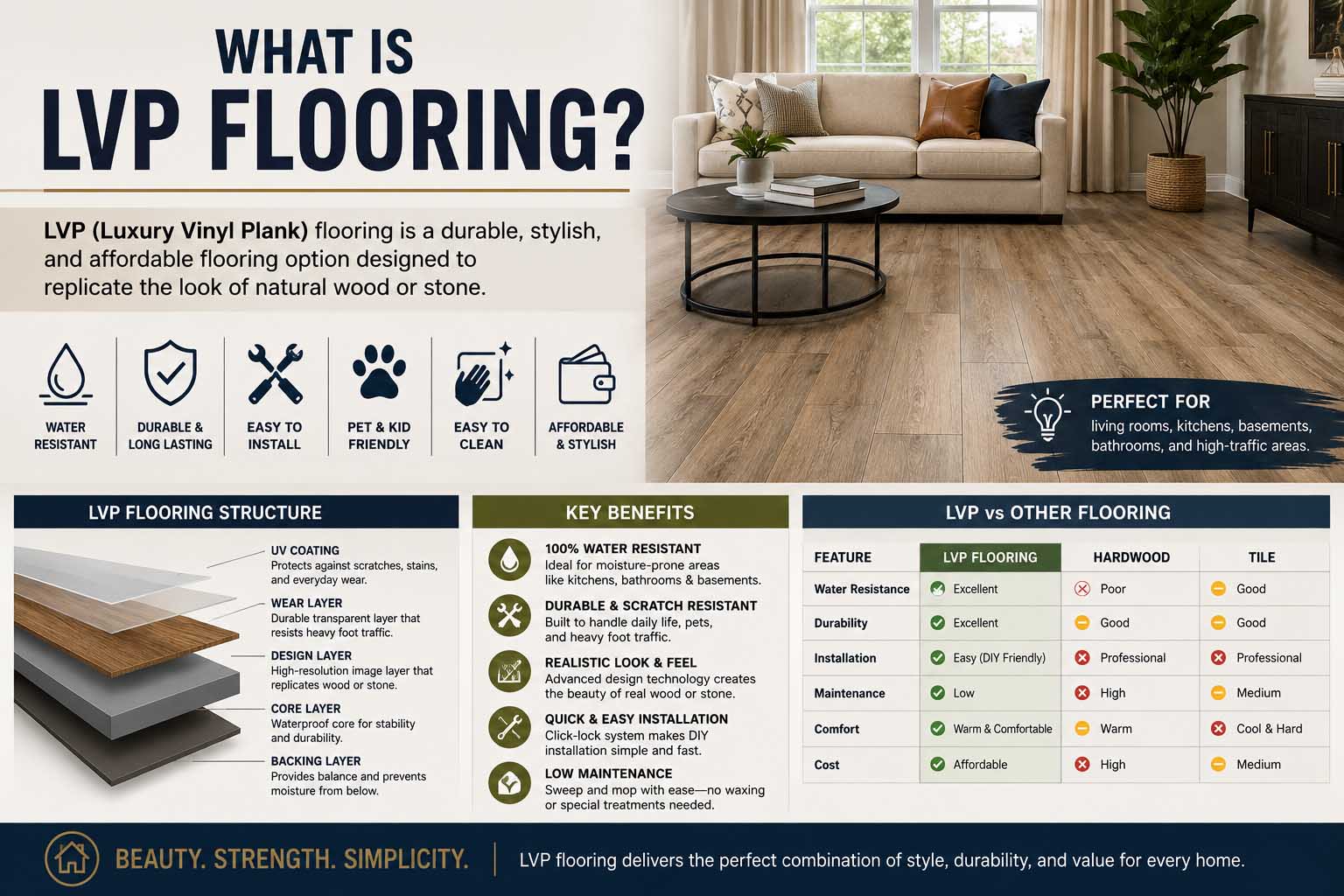
If you like the appearance of hardwood but want something easier to maintain, you may be wondering, what is LVP flooring and whether it is a good choice for your home? LVP stands for luxury vinyl plank, a type of resilient flooring designed in plank shapes that often imitate hardwood. Modern LVP comes in a wide range of colors, textures, patterns, thicknesses, and construction types, so shoppers can find options for everything from bedrooms and living rooms to kitchens and busy family spaces.
However, not every luxury vinyl plank performs the same way. Wear-layer thickness, core construction, installation method, surface texture, warranty terms, and subfloor preparation can all affect how well a floor performs.
Therefore, understanding what you are buying matters more than simply choosing the wood pattern that looks best in a showroom
What Is LVP Flooring and How Does It Work?
The simple answer to what is LVP flooring? is that it is a multilayer vinyl flooring product manufactured in planks rather than traditional square vinyl tiles or large sheet rolls.
Most products use a printed design layer to reproduce the appearance of wood. Meanwhile, a transparent protective wear layer sits above the design and helps protect it from everyday traffic.
Depending on the product, the plank may use a flexible vinyl construction or a more rigid core. Many modern rigid-core products also use click-lock edges that allow the flooring to float over a properly prepared subfloor.
This combination of appearance and practicality explains why LVP has become a common option for renovations and new construction. Likewise, people researching what is a modular home may encounter LVP because resilient flooring is often considered when buyers want practical, easy-care finishes.
What Is LVP Flooring Made Of?
If you are asking what is LVP flooring made of, the exact answer varies by manufacturer and product line. However, most products contain several functional layers.
Wear Layer
The wear layer is the clear surface layer that protects the printed design below it.
A stronger or thicker wear layer can make sense in high-traffic households, although shoppers should not judge durability from this measurement alone. The quality of the finish, construction, maintenance, and intended use also matter.
Design Layer
Below the protective surface is a printed visual layer. This layer creates the wood appearance and can reproduce oak, walnut, maple, hickory, and many other styles.
Better products often combine detailed printing with surface embossing. As a result, the grain can look and feel more realistic.
Core Layer
The core gives the plank much of its structure.
Some luxury vinyl planks remain relatively flexible, while rigid-core versions use denser construction. Common rigid-core categories include SPC, or stone plastic composite, and WPC, often called wood plastic or wood polymer composite.
SPC tends to feel firm underfoot, while WPC products may provide a somewhat softer feel. However, construction differs by manufacturer, so product specifications are more useful than category names alone.
Attached Underlayment
Some planks include an attached pad or backing. Depending on the product, this may improve comfort, help with sound, or simplify installation.
Still, an attached pad does not mean you can ignore the manufacturer’s subfloor requirements.
Why Shoppers Choose Luxury Vinyl Plank
LVP attracts buyers largely because it combines a wood-style appearance with relatively simple maintenance.
Unlike natural hardwood, many LVP products are designed to handle everyday moisture more easily. Therefore, suitable products are commonly considered for kitchens, entryways, laundry areas, and other spaces where occasional spills are expected.
Meanwhile, the wide range of designs makes it possible to create anything from a rustic interior to a clean contemporary space without buying natural wood.
Pros and Cons of LVP Flooring
No flooring material is ideal for every household. Therefore, comparing both sides can prevent disappointment after installation.
| Advantages | Disadvantages |
|---|---|
| Wide selection of wood-look designs | Quality varies considerably |
| Many products offer strong moisture resistance | Damaged planks may need replacement |
| Usually simple to clean | Can be damaged by sharp objects or heavy furniture |
| Available at several price levels | Some products look less realistic than others |
| DIY-friendly options are available | Subfloor problems can affect the finished result |
| Softer than ceramic or stone tile | Cannot be refinished like solid hardwood |
One of LVP’s biggest limitations is that it cannot usually be sanded and refinished like genuine hardwood. Once the decorative surface becomes badly damaged, replacing the affected plank or flooring section is generally the practical solution.
What Is the Best LVP Flooring for Your Home?
There is no universal answer to what is the best LVP flooring because the right product depends on the room, traffic level, budget, and installation conditions.
Instead of choosing solely by brand or appearance, compare the following features.
Wear Layer and Intended Use
Start by checking whether the manufacturer rates the flooring for your intended space.
A quiet guest bedroom experiences far less traffic than a kitchen used by a large family. Likewise, households with pets or children may prioritize resistance to everyday wear.
Wear layers are commonly measured in mils in the U.S. market. However, a larger number should not automatically be treated as proof that one product is better in every way.
Overall Thickness and Core
Plank thickness can influence how flooring feels, but thickness alone does not determine quality.
Instead, consider the entire construction. A rigid core may help the plank feel more substantial, while the backing and subfloor also influence comfort and sound.
Surface Texture
Look at samples under natural light rather than relying entirely on online photographs.
Some inexpensive floors use repeated patterns that become obvious across a large room. By contrast, more varied plank visuals and convincing embossing can create a more natural appearance.
Warranty
Read the warranty rather than simply choosing whichever box advertises the longest number of years.
Check what the warranty actually covers, which rooms qualify, whether professional installation is required, and which types of damage are excluded.
LVP vs. Laminate vs. Hardwood
Shoppers often compare LVP with laminate and hardwood because all three can provide a wood-style floor.
Laminate typically uses a fiberboard-based core with a photographic design layer. Meanwhile, LVP relies primarily on vinyl-based or composite construction.
Solid hardwood, by contrast, consists of real wood throughout. Therefore, it offers natural variation and can often be refinished, although it usually costs more and has different moisture considerations.
LVP makes sense when easy maintenance and moisture resistance are priorities. Hardwood may suit buyers who value natural material and long-term refinishing potential, while laminate can provide another affordable wood-look alternative.
Can You Install LVP in Kitchens and Bathrooms?
Many LVP products are marketed as waterproof or water-resistant, which makes them attractive for moisture-prone rooms.
However, shoppers should distinguish between the flooring material resisting water and an entire installed floor being completely protected from water damage.
Water can still reach subfloors, walls, or spaces around edges during leaks or flooding. Therefore, follow the manufacturer’s installation requirements carefully.
Subfloor moisture deserves attention too. For homes with moisture concerns beneath the floor, understanding whether a vapor barrier crawl space system is appropriate can be part of solving the underlying moisture problem rather than expecting new flooring to hide it.
For bathrooms, also verify that the specific flooring manufacturer approves the product for that location.
How Much Does LVP Flooring Cost?
LVP is available across a broad range of prices.
Material alone may cost roughly $2 to $7 or more per square foot, although premium products can exceed that range. Prices vary by brand, construction, retailer, location, design, and time.
Installation adds another expense when you hire a professional. Meanwhile, removing existing flooring, repairing the subfloor, moving furniture, installing trim, or modifying doors can increase the final project cost.
Therefore, compare the total installed price rather than focusing only on the price printed on the flooring box.
It is also smart to purchase extra material for cuts, waste, and future repairs. The exact allowance depends on room layout and installation method.
Installation: DIY or Professional?
Click-lock LVP can be appealing to DIY shoppers because planks often connect without being permanently attached to the subfloor.
However, easy-to-connect planks do not guarantee an easy installation.
The subfloor needs to meet the manufacturer’s requirements for flatness, cleanliness, dryness, and structural condition. Otherwise, uneven areas may create movement, gaps, or other problems.
Professional installation may therefore make sense for complicated room layouts, large areas, significant subfloor issues, or homeowners who simply want to reduce installation risk.
Before buying, check whether DIY installation affects warranty coverage.
How to Clean and Maintain LVP
Routine maintenance is one of LVP’s strongest selling points.
Sweep, dust-mop, or vacuum regularly so grit does not remain on the surface. When vacuuming, follow the flooring manufacturer’s cleaning advice and avoid settings or attachments that could scratch the finish.
If you are replacing carpet with vinyl plank, your previous research into the best vacuum for carpet may no longer apply in exactly the same way because hard flooring can require different vacuum settings or attachments.
For deeper cleaning, use products approved for your specific flooring. Avoid assuming that harsh chemicals, abrasive scrubbers, waxes, or steam cleaners are suitable.
Clean spills promptly as well. Although many products resist moisture, leaving liquids sitting unnecessarily is rarely a good maintenance habit.
Furniture pads can also help reduce scratches, while mats near exterior doors can capture grit before it reaches the floor.
Matching LVP With Your Interior
Flooring covers a large visual area, so its color can strongly affect the room.
Light wood tones can create an airy appearance, while darker flooring can provide contrast. Meanwhile, medium natural tones often work well across changing furniture styles.
Take samples home before ordering. Then, view them during the morning, afternoon, and evening because artificial and natural light can change how undertones appear.
Also compare the floor against permanent finishes such as cabinets, countertops, and large furniture pieces.
If a kitchen renovation includes refinishing rather than replacing cabinetry, researching the best paint for cabinets can help you coordinate the cabinet finish with the undertones in your selected flooring.
Avoid matching every wood tone perfectly. Slight contrast often looks more natural than trying to make the flooring, furniture, and cabinetry identical.
Common LVP Buying Mistakes
Buying on appearance alone is one of the biggest mistakes.
A beautiful plank may not have the construction or warranty you need for a busy household. Therefore, review specifications before committing to a design.
Another mistake is ignoring subfloor preparation. Even premium flooring can perform poorly when installed over an unsuitable surface.
Likewise, do not assume every product labeled “luxury vinyl” has equal quality. Compare wear layers, cores, edge systems, installation instructions, warranties, and customer support.
Finally, calculate your full project quantity before buying. Running short midway through installation can be frustrating, especially if the same production batch is no longer available.
FAQs About LVP Flooring
What does LVP flooring stand for?
If you are wondering what is LVP flooring stand for, the standard term is luxury vinyl plank. It refers to vinyl-based flooring manufactured in plank form, commonly with a wood-look design.
Is LVP real wood?
No. LVP is not hardwood. Instead, manufacturers use printed decorative layers and vinyl or composite materials to create a wood-style appearance.
Is LVP flooring waterproof?
Many LVP products are marketed as waterproof because the planks themselves resist water. However, installation details matter, and water may still damage the subfloor or surrounding building materials. Always check the manufacturer’s specifications.
How long does LVP flooring last?
There is no guaranteed lifespan for every product. Product quality, traffic, installation, maintenance, sunlight, pets, furniture, and other conditions all affect longevity. Therefore, compare warranties and intended-use ratings rather than relying on a single lifespan estimate.
Can LVP go over existing flooring?
Sometimes. Certain products can be installed over suitable existing hard flooring if the surface meets the manufacturer’s requirements. However, damaged, uneven, soft, or moisture-affected surfaces may require removal or preparation first.
Is LVP good for homes with pets?
LVP can be a practical option for pet households because many products are easy to clean and designed for everyday wear. Still, scratch resistance varies, so pet owners should compare surface durability and manufacturer guidance before buying.
Making the Right LVP Purchase
Understanding what is LVP flooring makes shopping much easier because you can look beyond color and price. Luxury vinyl plank can offer an attractive combination of wood-style design, moisture resistance, simple maintenance, and flexible installation options, yet quality varies significantly between products.
Before ordering, take home several samples, compare construction and wear layers, read the warranty, and confirm that the product is approved for your intended room. Then, inspect the subfloor and calculate the complete project cost, including preparation, trim, waste, and installation.
A floor covers too much of your home to choose from a small online picture alone. Therefore, spend a little extra time comparing real samples and technical specifications before buying. That simple step can help you choose LVP that suits both the way your home looks and the way you actually live in it.