
Vapor Barrier Crawl Space: A Complete Guide for Homeowners
Moisture problems beneath a home can lead to serious structural damage, mold growth, and unhealthy indoor air quality. One of the most effective ways to protect your property is by installing a vapor barrier crawl space system. Crawl spaces are often exposed to humidity from the ground, especially in areas with frequent rain or high moisture levels. Without proper protection, this damp environment can damage wood, insulation, and even your home’s foundation over time.
A crawl space vapor barrier acts as a protective layer between the soil and the structure of your home. By reducing moisture buildup, it helps improve air quality, energy efficiency, and the lifespan of your property. Homeowners handling other moisture-related repairs may also benefit from learning how to patch drywall.
What Is a Vapor Barrier Crawl Space?
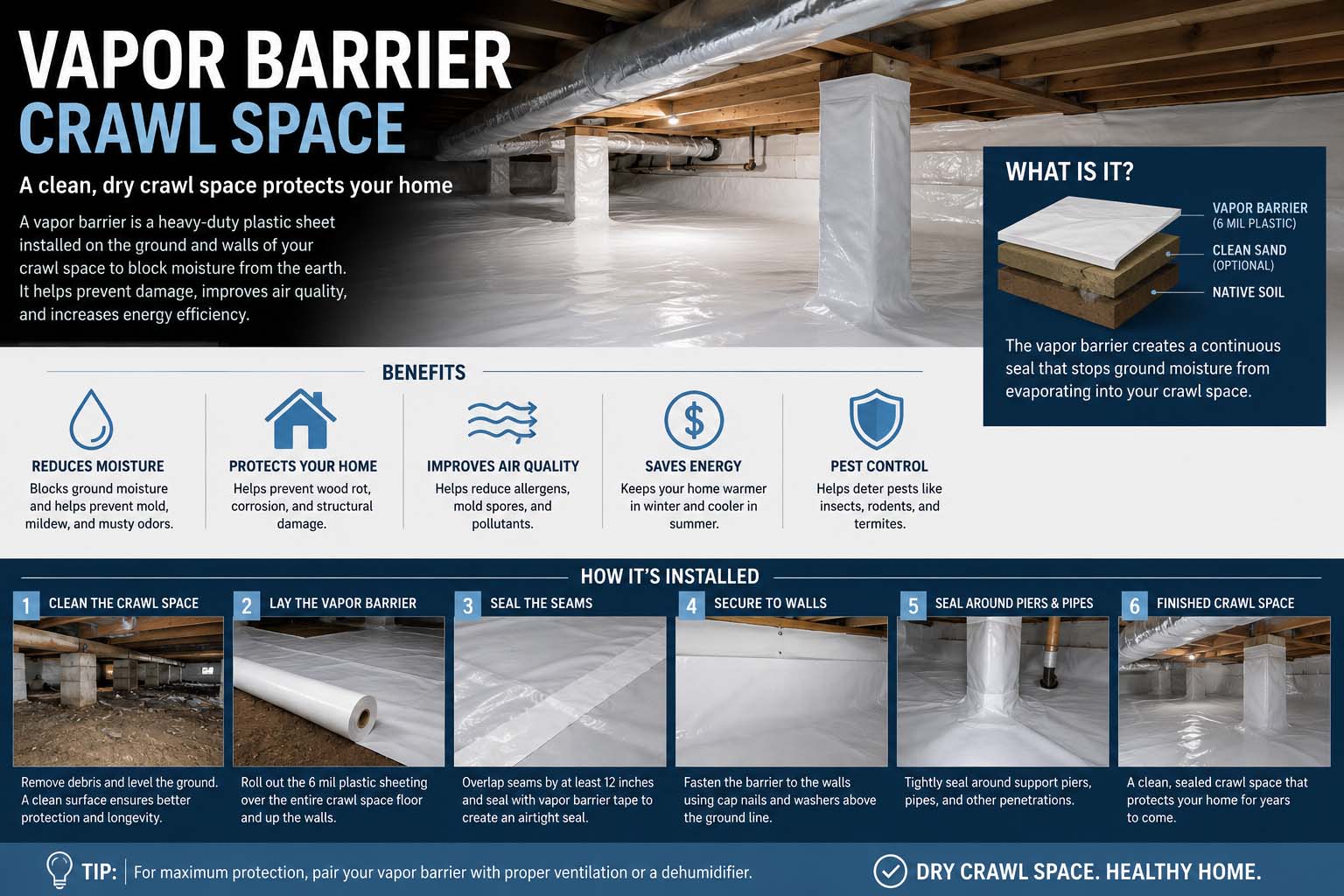
A vapor barrier crawl space refers to a crawl space that has been sealed with a moisture-resistant material, usually heavy-duty plastic sheeting. This material covers the ground and sometimes the walls to stop water vapor from entering the crawl space area.
Moisture naturally rises from the soil, especially during humid weather conditions. If left untreated, this moisture can create the perfect environment for mold, mildew, and pests. A vapor barrier prevents excess humidity from spreading into the home above.
Many homeowners notice musty odors, cold floors, or increased allergy symptoms before realizing their crawl space is the source of the problem. Installing a proper vapor barrier can significantly reduce these issues while creating a cleaner and healthier environment.
Another important benefit is energy efficiency. Damp air makes heating and cooling systems work harder. By controlling moisture levels, a vapor barrier can help stabilize indoor temperatures and reduce energy bills. Choosing the best vacuum for carpet can also help maintain a cleaner indoor environment after moisture problems have been resolved.
Why You Need a Vapor Barrier for Crawl Space
Choosing the right vapor barrier for crawl space areas is essential for maintaining the structural integrity of your home. Moisture can weaken wooden beams, damage insulation, and attract insects like termites. Over time, these problems become expensive to repair.
A quality vapor barrier creates a protective seal that minimizes moisture infiltration. Most professional installations use reinforced polyethylene material because it is durable and resistant to tearing. Thickness can vary depending on the climate and the condition of the crawl space.
Homes located in humid regions benefit greatly from crawl space moisture control. Excess humidity can travel upward into living spaces, affecting walls, flooring, and furniture. This process, often called the stack effect, allows moisture and odors to circulate throughout the home.
Another reason homeowners install vapor barriers is to improve indoor air quality. Mold spores and bacteria thrive in damp environments. By reducing moisture, you lower the risk of airborne contaminants entering your home.
Wet insulation loses effectiveness and can increase heating and cooling costs. A dry crawl space supports better overall home efficiency.
Crawl Space Vapor Barrier Installation
Proper crawl space vapor barrier installation is important for achieving long-lasting results. While some homeowners attempt DIY installation, professional installation often provides better protection and durability.
The process usually begins with cleaning the crawl space. Any debris, standing water, or damaged insulation should be removed before installation starts. The ground must be as smooth as possible to allow the barrier to lay flat.
After preparation, heavy-duty plastic sheeting is spread across the crawl space floor. The seams are overlapped and sealed with waterproof tape to prevent moisture leaks. In many cases, the material is extended several inches up the walls for added protection.
Professional installers may also use mechanical fasteners or adhesive to secure the barrier in place. This helps prevent movement and ensures the system remains effective over time.
Some advanced crawl space systems include additional features such as dehumidifiers, drainage systems, or encapsulation methods. Encapsulation takes moisture control a step further by fully sealing the crawl space from outside air. Homes with recurring groundwater issues may require professional drainage or waterproofing solutions.
Cost to Install Vapor Barrier in Crawl Space
The cost to install vapor barrier in crawl space areas depends on several factors, including the size of the crawl space, material thickness, labor costs, and whether additional moisture control systems are needed.
Basic vapor barrier installations are generally more affordable, especially for smaller crawl spaces with easy access. However, homes with severe moisture problems may require drainage improvements, sump pumps, or encapsulation systems, increasing the overall cost.
Material quality also plays a role in pricing. Thin plastic sheets are less expensive but may tear more easily and require replacement sooner. Thicker reinforced barriers cost more initially but provide greater durability and protection.
Labor costs vary depending on location and crawl space condition. Tight or difficult-to-access crawl spaces often require more time and specialized equipment, which can increase installation expenses.
Despite the upfront investment, many homeowners view vapor barriers as a cost-effective improvement. Preventing mold damage, wood rot, and insulation failure can save thousands of dollars in future repairs. Homeowners planning additional upgrades may also explore the best paint for cabinets to refresh their interiors.
Common Signs Your Crawl Space Needs a Vapor Barrier
Many homeowners are unaware of crawl space moisture problems until visible damage appears. One common sign is a persistent musty smell inside the home. This odor often originates from damp conditions beneath the floor.
Another warning sign is increased indoor humidity. Condensation on windows, warped wood flooring, or peeling paint may indicate excess moisture rising from the crawl space.
Mold growth is another serious issue connected to crawl space humidity. Dark stains on wood beams or insulation can signal moisture problems that require immediate attention. In some cases, prolonged moisture exposure can also lead to structural issues that require foundation repair.
Conclusion
A vapor barrier crawl space system is one of the most effective ways to protect your home from moisture-related damage. By controlling humidity levels beneath your house, a vapor barrier helps prevent mold, wood rot, pest infestations, and poor indoor air quality.