
Difference Between Antique and Vintage: A Beginner’s Guide to Shopping Smarter
If you’ve ever browsed an antique shop, online marketplace, or estate sale, you’ve probably seen the words difference between antique and vintage used almost interchangeably.Knowing the distinction can help you shop with more confidence, understand pricing, and avoid paying antique prices for an item that’s simply vintage.
Whether you’re decorating your home, collecting jewelry, buying furniture, or searching for unique gifts, understanding these terms makes it easier to recognize value and choose pieces that fit your style and budget.
Difference Between Antique and Vintage Explained
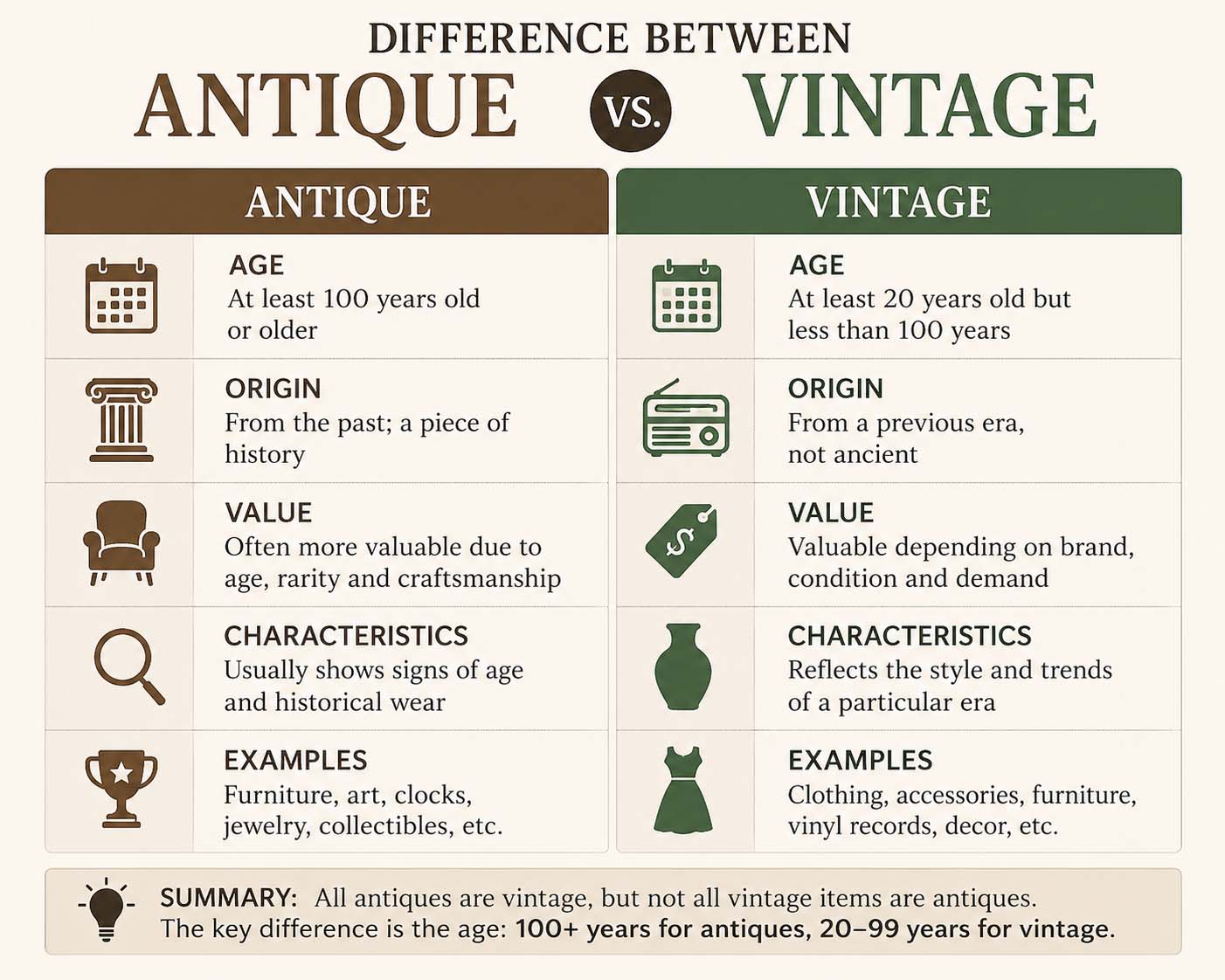
The easiest way to understand the difference between antique and vintage is by looking at age.
- “Antique items are generally 100 years old or older.”
- Vintage items are typically 20 to 99 years old.
Although these age ranges are widely accepted, there is no single law that applies to every product category. Some industries and retailers may use slightly different definitions, especially in fashion and collectibles.
Here’s a quick comparison.
| Feature | Antique | Vintage |
|---|---|---|
| Typical Age | 100+ years | 20–99 years |
| Historical Significance | Often high | Sometimes |
| Availability | Usually limited | More common |
| Price | Often higher | Varies widely |
| Best For | Serious collectors, heirlooms | Everyday decorating, fashion, collecting |
Age alone doesn’t determine value. Condition, rarity, craftsmanship, maker, and demand also play major roles.
What’s the Difference Between Vintage and Antique?
Many shoppers ask, what’s the difference between vintage and antique when browsing online listings.
Think of it this way:
An oak dining table made in 1915 is considered an antique because it’s more than a century old.
A mid-century modern chair made in 1965 is vintage because it hasn’t yet reached the 100-year mark.
Likewise, a leather jacket from the 1980s, a camera from the 1970s, or a record player from the 1960s would all fall into the vintage category rather than antique.
Understanding this simple timeline helps you evaluate listings more accurately and compare prices across different sellers.
Why Sellers Sometimes Use the Terms Incorrectly
Not every listing labeled “antique” actually qualifies.
Some sellers intentionally use the word because it attracts buyers searching for rare or collectible pieces. Others simply misunderstand the definition.
For that reason, it’s always worth asking questions before purchasing.
Ask about:
- Estimated manufacturing date
- Brand or maker
- Original documentation
- Previous ownership
- Restoration history
These details often reveal more than the listing title itself.
Why Age Isn’t the Only Thing That Matters
A common misconception is that older automatically means more valuable.
That’s not always true.
Several factors influence an item’s worth.
Rarity
Items produced in small quantities generally attract more collector interest.
Limited production furniture, discontinued ceramics, and early handmade pieces often command higher prices.
Condition
Collectors usually prefer original finishes, working parts, and minimal repairs.
Small signs of age may be expected, but major damage can reduce value significantly.
Provenance
Documentation showing where an item came from or who owned it can increase desirability.
Original receipts, labels, certificates, or photographs may add value.
Craftsmanship
Many antique pieces were handmade using traditional techniques that are less common today.
Quality construction often helps these items remain functional after decades of use.
Where Most People Shop for Antique and Vintage Finds
Great pieces can be found almost anywhere if you know where to look.
Popular shopping locations include:
- Antique stores
- Estate sales
- Auctions
- Local markets
- Online marketplaces
- Consignment shops
- Specialty dealers
If you’re new to secondhand shopping, learning what is a flea market can help you understand why these markets are popular places to find vintage furniture, collectibles, artwork, and decorative pieces at a range of prices.
Each shopping location offers different advantages depending on your goals.
Antique vs. Vintage Across Different Categories
The definitions stay generally consistent, but buying considerations change depending on the product.
Furniture
Antique furniture often reflects historical craftsmanship and traditional joinery methods.
Vintage furniture may include iconic styles such as:
- Mid-century modern
- Art Deco
- Retro designs
- Scandinavian modern
Vintage furniture is often easier to fit into today’s homes because many designs blend well with contemporary décor.
Jewelry
Both antique and vintage jewelry can hold significant value.
When shopping, pay attention to:
- Hallmarks
- Metal purity
- Gemstone quality
- Repairs
- Missing stones
If you’re considering precious metals, knowing how to tell if gold is real can help you avoid buying plated items that are mistakenly represented as solid gold.
Clothing
Vintage fashion remains especially popular because of unique fabrics, tailoring, and limited availability.
Antique clothing, meanwhile, is usually collected for historical interest rather than everyday wear.
What Is the Difference Between Antique and Vintage When It Comes to Value?
One of the biggest shopping questions is what is the difference between antique and vintage in terms of price.
There isn’t a simple answer.
Some vintage items sell for far more than antiques because demand changes over time.
For example:
- A rare 1970s designer handbag may sell for thousands of dollars.
- A common antique chair with significant wear may sell for much less.
Collectors often value:
- Original condition
- Brand reputation
- Limited production
- Cultural significance
- Current market demand
Instead of focusing only on age, compare similar items that have recently sold.
How to Spot Quality Before You Buy
Whether you’re buying online or in person, inspect the item carefully for signs of damage.
Look for:
- Original labels
- Manufacturer markings
- Solid construction
- Signs of authentic aging
- Consistent wear patterns
- Quality materials
Avoid making decisions based solely on polished photographs.
If shopping online, request close-up pictures of:
- Corners
- Undersides
- Labels
- Hardware
- Any repaired areas
Reliable sellers are usually happy to provide additional photos.
Buying Vintage vs. Antique: Which Is Better?
Neither option is automatically better.
The right choice depends on your goals.
Antique May Be Better If You Want:
- Historical significance
- Handmade craftsmanship
- Long-term collecting
- Family heirlooms
- Museum-quality pieces
Vintage May Be Better If You Want:
- Affordable decorating
- Everyday use
- Retro fashion
- Mid-century furniture
- Easier maintenance
- More shopping choices
For many first-time buyers, vintage offers a lower-risk entry into collecting because prices are often more accessible.
Common Shopping Mistakes to Avoid
Many buyers get excited when they see the word “antique.”
Take a moment before purchasing.
Some common mistakes include:
Assuming Every Old Item Is Valuable
Age is only one piece of the puzzle.
Many mass-produced items from decades ago remain inexpensive today.
Ignoring Repairs
Heavy restoration can affect collectibility.
Always ask whether finishes, upholstery, or hardware have been replaced.
Buying Without Measuring
Furniture may look perfect in photos but not fit your home.
Measure carefully before making large purchases.
Forgetting Material Quality
Solid wood, natural stone, brass, and quality fabrics often age better than lower-cost materials.
These details influence both durability and resale value.
How to Research an Item Before Spending More
Doing a little homework can save both money and disappointment.
Helpful steps include:
- Search for the maker’s mark.
- Compare recent sold listings rather than asking prices.
- Look for original catalogs or advertisements.
- Ask the seller about the item’s history.
- Compare similar examples from reputable dealers.
If you’re shopping for decorative silver pieces, understanding how to tell if silver is real can help you distinguish genuine sterling silver from silver-plated alternatives before making a purchase.
Understanding Price Ranges
There is no fixed price for antique or vintage items because every piece is different. Two items that appear almost identical can have very different values based on condition, rarity, brand, and provenance.
Here’s a general guide.
| Category | Typical Price Range* | What Affects the Price |
|---|---|---|
| Vintage home décor | $20–$300 | Brand, condition, popularity |
| Vintage furniture | $100–$2,000+ | Designer, materials, size |
| Antique furniture | $300–$10,000+ | Age, craftsmanship, rarity |
| Vintage jewelry | $30–$5,000+ | Metal, gemstones, designer |
| Antique jewelry | $200–$20,000+ | Historical period, condition |
| Collectibles | Varies widely | Demand and rarity |
*Prices vary depending on the seller, location, brand, condition, and current market demand.
Rather than focusing only on the asking price, compare recently sold listings to understand what buyers are actually paying.
How to Authenticate Antique and Vintage Items
Authenticity becomes more important as prices increase.
While no single method works for every item, several clues can help you judge whether a piece is genuine.
Examine Maker’s Marks
Many manufacturers stamped or labeled their products.
Look underneath furniture, inside drawers, on pottery bases, or on jewelry clasps for identifying marks.
Study Construction Methods
Older furniture often features:
- Hand-cut dovetail joints
- Solid wood construction
- Hand-forged hardware
- Natural wear patterns
Modern reproductions may use machine-made joints, newer fasteners, or synthetic materials.
Look for Consistent Aging
Authentic aging usually appears naturally across an entire piece.
Be cautious if only one area looks worn while everything else appears brand new.
Ask Questions
A knowledgeable seller should be able to explain:
- Approximate age
- Previous ownership
- Restoration work
- Known repairs
- Origin
If answers are vague or inconsistent, take extra time before buying.
Antique vs. Vintage vs. Retro
These three terms often get mixed up, but they describe different things.
| Term | Meaning |
|---|---|
| Antique | At least 100 years old |
| Vintage | Usually 20–99 years old |
| Retro | New item made to imitate an older style |
For example:
- A lamp manufactured in 1930 is antique.
- A lamp made in 1975 is vintage.
Knowing this difference helps you understand exactly what you’re purchasing and whether the price matches the item’s age.
Should You Buy Antique or Vintage?
“The answer depends on what matters most to you.”
Choose antiques if you appreciate history, traditional craftsmanship, and collecting rare pieces. Many antiques become conversation starters because they reflect another era and often feature details that are difficult to find in modern products.
Vintage items are ideal if you enjoy unique style without necessarily paying collector-level prices. They also tend to be easier to use in everyday life, especially when decorating modern homes.
Many shoppers build collections that include both antique and vintage pieces rather than choosing one over the other.
While antique shops specialize in older collectibles, many shoppers also visit what is a thrift store to understand how thrift stores differ from antique stores and where they might find affordable vintage pieces.
Caring for Antique and Vintage Items
Good care helps preserve both appearance and value.
Clean Gently
Avoid harsh chemicals unless they are specifically recommended for the material.
For wood furniture, a soft microfiber cloth is usually enough for regular dusting.
Keep Items Out of Direct Sunlight
Sun exposure can fade fabrics, artwork, wood finishes, and paper collectibles over time.
Control Humidity
Excess moisture can damage wood, encourage mold, and cause metal corrosion.
Indoor humidity between 40% and 60% is suitable for many collectibles.
Store Delicate Pieces Properly
Wrap fragile items individually and avoid stacking heavy objects on top of them.
Collectors often keep original boxes, paperwork, and packaging because these can increase resale value.
Signs You May Be Looking at a Reproduction
Reproductions aren’t necessarily bad purchases. Many are well made and much more affordable than genuine antiques.
Still, you should know what you’re buying.
Some signs include:
- Artificial distressing that looks too uniform
- Modern screws or nails on supposedly very old furniture
- Brand-new labels claiming antique status
- Plastic materials where natural materials would normally be expected
- Machine-perfect finishes on items advertised as handcrafted
If you’re unsure, compare the piece with verified examples from trusted dealers or reference books.
Is Buying Antique or Vintage a Good Investment?
Some pieces appreciate in value over time, but there are no guarantees.
Market trends change, and collector demand shifts from one generation to the next.
Buy primarily because you enjoy the item, not because you expect it to increase in value.
When an item does gain value, it’s an added bonus rather than the only reason for purchasing it.
Shopping Checklist Before You Buy
Whether you’re shopping online or in person, this quick checklist can help you make a smarter purchase.
- ✓ Confirm the item’s approximate age.
- ✓ Inspect the overall condition.
- ✓ Check for maker’s marks or labels.
- ✓ Ask about repairs or restoration.
- ✓ Compare recent selling prices.
- ✓ Request extra photos if buying online.
- ✓ Measure furniture before purchasing.
- ✓ Understand the return policy.
- ✓ Buy from reputable sellers whenever possible.
Taking a few extra minutes to verify these details can prevent expensive mistakes.
Popular Categories That Collectors Love
Collectors have different interests, but vintage coins and rare stamps remain consistently popular.
These include:
- Solid wood furniture
- Vintage watches
- Fine china
- Art glass
- Vinyl records
- Antique books
- Sterling silver tableware
- Vintage handbags
- Advertising signs
- Coins and paper currency
Paper money collectors, for example, often research what is a star note because these replacement banknotes can be more collectible than standard currency, depending on rarity and condition.
Frequently Asked Questions
What is the difference between vintage and antique?
The main difference is age. Antique items are generally at least 100 years old, while vintage items are usually between 20 and 99 years old.
Is every old item considered an antique?
No. An item must typically be around 100 years old before it is classified as an antique.
Can vintage items become antiques?
Yes. As time passes, many vintage items eventually reach the 100-year mark and may then be considered antiques.
Are antiques always more expensive than vintage items?
No. A highly sought-after vintage item can sell for more than a common antique. Condition, rarity, brand, and demand often have a greater impact on price than age alone.
Is it better to buy antique or vintage furniture?
If you want historical craftsmanship and collectible value, antiques may appeal to you. If you want stylish furniture that’s often more affordable and practical for daily use, vintage furniture is usually the better choice.
How can I tell if a seller is using the correct term?
Ask for the estimated manufacturing date, maker’s information, and supporting documentation. Reliable sellers are generally transparent about an item’s history.
Shop with Confidence
Understanding the difference between antique and vintage makes shopping much easier, whether you’re browsing estate sales, antique malls, online marketplaces, or local dealers. Once you know the age guidelines and the factors that influence value, you’ll be better equipped to compare listings, ask the right questions, and recognize fair prices.
Quality craftsmanship, authenticity, condition, and rarity often matter just as much. By taking a little time to research before buying, you can build a collection filled with pieces you’ll enjoy for years, whether they’re treasured antiques or stylish vintage finds.