
How to Tell If Gold Is Real: Complete Buyer’s Guide to Authentic Gold Jewelry
Gold has been valued for centuries because of its beauty, rarity, and long-term investment potential. Whether you’re buying jewelry, inheriting family heirlooms, or shopping at a pawn shop, knowing how to tell if gold is real can help you avoid costly mistakes.
While professional testing offers the most accurate results, there are several simple methods you can use to identify genuine gold at home. Moreover, understanding these techniques can improve your confidence as a buyer and help you make smarter purchasing decisions.
Overall, in this guide, you’ll learn practical ways to test gold, common signs of fake jewelry, and shopping tips for buying authentic gold products.
Why It Is Important to Verify Real Gold
Gold jewelry often carries a significant price tag.
Unfortunately, counterfeit products and gold-plated items can sometimes be mistaken for solid gold.
Verifying authenticity helps you:
- Protect your investment
- Avoid overpaying
- Understand the value of your jewelry
- Buy with confidence
- Resell items more easily in the future
Therefore, learning basic gold-testing methods is useful for both first-time buyers and experienced collectors. Likewise, buyers comparing precious metals may want to learn how to tell if silver is real.
Quick Comparison: Real Gold vs Fake Gold
| Feature | Real Gold | Fake Gold |
|---|---|---|
| Magnetic | No | Often Yes |
| Tarnishes | Rarely | Frequently |
| Hallmark Stamp | Usually Present | Often Missing |
| Weight | Heavier | Usually Lighter |
| Skin Reaction | Typically None | May Cause Discoloration |
| Value | High | Low |
Overall, this table provides a quick overview of some common differences.
Check for Hallmark Stamps
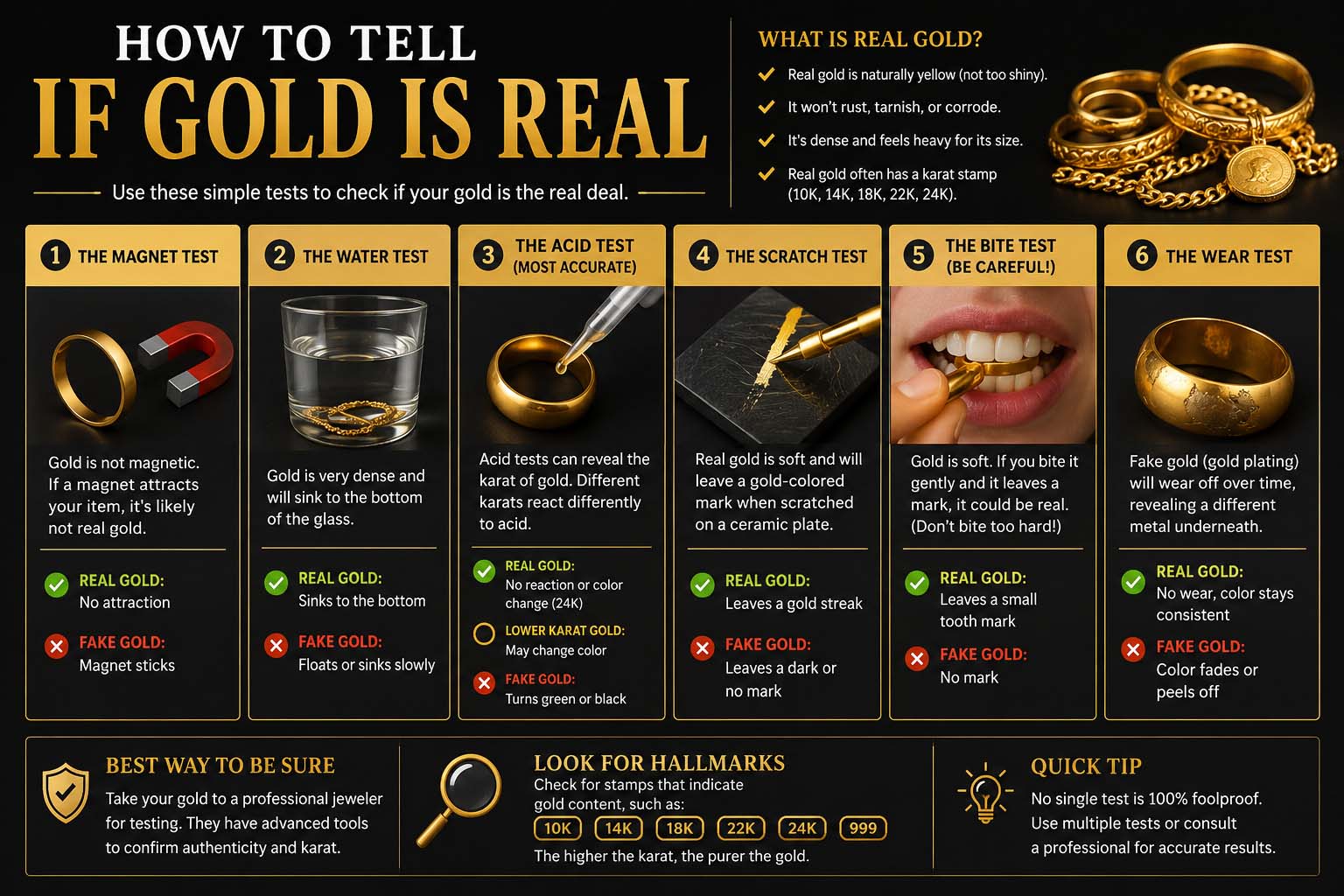
One of the easiest ways to determine authenticity is by looking for purity markings.
Common stamps include:
- 10K
- 14K
- 18K
- 22K
- 24K
You may also see numerical markings such as:
- 417 (10K)
- 585 (14K)
- 750 (18K)
- 916 (22K)
Generally, these marks are located inside rings, on necklace clasps, or near bracelet closures.
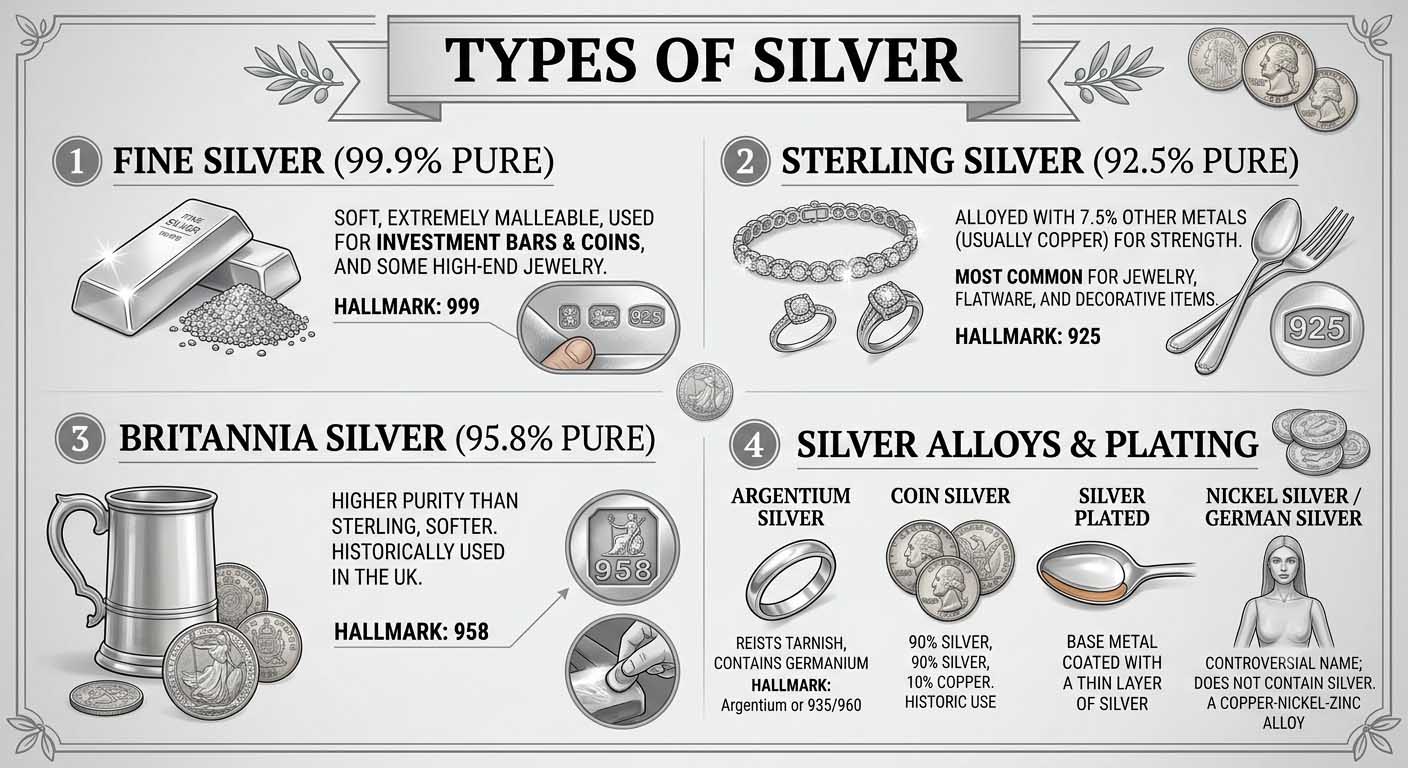
Although hallmarks can be faked, they are usually a good starting point. In addition, shoppers evaluating other precious-metal products may compare the different types of silver.
How to Tell If Something Is Real Gold
Many shoppers ask, how to tell if something is real gold when purchasing secondhand jewelry or collectibles.
Start by examining:
Color Consistency
Real gold typically maintains a consistent color.
If you notice:
- Peeling
- Fading
- Silver-colored areas underneath
The item may be gold-plated rather than solid gold.
Weight
Gold is a dense metal.
Therefore, authentic gold often feels heavier than similar-sized fake jewelry.
Signs of Wear
Check areas that experience frequent friction.
In particular, fake gold items often reveal underlying metals after extended use.
How to Tell If Gold Is Real at Home
If professional testing isn’t available, there are several methods to evaluate gold yourself.
The Magnet Test
Gold is not magnetic.
How to perform the test:
- Obtain a strong magnet.
- Hold it close to the jewelry.
- Observe any attraction.
Results:
- No attraction may indicate real gold.
- Strong attraction may suggest another metal.
However, keep in mind that some non-gold metals are also non-magnetic, so this test should not be used alone.
The Water Test
Gold is heavy and dense.
Steps:
- Fill a container with water.
- Drop the item into the water.
Generally, real gold sinks quickly.
In contrast, lightweight materials may float or sink slowly.
The Skin Test
Wear the jewelry for several hours.
Fake metals sometimes leave:
- Green marks
- Black discoloration
- Skin irritation
However, pure gold rarely causes these issues.
How to Tell If a Necklace Is Real Gold
Necklaces are among the most commonly counterfeited jewelry items.
If you’re wondering how to tell if a necklace is real gold, consider the following checks.
Inspect the Clasp
The clasp often contains important information such as:
- Purity markings
- Manufacturer stamps
- Metal identification
Examine High-Wear Areas
Pay attention to:
- Links
- Clasps
- Connectors
If a different metal appears beneath the surface, the necklace may be plated.
Compare Weight
Gold necklaces usually feel heavier than similarly sized fashion jewelry pieces.
How to Tell If a Ring Is Real Gold
Many people receive rings as gifts, inherit them, or purchase them secondhand.
To learn how to tell if a ring is real gold, start with a close inspection.
Check Inside the Band
Most genuine gold rings feature purity markings inside the band.
Look for Discoloration
Authentic gold generally maintains its appearance over time.
However, flaking or color changes may indicate plating.
Perform a Magnet Test
Since rings are small and easy to test, the magnet method works particularly well.
Professional Evaluation
A jeweler can verify authenticity through specialized equipment if you remain uncertain. Similarly, gemstone buyers may want to learn how to tell if a diamond is real.
Acid Testing for Gold
One of the most accurate methods is acid testing.
This process involves:
- Scratching the metal on a testing stone
- Applying testing acids
- Observing chemical reactions
Benefits:
- Highly accurate
- Widely used by jewelers
Drawbacks:
- Requires special kits
- Can slightly mark jewelry
Therefore, for valuable pieces, professional testing is usually recommended.
Pros and Cons of At-Home Gold Testing
Pros
- Quick and convenient
- Low cost
- Useful for initial screening
- No appointment needed
Cons
- Less accurate than professional testing
- Some tests may damage jewelry
- Results can be misleading if used alone
Overall, combining multiple methods generally improves reliability.
Gold Buyer Guide
If you’re shopping for gold jewelry, follow these recommendations.
Buy From Reputable Sellers
Choose:
- Established jewelers
- Certified dealers
- Trusted online retailers
Request Documentation
Certificates and receipts can help verify authenticity.
Understand Gold Purity
Different gold types include:
| Purity | Gold Content |
|---|---|
| 10K | 41.7% |
| 14K | 58.5% |
| 18K | 75% |
| 22K | 91.6% |
| 24K | 99.9% |
Compare Prices
If a deal seems too good to be true, it may be worth investigating further.
Ask About Return Policies
Reliable sellers usually provide clear return and exchange options. Meanwhile, shoppers comparing alternative engagement-ring gemstones may ask what is a moissanite diamond.
Common Mistakes Buyers Make
Assuming Every Yellow Metal Is Gold
Many alloys closely resemble genuine gold.
Ignoring Hallmarks
Always inspect purity stamps before purchasing.
Skipping Professional Verification
Buying Without Research
Understanding purity grades helps buyers make informed decisions.
FAQ
How can I tell if gold is real?
You can check hallmarks, perform magnet and water tests, inspect wear patterns, and seek professional testing if necessary.
Does real gold stick to a magnet?
No. Genuine gold is not magnetic.
Can real gold tarnish?
Pure gold does not tarnish easily, although gold alloys may show minor changes over time.
Check for purity stamps, examine high-wear areas, and compare weight with similar jewelry.
How do I tell if a ring is real gold?
Look for hallmarks inside the band, inspect for discoloration, and perform a magnet test.
Is professional testing worth it?
Yes. For valuable jewelry, professional testing provides the most reliable results.
Conclusion
Learning how to tell if gold is real is an essential skill for anyone buying, selling, or collecting gold jewelry. While simple methods such as hallmark inspection, magnet testing, and weight comparison can provide helpful clues, professional testing remains the most accurate way to verify authenticity.