
Types of Puzzles for Kids: How to Choose the Best One for Every Age
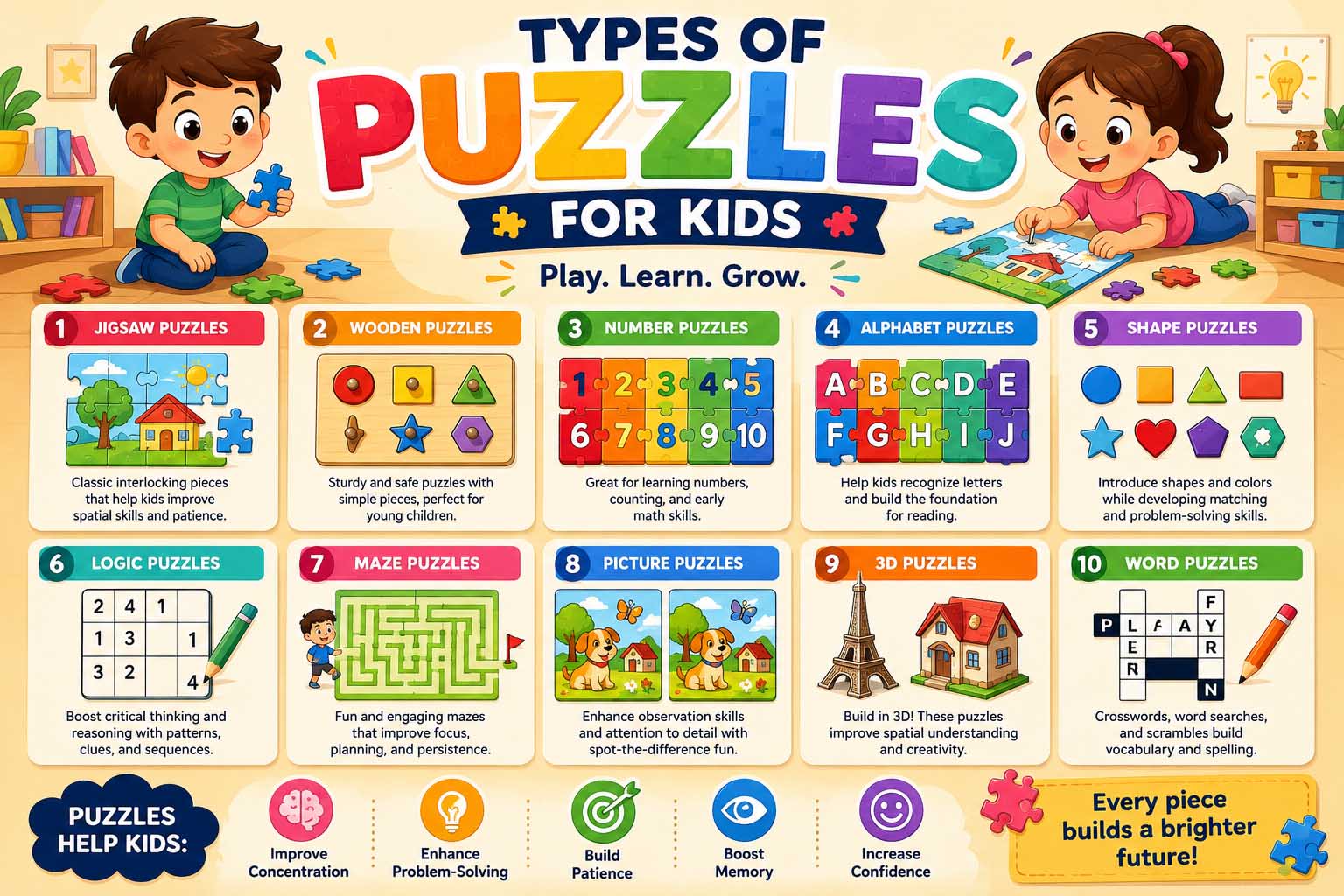
Shopping for the right types of puzzles for kids can feel overwhelming when there are hundreds of options available. From simple wooden puzzles for toddlers to challenging 3D models for older children, each puzzle offers a different way to learn, play, and build confidence. The best choice depends on a child’s age, interests, and current skill level rather than simply choosing the biggest or most colorful box.
Whether you’re buying a birthday gift, adding educational toys to your home, or looking for screen-free entertainment, this guide explains the most popular puzzle types and what makes each one worth considering.
Why Different Types of Puzzles for Kids Matter
Puzzles are more than just quiet activities. They encourage children to solve problems, recognize patterns, improve hand-eye coordination, and practice patience.
Each puzzle style develops different skills. For example, matching puzzles introduce basic recognition, while larger jigsaw puzzles strengthen planning and observation. As children grow, more advanced puzzles continue to challenge their thinking without feeling like traditional schoolwork.
Because every child learns differently, choosing the right puzzle often leads to a more enjoyable experience.
Types of Puzzles for Kids by Age
Age recommendations on puzzle boxes provide a useful starting point, but they should never replace a parent’s understanding of their child’s abilities.
Ages 1–3: Simple Wooden and Peg Puzzles
Young toddlers benefit from puzzles with large pieces that are easy to grasp.
Popular options include:
- Wooden peg puzzles
- Shape sorters
- Animal matching puzzles
- Color recognition puzzles
These puzzles encourage basic coordination while introducing familiar objects.
Ages 3–5: Beginner Jigsaw Puzzles
Preschoolers are ready for puzzles with more pieces and larger images.
Look for:
- 12 to 48-piece jigsaw puzzles
- Alphabet puzzles
- Number puzzles
- Vehicle or animal themes
Many parents also enjoy adapting puzzle pieces into simple baby shower games, creating fun guessing activities for younger family gatherings after the puzzles are no longer used.
Ages 6–8: Logic and Educational Puzzles
School-age children usually enjoy more challenging activities.
Good choices include:
- Larger jigsaws
- Maze books
- Hidden picture puzzles
- Word puzzles
- Beginner brain teasers
These puzzles encourage independent thinking while remaining approachable.
Ages 9 and Older: Advanced Challenges
Older children often appreciate puzzles requiring planning and persistence.
Examples include:
- 3D puzzles
- Escape room puzzle kits
- Mechanical puzzles
- Complex jigsaws
- STEM challenge puzzles
These options provide longer play sessions and greater satisfaction when completed.
Popular Types of Puzzles for Kids
Every puzzle category offers unique advantages.
Jigsaw Puzzles
Jigsaws remain one of the most popular choices because they grow with the child.
Benefits include:
- Pattern recognition
- Visual memory
- Patience
- Fine motor skills
Available piece counts range from fewer than 10 pieces to several hundred.
Floor Puzzles
Floor puzzles use oversized pieces and large illustrations.
They’re especially suitable for younger children who enjoy sitting or crawling around while building the picture.
Wooden Puzzles
Wooden puzzles are durable and often withstand years of daily use.
They’re ideal for:
- Daycares
- Preschools
- Families with multiple children
Although they usually cost more than cardboard versions, many parents appreciate their long lifespan.
Alphabet and Number Puzzles
Educational puzzles introduce early literacy and counting skills without making learning feel forced.
Children naturally practice letter recognition while playing.
Parents teaching language arts may later connect these activities with concepts like types of figurative language, showing children how words become more creative as they grow older.
3D Puzzles
Three-dimensional puzzles challenge spatial thinking.
Common themes include:
- Famous buildings
- Vehicles
- Dinosaurs
- Spacecraft
- Castles
Older children who enjoy building toys often find these especially rewarding.
Logic Puzzle Books
Puzzle books combine multiple activities in one place.
They often include:
- Mazes
- Sudoku
- Spot-the-difference games
- Word searches
- Picture challenges
They’re lightweight, affordable, and easy to take while traveling.
Materials: Which One Should You Buy?
Different materials affect durability, appearance, and price.
| Material | Best For | Advantages | Things to Consider |
|---|---|---|---|
| Cardboard | Most families | Affordable, wide variety | Can wear over time |
| Wood | Toddlers and frequent use | Durable, sturdy | Usually costs more |
| Foam | Young children | Soft, lightweight | Limited designs |
| Plastic | Travel puzzles | Easy to clean | Fewer premium options |
For many shoppers, cardboard offers the best balance between price and selection.
How Many Puzzle Pieces Are Appropriate?
Piece count matters just as much as puzzle design.
| Age | Suggested Piece Count |
| 1–2 years | 2–8 pieces |
| 2–3 years | 6–20 pieces |
| 3–5 years | 12–48 pieces |
| 5–7 years | 48–100 pieces |
| 8+ years | 100–500+ pieces |
Choosing a puzzle that’s too difficult may lead to frustration, while one that’s too easy may not keep a child’s attention.
Buying Checklist
Before purchasing a puzzle, consider these questions:
- Is it appropriate for the child’s age?
- Are the puzzle pieces easy to handle?
- Does the child enjoy the theme?
- Is the material durable enough?
- Will the puzzle still be interesting after several uses?
- Does it include safe, non-toxic materials?
- Is storage convenient?
A little planning helps you choose a puzzle that gets used regularly instead of sitting on a shelf.
Educational Benefits Worth Considering
Different puzzle styles encourage different learning experiences.
Some improve:
- Fine motor skills
- Shape recognition
- Memory
- Problem-solving
- Concentration
- Visual perception
- Planning
Others introduce geography, animals, history, or science through colorful illustrations.
For example, map puzzles become even more enjoyable when children also learn how to use a compass, helping them understand direction and navigation through play.
Gift Ideas Using Puzzles
Puzzles make thoughtful gifts because they suit many occasions.
Popular gift ideas include:
- Birthdays
- Holidays
- Classroom rewards
- Family game nights
- Rainy day activity boxes
Parents can even include puzzle activities during celebrations inspired by creative gender reveal ideas, giving older siblings something engaging to enjoy while guests gather.
When buying a gift, choose a puzzle that matches the child’s interests instead of simply selecting the highest piece count.
Price Range
Puzzle prices vary depending on size, material, brand, artwork, and retailer.
Typical price ranges include:
| Puzzle Type | Typical Price |
| Wooden toddler puzzles | $10–$30 |
| Standard jigsaw puzzles | $8–$25 |
| Floor puzzles | $15–$35 |
| 3D puzzles | $20–$60 |
| Logic puzzle books | $5–$20 |
Prices may vary depending on the brand, retailer, location, and time of purchase.
Premium licensed puzzles often cost more due to artwork and collectible appeal.
Common Shopping Mistakes
Avoiding a few simple mistakes can save money and disappointment.
Buying Only by Age
Every child develops differently.
A five-year-old who loves puzzles may enjoy a challenge designed for older children, while another may prefer simpler activities.
Ignoring Interests
Children complete more puzzles when they enjoy the subject.
Dinosaurs, space, princesses, construction vehicles, and animals often motivate kids to keep trying.
Choosing Poor-Quality Pieces
Thin cardboard may bend or tear after repeated use.
Reading product reviews often helps identify puzzles with better durability.
Forgetting Storage
Large puzzles can include hundreds of pieces.
Storage boxes, puzzle mats, or zippered organizers help prevent missing pieces.
Caring for Kids’ Puzzles
A few simple habits help puzzles last longer.
- Store pieces in the original box.
- Keep puzzles dry.
- Avoid bending cardboard pieces.
- Wipe wooden puzzles with a slightly damp cloth when needed.
- Separate incomplete puzzles from finished ones.
Good storage means younger siblings can enjoy the same puzzles years later.
Frequently Asked Questions
What are the best types of puzzles for kids?
The best choice depends on the child’s age and interests. Wooden puzzles work well for toddlers, while jigsaws, logic puzzles, and 3D puzzles suit older children.
Are wooden puzzles better than cardboard?
Wooden puzzles generally last longer and resist damage better. Cardboard puzzles, however, offer more variety and lower prices.
How many puzzle pieces should a six-year-old have?
Many six-year-olds enjoy puzzles with 48 to 100 pieces, although confident puzzlers may be ready for larger challenges.
Are puzzles a good educational gift?
Yes. Puzzles encourage problem-solving, patience, observation, and fine motor development while providing enjoyable, screen-free entertainment.
Should I buy licensed character puzzles?
If a child already loves a favorite movie, TV show, or book, licensed puzzles often increase excitement and encourage repeated play.
Choosing a Puzzle They’ll Want to Build Again
The best types of puzzles for kids are the ones that match a child’s curiosity, ability, and favorite interests. Instead of focusing only on age recommendations or piece count, think about how the puzzle will be used at home, in the classroom, or as a gift.
A well-chosen puzzle can provide hours of entertainment while helping children develop valuable skills along the way. With the right balance of challenge, quality, and engaging artwork, it’s a purchase that families can enjoy again and again.