
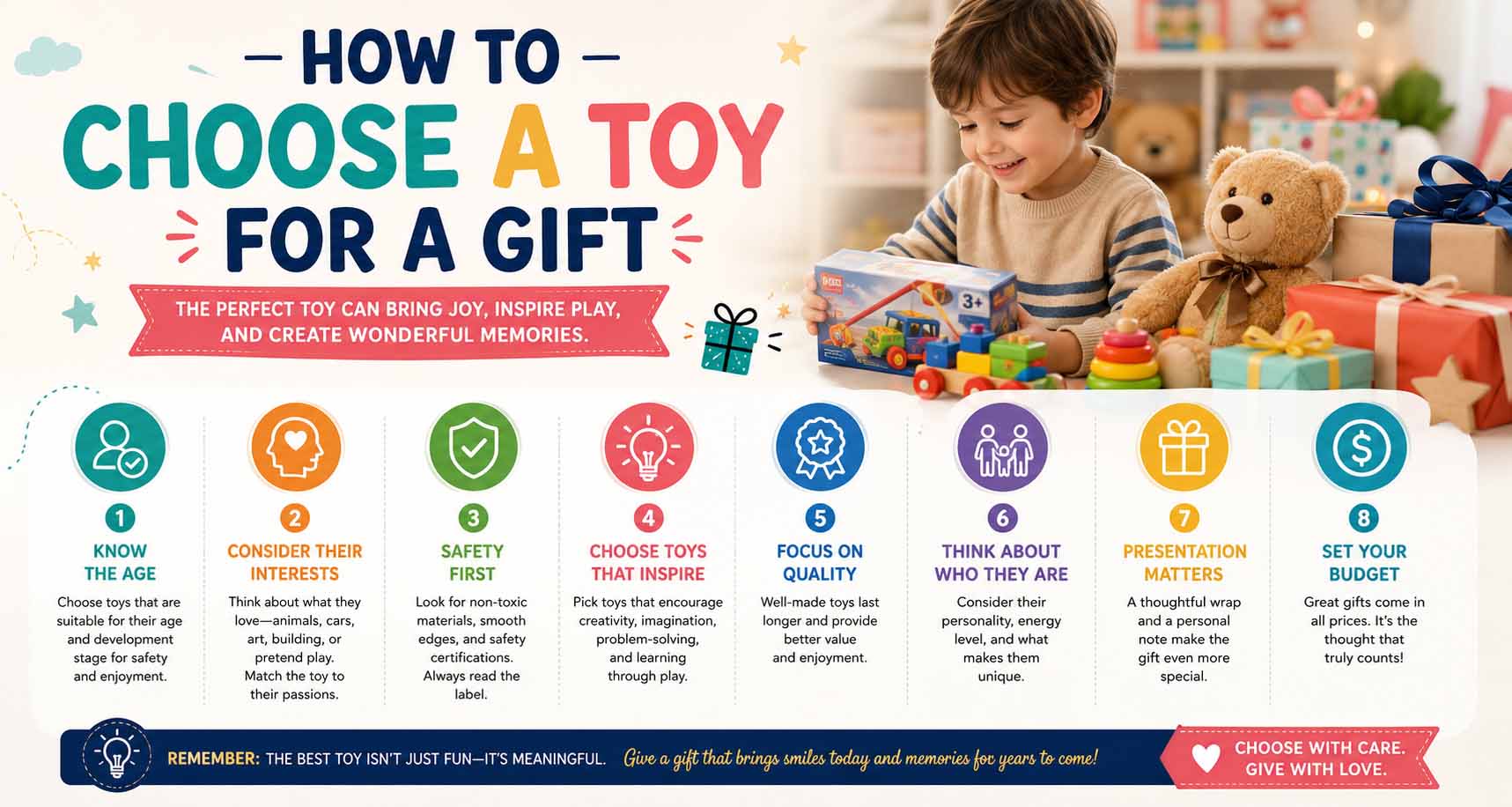
How to Choose a Toy for a Gift: A Practical Guide for Every Occasion
Choosing the perfect toy can feel overwhelming. With thousands of options available, it’s easy to wonder how to choose a toy for a gift that will be fun, safe, and appreciated. abilities, and personality.
Whether you’re shopping for a birthday, holiday, baby shower, or another special occasion, this guide will help you make a thoughtful choice while avoiding common buying mistakes.
Why Choosing the Right Toy Matters
A well-chosen toy does more than entertain.
It can encourage:
- Creativity
- Problem-solving
- Physical activity
- Social interaction
- Confidence
- Independent play
On the other hand, a toy that’s too advanced, too simple, or unrelated to a child’s interests may spend more time on a shelf than in use.
That’s why taking a few extra minutes to plan your purchase is worthwhile.
How to Choose a Toy for a Gift Based on Age
Age recommendations are one of the best starting points.
Manufacturers test toys for developmental stages as well as safety requirements.
Here’s a simple guide.
| Age | Good Toy Ideas |
|---|---|
| 0–12 months | Soft toys, sensory toys, rattles |
| 1–2 years | Stacking blocks, shape sorters, push toys |
| 3–5 years | Pretend play sets, puzzles, art supplies |
| 6–8 years | Building sets, science kits, board games |
| 9–12 years | Strategy games, robotics kits, sports equipment |
| Teens | Hobby kits, collectibles, creative projects |
Always check the recommended age on the packaging before purchasing.
Consider the Child’s Interests
A child’s hobbies matter just as much as their age.
Think about what they already enjoy.
For example:
- Animals
- Dinosaurs
- Space
- Cars
- Art
- Music
- Reading
- Building
- Sports
- Video games
A toy that supports an existing passion often becomes a favorite.
If you’re unsure, ask parents or caregivers for ideas.
How to Choose a Toy for a Gift That Encourages Learning
Educational toys don’t have to feel like schoolwork.
Many toys naturally teach valuable skills through play.
Examples include:
Building Toys
Construction sets improve:
- Spatial reasoning
- Creativity
- Fine motor skills
Art Supplies
Drawing kits encourage imagination and self-expression.
Science Kits
Hands-on experiments introduce scientific thinking in an enjoyable way.
Musical Toys
Instruments help children develop rhythm, listening skills, and coordination.
Learning through play often creates lasting curiosity.
Think About the Child’s Personality
Two children of the same age may enjoy completely different toys.
Ask yourself:
Does the child enjoy:
- Quiet activities?
- Outdoor adventures?
- Creative projects?
- Team games?
- Independent play?
For example:
An energetic child may love outdoor sports equipment.
A quieter child might appreciate books, craft kits, or model-building sets.
Matching personality to the gift often leads to greater enjoyment.
Prioritize Safety
Safety should always come first.
Before buying, check for:
- Age recommendations
- Small parts warnings
- Strong construction
- Non-toxic materials
- Rounded edges where appropriate
- Safety certifications
Avoid toys with loose pieces for young children who may still put objects in their mouths.
Choose Toys That Grow With the Child
Some toys remain enjoyable for years.
Examples include:
- Building bricks
- Wooden blocks
- Dollhouses
- Train sets
- Art easels
- Board games
These gifts continue offering new ways to play as children grow.
Long-lasting toys often provide better overall value than novelty items.
Educational vs Entertainment Toys
You don’t have to choose one or the other.
The best toys combine both.
| Educational Focus | Entertainment Focus |
|---|---|
| Problem-solving | Excitement |
| Creativity | Imaginative play |
| Fine motor skills | Social interaction |
| STEM learning | Fun challenges |
Many popular toys naturally balance learning with enjoyment.
Budgeting for a Toy Gift
A meaningful gift doesn’t require a large budget.
Here’s a general pricing guide.
| Budget | Gift Ideas |
|---|---|
| Under $20 | Books, craft kits, small games |
| $20–$50 | Building sets, dolls, puzzles |
| $50–$100 | STEM kits, larger playsets |
| $100+ | Ride-on toys, premium building sets, electronics |
Prices vary depending on the retailer, brand, product features, and seasonal promotions.
Shopping during sales can stretch your budget further.
Indoor or Outdoor Toys?
Consider where the toy will be used.
Indoor toys work well for:
- Apartments
- Rainy weather
- Quiet play
Outdoor toys encourage:
- Physical activity
- Coordination
- Social play
Examples include:
- Scooters
- Balls
- Gardening kits
- Bubble machines
- Sports equipment
Think about the family’s available space before buying larger toys.
Should You Buy Electronic Toys?
Electronic toys can be fun and educational.
However, they’re not always the best choice.
Pros:
- Interactive learning
- Lights and sounds
- Educational apps
- Language development
Cons:
- Batteries may be required.
- Screen time concerns.
- Limited open-ended creativity in some products.
Many families appreciate a healthy mix of electronic and traditional toys.
Don’t Forget the Parents
The best gift works for the whole family.
Parents often appreciate toys that are:
- Easy to clean
- Durable
- Simple to store
- Quick to assemble
- Made from quality materials
Large toys may look exciting but can become inconvenient if storage space is limited.
Practicality matters.
Great Gift Ideas for Different Occasions
Different celebrations call for different types of toys.
Birthday Gifts
Choose something personal based on the child’s interests.
Holiday Gifts
Board games, building sets, and creative kits often make excellent seasonal presents.
Baby Showers
Developmental toys and soft sensory items are thoughtful additions alongside practical gifts. If you’re planning a celebration, exploring fun baby shower games can help make the event even more memorable.
New Baby Celebrations
Soft books, plush toys, and tummy-time mats are popular choices for infants. Parents may also appreciate resources on how to get free baby stuff when preparing for a growing family.
Family Gatherings
Games that encourage everyone to play together often become lasting favorites.
Choosing Toys for Babies and Toddlers
Buying for very young children requires extra care.
Focus on:
- Soft materials
- Large pieces
- Washable fabrics
- Bright colors
- Sensory textures
Parents of toddlers also benefit from understanding the difference between 24 months and 2t when selecting toys or ride-on products that may have size or developmental recommendations.
Creative Toys vs Active Toys
Both categories offer unique benefits.
Creative Toys
Examples:
- Paint sets
- Clay
- Building kits
- Craft projects
These encourage imagination.
Active Toys
Examples:
- Jump ropes
- Sports equipment
- Balance bikes
- Outdoor games
These support movement and coordination.
Choosing one depends on the child’s interests and available play space.
Puzzle Toys Make Excellent Gifts
Puzzles remain one of the most versatile toy categories.
They help develop:
- Memory
- Patience
- Logical thinking
- Fine motor skills
If you’re comparing options, learning about different types of puzzles for kids can help you find one that matches the child’s age and skill level.
Common Mistakes to Avoid
Many shoppers make similar mistakes.
Try to avoid:
- Buying only based on popularity.
- Ignoring age recommendations.
- Choosing toys that require excessive setup.
- Forgetting to check battery requirements.
- Purchasing oversized toys without considering storage.
- Selecting gifts based on your own preferences instead of the child’s.
A thoughtful gift almost always beats an expensive one.
Frequently Asked Questions
How do I choose a toy for a gift?
Start by considering the child’s age, interests, personality, and developmental stage. Then choose a safe, well-made toy that matches those factors.
Should educational toys always be the first choice?
Not necessarily.
The best toys often combine learning with fun, making children eager to play while naturally building new skills.
How much should I spend?
Your budget should reflect the occasion and your comfort level. Great toy gifts are available at nearly every price point.
Are electronic toys better than traditional toys?
Neither is automatically better. Many families enjoy balancing electronic toys with creative, active, and hands-on play.
Is it okay to ask parents for suggestions?
Absolutely.
Parents usually know what their child already owns and what interests them most.
Give a Gift They’ll Remember
Learning how to choose a toy for a gift isn’t about finding the newest trend or the most expensive option. It’s about choosing something that matches the child’s age, personality, interests, and stage of development. A carefully selected toy can inspire creativity, build confidence, encourage learning, and create lasting memories.
Before making your final decision, think about how the child likes to play, where they’ll use the toy, and whether it offers long-term value. A gift chosen with care is one that children are far more likely to enjoy long after the wrapping paper is gone.