
How to Tell If Silver Is Real: Simple Ways to Check Authenticity at Home
Learning how to tell if silver is real can help you avoid counterfeit jewelry, misleading product descriptions, and unnecessary spending. Genuine silver is commonly used in rings, necklaces, bracelets, coins, silverware, and decorative objects. However, silver-plated products and other silver-colored metals can look almost identical to solid silver.
Fortunately, several checks can help you identify possible signs of genuine silver. You can inspect hallmarks, examine the surface, check the item’s response to a magnet, and compare how ice melts on different materials. However, no single home test can guarantee authenticity.
The best approach is to combine several observations and seek professional testing when an item’s authenticity or value matters.
How to Tell If Silver Is Real: Genuine Silver vs. Fake Silver
Before testing an item, understand the difference between solid silver, sterling silver, and silver-plated metal. These materials may have similar appearances, but their silver content and value differ.
| Silver type | Typical composition | Main characteristics |
|---|---|---|
| Fine silver | 99.9% silver | High purity but relatively soft |
| Sterling silver | 92.5% silver | Durable alloy used in jewelry and silverware |
| Britannia silver | 95.8% silver | Higher-purity silver alloy |
| Silver-plated metal | Base metal with a silver coating | Silver covers the surface only |
| Nickel silver | Usually copper, nickel, and zinc | Contains no actual silver unless separately plated |
Sterling silver is genuine silver even though it contains other metals. Silver-plated items also contain silver, but only as a surface layer. Nickel silver, despite its name, does not contain silver as a normal ingredient.
Read our guide to types of silver to understand these materials in more detail.
How to Tell If Silver Is Real by Checking Hallmarks
Hallmarks are useful starting points when identifying silver. Depending on the item and its country of origin, they may indicate purity, manufacturer, or an official assay.
How to Tell If Silver Is Real With a 925 Stamp
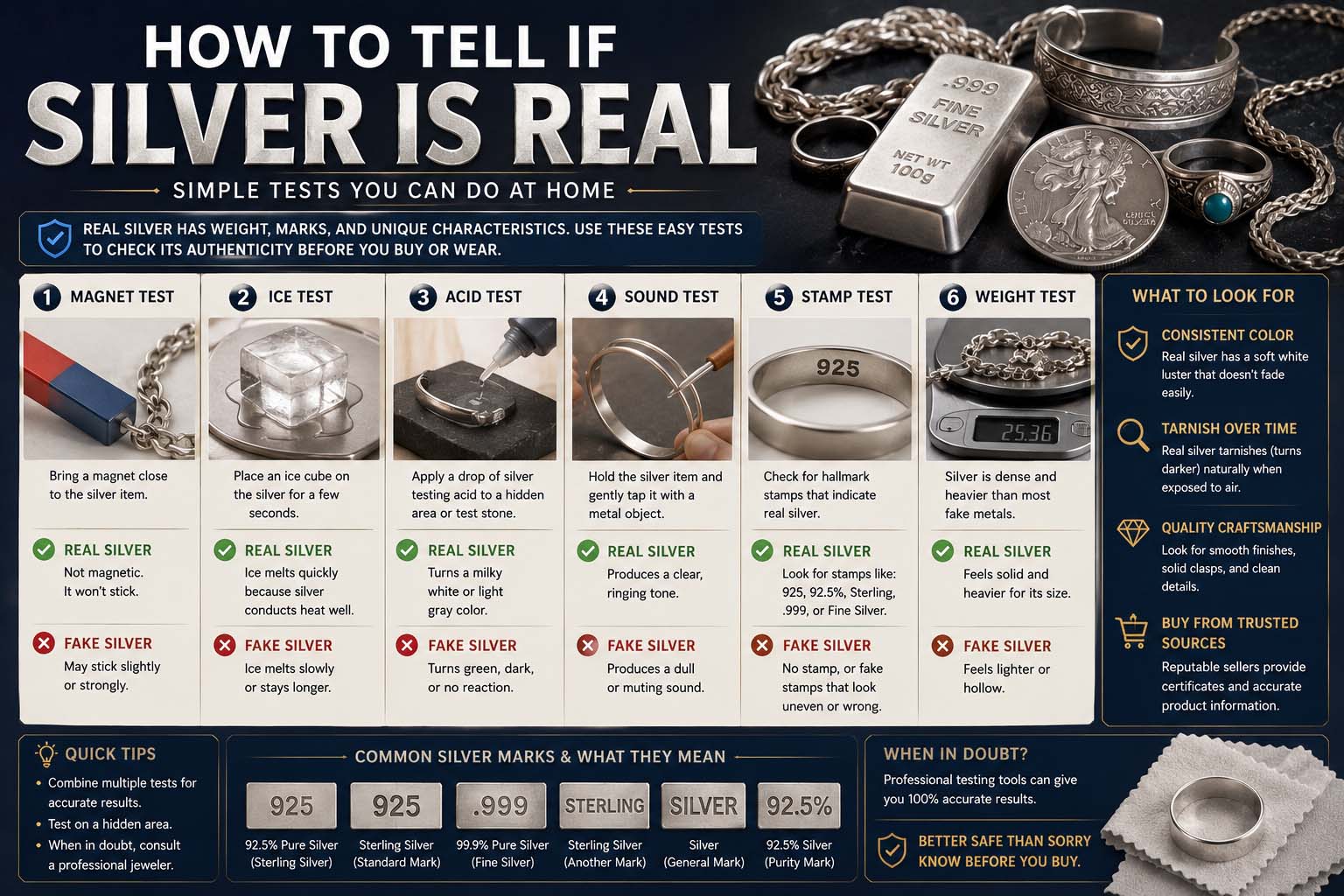
A 925 or .925 stamp usually indicates sterling silver, which contains 92.5% silver. Other common markings include the word STERLING.
Check the inside of rings, necklace clasps, pendant backs, and the underside of silverware. A mark that matches the item’s type and construction can support an authenticity assessment.
However, counterfeit items can carry false stamps. Therefore, a 925 marking is useful evidence, not a guarantee.
How to Identify Fine Silver With a 999 Hallmark
Fine silver commonly carries a 999 or .999 mark, indicating approximately 99.9% silver content. It is frequently used in bullion and selected decorative products.
Because fine silver is relatively soft, it may be less suitable for some everyday jewelry designs than sterling silver. Always compare the hallmark with the seller’s documentation and other available evidence.
How to Recognize Silver-Plated Markings
Silver-plated products may carry descriptions such as silver plate or EPNS, depending on the manufacturing method and country. These terms do not mean the object is made entirely from silver.
Inspect worn edges and corners for a different-colored base metal. Still, surface appearance cannot reliably determine the full composition of an item.
How to Tell If Silver Is Real: 7 Simple Home Tests
When learning how to tell if silver is real, begin with non-destructive checks. These methods can reveal warning signs, but they cannot independently confirm the item’s silver content.
1. How to Tell If Silver Is Real With the Magnet Test
Silver is not strongly magnetic. If an item is strongly attracted to an ordinary magnet, it may contain a magnetic metal that deserves further investigation.
Bring the magnet close to the object without scraping its surface. A strong attraction is a warning sign, but a lack of attraction does not prove the item is silver. Many other metals are also nonmagnetic, and some genuine silver objects contain magnetic components.
2. How to Tell If Silver Is Real With the Ice Test
Silver conducts heat efficiently, so ice may melt quickly when placed on a silver object under suitable conditions.
For a simple comparison, place an ice cube on the item and another on a comparable surface at the same temperature. Observe whether their melting rates differ.
However, the result depends on the item’s size, temperature, thickness, and contact with the ice. Other metals also conduct heat well, so this test is not definitive.
3. How to Tell If Silver Is Real by Inspecting Its Surface
Genuine silver often has a bright, reflective finish, although its appearance changes with polishing, age, and tarnish. Silver-plated products can look equally convincing when new.
Examine edges, joints, clasps, and frequently handled areas. If a different-colored metal appears underneath the surface, the item may be plated. Nevertheless, lighting, dirt, and surface treatments can affect what you see.
4. How to Tell If Silver Is Real by Looking for Tarnish
Silver can develop gray, brown, or black tarnish after exposure to sulfur-containing compounds in the environment. This discoloration can provide a useful clue when other evidence also suggests silver.
However, other metals and coatings can discolor too. Some genuine silver objects may remain bright because they are cleaned regularly or stored in protective conditions.
Avoid using harsh household chemicals to force a reaction, as they can damage the finish.
5. How to Tell If Silver Is Real by Checking Its Weight
Silver is relatively dense, so weight can help when evaluating objects with known dimensions. For example, you can compare a coin or bullion bar with reliable specifications for its weight and size.
A major discrepancy may suggest that the item is counterfeit or inaccurately described. However, hollow construction, gemstones, solder, and mixed-metal parts can affect an object’s weight.
Weight alone is not enough to establish authenticity.
6. How to Tell If Silver Is Real by Listening to Its Sound
Some silver objects produce a clear ringing sound when gently tapped. Other materials may produce a duller sound, but results depend on the object’s shape, thickness, and construction.
Do not strike valuable, fragile, or antique items to perform this test. Sound should be treated as a minor observation rather than reliable proof.
7. How to Tell If Silver Is Real by Examining Its Construction
Inspect the item’s joints, clasps, connecting links, and decorative components. In jewelry, different parts may use different metals, even when the main section is sterling silver.
Look for inconsistent finishes, unusual seams, and visible wear. These observations can help you decide whether further testing is appropriate, but craftsmanship alone cannot prove silver purity.
How to Tell If Silver Is Real in Jewelry
Jewelry can contain gemstones, coatings, adhesives, and components made from different metals. Therefore, inspect the entire piece instead of relying on one hallmark.
How to Tell If Silver Is Real in Rings and Bracelets
Check inside a ring band and around the clasp or connecting links of a bracelet. Look for 925 or sterling markings and examine worn areas for signs of a different-colored base metal.
Also consider the item’s overall construction. Poor finishing or inconsistent marks may justify further investigation, although appearance alone cannot establish authenticity.
How to Tell If Silver Is Real in Necklaces and Earrings
Inspect necklace clasps, pendant backs, earring posts, and attachment points. Some jewelry contains sterling silver in the main piece but uses another metal for certain small components.
Ask the seller about mixed-metal construction if the product description does not explain which parts contain silver.
Can Silver Color Prove That Jewelry Is Genuine?
No. Genuine silver usually has a bright white appearance, but plating and other silver-colored metals can imitate it. Lighting, polishing, and tarnish can also change the appearance of genuine silver.
If you are comparing precious-metal jewelry, read our guides on how to tell if gold is real, how to tell if a diamond is real, and what is a moissanite diamond.
How to Tell If Silver Is Real in Silverware and Antiques
Silverware may be made from solid sterling silver, silver-plated metal, or other alloys. Antique items can also carry historical markings that require additional research.
How to Identify Genuine Silverware Hallmarks
Check the underside of spoons, forks, serving trays, and other pieces. Look for sterling or purity marks, along with manufacturer symbols that may help identify the item.
Research the markings using reliable references before estimating age or value. For expensive antiques, consider a qualified specialist.
How to Recognize Silver-Plated Silverware
Silver-plated pieces may carry plating-related descriptions or marks. If the coating has worn away, the underlying metal may become visible.
Plated items can still be attractive and useful. However, their precious-metal content and potential resale value differ from solid sterling silver.
Why Silver Purity Matters for Antique Items
Silver content can affect an item’s value, but age, maker, craftsmanship, rarity, and condition may also matter. Do not assume an antique is valuable solely because it looks silver-colored or has a decorative design.
Why You Should Avoid the Lighter Test for Silver
Using a lighter to heat an item is not a reliable way to establish silver purity. Open flames may damage gemstones, coatings, adhesives, and delicate decorative details. Heating unknown materials can also create unnecessary risks.
Instead, start with visual inspection and other non-destructive checks. For valuable objects, professional testing is safer and more informative than experimenting with heat or chemicals at home.
Professional Methods for Testing Real Silver
When home checks produce conflicting results, consult a qualified jeweler, precious-metal specialist, assay service, or suitable antiques expert.
Professional Acid Testing for Silver
Acid testing can help identify certain silver alloys through their reactions to testing solutions. Depending on the procedure, it may require scratching or exposing a small area.
Because chemicals can be hazardous and the process may damage an item’s surface, leave this method to trained professionals.
XRF Testing for Silver Purity
X-ray fluorescence, or XRF, analyzes the elemental composition of many metals. It can estimate silver content without cutting or melting the object.
However, XRF generally measures the area being examined. Thick plating and uneven construction may complicate interpretation, so results should be considered in context.
Density and Conductivity Testing
Professionals may measure density or electrical conductivity to help distinguish materials with different physical properties. These methods can provide useful evidence when appropriate for the item’s shape and construction.
Hollow objects, solder, stones, and mixed-metal components can complicate the results. The best method depends on the object being examined.
For guidance on precious-metal descriptions and marketing, consult the Federal Trade Commission’s Jewelry Guides.
How to Buy Genuine Silver Online
Online listings can make it difficult to distinguish solid silver from plated products. Before purchasing, review the material description, purity markings, seller reputation, and return policy.
Choose a Reputable Silver Seller
Look for sellers with clear contact information, detailed listings, and transparent customer-service policies. Independent reviews can help, but they should not be your only source of reassurance.
For expensive items, ask whether documentation or independent authentication is available.
Read Silver Product Descriptions Carefully
Check whether the listing specifies sterling silver, fine silver, silver-plated metal, or another material. Terms such as “silver tone” may describe color rather than actual silver content.
Review dimensions, weight, and the materials used for clasps, stones, and other components. Ask questions before purchasing if the description is unclear.
Check Return and Authenticity Policies
Read the return window, refund conditions, and any authenticity guarantee before placing an order. Keep your receipt, listing, photographs, and seller communications.
These precautions make it easier to resolve a dispute if the delivered item differs from the product description.
Sterling Silver vs. Silver-Plated Metal
Although these materials can look similar, their composition, durability, and value are different.
Advantages and Disadvantages of Sterling Silver
Advantages:
- Contains 92.5% silver.
- Is widely used for quality jewelry and silverware.
- Can retain material value, depending on purity and market conditions.
- Can last for many years with suitable care.
Disadvantages:
- Can tarnish over time.
- May cost more than plated alternatives.
- Can scratch or bend depending on its design and use.
Advantages and Disadvantages of Silver-Plated Metal
Advantages:
- Often costs less than sterling silver.
- Offers a silver-colored finish for decorative and everyday items.
- Is available in many designs.
Disadvantages:
- Its silver coating can wear away.
- The base metal may have limited precious-metal value.
- Aggressive polishing can damage the surface layer.
Choose according to your budget, intended use, and expectations. Plated products can be suitable for decoration, while verified sterling silver may be preferable when silver content is important.
Common Mistakes When Learning How to Tell If Silver Is Real
Several mistakes can lead to incorrect conclusions about silver authenticity.
Don’t Trust Appearance Alone
Silver-colored metals can look convincing, and plated products can have a bright finish. Appearance is only one clue.
Don’t Assume Every Hallmark Is Genuine
Counterfeit items may carry false purity stamps. Check markings alongside construction, seller information, and other evidence.
Don’t Treat the Magnet Test as Conclusive
A nonmagnetic response does not prove that an item contains silver. Many other metals are also nonmagnetic.
Don’t Treat Tarnish as Proof of Silver
Tarnish can support an assessment, but other materials may also discolor. Consider it alongside other evidence.
Avoid Damaging Silver With Home Tests
Do not use flames, aggressive scratching, or untrained chemical testing on valuable items. Non-destructive observations are preferable, particularly for antiques and heirlooms.
Frequently Asked Questions About How to Tell If Silver Is Real
How Can You Tell If Silver Is Real at Home?
Inspect the hallmarks, surface, and construction. A magnet check or careful ice comparison may provide additional clues, but no basic home test can conclusively establish silver purity.
Does Real Silver Stick to a Magnet?
Silver is not strongly magnetic. Strong attraction may indicate a magnetic metal, but a nonmagnetic result does not prove that an item is genuine silver.
Does Sterling Silver Tarnish?
Yes. Sterling silver can tarnish after exposure to sulfur-containing compounds in the environment. Storage, handling, and surface treatments affect how quickly discoloration develops.
Can Fake Silver Have a 925 Stamp?
Yes. A counterfeit item can carry a false 925 mark. Check the rest of the item and seek professional verification if authenticity is important.
Does the Ice Test Prove Silver Is Real?
No. Silver conducts heat efficiently, but other metals also transfer heat. Ice melting speed is affected by temperature, object size, and contact conditions.
Is the Lighter Test Reliable?
No. Heating an item with a flame is not a dependable silver authentication method and may damage the object.
Is Silver-Plated Jewelry Worth Buying?
It can be a good option for affordable fashion jewelry. However, silver-plated jewelry is different from solid sterling silver, and its value depends on condition, craftsmanship, base metal, and demand.
Can Genuine Silver Have No Hallmark?
Yes. Some genuine silver objects lack visible hallmarks because of their age, origin, size, or manufacturing practices. Additional testing may be needed.
Final Tips for Identifying Genuine Silver
Learning how to tell if silver is real begins with understanding silver purity and checking hallmarks, surface condition, and construction. Magnet, ice, tarnish, sound, and weight tests can provide clues, but none should be treated as definitive proof.
For valuable purchases, combine several observations with reliable documentation and professional testing when necessary. Always confirm whether an item is fine silver, sterling silver, or silver-plated before paying a premium.
With careful inspection and realistic expectations, you can make more informed buying decisions and reduce the risk of paying solid-silver prices for a plated product.