

Can Dogs Have Peanuts? A Complete Guide for Dog Owners
Many pet owners wonder, can dogs have peanuts safely? Dogs are naturally curious animals and often want to taste whatever their owners are eating. However, before sharing this popular snack, owners should understand which varieties are suitable for dogs and what precautions they need to take.
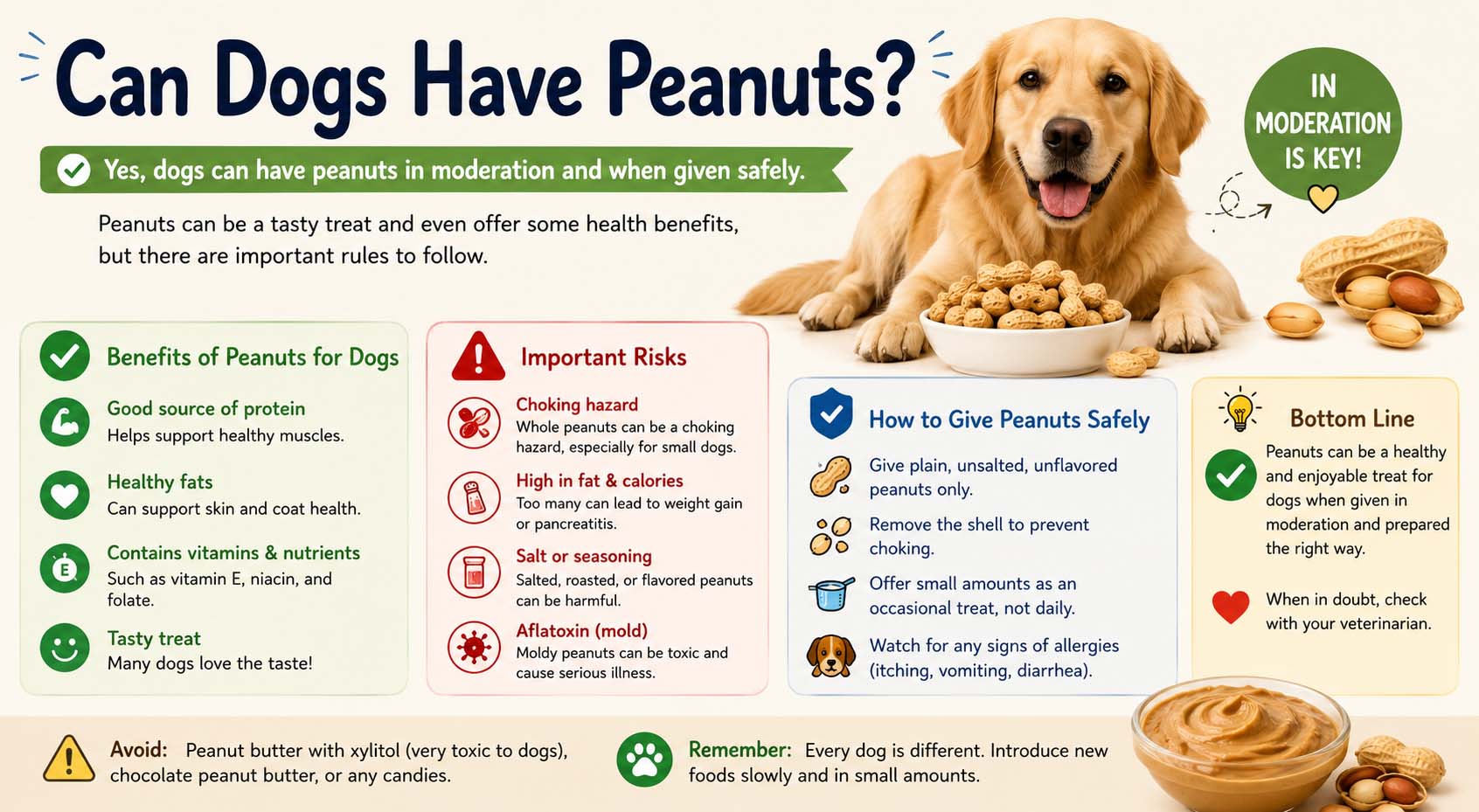
Fortunately, plain peanuts are generally safe for healthy dogs when owners offer them occasionally in small amounts. They contain protein, fats, vitamins, and minerals. Nevertheless, their high calorie and fat content makes them unsuitable as a regular part of a dog’s diet.
Not every peanut product is safe for pets. Salted, flavored, chocolate-covered, and heavily seasoned varieties may contain ingredients that cause digestive problems or more serious health risks.
Therefore, choosing the right type and serving size matters. Similarly, pet owners exploring other foods may wonder can dogs have sweet potatoes.
This guide explains which peanuts dogs can eat, the potential nutritional benefits, common risks, and how to serve them safely.
Can Dogs Have Peanuts Safely?
Yes, most healthy dogs can eat small amounts of plain, unsalted, shelled peanuts as an occasional treat.
However, peanuts should never replace a complete and balanced dog food. Although they provide some nutrients, they also contain substantial amounts of fat and calories.
The safest options are plain dry-roasted peanuts or plain boiled peanuts without added salt or seasoning.
Before offering peanuts, owners should consider their dog’s size, medical history, and ability to chew them safely.
For example, a small dog needs a much smaller portion than a large dog. In addition, dogs with pancreatitis, digestive sensitivities, or certain dietary restrictions may need to avoid peanuts altogether.
According to the American Kennel Club’s guidance on feeding peanuts to dogs, plain peanuts can be suitable in moderation, while salted varieties and peanut shells should be avoided.
Which Types of Peanuts Are Suitable for Dogs?
Not all peanuts offer the same level of safety.
| Peanut Type | Suitable for Dogs? | Important Precautions |
|---|---|---|
| Plain, dry-roasted peanuts | Generally yes | Remove shells and serve small amounts |
| Plain boiled peanuts | Generally yes | Avoid added salt and seasonings |
| Salted peanuts | Not recommended | Excess sodium can cause health problems |
| Honey-roasted peanuts | Not recommended | Often contain added sugar, salt, and oils |
| Flavored peanuts | Avoid | May contain garlic, onion, or other unsuitable ingredients |
| Chocolate-covered peanuts | No | Chocolate is toxic to dogs |
| Peanuts in shells | Avoid | Shells can cause choking or digestive problems |
Even with plain peanuts, moderation remains essential.
Can Dogs Have Honey-Roasted Peanuts?
Honey-roasted peanuts are not a recommended snack for dogs. Although they may seem harmless, manufacturers commonly prepare them with added sugar, salt, oils, and flavorings.
These ingredients provide no necessary nutritional benefit for dogs. In addition, the extra calories may contribute to unwanted weight gain when owners offer such snacks regularly.
Why Added Sugar and Salt Can Be Harmful
Dogs do not need sugary treats as part of their regular diet.
Excessive sugar consumption can contribute to weight gain and may cause digestive discomfort. Likewise, salty snacks are unsuitable for dogs, particularly those with certain medical conditions.
Very large amounts of sodium can cause serious health problems, including sodium poisoning.
Therefore, owners should avoid offering heavily salted or sweetened peanut products.
What If Your Dog Accidentally Eats Honey-Roasted Peanuts?
If a healthy dog eats one or two ordinary honey-roasted peanuts, serious poisoning is generally unlikely. However, the risk depends on the ingredients, quantity, and dog’s size and health.
First, check the product label for potentially toxic ingredients.
Next, monitor your pet for vomiting, diarrhea, unusual thirst, weakness, or changes in behavior.
If the product contains chocolate, xylitol, or another toxic ingredient, contact a veterinarian immediately.
Also, seek veterinary advice if your dog eats a large quantity or develops concerning symptoms.
Nutritional Benefits of Plain Peanuts for Dogs
Plain peanuts contain several nutrients that contribute to their nutritional value.
However, dogs that eat a complete and balanced diet generally do not need peanuts to obtain these nutrients.
Protein and Muscle Maintenance
Peanuts contain plant-based protein, which contributes to their nutritional content.
Protein supports normal body functions, including muscle maintenance and tissue repair.
Nevertheless, peanuts should not serve as a dog’s primary protein source because they do not provide the same balanced nutrition as properly formulated dog food.
Healthy Fats and Energy
Peanuts contain mostly unsaturated fats.
These fats supply energy, while dietary fat also plays a role in maintaining healthy skin and coats.
However, peanuts are calorie-dense. Consequently, frequent or excessive servings can contribute to weight gain.
High-fat foods may also trigger digestive problems and can be particularly risky for dogs prone to pancreatitis.
Vitamins and Minerals
Peanuts naturally contain nutrients such as:
- Vitamin E
- Niacin (vitamin B3)
- Magnesium
- Phosphorus
- Plant-based protein
Although these nutrients have important functions, peanuts are not a necessary supplement for dogs that already receive balanced nutrition.
Therefore, owners should view them as an occasional snack rather than a health food their pets need.
Similarly, those exploring other pet-friendly foods may ask can dogs eat black beans.
Can Dogs Have Boiled Peanuts?
Dogs can generally eat small amounts of plain boiled peanuts when they contain no added salt, spices, or harmful ingredients.
However, many traditional boiled peanut recipes use substantial amounts of salt. Some also include spicy seasonings or other flavorings.
As a result, owners should never assume that boiled peanuts are suitable simply because they have a softer texture.
Are Boiled Peanuts Easier to Chew?
Boiling softens peanuts, which may make them easier to chew than some dry-roasted varieties.
Nevertheless, soft peanuts can still present a choking risk, particularly for dogs that swallow food quickly.
Therefore, remove the shells and consider breaking the peanuts into smaller pieces before serving them.
Why Peanut Shells Should Be Removed
Peanut shells are tough and fibrous.
Dogs may struggle to chew or digest them properly. In addition, shell fragments can create choking hazards or contribute to gastrointestinal obstruction.
For this reason, always remove the shells before offering peanuts to your pet.
If your dog swallows shells and develops repeated vomiting, abdominal discomfort, loss of appetite, or difficulty passing stool, contact a veterinarian.
How Many Peanuts Can a Dog Eat?
The appropriate serving size depends on the dog’s size, overall diet, health, and individual tolerance.
Because peanuts contain substantial amounts of fat and calories, there is no single serving size that suits every dog.
Start With a Very Small Portion
When introducing peanuts, begin with a tiny piece of a plain, shelled peanut.
Then, observe your dog for digestive discomfort or unusual reactions.
If your pet tolerates the food, you may occasionally offer a small portion as a treat.
However, avoid giving peanuts every day simply because your dog enjoys them.
Follow the Treat-Calorie Guideline
Veterinary nutrition guidance commonly recommends keeping treats to no more than about 10% of a dog’s daily calorie intake.
The remaining calories should come from a complete and balanced diet.
Since peanuts are energy-dense, even a small handful can provide more calories than some dogs should receive from treats.
Therefore, consider your pet’s daily food intake rather than relying on a fixed number of peanuts.
When to Avoid Peanuts Completely
Some dogs should avoid peanuts unless a veterinarian specifically approves them.
Examples include dogs with:
- A history of pancreatitis
- Known peanut allergies or suspected food reactions
- Digestive conditions that require dietary restrictions
- Weight-management diets with limited treat allowances
- Difficulty chewing or swallowing safely
If your dog has a medical condition, consult your veterinarian before introducing new snacks.
Can Dogs Have Roasted Peanuts?
Plain dry-roasted peanuts without added salt, oil, or seasonings are generally suitable for healthy dogs in small quantities.
However, flavored roasted peanuts can contain ingredients that make them unsuitable.
For example, some products include garlic powder, onion powder, excessive sodium, or spicy coatings.
Therefore, always inspect the ingredient list before sharing any packaged peanut snack.
Dry-Roasted vs. Oil-Roasted Peanuts
Dry-roasted peanuts do not require added oil during roasting.
In contrast, oil-roasted varieties may contain additional fat, depending on how manufacturers prepare them.
Since peanuts already contain considerable fat, plain dry-roasted options are generally the simpler choice.
Nevertheless, both varieties require portion control.
Why Seasoned Peanuts Are Risky
Seasoned peanuts may contain ingredients that irritate a dog’s digestive system.
More seriously, garlic and onion can damage a dog’s red blood cells when consumed in toxic amounts.
Chocolate coatings also create a poisoning risk.
As a result, owners should avoid flavored varieties rather than attempting to estimate how much seasoning might be safe.
Can Dogs Eat Peanut Butter?
Some peanut butter products are suitable for dogs in small amounts. However, owners must check the ingredients carefully.
The biggest concern is xylitol, a sweetener that is highly toxic to dogs. Manufacturers may also identify it as birch sugar on ingredient labels.
Even a relatively small exposure can cause dangerous changes in blood sugar and potentially severe liver injury.
Therefore, never give your dog peanut butter containing xylitol.
If your dog consumes a product containing this ingredient, seek emergency veterinary care immediately. Do not wait for symptoms to appear.
Choosing a Safer Peanut Butter
When selecting peanut butter for your dog, look for a simple product with:
- No xylitol or birch sugar
- No chocolate
- No added sweeteners
- Little or no added salt
- No unnecessary flavorings
Even suitable peanut butter contains considerable fat and calories.
Therefore, serve it sparingly and account for it within your dog’s daily treat allowance.
Potential Risks of Feeding Peanuts to Dogs
Although plain peanuts are generally safe, owners should understand the possible risks.
Choking and Digestive Blockages
Whole peanuts may create choking risks, particularly for small dogs or pets that swallow food without chewing.
Peanut shells present additional concerns because their tough texture makes them difficult to digest.
Therefore, remove shells and serve appropriately sized pieces.
Weight Gain and Pancreatitis
Peanuts contain high levels of fat and calories.
Frequent overfeeding can contribute to weight gain. In addition, fatty foods may cause digestive upset and can trigger pancreatitis in susceptible dogs.
Signs of pancreatitis may include vomiting, abdominal pain, reduced appetite, and lethargy.
If your dog develops these symptoms, seek veterinary attention.
Allergic Reactions
Dogs can develop food allergies or sensitivities, although peanut allergies are not among the most common canine food allergies.
Possible signs include itching, skin irritation, vomiting, diarrhea, or swelling.
Severe reactions involving breathing difficulties, collapse, or significant facial swelling require emergency veterinary care.
Mold and Poor Storage
Improperly stored peanuts may develop mold.
Some molds can produce aflatoxins, which are harmful to animals and can cause serious illness.
Therefore, never offer peanuts that smell musty, appear moldy, or have passed their recommended storage period.
Store peanut products properly and discard anything that appears spoiled.
How to Feed Peanuts to Your Dog Safely
Following a few simple precautions can reduce the risks associated with peanut treats.
- Choose plain peanuts. Select unsalted, unseasoned peanuts without chocolate or other coatings.
- Remove every shell. Never offer peanuts with their outer shells attached.
- Serve small pieces. Adjust the size to your dog’s chewing ability.
- Start slowly. Offer a tiny amount when introducing peanuts for the first time.
- Monitor your dog. Watch for digestive discomfort, itching, swelling, or unusual behavior.
- Limit portions. Count peanut calories as part of your dog’s daily treat allowance.
- Check with your veterinarian. Ask for guidance if your pet has dietary restrictions or a history of digestive illness.
These precautions help owners make informed decisions without treating peanuts as an essential part of canine nutrition.
Likewise, learning about the different diets of animals can be useful for general pet and wildlife education. For example, readers may also explore what do peacocks eat.
Frequently Asked Questions About Dogs and Peanuts
Are Unsalted Peanuts Safe for Dogs?
Yes, plain, unsalted, shelled peanuts are generally safe for healthy dogs in small amounts.
However, owners should still consider their pet’s size, calorie needs, and medical history.
Can Puppies Eat Peanuts?
Puppies have different nutritional needs and may be more vulnerable to choking.
Therefore, avoid offering whole peanuts. Consult your veterinarian before introducing peanut treats, especially to very young puppies.
What Happens If a Dog Eats Too Many Peanuts?
Eating too many peanuts may cause vomiting, diarrhea, abdominal discomfort, or excessive calorie intake.
Large amounts of fatty food can also increase the risk of pancreatitis in susceptible dogs.
If your pet consumes a substantial quantity or develops concerning symptoms, contact your veterinarian.
Can Dogs Eat Peanuts Every Day?
Daily peanut treats are generally unnecessary.
Although small portions may fit within a healthy dog’s treat allowance, frequent feeding can add unwanted calories and fat.
Instead, provide a balanced diet and use suitable treats sparingly.
Are Raw Peanuts Safe for Dogs?
Plain, fresh, shelled raw peanuts are not inherently toxic to dogs. However, they may carry contamination or storage-related risks.
For this reason, plain dry-roasted peanuts from a reliable source are generally a more practical option.
Avoid raw peanuts that appear spoiled, moldy, or improperly stored.
Final Thoughts
The answer to can dogs have peanuts is generally yes, provided the peanuts are plain, unsalted, shelled, and served in small amounts.
However, owners should avoid honey-roasted, heavily salted, chocolate-covered, and seasoned varieties. They should also check peanut butter carefully for xylitol.
Although peanuts contain protein, fats, and several micronutrients, dogs do not need them to maintain a balanced diet.
Therefore, treat peanuts as an occasional snack rather than a regular food source.
By checking ingredients, controlling portions, and considering individual health needs, pet owners can make safer feeding decisions for their dogs.