
What Is a Thrift Store? A Complete Guide to Shopping, Saving Money, and Starting Your Own
If you’ve ever searched for affordable clothing, unique furniture, vintage décor, or secondhand treasures, you’ve probably come across a thrift store. Therefore, many shoppers ask, what is a thrift store?
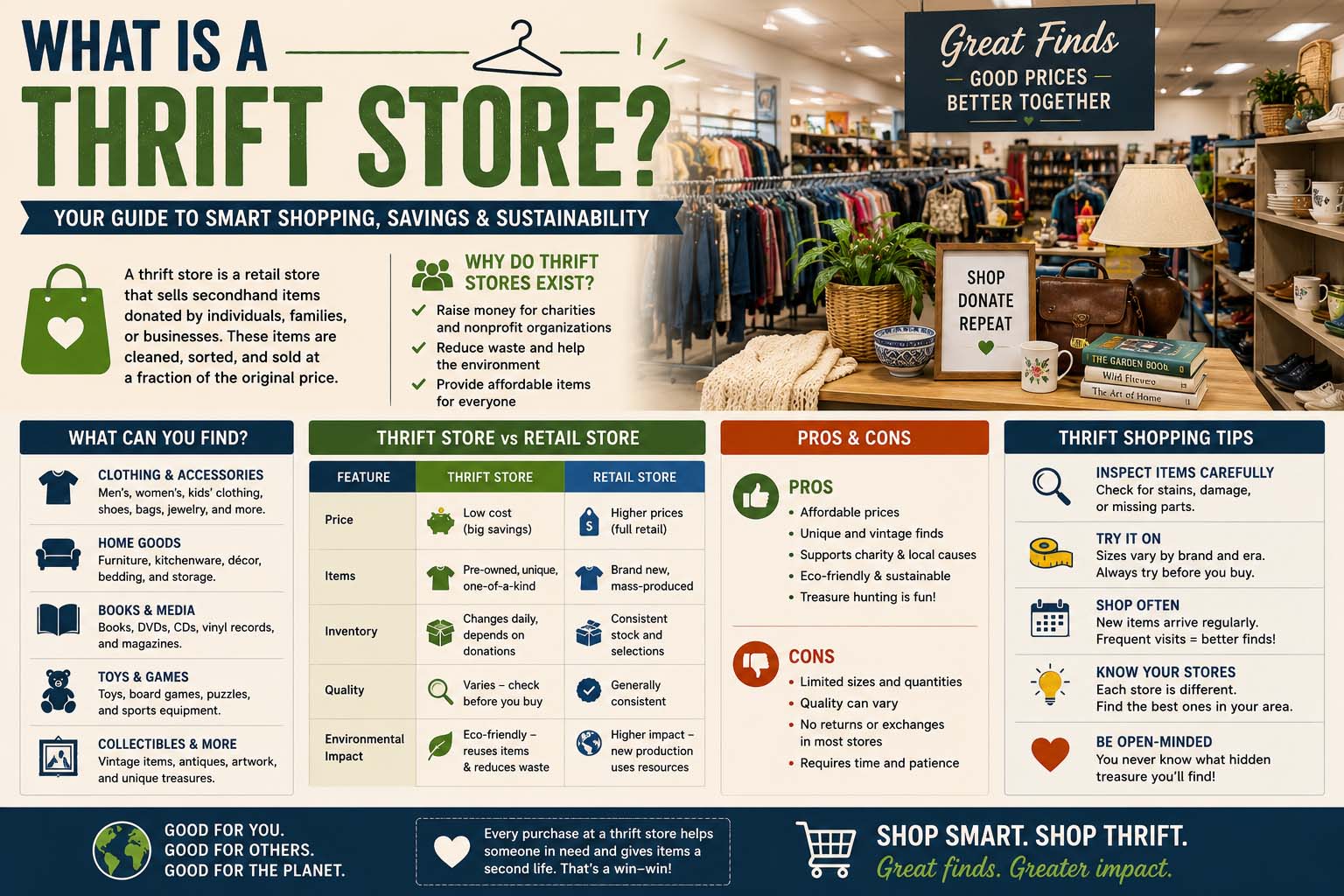
A thrift store is a retail shop that sells donated or secondhand items, usually at affordable prices. This simple thrift store definition covers shops selling clothing, shoes, books, household goods, furniture, toys, electronics, and collectibles. While many thrift stores are operated by charities or nonprofit organizations, others are privately owned businesses.
Quick Comparison: Thrift Store vs. Other Retail Stores
| Store Type | Products | Pricing | Condition | Purpose |
|---|---|---|---|---|
| Thrift Store | Donated secondhand items | Low | Used | Affordable shopping |
| Retail Store | Brand-new products | Regular | New | Traditional shopping |
| Consignment Store | Seller-owned items | Moderate | Used | Shared profits |
| Antique Store | Vintage collectibles | Higher | Used | Rare and collectible items |
Overall, understanding these differences helps shoppers choose the best option for their needs. Likewise, buyers comparing secondhand marketplaces may ask what is a flea market.
What Is a Thrift Store?
The thrift store meaning is fairly simple: it is a shop where previously owned goods are sold again rather than being discarded.
Unlike traditional retail stores, thrift stores often receive donated merchandise instead of purchasing all their inventory directly from manufacturers or wholesalers.
Common products include:
- Clothing
- Shoes
- Handbags
- Home décor
- Kitchenware
- Books
- Furniture
- Toys
- Sporting goods
- Small electronics
Because inventory depends heavily on donations and available secondhand goods, every shopping trip can offer a different selection.
How Do Thrift Stores Work?
If you’re wondering how do thrift stores work, most follow a relatively simple process.
- Community members donate gently used items.
- Staff inspect, sort, and organize suitable donations.
- Products are priced and displayed for sale.
- Customers purchase the secondhand merchandise.
- Revenue supports the business or nonprofit organization.
In addition, many nonprofit thrift stores use proceeds to help fund community programs, job training, healthcare services, or charitable activities.
Benefits of Shopping at a Thrift Store
Thrift shopping offers several advantages.
Save Money
Many secondhand products cost less than comparable new items.
Shoppers can often find:
- Brand-name clothing
- Kitchen appliances
- Furniture
- Home accessories
at discounted prices.
Find Unique Items
Since inventory changes regularly, thrift stores may carry unusual or one-of-a-kind products that aren’t available in traditional retail stores. Meanwhile, shoppers seeking specialized retail experiences may also ask what is a boutique.
Support Sustainability
Buying secondhand helps extend the useful life of existing products and supports efforts to reduce and reuse materials before they become waste.
Support Local Communities
Many nonprofit thrift stores use sales revenue to help fund charitable programs and community services.
What Is a Hospice Thrift Store?
A hospice thrift store is a secondhand retail shop operated by or associated with a hospice organization or charity. Revenue generated from donated goods may help support hospice care, patient services, family assistance, or community outreach programs.
Items sold may include:
- Clothing
- Furniture
- Books
- Household goods
- Decorative items
As a result, shopping at these stores can allow customers to save money while supporting the organization connected with the shop.
What License Is Needed to Open a Thrift Store?
Entrepreneurs frequently ask what license is needed to open a thrift store.
Requirements vary depending on the country, state, province, or local municipality, but common business requirements may include:
- General business license
- Sales tax permit where applicable
- Employer identification or registration if required
- Zoning approval
- Resale certificate in some locations
- Other permits required by local authorities
Because regulations differ by location, prospective owners should check with the relevant local government or business licensing office before opening a store.
What Is a Thrift Store POS?
A thrift store POS, or point-of-sale system, is the software and hardware used to process customer purchases and help manage store operations.
Modern POS systems may include features such as:
- Barcode scanning
- Inventory management
- Donation tracking
- Customer receipts
- Sales reporting
- Employee management
- Payment processing
- Discount management
Therefore, a suitable POS system can help simplify everyday sales and inventory tasks.
What Can You Buy at a Thrift Store?
The exact selection varies, but popular categories include:
Clothing
- Jackets
- Jeans
- Dresses
- Shirts
- Shoes
Home Goods
- Lamps
- Dishes
- Cookware
- Picture frames
Furniture
- Tables
- Chairs
- Sofas
- Shelves
Books
- Fiction
- Cookbooks
- Children’s books
- Educational materials
Collectibles
- Vintage décor
- Vinyl records
- Glassware
- Artwork
In particular, shoppers evaluating older products may benefit from understanding the difference between antique and vintage.
Pros and Cons of Shopping at Thrift Stores
Pros
- Affordable prices
- Unique product selection
- More opportunities to reuse existing goods
- Can support charitable organizations
- Useful for budget-conscious buyers
Cons
- Limited quantities
- Sizes may be unavailable
- Some products show signs of wear
- Inventory changes quickly
- Returns may be limited depending on store policy
Buyer Guide: How to Shop Smart at a Thrift Store
If you’re new to thrift shopping, these tips can help.
Inspect Every Item
Check for:
- Stains
- Tears
- Missing parts
- Broken zippers
- Electrical function when applicable
Visit Frequently
Inventory can change regularly. Therefore, repeat visits may increase your chances of finding items that match your needs.
Know Retail Prices
Understanding the cost of comparable new products helps you determine whether a secondhand item represents good value.
Check Return Policies
While some thrift stores allow returns or exchanges, others may consider certain purchases final.
Keep an Open Mind
Thrift shopping is unpredictable. You may discover useful bargains or unusual products that weren’t originally on your shopping list.
Why Thrift Shopping Remains Popular
Several factors help explain the continuing appeal of thrift stores.
Affordable Shopping
Secondhand stores provide another option for shoppers trying to control their spending.
Sustainable Shopping
Reusing products can extend their useful life and reduce unnecessary waste.
Vintage Fashion
Older clothing, décor, and collectibles can appeal to shoppers looking for distinctive styles.
Treasure Hunting
Many people enjoy searching for rare, discontinued, unusual, or inexpensive products that may be difficult to find in conventional stores. In contrast, shoppers comparing traditional retail formats may ask what is a department store, while deal seekers may explore what is a flash sale.
Frequently Asked Questions
What is a thrift store?
A thrift store sells previously owned or donated goods for resale, often at relatively affordable prices. Some are operated by nonprofit organizations, while others are independent businesses.
What does thrift store mean?
The term generally refers to a retail shop that resells used or donated merchandise, such as clothing, furniture, books, and household goods.
What is a hospice thrift store?
It is a secondhand shop connected with a hospice organization or charity. Revenue from sales may help support hospice-related services and programs.
What license is needed to open a thrift store?
Requirements vary by location but may include a general business license, tax registration, zoning approval, and other locally required permits.
What is a thrift store POS?
It is a point-of-sale system used to process purchases and may also help manage inventory, donations, discounts, payments, and sales reports.
Are thrift store items cleaned before being sold?
Policies vary by store. Buyers should check an item’s condition and clean washable clothing and household goods appropriately before use.
Is thrift shopping worth it?
It can be worthwhile for shoppers looking for lower-cost secondhand goods, unusual finds, or opportunities to reuse existing products.
Conclusion
Understanding what is a thrift store makes it easier to see how secondhand retail differs from conventional shopping. Whether you’re looking for affordable clothing, vintage collectibles, home furnishings, or everyday essentials, thrift stores can provide a practical way to shop for previously owned goods.