
Types of Heels: A Complete Guide to Choosing the Perfect Style
Shopping for heels can feel overwhelming when every pair looks slightly different. From elegant stilettos to comfortable wedges, the many types of heels available today are designed for different occasions, outfits, and comfort preferences.
Whether you’re buying your first pair or expanding your shoe collection, understanding heel styles helps you choose footwear that matches your wardrobe and lifestyle. The right heel can improve your posture, complement your outfit, and provide the confidence you need without sacrificing comfort.
This guide explains the most popular heel styles, when to wear them, and what to consider before making your next purchase.
Why Understanding Types of Heels Matters
Not every heel is designed for the same purpose. Some prioritize elegance, while others focus on stability or all-day comfort.
For example, a slim stiletto may be perfect for an evening event, but it may not be the best choice if you’ll be walking several city blocks. On the other hand, a chunky block heel offers better balance and often feels much more comfortable for extended wear.
Learning about the different types of heels makes shopping easier because you’ll know exactly what features suit your needs.
Popular Types of Heels Every Shopper Should Know
Stiletto Heels
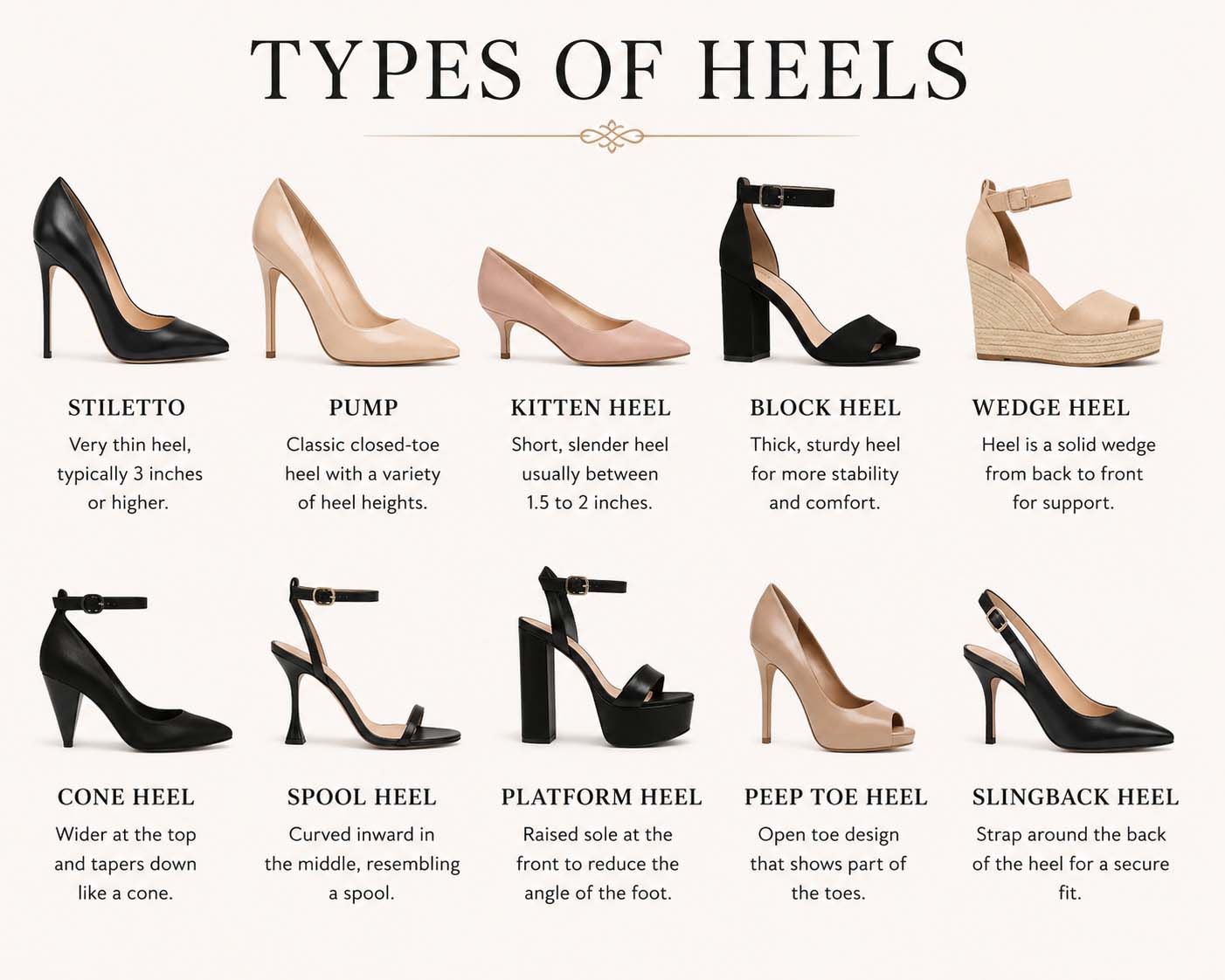
Stilettos are among the most recognizable types of high heels. Their long, thin heel creates a sleek silhouette that pairs beautifully with formal dresses, cocktail outfits, and tailored pants.
Best for:
- Weddings
- Date nights
- Formal events
- Evening parties
Although stylish, stilettos usually require more balance and may not be ideal for long hours of standing.
Block Heels
Block heels feature a wide, square-shaped heel that distributes body weight more evenly. Many shoppers choose them because they’re easier to walk in than narrow heels.
They work well with:
- Jeans
- Midi dresses
- Office wear
- Casual skirts
If you’re building your first heel collection, block heels are one of the easiest styles to wear confidently.
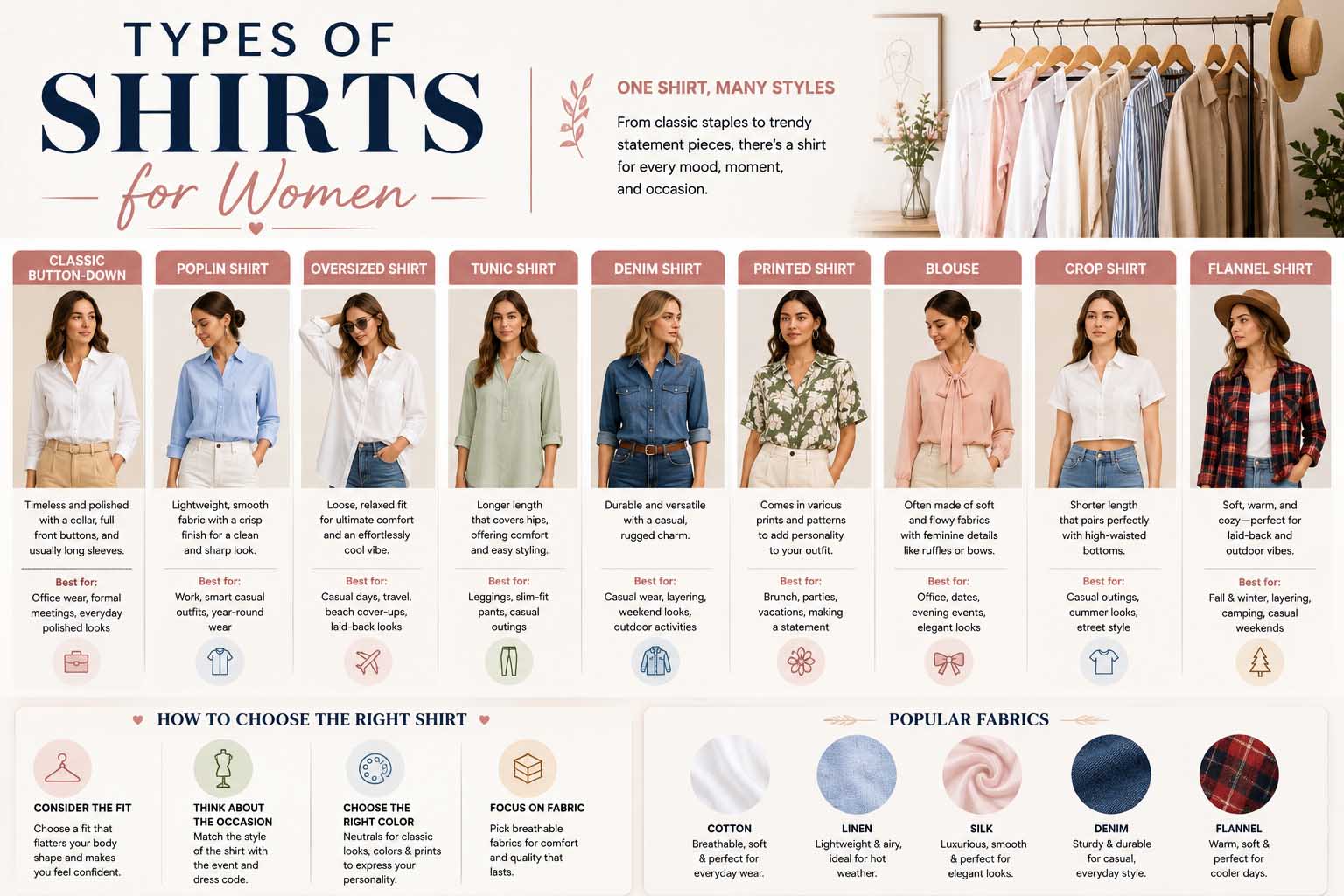
When creating polished office outfits, pairing block heels with the right types of shirts can create a comfortable yet professional look without feeling overly formal.
Kitten Heels
Kitten heels have a short heel, usually between 1.5 and 2 inches. They’re an excellent option for shoppers who want a bit of height without the pressure of taller shoes.
These heels remain popular because they’re versatile enough for work, brunch, and semi-formal occasions.
They’re also a great choice for anyone transitioning from flats to heels.
Wedge Heels
Unlike traditional heels, wedges support the entire foot from heel to toe. This design improves stability and often feels more comfortable throughout the day.
Wedges are especially popular during warmer months because they pair naturally with:
- Sundresses
- Linen outfits
- Maxi skirts
- Shorts
They’re also a favorite vacation shoe thanks to their balance of comfort and style.
Platform Heels
Platform heels include extra sole thickness beneath the front of the foot. Although they appear tall, the platform reduces the angle between your heel and toes, making them feel more comfortable than their height suggests.
Platforms are commonly worn for:
- Parties
- Fashion-forward outfits
- Nightlife
- Special occasions
Many modern designs combine platforms with block heels for added stability.
Cone Heels
Cone heels begin wide at the shoe and narrow toward the ground, creating a unique shape that stands out without feeling overly dramatic.
These heels provide a balance between fashion and function, making them suitable for both casual and dressier outfits.
Spool Heels
Spool heels, sometimes called Louis heels, feature a curved shape that’s wider at the top and bottom while narrowing in the center.
They add vintage charm and pair beautifully with classic dresses and elegant skirts.
Sculptural Heels
Fashion brands increasingly experiment with artistic heel shapes, creating sculptural heels that resemble geometric designs or abstract artwork.
These heels prioritize visual impact and are often chosen for fashion events or statement outfits.
Comparing Different Types of High Heels
| Heel Type | Stability | Comfort | Best For |
|---|---|---|---|
| Stiletto | Low | Moderate | Formal occasions |
| Block Heel | High | High | Everyday wear |
| Kitten Heel | High | High | Office and casual events |
| Wedge | Very High | Very High | Summer outfits |
| Platform | Moderate | High | Parties and evening wear |
| Cone Heel | Moderate | Moderate | Fashion styling |
| Spool Heel | Moderate | Moderate | Vintage-inspired outfits |
How to Choose the Right Types of Heels for Women
Finding the right pair depends on more than appearance. Consider where you’ll wear them and how long you’ll stay on your feet.
Think About the Occasion
A single pair rarely works for every event.
For example:
- Weddings often call for elegant pumps or block heels.
- Office settings usually suit kitten heels or mid-height block heels.
- Weekend outings may be better with wedges or chunky heels.
If you’re attending a memorial service, comfort and understated style matter just as much as appearance. Choosing classic low heels works well alongside the outfit advice found in what to wear to a funeral.
Consider Heel Height
Heel height affects both comfort and posture.
General guidelines include:
- 1–2 inches: Easy for everyday wear.
- 2–3 inches: A balance of style and comfort.
- 3–4 inches: Great for special occasions.
- 4+ inches: Best for shorter periods or experienced heel wearers.
Higher doesn’t always mean better. The right height depends on your comfort level.
For additional foot-health guidance, the American Podiatric Medical Association provides practical advice on choosing and wearing footwear comfortably.
Look at Toe Shape
The front of the shoe plays a major role in overall comfort.
Common options include:
- Pointed toe
- Almond toe
- Round toe
- Square toe
- Open toe
Wider toe boxes often provide better comfort during long wear.
Materials Used in Different Types of Heels
The material affects how comfortable heels feel, how durable they are, and how much maintenance they require.
Leather
Leather remains one of the most popular choices because it molds to your feet over time.
Benefits include:
- Long lifespan
- Better breathability
- Classic appearance
Suede
Suede offers a soft, luxurious finish that’s especially popular for fall and winter fashion.
However, it requires more care since moisture and stains can damage the surface.
Patent Leather
Patent leather has a glossy finish that instantly creates a dressier appearance.
It’s commonly chosen for evening shoes and formal events.
Synthetic Materials
Modern synthetic materials have improved significantly in both comfort and appearance.
They often cost less than genuine leather and come in countless colors and finishes, making them a practical choice for trend-focused shoppers.
Shopping Tips for First-Time Heel Buyers
Buying your first heels doesn’t have to be intimidating. Focus on comfort before fashion trends.
A few practical tips include:
- Start with block heels or kitten heels.
- Shop later in the day when your feet are slightly swollen for a more accurate fit.
- Walk around the store before buying.
- Make sure your heel doesn’t slip out while walking.
- Leave enough room for your toes without excessive movement.
Choosing one versatile neutral color—such as black, nude, or beige—often gives you the most outfit options.
Many shoppers also discover that investing in comfortable shoes complements their overall style journey, much like upgrading skincare or wardrobe essentials when learning how to glow up.
Price Range: What Should You Expect to Spend?
Heel prices vary widely depending on the brand, materials, craftsmanship, and design. While premium designer heels often command higher prices, there are plenty of quality options available at affordable price points.
| Price Range | What You Can Expect |
|---|---|
| Under $50 | Trend-focused styles, synthetic materials, occasional wear |
| $50–$100 | Better construction, more comfort features, everyday options |
| $100–$250 | Genuine leather, improved durability, reputable brands |
| $250+ | Designer labels, luxury materials, handcrafted details |
Keep in mind that prices change based on retailer, promotions, location, and seasonal collections. Paying more doesn’t always guarantee greater comfort, so reading customer reviews and checking sizing information is just as valuable.
A polished look isn’t just about your shoes. Many people also pay attention to details like nail care, so learning what is a russian manicure can help you create a more refined overall appearance for formal events.
Pros and Cons of Wearing Heels
Choosing the right heel style often comes down to balancing appearance with practicality.
| Pros | Cons |
| Adds height and creates a longer leg line | Some styles can become uncomfortable after long wear |
| Complements both casual and formal outfits | Higher heels may reduce stability |
| Available in countless styles and materials | Fit varies between brands |
| Can elevate a simple outfit instantly | Certain materials require extra maintenance |
| Suitable for many occasions | Some styles are less practical for walking long distances |
The key is selecting a heel that matches your plans instead of choosing solely based on appearance.
Common Shopping Mistakes to Avoid
Many shoppers end up with heels they rarely wear because they focus only on style. Avoid these common mistakes to get better value from your purchase.
Buying the Wrong Size
Sizing differs between brands, so don’t assume every size will fit the same. Always check the brand’s size guide and customer reviews if you’re shopping online.
If you’re between sizes, consider whether the material will stretch over time. Leather often becomes more flexible with wear, while many synthetic materials keep their original shape.
Choosing Height Over Comfort
Very high heels may look stunning, but they’re not always the best option for everyday use.
If you’ll be walking, standing for several hours, or attending an event with lots of movement, a mid-height block heel or wedge is usually a more practical choice.
Ignoring Cushioning
Some shoes include padded insoles, arch support, or extra cushioning beneath the ball of the foot. These small features can make a noticeable difference during extended wear.
Forgetting About Your Wardrobe
Before buying a statement pair, think about what you’ll actually wear with them.
Neutral shades like black, nude, white, or metallic finishes often pair with more outfits than bold seasonal colors.
Caring for Your Heels
Proper care helps maintain both appearance and comfort.
Here are a few simple maintenance habits:
- Store heels upright or in dust bags.
- Use shoe trees for leather styles when appropriate.
- Clean dirt after each wear.
- Protect suede with a suitable protector spray.
- Replace worn heel tips before they become damaged.
- Rotate between pairs instead of wearing the same heels every day.
These habits can help quality shoes stay in good condition for years.
Alternatives to Different Types of High Heels
Not everyone enjoys wearing tall heels, and that’s perfectly fine. There are several fashionable alternatives that still create a polished look.
Popular options include:
- Dressy flats
- Loafers
- Platform sneakers
- Low block heels
- Kitten heels
- Fashion mules
These styles can provide a similar level of sophistication while offering more comfort for everyday wear.
For certain professions or outdoor work, specialized footwear makes much more sense than dress heels. If durability and protection are your priorities, botas de trabajo are designed specifically for demanding environments.
Quick Buying Checklist
Before placing your order, ask yourself these questions:
- What occasions will I wear these heels for?
- How long will I typically be standing or walking?
- Is the heel height comfortable for my experience level?
- Does the toe shape provide enough room?
- Is the material suitable for my climate and lifestyle?
- Will the color match several outfits I already own?
- Have I checked the brand’s sizing guide and customer reviews?
Answering these questions can help you choose a pair you’ll actually enjoy wearing.
Frequently Asked Questions About Types of Heels
Which heel type is the most comfortable?
Block heels, wedges, and kitten heels are generally considered the most comfortable because they provide better stability and distribute weight more evenly than narrow stilettos.
What heel height is best for beginners?
A heel between 1 and 2.5 inches is a comfortable starting point. It offers extra height while remaining easier to walk in.
Are platform heels easier to wear than stilettos?
In many cases, yes. The raised front platform reduces the angle of your foot, making tall shoes feel less steep than standard high heels.
Which heel style works best for weddings?
That depends on the venue. Block heels are a popular choice for outdoor weddings because they sink less into grass, while classic pumps and stilettos remain timeless for indoor celebrations.
How many pairs of heels should you own?
A practical collection often includes:
- One neutral everyday pair
- One formal pair
- One comfortable block heel
- One seasonal or fashion-forward style
This gives you flexibility without buying shoes you rarely wear.
What’s the difference between pumps and stilettos?
Pumps describe a type of shoe, while a stiletto refers to the heel shape. A pump may feature a stiletto heel, a block heel, or another heel style.
Finding the Right Pair for Your Style
The best types of heels are the ones that fit comfortably, suit your wardrobe, and match your daily routine. While trendy designs can be fun, timeless styles often deliver the greatest long-term value because they work across multiple occasions.
If you’re building your collection, start with a versatile pair in a neutral color and a comfortable heel height. As your confidence grows, you can explore more fashion-forward options, unique materials, or statement designs.
Whether you prefer elegant stilettos, supportive wedges, or dependable block heels, understanding the different types of heels, types of high heels, types of heels for women, and different types of high heels makes shopping much easier. Instead of chasing trends, focus on quality, fit, and how often you’ll realistically wear the shoes. That’s the smartest way to invest in a pair you’ll reach for again and again.