
Types of Windows: A Practical Guide to Choosing the Right Style
Choosing windows can seem straightforward until you start comparing how they open, how much ventilation they provide, and what materials are available. The types of windows you choose can affect natural light, airflow, cleaning, energy performance, security, and the overall appearance of your home. Therefore, understanding the basic options before requesting quotes can make the buying process much easier.
Some windows work best in bedrooms where ventilation matters, while others suit living rooms where an unobstructed view is the priority. Likewise, certain designs fit small spaces better than others. Instead of choosing based only on appearance, consider how each window will function in the room every day.
Understanding the Different Types of Windows
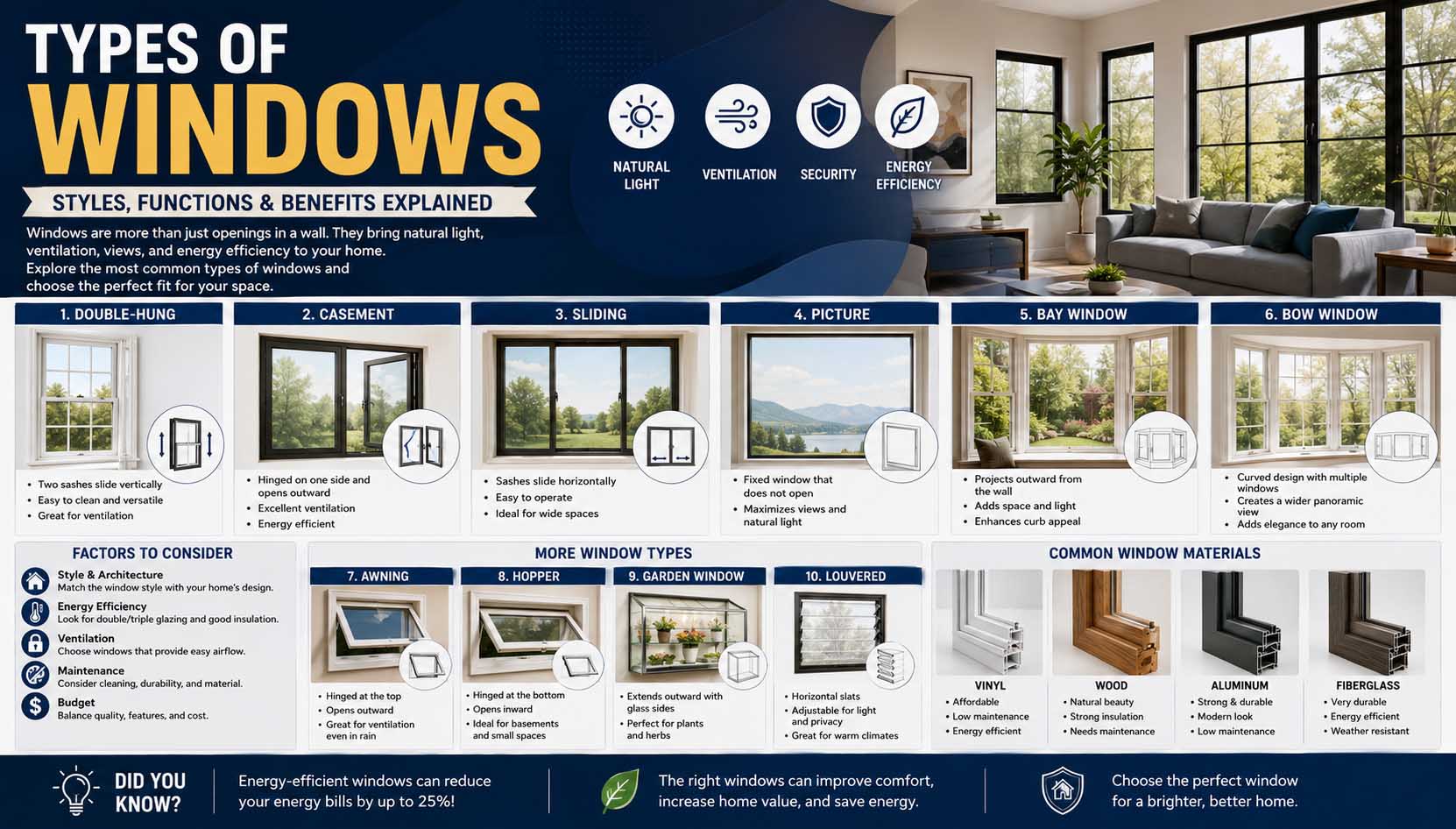
Windows are commonly categorized by how they open and how their sashes are arranged. For example, some slide vertically, others move horizontally, and some swing outward on hinges.
Fixed windows do not open at all. Instead, manufacturers design them primarily for daylight and views.
The right choice depends on several factors, including the opening size, climate, ventilation needs, architectural style, maintenance preferences, and budget.
This applies to many housing styles. For example, someone researching what is a modular home may also find that modular construction can accommodate many conventional window styles, depending on the home’s design and manufacturer.
Before comparing frames or glass packages, it helps to understand the main window configurations first.
Most Popular Types of Windows for Homes
Although manufacturers offer many specialized designs, a relatively small group covers most residential needs.
Double-Hung Windows
Double-hung windows have two movable sashes. The lower sash moves upward, while the upper sash moves downward.
Because both sections can open, these windows offer flexible ventilation. Opening the bottom and top can help air circulate through a room.
Many modern versions also have tilt-in sashes. Consequently, homeowners may find them easier to clean from inside the house, especially on upper floors.
Best for: Bedrooms, living rooms, traditional homes, and buyers who want flexible ventilation.
Consider before buying: They contain more moving parts than fixed windows, so compare locks, balances, seals, and sash construction carefully.
Single-Hung Windows
Single-hung windows resemble double-hung models, but only the lower sash normally moves. The upper section remains fixed.
Because the design is simpler, single-hung models can sometimes cost less than comparable double-hung windows.
However, you sacrifice some ventilation flexibility and may find exterior cleaning less convenient depending on the installation.
Best for: Budget-conscious renovations, traditional designs, and rooms where basic ventilation is sufficient.
Casement Windows
Casement windows attach to the frame with side hinges and usually open outward using a crank or handle.
When fully opened, the sash can catch passing air and direct it indoors. As a result, casement windows are a strong option when ventilation is a priority.
Their locking mechanism can also pull the sash tightly against the frame when closed, which can support a good weather seal when the window is properly manufactured and installed.
Best for: Kitchens, bedrooms, contemporary homes, and areas where strong ventilation is useful.
However, consider outdoor clearance. An outward-opening sash may not suit a narrow walkway or another location where it could obstruct movement.
Sliding Windows
Sliding windows move horizontally along tracks. Usually, one or both panels can slide.
Their simple operation makes them useful for wide openings. Since they do not swing inward or outward, they also work well where space around the window is limited.
Best for: Modern homes, wide wall openings, rooms facing patios, and spaces where outward clearance is limited.
Meanwhile, buyers should inspect track construction and drainage. Tracks can collect dirt over time, so occasional cleaning helps maintain smooth operation.
Types of Windows Designed for Light and Views
Not every window needs to provide maximum ventilation. In some rooms, daylight and scenery matter more.
Picture Windows
A picture window is a large fixed window that does not open. Since it requires no sash hardware or opening mechanism, it can provide a broad, uninterrupted view.
Picture windows work especially well in living rooms overlooking gardens, mountains, city views, or other attractive surroundings.
Because they remain sealed, however, they provide no ventilation. Therefore, homeowners often combine them with operable windows nearby.
Best for: Living rooms, stairways, high walls, and rooms where views matter more than airflow.
Bay Windows
Bay windows project outward from the exterior wall and typically combine three sections. A large center window is commonly paired with two angled side windows.
This shape creates extra interior depth and can make a room feel more open. Depending on the design, homeowners may use the interior projection as a window seat, shelf, or decorative area.
Bay windows can become a strong architectural feature, although installation is generally more involved than replacing a simple flat window.
Best for: Living rooms, dining areas, front elevations, and traditional home designs.
Bow Windows
Bow windows are similar to bay windows, yet they usually use four or more sections arranged in a gentle curve.
As a result, the exterior appearance is softer and more rounded.
They can bring substantial daylight into a room and create panoramic views. However, their larger size and more complicated construction can increase purchasing and installation costs.
Types of Windows for Ventilation and Difficult Spaces
Certain locations need a window that can provide airflow without requiring a conventional vertical or horizontal sash.
Awning Windows
Awning windows have hinges at the top and open outward from the bottom.
Because the open sash forms an awning-like shape, the design can offer ventilation while providing some protection from light rain. However, weather conditions and installation details still matter.
Awning windows often appear above or below larger fixed windows.
Best for: Bathrooms, kitchens, basements, and combinations with picture windows.
Hopper Windows
Hopper windows are generally hinged at the bottom and open inward from the top.
Their compact design makes them common in basements and other smaller openings.
Since the sash opens inside, buyers should make sure furniture, curtains, or stored items will not interfere with its movement.
Skylights and Roof Windows
Skylights bring daylight through the roof rather than a wall. Fixed versions provide light, while certain operable models can also offer ventilation.
They are particularly useful in rooms where exterior wall space is limited.
However, roof installation requires careful flashing and waterproofing. Moisture management elsewhere in the building matters too; for instance, homeowners dealing with a vapor barrier crawl space are addressing a different part of the home’s overall moisture-control strategy.
For skylights, professional installation is often worth considering because improper roof integration can lead to expensive problems.
Comparing Common Window Styles
The following quick-reference table can help narrow down the options.
| Window Type | Opens? | Ventilation | Main Advantage | Good Choice For |
|---|---|---|---|---|
| Double-hung | Yes | Very good | Flexible operation | Bedrooms, living areas |
| Single-hung | Yes | Good | Simple design | Budget renovations |
| Casement | Yes | Excellent | Wide opening | Kitchens, bedrooms |
| Sliding | Yes | Good | Easy horizontal operation | Wide openings |
| Picture | No | None | Clear views | Living rooms |
| Bay | Usually partly | Varies | Extra visual space | Front rooms |
| Bow | Usually partly | Varies | Panoramic appearance | Larger rooms |
| Awning | Yes | Good | Compact ventilation | Bathrooms, kitchens |
| Hopper | Yes | Good | Fits small openings | Basements |
| Skylight | Depends | Varies | Overhead daylight | Dark interior spaces |
No single design wins every category. Instead, match the window’s function to the room.
Choosing Window Frame Materials
Once you know which style you need, compare frame materials.
Vinyl
Vinyl windows are widely available and generally require little maintenance. They do not need regular painting, and manufacturers offer them across many price levels.
However, construction quality varies between product lines. Therefore, compare frame reinforcement, seals, hardware, warranties, and glass specifications rather than judging a window solely by its material.
Wood
Wood offers a traditional appearance and can complement classic interiors.
Depending on the product, exterior surfaces may use cladding to help protect the wood from weather exposure.
Wood windows can require more maintenance, especially when exposed surfaces need refinishing or painting.
Aluminum
Aluminum frames are strong and can support relatively slim profiles.
They are often associated with modern architecture. However, thermal characteristics vary, so buyers in climates with major temperature differences should examine the complete window’s performance specifications.
Fiberglass
Fiberglass window frames are valued for strength and dimensional stability. They can also suit homeowners who want an alternative to vinyl or wood.
However, availability and pricing differ by manufacturer and market.
Types of Replacement Windows to Consider
Shopping for types of replacement windows introduces another decision: full-frame replacement or an insert-style installation.
An insert replacement generally fits a new window unit within the existing frame when that frame is still suitable. This approach may reduce disruption, although it can slightly reduce the glass area.
Full-frame replacement removes more of the existing window assembly. It can make sense when frames are damaged, the opening requires correction, or the homeowner wants a more comprehensive replacement.
During a larger renovation, inspect the surrounding wall finish as well. If removing trim exposes damaged interior surfaces, knowing how to patch drywall can help with the finishing work after installation.
Never select the installation method based only on price. Existing frame condition and water-management details should influence the decision.
What to Check Before Buying Windows
Start with accurate measurements, but remember that replacement-window sizing and installation tolerances can be more complicated than simply measuring visible glass.
Next, consider how each room is used. A bathroom may need privacy and ventilation, whereas a living room may benefit more from a large picture window.
Then compare glazing. Depending on climate and product specifications, buyers may encounter double-pane or triple-pane glass, low-emissivity coatings, gas-filled insulating glass units, and other options.
Look at the entire window’s rated performance rather than assuming that one feature automatically makes a product efficient.
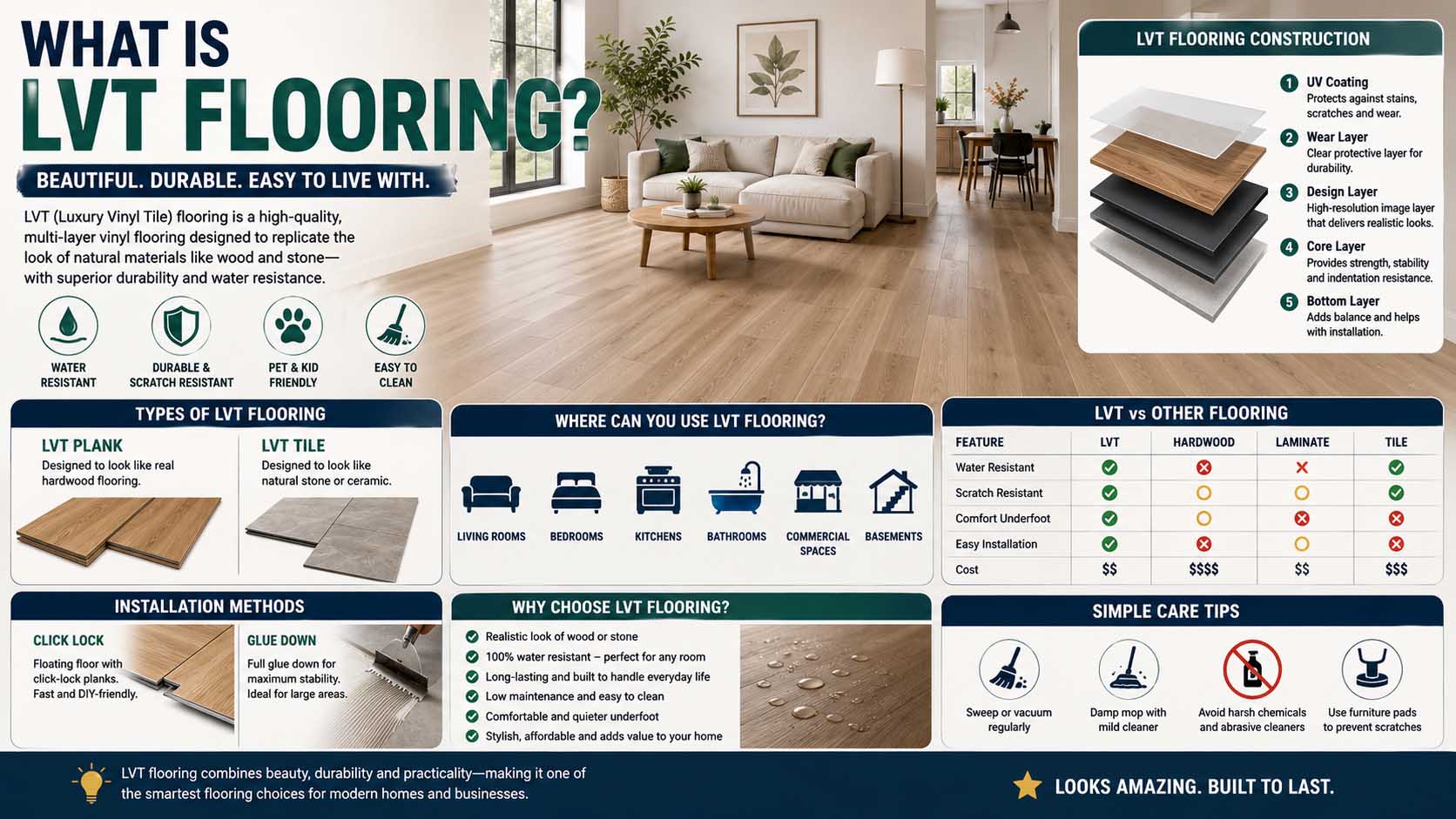
Also consider interior finishes. Windows form part of the room’s overall design alongside walls, trim, cabinetry, and flooring. For example, homeowners comparing what is LVP flooring may be planning a broader renovation where window frame colors and floor finishes need to work together visually.
Finally, compare warranties carefully. Coverage can differ for glass, frames, hardware, seals, finishes, labor, and transfer to future owners.
What About Blinds and Window Coverings?
After choosing the window itself, think about privacy and light control.
Common types of blinds for windows include horizontal blinds, vertical blinds, roller shades, cellular shades, Roman shades, and wood or faux-wood blinds.
The best option depends partly on window operation. For example, a treatment that works easily with a double-hung window might interfere with a casement handle.
Large sliding windows may suit different coverings than narrow bedroom windows.
Meanwhile, color matters when coordinating a renovation. If you’re updating windows near painted built-ins or kitchen areas, researching the best paint for cabinets can help create a more consistent finish throughout the room.
Measure window coverings only after confirming where they will mount—inside or outside the frame.
Common Window-Buying Mistakes
One common mistake is choosing entirely by price. A cheap window that performs poorly for the location may prove less satisfying over time.
Another mistake is focusing only on appearance. A beautiful window can still be inconvenient if it opens into a walkway or provides insufficient ventilation.
Likewise, buyers sometimes compare frame materials without considering glass, hardware, weather sealing, installation quality, and warranty terms.
Poor measurements are another expensive problem. Therefore, verify dimensions carefully and follow the manufacturer’s requirements.
Finally, avoid overlooking installation. Even a well-made window may perform poorly when improperly fitted, flashed, sealed, or integrated with the surrounding wall.
FAQs About Different Types of Windows
Which type of window is best for a home?
There is no universal best option. Double-hung windows offer flexible everyday use, casement windows provide strong ventilation, and picture windows work well for large views. Many homes use several styles.
What windows are easiest to clean?
Some double-hung windows have tilt-in sashes that simplify exterior-glass cleaning from indoors. Certain casement designs can also be relatively accessible, although the exact experience depends on the model.
What window gives the best view?
Picture windows usually provide one of the clearest views because they have no movable sash dividing the main glass area. Bay and bow windows can provide broader viewing angles.
Are casement or sliding windows better?
Casement windows can provide a wide ventilation opening, while sliding windows are convenient when you do not have space for an outward-opening sash. The better choice depends on the location.
Should every window in a house match?
Not necessarily. Using a consistent frame color and design language can create visual unity, while different rooms can still use different operating styles according to their needs.
Choosing the Right Windows for Your Home
The best way to compare the types of windows is to start with function rather than appearance alone. Decide how much ventilation, daylight, privacy, cleaning access, and outdoor clearance each room needs. Then compare suitable styles, frame materials, glazing packages, warranties, and installation options.
For many homes, a combination works best. You might choose casement windows where airflow matters, picture windows for major views, double-hung models for flexible everyday use, and awning windows for smaller spaces.
Before ordering, get accurate measurements and compare complete product specifications instead of focusing on a single feature. Since window costs vary by size, material, glazing, brand, retailer, location, customization, and installation requirements, getting several detailed quotes can also make it easier to judge overall value rather than simply choosing the lowest upfront price.