
Types of Hats Names: Popular Hat Styles and a Practical Buying Guide
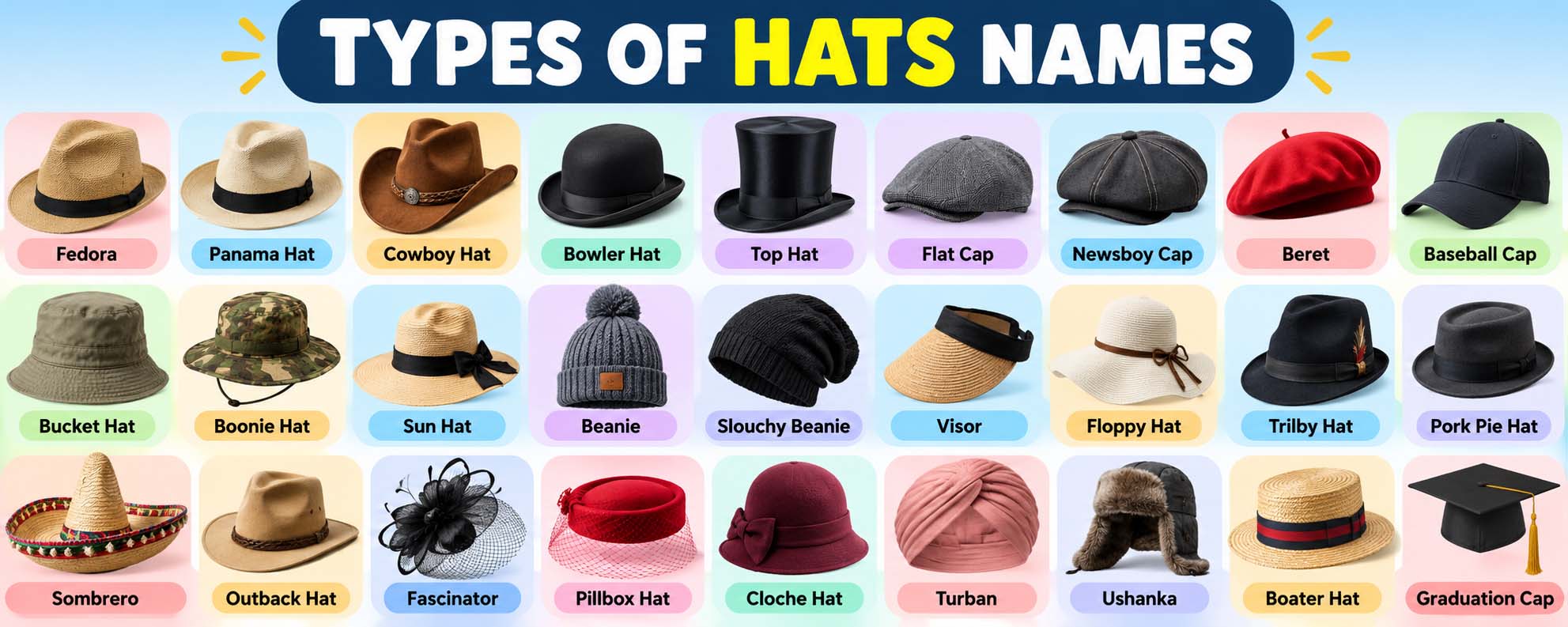
Walk into a hat shop or browse one online, and you will quickly notice that similar-looking designs can have completely different names. Learning the most common types of hats names makes shopping easier because you can search for the exact shape, material, brim, and style you want. From baseball caps and bucket hats to fedoras, beanies, and formal fascinators, each design serves a different purpose and creates a different look.
Some hats provide shade or types of hats names , while others mainly complete an outfit. Therefore, the right choice depends on when you will wear it, how you want it to fit, and whether function or fashion matters most.
Below, you will find popular hat styles, their names, key differences, and practical tips for choosing a hat you will actually wear.
Quick Guide to Hat Types and Their Names
Before comparing individual designs, this quick reference can help you identify some of the most familiar hat styles and types of hats names used by shoppers.
| Hat Type | Recognizable Feature | Common Use |
|---|---|---|
| Baseball cap | Curved or flat front bill | Casual and outdoor wear |
| Beanie | Soft, brimless knit design | Cold-weather wear |
| Fedora | Pinched crown and medium brim | Smart-casual outfits |
| Bucket hat | Downward-sloping brim | Casual and outdoor wear |
| Panama hat | Lightweight woven construction | Warm-weather outfits |
| Cowboy hat | High crown and wide shaped brim | Western and outdoor style |
| Flat cap | Rounded crown with short front peak | Casual and smart-casual wear |
| Trucker hat | Front panel with mesh back | Casual and outdoor wear |
| Sun hat | Extra-wide brim | Sunny outdoor settings |
| Beret | Soft, round, brimless shape | Fashion and traditional styling |
| Boater | Flat crown and flat brim | Summer and occasion wear |
| Fascinator | Decorative headpiece | Weddings and formal events |
These names describe general categories, although brands may adjust crown height, brim width, materials, and other details. Therefore, compare product photos and measurements instead of relying on the name alone.
Everyday Types of Hats and Their Names
Several hat styles work particularly well for daily outfits because they are easy to combine with casual clothing.
Baseball Cap
The baseball cap remains one of the easiest styles to recognize. It usually has a rounded crown, front bill, and adjustable or fitted construction.
Traditional models often have curved bills, while modern versions may use flatter peaks. Materials range from cotton and polyester to wool blends and performance fabrics.
Before buying, check whether the cap is fitted, snapback, strapback, or stretch-fit. An adjustable design is usually easier to buy online, especially when you do not know your exact head measurement.
Trucker types of hats names Hat
A trucker hat looks similar to a baseball cap, yet it commonly uses mesh panels across the back. As a result, the construction allows more airflow than a fully enclosed cap.
Many models also have a structured front panel and adjustable snap closure. Therefore, trucker hats often suit casual outfits, travel, and outdoor activities.
Bucket Hat
Bucket hats feature a soft crown with a brim that slopes downward around the entire head. Since many versions can fold easily, they can also be convenient for travel.
Cotton works well for casual fashion, while outdoor-oriented versions may use lightweight synthetic fabrics. Some designs also include ventilation eyelets, adjustable cords, or water-resistant materials.
Since hats form just one part of a complete wardrobe, understanding broader types of clothing can also help you decide whether a sporty, minimalist, vintage, or dressier hat fits your usual outfits.
Beanie
A beanie has a simple brimless construction and usually uses knitted material. Consequently, it remains a popular choice during cooler weather.
Cuffed beanies provide a folded section around the lower edge, whereas fisherman-style beanies usually sit higher on the head. Slouchy versions, meanwhile, leave extra material toward the back.
When shopping, check the fabric composition because wool, acrylic, cotton, and blended knits can feel noticeably different.
Classic Types of Hats for a Dressier Look
types of hats names Casual hats are only part of the picture. Several traditional designs provide a more polished appearance and can complement smarter outfits.
Fedora
A fedora typically has a soft brim and an indented crown with pinching near the front. However, brim width and crown proportions vary between models.
Felt versions are commonly associated with cooler weather, whereas lightweight woven variations can work during warmer months.
When choosing one, consider proportion. A very wide brim creates a stronger visual statement, while a narrower brim tends to look more understated.
Trilby
People often confuse trilbies with fedoras because both have shaped crowns. However, a trilby generally has a narrower brim, which often turns upward toward the back.
Because the difference can be subtle in product photographs, check the brim measurements before ordering.
Flat Cap
A flat cap has a rounded fabric crown and a small stiff peak at the front. Wool and tweed versions suit cooler seasons, while cotton and linen options can feel more appropriate during warmer weather.
This hat works particularly well when you want something smarter than a baseball cap without choosing a wide-brimmed design.
Panama Hat
Despite being treated as a style name in everyday shopping, a traditional Panama hat refers to a woven hat associated with Ecuadorian craftsmanship.
Its lightweight construction makes it recognizable as warm-weather headwear. However, quality, weave, brim width, and crown shape can differ substantially between products.
The Smithsonian’s National Museum of American History documents a Panama hat made by Sombreros Barberan in Guayaquil, Ecuador, using woven straw. See the Smithsonian Panama hat collection record for an example.
When comparing options, look carefully at the material description rather than buying solely based on the product title.
Outdoor Types of Hats and Their Uses
Outdoor hats often prioritize coverage, portability, or practical materials. However, their designs can still vary significantly.
Sun Hat
Sun hats generally use a broad brim to provide more coverage around the face than a standard cap.
Some are designed mainly for fashion, while others use lightweight outdoor fabrics, ventilation panels, chin cords, or packable construction.
Therefore, consider where you plan to wear the hat. A structured straw design may work well for a resort outfit, while a foldable fabric model may be easier to pack for travel.
Cowboy Hat
Cowboy types of hats names are easy to recognize because of their high crown and broad, shaped brim. Nevertheless, there are many variations in crown creases and brim profiles.
Shoppers interested in Western headwear can explore the types of cowboy hats separately because cattleman, pinch-front, gambler, and other shapes can create noticeably different appearances.
Materials also matter. Felt models are common, while straw versions can provide a lighter option for warmer conditions.
Boonie Hat
A boonie hat usually has a soft, relatively wide brim and an outdoor-focused construction. Many versions include ventilation holes, loops around the crown, or an adjustable chin cord.
Because these hats are often designed for practical outdoor use, compare material, packability, ventilation, and fit rather than focusing only on appearance.
Fashion Hat Types and Names
Some hat names appear most often in fashion collections rather than everyday sportswear.
Beret
The beret has a soft, round, brimless design. Depending on how it is positioned, it can sit centrally or tilt toward one side.
Wool and wool-blend versions are common for cooler weather, although lighter fabrics are also available.
Because berets have a distinctive silhouette, they can change the character of an outfit without relying on a large brim.
Cloche Hat
A cloche has a rounded, bell-like shape that fits relatively close to the head. Its design is strongly associated with 1920s fashion, although contemporary versions still appear in modern collections.
Felt styles work naturally with coats and cooler-season clothing. Meanwhile, decorative trims can make the design feel more formal.
Boater Hat
Boater hats traditionally have a flat crown and flat brim. Straw construction is common, often with a ribbon around the crown.
Because of their structured silhouette, boaters can complement summer outfits, outdoor celebrations, and vintage-inspired clothing.
Hat choices often overlap with different types of aesthetics, so a boater may suit vintage styling while a bucket hat can fit streetwear and a fedora may work with classic wardrobes.
Fascinator
A fascinator is technically closer to decorative headwear than a conventional full hat. Still, shoppers frequently encounter it while searching for hats for weddings, races, and formal occasions.
Fascinators may feature feathers, mesh, flowers, bows, or sculptural details. They can attach using a headband, clip, or comb.
When shopping online, check the attachment method because it can affect how securely and comfortably the piece sits.
Unusual Types of Hats and Costume Hat Names
Not every hat is designed for ordinary daily wear. Historical, theatrical, ceremonial, and costume headwear creates another large category.
Top Hat
A top hat features a tall cylindrical crown and a relatively narrow brim. Today, it appears mainly in formal traditions, costumes, performances, and historical styling rather than everyday wardrobes.
If you are purchasing one for an event, check crown height and construction because costume versions can differ greatly from formal versions.
Bowler Hat
The bowler, also called a derby hat in some contexts, has a rounded crown and short curved brim.
Its distinctive shape makes it useful for vintage-inspired outfits, costumes, and theatrical styling.
Jester Hat
People searching for jester hat names are usually looking for costume variations rather than standard fashion categories. Common designs include multi-point jester caps, two-point fool hats, bell-tipped jester hats, and medieval-inspired versions.
Because costume manufacturers use naming inconsistently, product photographs are often more useful than titles. Therefore, compare the number of points, bells, colors, fabric, and fastening method before ordering.
How to Choose the Right Size for Different Hat Types
Even the perfect style can disappoint if the fit is wrong. Fortunately, hat sizing becomes much easier once you know your head circumference.
Use a flexible measuring tape and wrap it around your head where the hat will naturally sit, generally above the eyebrows and ears. Keep the tape comfortably snug rather than pulling it tight.
Then, compare that measurement with the manufacturer’s size chart.
Some hats use numerical sizing, whereas others come in small, medium, large, or one-size adjustable designs. Since sizing standards can vary between brands, always check the specific chart for the product you are considering.
For fitted hats, accurate measurement matters especially. Conversely, adjustable baseball and trucker caps provide more flexibility.
Materials Used for Different Types of Hats
Material affects appearance, weight, seasonal use, care, and how easily a hat holds its shape.
Cotton is common in baseball caps and bucket hats because it creates a familiar casual feel. Meanwhile, wool and felt frequently appear in fedoras, flat caps, beanies, and winter hats.
Straw and other woven materials suit many warm-weather designs. Synthetic fabrics are also common in performance and outdoor hats because manufacturers can create lightweight and quick-drying constructions.
However, do not judge quality from material names alone. Instead, check stitching, lining, brim construction, closures, sweatbands, and finishing.
Buying Guide for Different Types of Hats
Before placing an order, ask yourself a few simple questions:
- Where will I wear it? Choose a style appropriate for casual, formal, outdoor, or seasonal use.
- Does the size match my measurement? Check the brand’s chart rather than assuming.
- Is the brim practical? Wider brims take up more space and create a stronger look.
- Does the material suit the season? Consider warmth, weight, ventilation, and care.
- Can I adjust the fit? Straps, snaps, elastic, and internal adjusters offer extra flexibility.
- Will it work with my wardrobe? Think about colors and silhouettes you already wear.
- How should it be stored? Structured hats may need more storage space than packable designs.
This checklist is especially useful when buying online because product images alone rarely reveal every practical detail.
How Much Should You Spend on a Hat?
Hat prices vary widely. Basic caps, beanies, and casual bucket hats can be relatively inexpensive, while handcrafted felt, premium straw, designer, and specialty hats may cost considerably more.
Instead of choosing based only on price, consider how frequently you expect to wear the hat. For occasional costume use, a basic model may be enough. Conversely, a frequently worn everyday hat may justify closer attention to materials, construction, and fit.
Brand, material, craftsmanship, retailer, location, season, and promotions can all affect pricing. Therefore, compare similar products before deciding whether a particular hat offers reasonable value.
Common Mistakes When Shopping for Hats
Buying based entirely on appearance is one of the easiest mistakes to make. A hat can look great on a model yet feel completely different once you account for brim width, crown height, and head size.
Likewise, do not assume “one size” means a universal fit. Check the listed circumference range whenever possible.
Another mistake is overlooking storage. Structured fedoras, cowboy hats, and wide-brim designs generally require more space than foldable bucket hats or soft beanies.
Finally, avoid choosing material solely because of appearance. Think about the weather, expected use, cleaning requirements, and how carefully you want to maintain the hat.
FAQs About Types of Hats and Their Names
What are the most popular types of hats names?
Popular names include baseball cap, beanie, bucket hat, fedora, trilby, Panama hat, cowboy hat, flat cap, trucker hat, beret, boater, sun hat, and fascinator. However, availability changes according to season and fashion trends.
What is the difference between a cap and a hat?
In everyday shopping, caps generally have a closer-fitting crown and often include a front peak or bill. Hats can describe a much broader range of headwear, including wide-brimmed styles. However, retailers sometimes use the terms loosely.
What hats are best for casual outfits?
Baseball caps, trucker hats, bucket hats, beanies, and some flat caps work naturally with casual wardrobes. Still, the best option depends on your clothing style and the season.
How do I know what hat size to buy online?
Measure your head circumference with a flexible tape and compare the measurement with the retailer or manufacturer’s sizing chart. Also, check whether the design includes an adjustable closure.
Which hats are easiest to pack?
Soft bucket hats, beanies, and some fabric sun hats are often easier to pack because they have less rigid construction. However, always check the manufacturer’s care instructions because some structured or woven hats can lose their shape when folded.
Pick a Hat for How You Will Actually Wear It
Learning the types of hats names gives you useful shopping vocabulary, yet the name on the product page should only be your starting point. Once you identify a style you like, compare its crown shape, brim size, material, measurements, adjustability, and care requirements.
For everyday casual wear, a baseball cap, bucket hat, or beanie can be an easy starting point. Meanwhile, a fedora, flat cap, Panama hat, or boater can create a more distinctive outfit. Outdoor shoppers may prefer sun hats, boonies, or other functional designs, while fascinators and specialty hats make more sense for specific events.
Most of all, buy for your actual wardrobe and routine rather than the product photograph alone. A well-chosen hat should fit properly, suit the occasion, and work naturally with clothes you already enjoy wearing.