
What Is a Cashmere Sweater? A Traveler’s Guide to Luxury Comfort and Cold-Weather Fashion
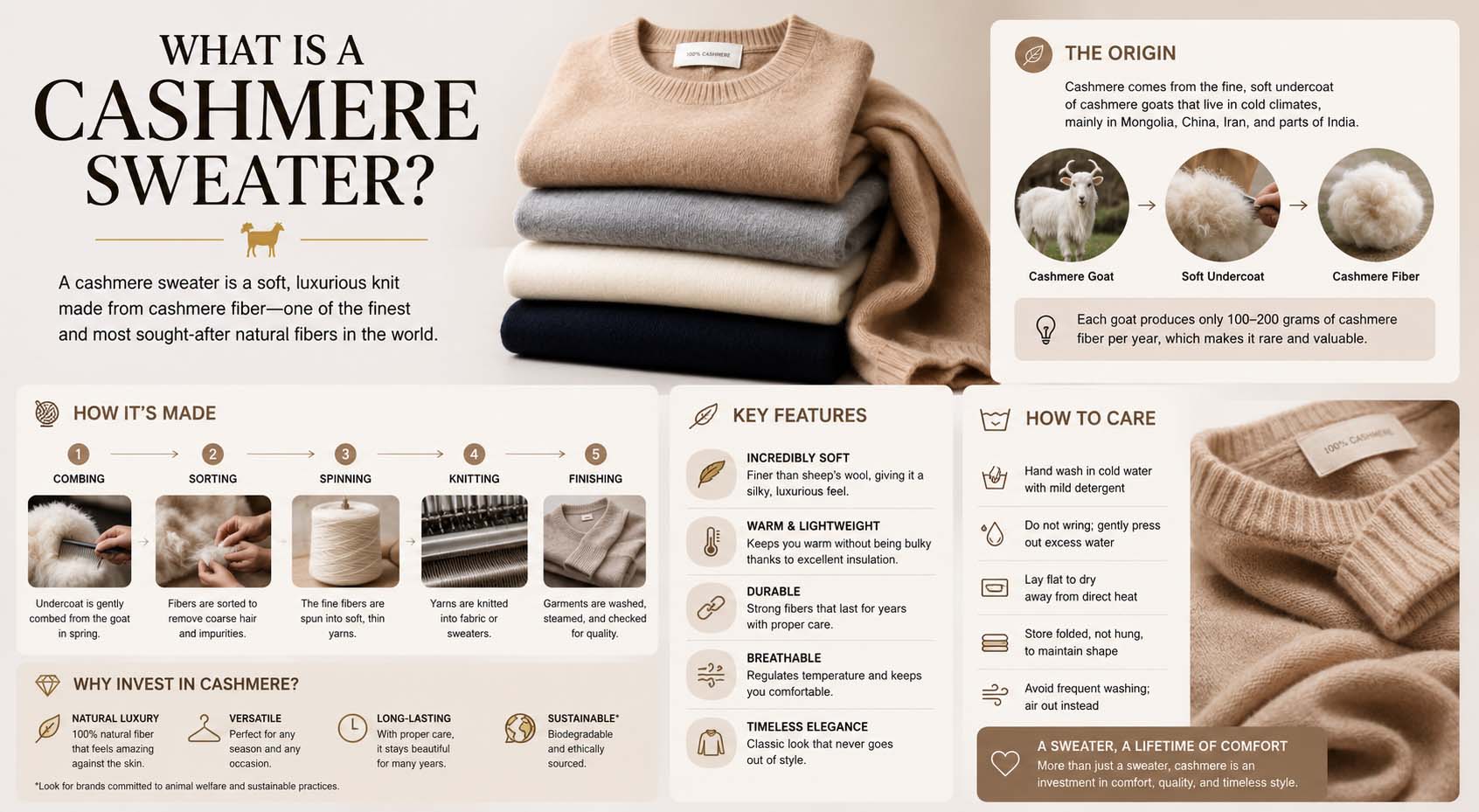
Travelers who visit cold-weather destinations often look for clothing that combines warmth, comfort, and easy layering. If you are wondering what is a cashmere sweater, it is a knitted garment made entirely or partly from cashmere, the fine undercoat fiber of cashmere goats. Genuine cashmere is valued for its softness and fine fibers, making it a popular material for premium knitwear.
Cashmere sweaters can work well for winter vacations, mountain trips, cool-weather city tours, and layered travel outfits. However, not every garment marketed with cashmere contains 100% cashmere. Therefore, checking the fiber-content label is one of the most useful steps when shopping.
Travelers comparing other warm materials may also benefit from learning what is sherpa.
What Is a Cashmere Sweater Made Of?
Cashmere comes from the fine undercoat of cashmere goats. Manufacturers separate the finer fibers from coarser hair before processing them into yarn for sweaters and other garments.
Under U.S. labeling rules, the term cashmere has a specific meaning. The fiber must come from the fine, dehaired undercoat of a cashmere goat and meet specified fiber-diameter requirements. Product labels must also accurately disclose fiber content.
For example, a sweater containing both wool and cashmere should state the respective percentages rather than suggesting that the entire garment is cashmere. You can read the FTC’s guidance on cashmere labeling for more information about these requirements.
Therefore, shoppers should always read the fiber-content label when comparing products.
Why Travelers Choose Cashmere Sweaters
Cashmere appeals to travelers because fine knitwear can provide warmth without the bulky feel of many heavy winter garments. As a result, a sweater can fit comfortably beneath a coat or jacket.
A cashmere sweater can work well for:
- Winter sightseeing
- Airplane travel
- Mountain vacations
- Cold-weather city walks
- Evening dinners during trips
- Layered travel outfits
The material also has an elegant appearance, so one sweater can work with both casual and dressier outfits. Therefore, travelers who want to pack fewer garments may appreciate its versatility.
However, cashmere remains a delicate natural fiber. Rough luggage straps, repeated friction, and unsuitable washing methods can affect its appearance over time.
How to Check Whether a Sweater Is Really Cashmere
Start with the garment label rather than relying on softness alone.
A very soft sweater is not necessarily pure cashmere because manufacturers can produce soft garments from several natural and synthetic fibers.
Check the fiber-content label for terms such as:
- 100% Cashmere
- 90% Wool, 10% Cashmere
- 50% Cashmere, 50% Wool
The exact composition matters because a cashmere blend differs from a garment made entirely from cashmere.
Next, inspect the construction. Look at the seams, stitching, cuffs, and overall finish. A well-made garment should generally have consistent knitting and secure construction.
However, price alone cannot prove authenticity. Therefore, consider the label, seller information, garment construction, and return policy together when evaluating a purchase.
Cashmere vs. Regular Wool
Cashmere comes from the fine undercoat of cashmere goats, while conventional wool generally comes from sheep.
Both materials can provide useful insulation in cool weather. However, they can differ in texture, weight, durability, price, and care requirements.
Regular wool can be an excellent choice for rugged travel clothing. Meanwhile, travelers may prefer cashmere when softness, low bulk, and a refined appearance matter more.
Best Time to Wear Cashmere While Traveling
Cashmere works best when temperatures call for light or moderate insulation. However, the ideal clothing system depends on the destination, weather, sweater thickness, and other layers.
Autumn Travel
During cool autumn weather, a cashmere sweater can work as an outer layer on mild days or underneath a jacket when temperatures drop.
Neutral colors also make it easier to combine one sweater with several travel outfits.
Winter Vacations
During winter, cashmere works well as part of a layered clothing system.
For example, you can combine a suitable base layer, cashmere sweater, and weather-resistant outer layer. This approach provides more flexibility than relying on one garment alone.
Spring Trips
Cool mornings and evenings can make a lightweight sweater useful during spring travel.
In addition, cashmere can fit into a small travel wardrobe because you can wear it with casual trousers, jeans, skirts, or dressier clothing.
Summer Mountain Travel
High-altitude and northern destinations can remain cool even during warmer months. Therefore, a lightweight sweater may provide useful extra warmth when temperatures fall.
Always check the destination’s forecast before deciding what to pack.
Destinations Where Cashmere Layers Can Be Useful
Travelers can use cashmere in many destinations where temperatures become cool enough for layering.
Paris, France
A simple cashmere sweater can fit easily into a city wardrobe for cool autumn or winter days.
Switzerland
Mountain destinations often require flexible layering because conditions can vary by elevation and season.
Travelers exploring outdoor areas may also find it helpful to learn how to use a compass.
Scotland
Changing weather can make layering useful during trips around Scotland. A sweater can provide insulation beneath a suitable rainproof or wind-resistant outer layer.
Combining cashmere with a comfortable base layer can improve flexibility. Understanding the benefits of compression shirts can also help travelers compare different clothing layers.
Japan
A cashmere sweater can work well during cooler periods in cities such as Tokyo and Kyoto. However, temperatures vary by region and season.
Canada
Cold destinations may require more insulation than a sweater alone can provide. Therefore, travelers should combine cashmere with appropriate outerwear, footwear, and other winter clothing.
When to Shop for Cashmere Sweaters
Cashmere prices vary throughout the year according to the retailer, brand, collection, and sales schedule.
End-of-season sales can sometimes provide discounts on winter knitwear. Therefore, shoppers may find reduced prices when retailers clear colder-season inventory.
However, there is no universal month that guarantees the lowest cashmere price because retailers follow different promotional calendars.
If you are buying for a future trip, compare prices early rather than waiting until the last moment. This also gives you time to check sizing, fiber content, and return policies.
What Is a Good Price for a Cashmere Sweater?
There is no single correct price because cost depends on fiber content, construction, brand, design, sourcing, and retail positioning.
Instead of judging a sweater by price alone, compare:
- Fiber-content label
- Knit construction
- Garment weight
- Stitching and seams
- Fit
- Care requirements
- Seller reputation
- Return policy
A lower-priced sweater may contain a cashmere blend rather than 100% cashmere. However, a high price does not automatically prove superior quality.
Therefore, shoppers should evaluate the garment itself rather than assuming price always reflects quality.
How to Choose a Cashmere Sweater
First, check the fiber-content label. Decide whether you want pure cashmere or a blend.
Next, consider how you plan to wear the sweater. A lightweight style may work better for layering and travel, while a heavier knit can provide more insulation.
Then, inspect the fit. A sweater that feels comfortable over your intended base layer will usually offer more travel flexibility.
Also, examine:
- Neckline
- Cuffs
- Hem
- Seams
- Knit consistency
- Overall construction
Finally, check the care label before purchasing. If the garment requires a routine that does not fit your lifestyle, another option may prove more practical.
Choosing a Cashmere Brand
There is no single best cashmere brand for every shopper. Budget, style, fit, construction, fiber content, and availability all influence the decision.
Well-known names in the cashmere and knitwear market include:
- Loro Piana
- Brunello Cucinelli
- Naadam
- Everlane
- Uniqlo
- Johnstons of Elgin
However, brand recognition should not replace checking the individual garment.
For example, different products from the same retailer may use different fiber blends or construction methods. Therefore, read the label and product details for the specific sweater you plan to buy.
Cashmere and Cold-Weather Layering
Cashmere can provide useful insulation while remaining relatively lightweight. Therefore, it works particularly well as a middle layer.
For colder destinations, consider a simple system:
- Wear a comfortable base layer.
- Add the cashmere sweater for insulation.
- Use an appropriate coat or jacket for protection from wind, rain, or snow.
This system lets you remove layers when moving between cold outdoor conditions and heated indoor spaces.
However, the sweater itself is not a substitute for weatherproof outerwear during severe conditions.
What Is the Best Way to Wash a Cashmere Sweater?
Always begin with the garment’s care label because instructions can vary.
When the label permits hand washing, use cool or lukewarm water and a detergent suitable for delicate wool garments. Wash gently rather than rubbing or aggressively scrubbing the fabric.
Next, remove excess water carefully. Avoid twisting or wringing the sweater because that can distort its shape.
Then, reshape the garment and lay it flat to dry according to its care instructions. Hanging a wet knit sweater can cause stretching.
If the label specifies dry cleaning or another care method, follow those instructions instead.
How to Reduce Pilling and Wear
Pilling occurs when fibers rub together and form small balls on the fabric surface. Friction can make the effect more noticeable in areas such as the underarms, sides, and places where bags rub against clothing.
Therefore, avoid repeatedly wearing rough backpack straps directly over delicate knitwear when possible.
You can also rotate sweaters rather than wearing the same garment continuously throughout a long trip.
When pilling occurs, use a method designed for delicate knitwear and work gently. Aggressive pulling can damage the fabric.
How to Store Cashmere During Travel
Clean and dry the sweater according to its care instructions before long-term storage.
Folding usually works better than hanging for many knit garments because hangers can distort the shoulders over time.
During travel, place the sweater somewhere that protects it from snagging on zippers, hooks, or rough objects.
Avoid packing damp cashmere. Instead, make sure the garment is completely dry before storing it in luggage.
For longer storage periods, keep the garment clean and protected according to the manufacturer’s recommendations.
Common Mistakes to Avoid
Proper care can help maintain the sweater’s shape and appearance.
Avoid:
- Washing without checking the care label
- Using excessively hot water
- Twisting or wringing wet cashmere
- Hanging a heavy wet sweater to dry
- Rubbing the fabric aggressively
- Packing it while damp
- Exposing it repeatedly to rough straps or surfaces
- Assuming every “cashmere” garment is 100% cashmere
Also, avoid buying based only on softness. Instead, read the fiber label so you know what the garment actually contains.
Travel Tips for Wearing Cashmere
Neutral colors such as gray, black, beige, and navy can make outfit planning easier because they pair with many other garments.
Layering cashmere over different types of shirts can also provide flexibility when temperatures change.
For colder trips, combine the sweater with appropriate thermal or insulating layers and a protective outer garment.
Meanwhile, keep delicate knitwear away from rough luggage hardware whenever possible.
A versatile sweater can serve several situations during one trip, from daytime sightseeing to an evening meal.
FAQ About Cashmere Sweaters
What Is a Cashmere Sweater?
A cashmere sweater is a knitted garment made entirely or partly from cashmere, the fine undercoat fiber of cashmere goats. Check the fiber-content label to determine how much cashmere a particular garment contains.
What Is a Cashmere Sweater Made Of?
A pure cashmere sweater uses cashmere fibers that meet the applicable definition for the fiber. However, some sweaters combine cashmere with wool or other fibers, so always check the label.
Is Cashmere Warmer Than Regular Wool?
The warmth of a garment depends on several factors, including fiber properties, knit density, garment thickness, fit, and layering. Therefore, comparing two sweaters requires more than looking at the fiber name alone.
What Is a Good Price for a Cashmere Sweater?
There is no universal good price. Fiber content, construction, brand, garment weight, design, and retailer all influence cost.
What Is the Best Way to Wash a Cashmere Sweater?
Follow the garment’s care label first. If it permits hand washing, gently wash the sweater with an appropriate detergent and lay it flat to dry rather than wringing or hanging it wet.
How Can I Tell if a Sweater Is 100% Cashmere?
Check its fiber-content label. In the United States, wool-product labeling rules require accurate disclosure of fiber content.
What Is the Best Brand for a Cashmere Sweater?
No single brand suits every shopper. Compare fiber content, construction, fit, care requirements, price, and return policies rather than relying on the brand name alone.
Conclusion
Understanding what a cashmere sweater means helps travelers and shoppers distinguish genuine cashmere garments from blends while making more informed clothing choices. Cashmere comes from the fine undercoat fibers of cashmere goats and can provide a soft, lightweight option for cool-weather layering.
Before buying, check the fiber-content and care labels, inspect the construction, and choose a weight and fit that suit your needs. With appropriate care and thoughtful packing, a cashmere sweater can become a versatile part of a cold-weather travel wardrobe.