
Can Dogs Have Sweet Potatoes?
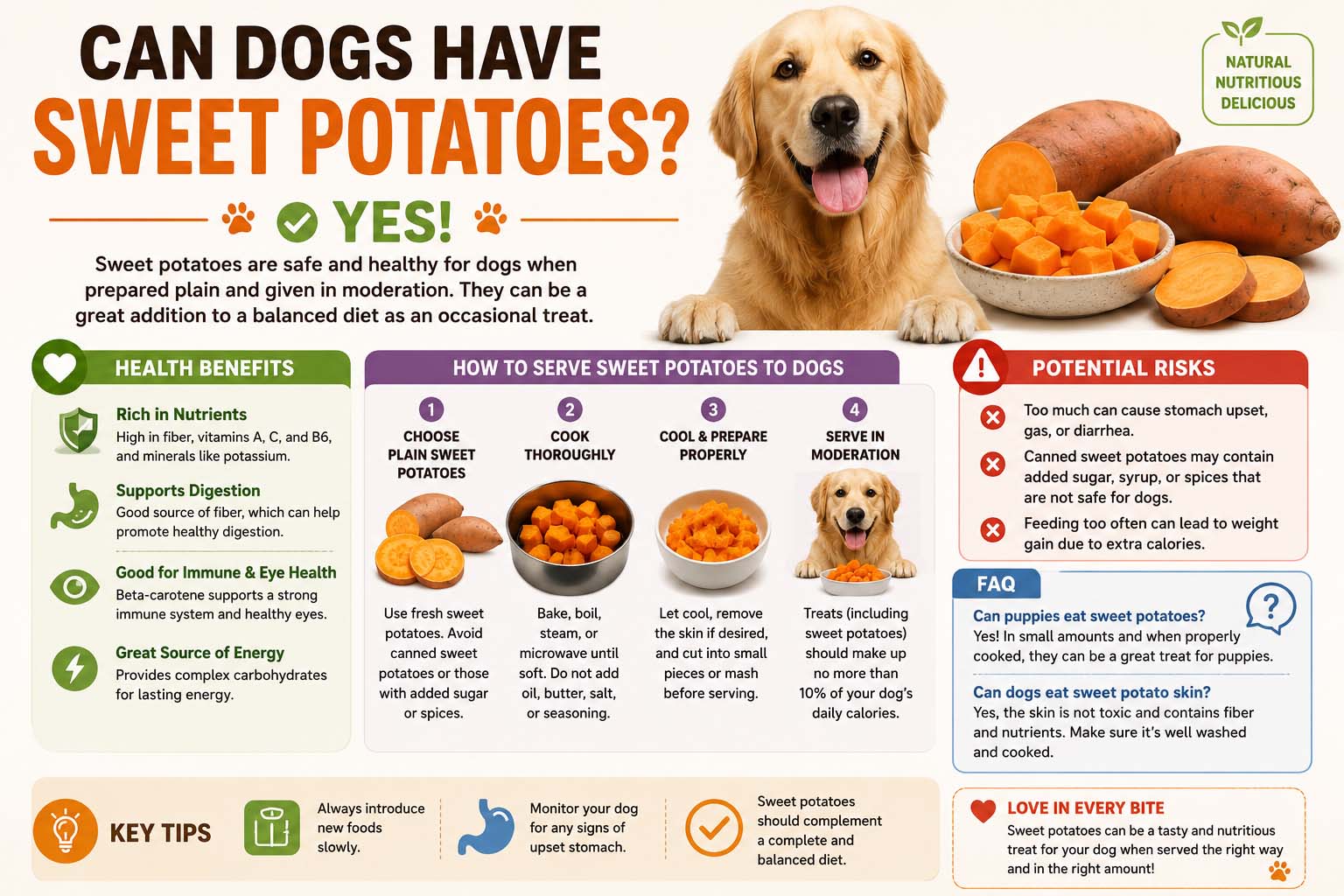
Many dog owners wonder can dogs have sweet potatoes as a healthy treat. Yes, most dogs can enjoy plain, fully cooked sweet potatoes in small amounts. These vegetables contain dietary fiber, vitamins, minerals, and antioxidants. However, proper preparation and portion control matter when adding them to your dog’s diet.
Sweet potatoes provide nutrients such as vitamin A, vitamin C, and potassium. In addition, their fiber can support normal digestion. However, they should complement complete and balanced dog food rather than replace it. Dogs with diabetes, weight concerns, or other health conditions may need dietary guidance from a veterinarian.
If you’re exploring other foods for your pet, read our guide on can dogs eat black beans.
Dogs may enjoy the naturally sweet flavor of this vegetable. Nevertheless, feeding too much can cause digestive upset or contribute to excess calorie intake. The safest approach is to introduce small portions and monitor your dog’s response.
Are Raw Sweet Potatoes Safe for Dogs?
Raw sweet potatoes are not recommended for dogs. Their firm texture makes them difficult to chew, especially for small dogs and pets that swallow food quickly. As a result, large or hard pieces may cause choking or digestive problems.
Raw sweet potatoes can also be difficult to digest. Some dogs may develop gas, vomiting, diarrhea, or abdominal discomfort after eating them. In severe cases, large pieces can contribute to an intestinal blockage.
Cooking softens the vegetable and makes it easier for dogs to chew. Therefore, boiling, steaming, or baking sweet potatoes without added ingredients provides a safer option.
If your dog accidentally eats a small piece of raw sweet potato, monitor them for unusual symptoms. Contact your veterinarian if your dog develops persistent vomiting, abdominal pain, or other concerning signs.
Safe Preparation Methods
Fully cooked sweet potatoes offer a practical way to share this vegetable with your pet. Plain boiled, steamed, or baked sweet potatoes work well because they soften the flesh without requiring extra ingredients.
Follow these preparation tips:
- Wash thoroughly: Rinse the sweet potato to remove dirt and surface residue.
- Cook completely: Boil, steam, or bake it until the flesh becomes soft.
- Remove the skin: Peeling helps make the vegetable easier to chew and digest.
- Cut into small pieces: Choose pieces appropriate for your dog’s size to reduce choking risks.
- Let it cool: Allow the sweet potato to reach a safe temperature before serving.
- Serve a small portion: Start with a little and monitor your dog’s reaction.
Avoid adding butter, sugar, salt, garlic, onions, or heavy seasonings. These ingredients offer no benefit to your dog, and some can cause serious health problems.
Sweet potatoes contain carbohydrates, so large servings can add unnecessary calories to your pet’s diet. For this reason, keep portions modest and consult your veterinarian before making regular dietary changes. The American Kennel Club’s guide to sweet potatoes for dogs provides further guidance on preparation, nutrition, and feeding precautions.
Some owners mash a small amount of plain cooked sweet potato into their dog’s usual food. Others offer a few cooled pieces as an occasional treat. Either way, the vegetable should remain a small addition to a balanced diet.
For information about another popular snack, see our article on can dogs have peanuts.
Purple Varieties and Their Nutrients
Dogs can generally eat purple sweet potatoes when owners cook them thoroughly and serve small, plain portions. Purple varieties contain many of the same nutrients as orange sweet potatoes, although their nutritional profiles can differ.
Their purple color comes from natural pigments called anthocyanins, which have antioxidant properties. In addition, purple sweet potatoes provide carbohydrates and dietary fiber.
However, a different color does not make this vegetable suitable for unlimited feeding. The same precautions apply to both varieties: cook them fully, avoid seasonings, and offer only a modest amount.
If your dog has a sensitive stomach or a medical condition, ask your veterinarian whether this food suits their individual needs.
Is Sweet Potato Skin Suitable for Dogs?
Sweet potato skin is not generally considered toxic to dogs, but it can be tougher to chew and digest than the soft flesh. Therefore, peeling the vegetable before serving is a sensible precaution, particularly for small dogs or pets with sensitive digestion.
If you choose to leave the skin on, wash the sweet potato thoroughly and cook it until soft. Also, cut the food into appropriately sized pieces and supervise your dog while eating.
Dogs that experience digestive discomfort may tolerate peeled sweet potatoes better. If symptoms occur after eating the vegetable, stop feeding it and contact your veterinarian when necessary.
Pet owners interested in other animals’ diets can also explore our guide on what do peacocks eat.
Final Feeding Advice
Sweet potatoes can be a suitable occasional treat for many dogs when owners prepare them correctly. Cook the vegetable until soft, remove the skin when practical, and avoid added salt, sugar, butter, and seasonings.
Start with a small portion and watch for changes in digestion. Moreover, keep treats within your dog’s overall dietary needs instead of replacing regular meals with vegetables.
Dogs with diabetes, weight-management concerns, or specific dietary restrictions should receive individualized advice from a veterinarian. With sensible portions and proper preparation, you can make an informed decision about including sweet potatoes in your dog’s diet.