
How to Buy a Vending Machine: A Complete Beginner’s Buying Guide
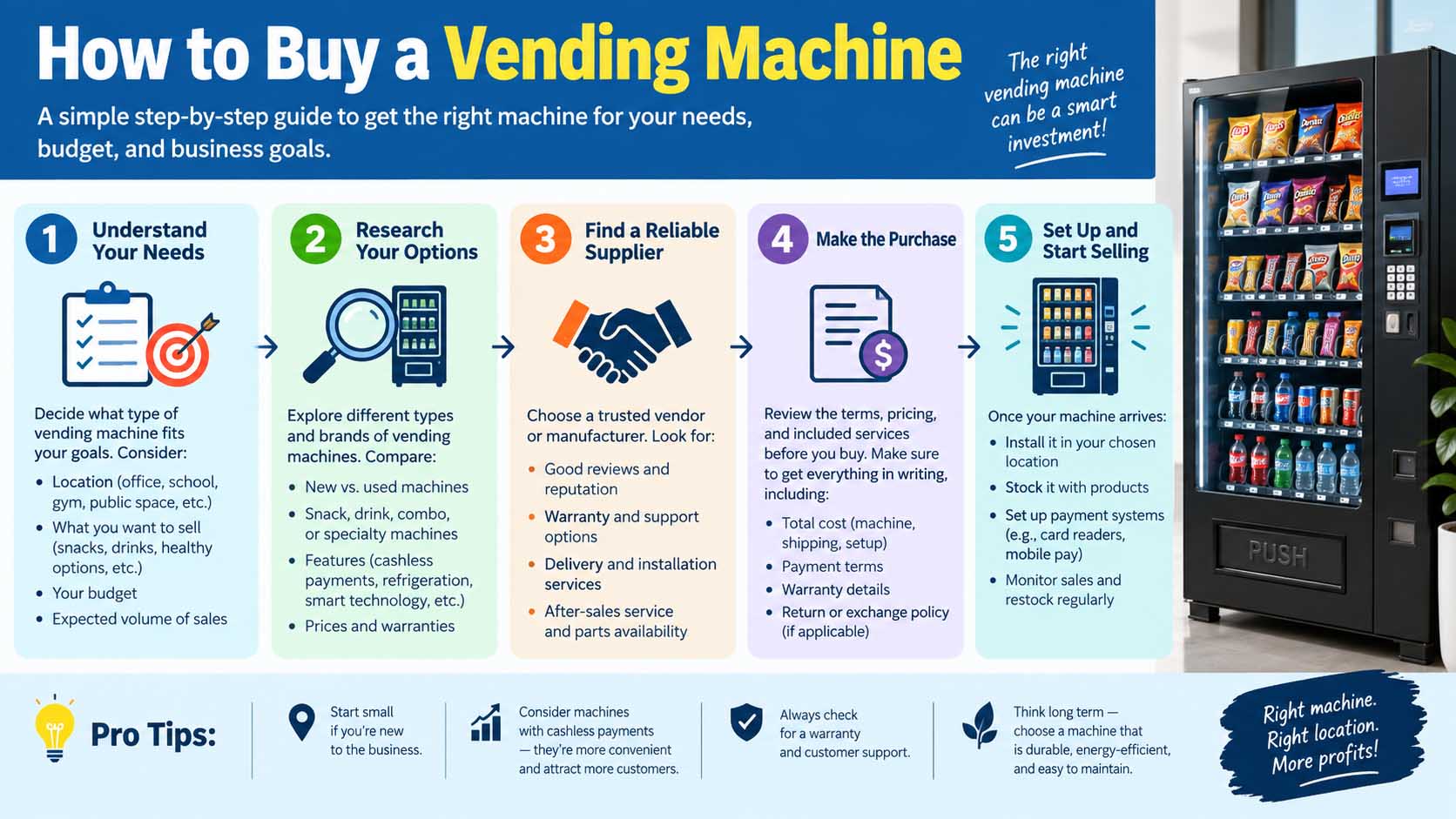
Learning how to buy a vending machine can feel confusing at first. There are different machine types, payment systems, capacities, sizes, and price points to consider. However, the right choice depends less on finding the most expensive machine and more on matching the equipment to your location, products, budget, and expected customer demand. Whether you want to operate one machine or build a larger vending business, a careful buying process can help you avoid expensive mistakes.
Start by Deciding What You Want to Sell
Before comparing machines, decide what products you plan to stock. A machine designed for bottled drinks will have different storage and dispensing requirements from one designed for snacks, fresh food, or specialty products.
Snacks and Packaged Foods
Snack vending machines are suitable for products such as chips, cookies, candy, crackers, and packaged pastries. They often use adjustable shelves or spirals, allowing operators to accommodate products with different dimensions.
Consider the size of your most popular products before buying. A machine with flexible product slots gives you more freedom when changing inventory later.
Cold Drinks
Beverage machines are designed to hold cans, bottles, or other packaged drinks. Refrigeration is one of the major features to consider because temperature control can affect where the machine can be placed and how much electricity it uses.
If drinks are likely to be your main product category, check the machine’s capacity, cooling system, bottle compatibility, and temperature controls.
Combination Machines
Combination vending machines offer both snacks and beverages in one unit. They can be useful when floor space is limited because a single machine can serve multiple product categories.
However, combination models can be larger and more expensive than basic machines. Therefore, make sure the location has enough room and customer demand to justify the additional capacity.
How to Buy a Vending Machine That Fits Your Location
Your location should influence the machine you purchase. A vending machine placed in a busy workplace may need much more capacity than one installed in a small private office.
Think about who will use the machine, how frequently they visit, and what they are likely to buy. A gym, school, hotel, warehouse, apartment building, and office can all have very different vending needs.
Measure the available floor area before ordering. Also check doorway widths, elevators, stairs, power outlets, and ventilation requirements. A machine that looks compact online may be difficult to move through a narrow entrance.
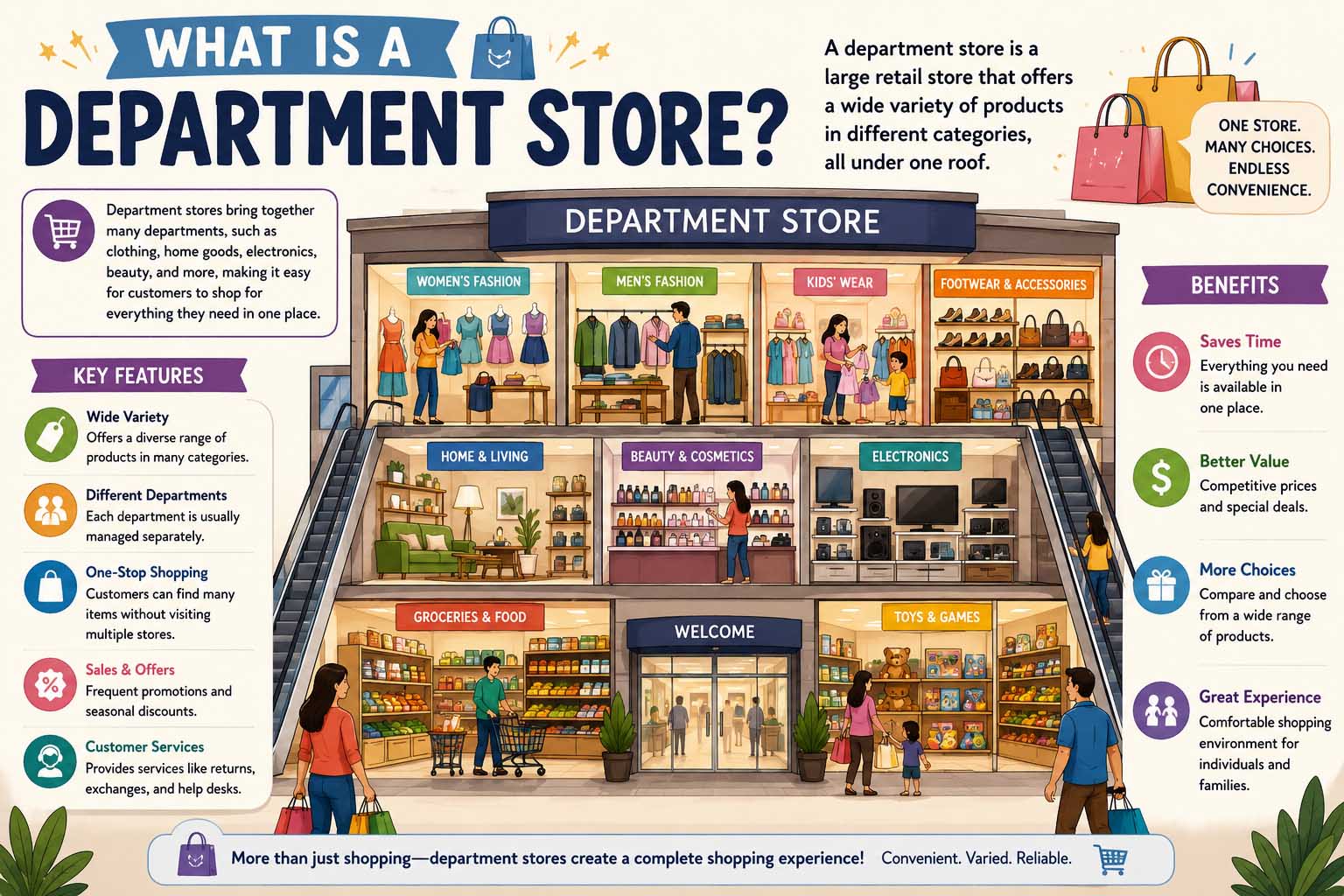
If you are unfamiliar with retail terminology, understanding what is a department store can also provide useful context for how vending differs from traditional retail. Vending offers a much smaller footprint, but the same basic principle applies: product selection should reflect the customers you are trying to serve.
Key Features to Compare Before Buying
Once you know what you want to sell and where the machine will go, compare the features that affect everyday operation.
Payment Options
Modern vending machines may support cash, cards, contactless payments, mobile wallets, or combinations of these options. Offering multiple payment methods can make the machine more convenient for customers.
Before buying, check whether the payment hardware is included or sold separately. Also ask about installation, transaction fees, software requirements, and compatibility with your intended market.
Product Capacity
Capacity determines how frequently you need to restock. A high-capacity machine can make sense in a busy location, while a smaller model may be better for a low-traffic site.
Do not automatically choose the biggest machine available. Extra capacity only helps when customers actually buy enough products to use it.
Display and Controls
A clear display can make product selection easier. Look for controls that are simple to understand and accessible to customers.
For digital models, examine screen visibility, interface design, product-selection controls, and any available remote management features.
Security Features
A vending machine contains both merchandise and payment equipment, so construction and security deserve attention. Look for durable doors, reliable locks, reinforced areas around payment components, and a design appropriate for the intended location.
The level of security you need will depend on whether the machine is indoors, outdoors, monitored, or placed in a restricted-access building.
How Much Does It Cost to Buy a Vending Machine?
One of the first questions buyers ask is how much does it cost to buy a vending machine? There is no single price because vending machines vary widely according to type, capacity, technology, condition, and brand.
New machines generally cost more than used or refurbished equipment. A basic machine may have a relatively simple design, while advanced models can include refrigeration, touchscreens, cashless payment systems, remote monitoring, and other technology.
When comparing prices, look beyond the advertised machine cost. Delivery, installation, payment equipment, taxes, initial inventory, repairs, and replacement parts can all affect the total amount you spend.
How Much to Buy a Vending Machine: New vs. Used
If your budget is limited, a used vending machine may appear attractive. However, the purchase price is only part of the calculation.
Ask about the machine’s age, maintenance history, previous operating environment, payment-system compatibility, refrigeration performance if applicable, and availability of replacement parts.
A refurbished machine can offer a middle ground between buying new and buying an older used unit. Still, inspect the warranty and refurbishment details rather than assuming that every refurbished machine has received the same level of work.
How Much Is a Vending Machine to Buy? Compare Total Ownership Costs
When shoppers search how much is a vending machine to buy, they are often thinking about the initial purchase price. A better approach is to calculate the total cost of ownership.
Potential expenses include:
| Cost | What to Consider |
|---|---|
| Machine | New, used, or refurbished condition |
| Delivery | Distance and machine weight |
| Installation | Setup and electrical requirements |
| Payment system | Card or cashless equipment |
| Inventory | Initial products and restocking |
| Electricity | Especially relevant for refrigerated machines |
| Maintenance | Routine service and repairs |
| Location | Rent, commission, or other agreements |
| Insurance | Requirements vary by operator and location |
Prices can change based on the manufacturer, retailer, location, machine specifications, and market conditions. Therefore, compare several quotes rather than relying on one advertised figure.
Choose the Right Size
Size affects more than appearance. A larger vending machine can hold more inventory, but it also requires more floor space and may be harder to transport.
Measure the installation area carefully. Leave enough clearance for customers to stand comfortably and for you to open the machine during restocking and maintenance.
If the machine will be placed in a small business or private office, a compact model may provide a better fit. On the other hand, a high-traffic facility may benefit from greater capacity.
New, Used, or Refurbished: Which Should You Choose?
Each option has advantages and drawbacks.
New Machines
New equipment usually offers the latest features and may come with a manufacturer’s warranty. It can be a good choice for buyers who want predictable condition and modern payment technology.
The downside is the higher upfront cost.
Used Machines
Used equipment can reduce the initial purchase price. It may work well when the machine has been properly maintained and replacement parts are readily available.
Before purchasing, inspect the machine carefully and test major functions whenever possible.
Refurbished Machines
Refurbished vending machines can offer modernized equipment at a price below some new models. However, refurbishment standards vary between sellers.
Ask exactly what was repaired or replaced, what warranty is included, and whether the seller provides technical support.
Where to Buy a Vending Machine
Buyers can find vending machines through specialized vending-equipment suppliers, commercial equipment dealers, manufacturers, online marketplaces, and businesses selling used equipment.
A specialized supplier may be useful for first-time buyers because you can often ask about compatibility, payment systems, delivery, and parts.
If buying secondhand, inspect the seller’s reputation and request detailed information about the machine’s condition. Avoid making a decision based only on attractive photographs or a low price.
Traditional retail concepts can also help explain the difference in shopping models. For example, what is a boutique? It is generally a smaller retail environment focused on a particular product selection or style. A vending machine is even more compact, which makes careful product selection especially important.
Common Buying Mistakes to Avoid
One common mistake is purchasing equipment before confirming that it fits the intended location.
Another mistake is choosing a machine without considering payment preferences. If customers rarely carry cash, a cash-only machine could create unnecessary friction.
Buyers also sometimes overlook spare parts and technical support. Before purchasing, find out whether replacement components are still available and whether qualified technicians can service the machine.
Finally, do not assume that a machine will perform equally well in every location. Customer traffic and product demand matter just as much as the equipment itself.
Vending Machine Buying Checklist
Before placing an order, run through this quick checklist:
- Decide which products you will sell.
- Confirm the available floor space.
- Measure doorways and access routes.
- Estimate expected customer demand.
- Choose the appropriate machine capacity.
- Compare payment options.
- Check power requirements.
- Review security features.
- Compare new, used, and refurbished equipment.
- Ask about warranties.
- Confirm replacement-part availability.
- Calculate delivery and installation costs.
- Include initial inventory in your budget.
- Research ongoing maintenance expenses.
- Review the seller’s reputation and support options.
This checklist can help you compare machines based on practical needs instead of appearance alone.
How Much Is It to Buy a Vending Machine When You Include Everything?
The answer to how much is it to buy a vending machine becomes more useful when you think beyond the machine itself. Your actual starting budget should account for equipment, transportation, setup, inventory, payment technology, and possible maintenance.
For that reason, two buyers can purchase similar machines but have very different total startup costs. Location can also affect expenses, particularly if you pay rent or share sales revenue with a property owner.
A sensible approach is to create a complete budget before buying. Leave some room for unexpected costs rather than spending your entire budget on the machine.
Maintenance After Purchase
Regular maintenance can help keep a vending machine operating properly. Cleaning schedules will depend on the products and machine type, while refrigerated equipment requires attention to cooling components and ventilation.
Check product dispensers, payment systems, locks, displays, lighting, and other operating components regularly. Keep records of repairs and replacement parts so you can identify recurring problems.
Your product selection should also be reviewed periodically. Slow-selling products take up valuable space, while popular items may need more frequent restocking.
For comparison, learning what is a thrift store can show how important product turnover and inventory selection are in retail. Vending works on a smaller scale, but unused inventory still represents money tied up in products.
Final Tips for First-Time Buyers
The best vending machine is not necessarily the newest, largest, or most feature-packed model. Instead, it should match your location, customer base, product selection, budget, and ability to maintain it.
Start with the fundamentals. Decide what you want to sell, estimate demand, measure the location, and establish your total budget. Then compare machines based on capacity, payment methods, security, reliability, serviceability, and ongoing costs.
If you are still researching the retail world, knowing what is a flea market can also help you understand how different retail formats serve customers. However, vending has a distinct advantage in terms of compact operation: the equipment can bring products directly to customers without requiring a traditional storefront.
Take time to compare several sellers and ask detailed questions before making a purchase. Most of all, calculate the full cost rather than focusing only on the sticker price. With a location-first approach and realistic budgeting, buying your first vending machine becomes a much more manageable shopping decision.