
Difference Between Blazer and Suit Jacket: Which One Should You Buy?
Have you ever stood in a clothing store wondering about the difference between blazer and suit jacket? At first glance, they look very similar. Both have lapels, buttons, and structured tailoring. However, they serve different purposes and work best in different outfits.
Knowing which one to buy can help you build a more versatile wardrobe while avoiding common style mistakes. Whether you’re shopping for work, weddings, business meetings, or smart-casual events, understanding the differences makes choosing the right jacket much easier.
This guide explains how blazers and suit jackets compare, when to wear each one, and what to consider before making your purchase.
Difference Between Blazer and Suit Jacket at a Glance
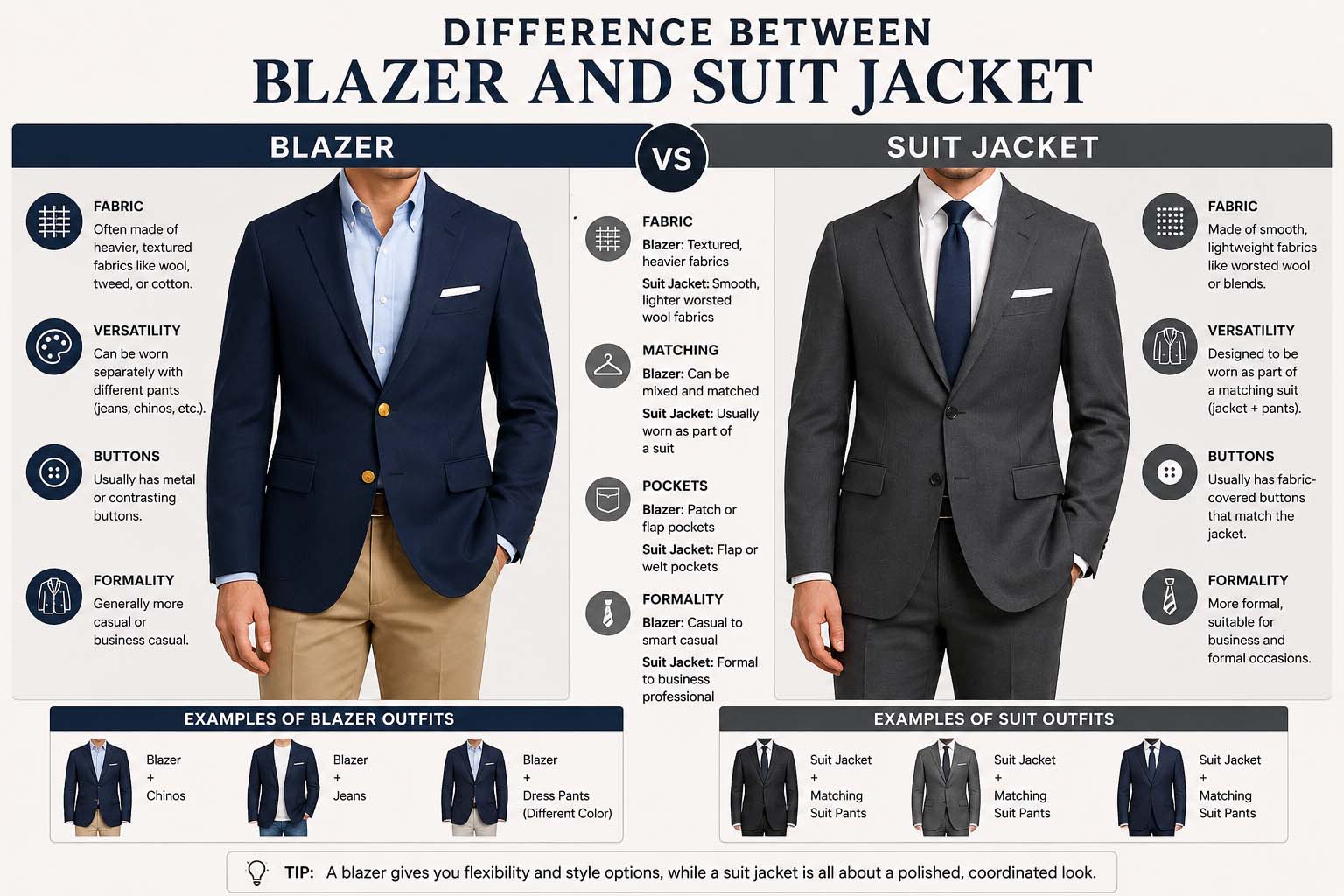
The easiest way to understand the difference between blazer and suit jacket is to look at how each garment is designed to be worn.
| Feature | Blazer | Suit Jacket |
|---|---|---|
| Worn With | Different trousers | Matching suit trousers |
| Formality | Smart casual to business casual | Business and formal occasions |
| Fabric | Often textured | Usually smooth and matching |
| Buttons | Decorative metal or contrasting buttons | Buttons matching the fabric |
| Versatility | High | More limited outside the full suit |
| Styling | Easy to mix and match | Best worn as part of a complete suit |
Although the two jackets share a similar shape, they are built for different occasions.
What Is a Blazer?
A blazer is a standalone jacket designed to pair with different trousers rather than matching pants.
Traditionally, blazers were associated with rowing clubs and naval uniforms. Today, they have become one of the most versatile pieces in modern wardrobes.
Blazers commonly feature:
- Structured shoulders
- Single- or double-breasted designs
- Patch or flap pockets
- Contrasting or metal buttons
- Wool, cotton, linen, or blended fabrics
Because blazers are separate garments, you can easily wear them with chinos, jeans, wool trousers, or even tailored shorts in warmer weather.
Many shoppers enjoy finding unique blazer styles by browsing what is a boutique, where smaller retailers often carry distinctive cuts, fabrics, and seasonal collections that differ from large chain stores.
What Is a Suit Jacket?
A suit jacket is one part of a matching suit.
It is specifically designed to be worn with trousers made from the same fabric, color, weave, and finish.
Unlike blazers, suit jackets rely on matching pants to create a complete formal outfit.
Common features include:
- Matching trousers
- Coordinated fabric
- Traditional business styling
- Clean lines
- More formal appearance
Although some people wear suit jackets separately, doing so often looks incomplete because the matching trousers are missing.
Difference Between Suit Jacket and Blazer
Many shoppers search for the difference between suit jacket and blazer because both appear nearly identical on store racks.
The biggest distinction comes down to flexibility.
A blazer is intended to mix with different clothing.
A suit jacket is intended to stay with its matching trousers.
For example:
A navy blazer works well with gray chinos, beige trousers, dark denim, or white pants.
A charcoal suit jacket should usually remain paired with its charcoal suit trousers.
Separating a suit often causes uneven wear because the jacket and trousers age differently over time.
Fabric Differences
Fabric plays a major role in distinguishing these garments.
Blazer Fabrics
Blazers often use textured materials that create visual interest.
Popular choices include:
- Wool
- Cotton
- Linen
- Tweed
- Corduroy
- Wool blends
These fabrics make blazers comfortable to wear across multiple seasons.
Suit Jacket Fabrics
Suit jackets generally use smoother fabrics with a refined finish.
Common materials include:
- Worsted wool
- Super wool fabrics
- Wool blends
- Performance fabrics
Because the jacket must perfectly match the trousers, consistency in color and texture is essential.
When Should You Wear a Blazer?
Blazers are extremely versatile.
They work well for:
- Business casual offices
- Dinner dates
- Smart casual parties
- Travel
- Conferences
- Casual weddings
- Networking events
A navy blazer paired with chinos remains one of the easiest combinations to dress up or down.
If you’re shopping in larger retail chains, understanding what is a department store can help you compare the wider selection of brands, price ranges, and seasonal blazer collections often available in one location.
When Should You Wear a Suit Jacket?
Suit jackets remain the better choice for more formal occasions.
They’re commonly worn for:
- Job interviews
- Business meetings
- Weddings
- Formal ceremonies
- Corporate presentations
- Court appearances
- Professional events
Whenever a dress code specifically requests business formal or formal attire, wearing the complete matching suit is usually the safest option.
What’s the Difference Between a Blazer and a Suit Jacket in Everyday Style?
If you’re asking, what’s the difference between a blazer and a suit jacket, think about versatility.
A blazer can become part of dozens of outfits.
One blazer may pair with several different shirts, trousers, shoes, and accessories.
A suit jacket, however, has a much narrower purpose.
It looks its best when worn exactly as designed—with the matching suit trousers.
For people building a capsule wardrobe, a high-quality blazer often provides greater value because it creates many more outfit combinations.
Fit and Construction
Although both garments are tailored, subtle differences exist.
Blazers often have:
- Slightly more relaxed tailoring
- Heavier fabrics
- Structured shoulders
- More casual pocket styles
Suit jackets typically feature:
- Cleaner silhouettes
- Lighter construction
- Elegant drape
- Coordinated tailoring with matching trousers
Neither option is automatically better.
The right choice depends on how and where you’ll wear it.
Color Choices
Color also affects versatility.
Popular blazer colors include:
- Navy
- Gray
- Olive
- Beige
- Brown
These neutral shades coordinate easily with different trousers.
Suit jackets most commonly appear in:
- Navy
- Charcoal
- Black
- Medium gray
These colors create classic formal suits suitable for professional and ceremonial settings.
Choosing timeless colors generally provides better long-term value than following short-lived fashion trends.
How to Choose Between a Blazer and a
Suit Jacket
If you’re still deciding which option to buy, start by thinking about when you’ll wear it.
Choose a Blazer If You:
- Need a versatile jacket for different outfits
- Dress in business casual clothing most days
- Want to pair one jacket with several trousers
- Prefer smart-casual style
- Travel frequently and want flexible wardrobe options
A quality blazer is often one of the first tailored pieces worth adding to your wardrobe because it works in many situations.
Choose a Suit Jacket If You:
- Attend formal business meetings regularly
- Need clothing for weddings or ceremonies
- Work in a business formal office
- Want a polished, coordinated appearance
If formal occasions are common in your schedule, investing in a well-fitted suit is usually the better decision.
What’s the Difference Between a Suit Jacket and a Blazer for Business Wear?
Many professionals ask, what’s the difference between a suit jacket and a blazer when shopping for work clothing.
The answer depends largely on your workplace dress code.
In business casual offices, a blazer paired with chinos or tailored trousers usually looks appropriate while offering more flexibility.
In traditional corporate environments, client meetings, or formal presentations, a matching suit creates a more professional appearance.
When you’re unsure about the expected dress code, it’s generally safer to wear a complete suit than separate pieces.
Price Range and Value
Prices vary depending on the brand, fabric, construction, and retailer.
Here’s a general guide.
| Type | Typical Price Range* |
|---|---|
| Budget Blazer | $60–$150 |
| Mid-Range Blazer | $150–$350 |
| Premium Blazer | $350+ |
| Budget Suit | $150–$350 |
| Mid-Range Suit | $350–$800 |
| Premium Suit | $800+ |
*Prices vary by brand, location, retailer, and season.
A blazer often delivers better value for shoppers who want maximum versatility from a single purchase.
Pros and Cons
| Blazer | Suit Jacket |
| Works with many outfits | Creates a polished formal appearance |
| Suitable for business casual | Ideal for business formal events |
| Easier to dress up or down | Provides a coordinated look |
| Greater styling flexibility | Better for weddings and ceremonies |
| May not be formal enough for every event | Less versatile when worn separately |
Neither option is objectively better. Your lifestyle and wardrobe determine which purchase makes the most sense.
Common Shopping Mistakes
Even experienced shoppers occasionally choose the wrong jacket.
Wearing a Suit Jacket as a Separate Too Often
Suit jackets are designed to match their trousers.
Wearing the jacket repeatedly with different pants can make the outfit look unbalanced, and the jacket may wear out faster than the trousers.
Buying the Wrong Fit
A high-quality fabric can’t compensate for poor tailoring.
Check that:
- The shoulders sit naturally.
- Sleeves end near the wrist bone.
- The jacket buttons comfortably.
- The length covers your seat appropriately.
If necessary, minor alterations can dramatically improve the overall appearance.
Choosing Fashion Over Versatility
Bright colors and bold patterns may look exciting in the store, but neutral shades usually work with far more outfits.
If you’re buying your first blazer or suit, navy or charcoal remains a smart choice.
Caring for Your Jacket
Proper care helps your clothing last much longer.
Follow these tips:
- Hang jackets on wide wooden hangers.
- Brush away dust after wearing.
- Air them out before storing.
- Dry clean only when necessary.
- Steam wrinkles instead of excessive ironing.
Rotating jackets throughout the week also reduces wear.
Understanding difference between antique and vintage can be helpful if you’re shopping for pre-owned jackets, since many secondhand stores label older clothing using these terms even though they have different meanings.
Choosing the Right Fabric for the Season
Fabric affects comfort as much as appearance.
For cooler weather, wool and tweed provide warmth while maintaining structure.
For spring and summer, linen and lightweight cotton offer better breathability.
You may also notice jackets with fleece-style linings or trims. Learning what is sherpa can help you recognize this soft fabric, although it’s typically used in casual outerwear rather than traditional blazers or suit jackets.
Selecting the right material ensures you’ll wear your jacket more often throughout the year.
Building a Practical Wardrobe
Instead of buying several similar jackets, focus on versatile pieces that work together.
A simple wardrobe might include:
- One navy blazer
- One charcoal suit
- White and light blue dress shirts
- Neutral chinos
- Dark dress trousers
- Brown and black leather shoes
With these basics, you can create outfits suitable for business meetings, celebrations, dinners, and everyday office wear.
For active lifestyles, some people also wear performance garments underneath tailored clothing. While these serve a different purpose, understanding the benefits of compression shirts can help if comfort or muscle support is important during long days of travel or standing.
Frequently Asked Questions
Can you wear a suit jacket with jeans?
You can, but the result often looks less polished because the jacket was designed to match its original trousers. A blazer usually pairs with jeans much more naturally.
Is a blazer more casual than a suit jacket?
Yes. A blazer is generally considered less formal and offers greater flexibility for smart-casual and business casual outfits.
Can I wear a blazer to a wedding?
Yes, if the dress code is smart casual, cocktail, or semi-formal. However, for black-tie or highly formal weddings, a complete suit is usually more appropriate.
Should my first tailored jacket be a blazer or a suit?
If you attend mostly casual or business casual events, a navy blazer is often the most versatile first purchase. If your work or lifestyle regularly requires formal attire, start with a well-fitted suit.
How can I tell whether a jacket belongs to a suit?
Check the label and fabric. Suit jackets usually have matching trousers made from the exact same material, color, and pattern.
Make the Right Choice for Your Wardrobe
Understanding the difference between blazer and suit jacket makes shopping much easier. A blazer offers versatility and works with a wide range of trousers, making it a great choice for business casual settings and everyday smart dressing. A suit jacket, on the other hand, is designed to be worn with matching trousers and remains the better option for formal occasions.
Before buying, think about where you’ll wear the jacket most often, choose a timeless color, and focus on fit over fashion trends. years.