
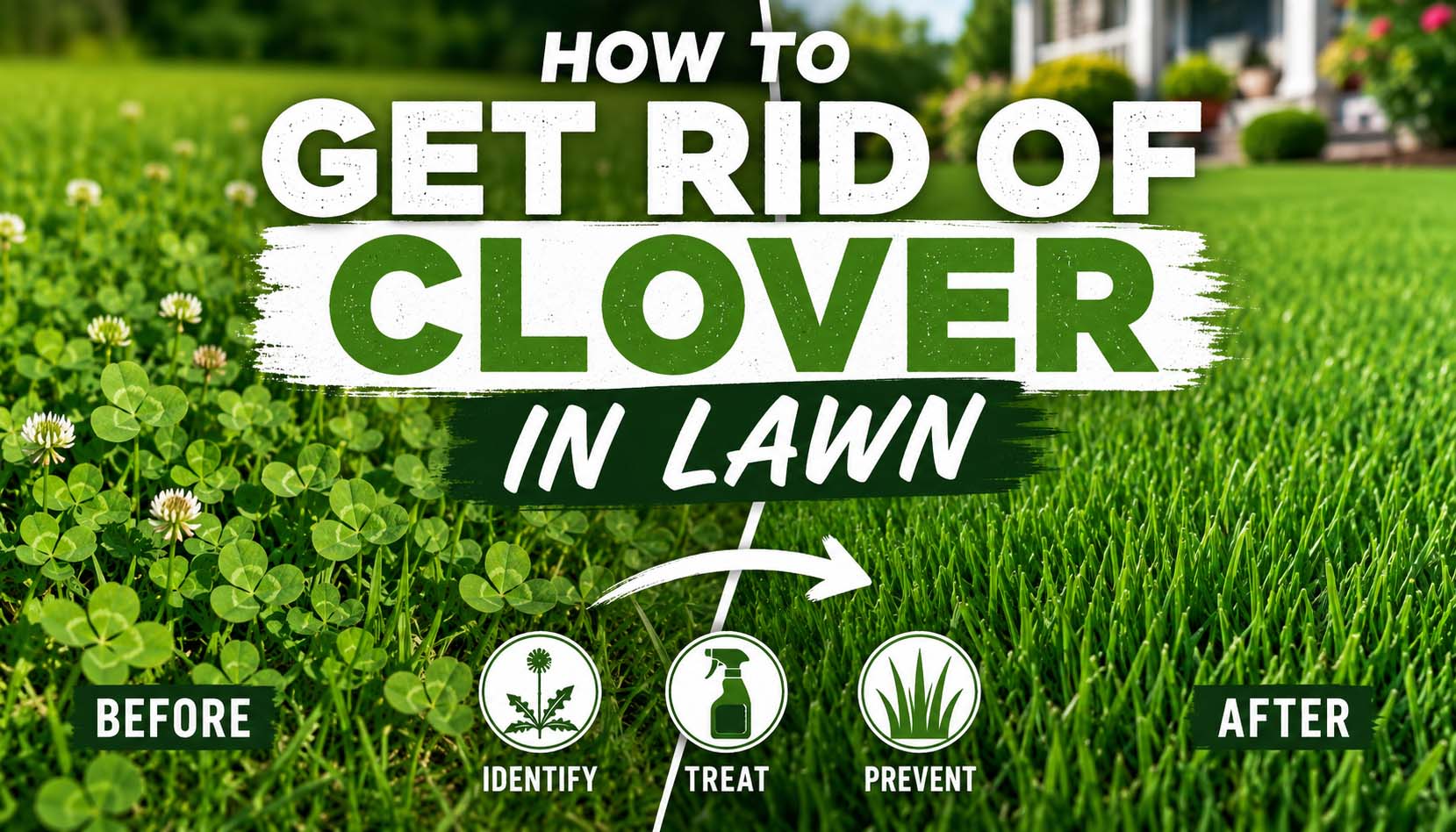
How to Get Rid of Clover in Lawn: A Complete Home and Garden Guide
Clover can quickly spread across a lawn and compete with grass for space. While some homeowners appreciate clover because it attracts pollinators and improves soil nitrogen levels, others prefer a uniform, grass-only lawn.
If you’re wondering how to get rid of clover in lawn, the good news is that there are several effective methods available. From natural lawn care solutions to selective weed control products, homeowners can choose the approach that best fits their lawn goals and budget.
Overall, this guide covers why clover appears, how to remove it, and the best products to consider for long-term lawn health.
What Is Clover and Why Does It Grow in Lawns?
Clover is a broadleaf plant commonly found in residential lawns.
It often appears when:
- Grass is thin or weak
- Soil nitrogen levels are low
- Lawns are under-fertilized
- Soil becomes compacted
- Grass struggles to compete
The most common variety is white clover, which spreads through seeds and creeping stems.
Although clover itself is not harmful, many homeowners consider it a weed because it disrupts the appearance of a traditional lawn.
Signs Your Lawn Has a Clover Problem
Common indicators include:
- Small white flowers
- Three-leaf clusters
- Patches spreading across grass
- Uneven lawn appearance
- Reduced grass density
Therefore, identifying clover early makes removal much easier.
Quick Comparison: Clover Removal Methods
| Method | Effectiveness | Cost | Difficulty |
|---|---|---|---|
| Manual Removal | Moderate | Low | Medium |
| Lawn Fertilization | High | Low-Medium | Easy |
| Natural Solutions | Moderate | Low | Easy |
| Selective Herbicides | High | Medium | Easy |
| Lawn Renovation | Very High | High | Difficult |
Ultimately, choosing the right method depends on the size of the infestation and your lawn goals.
How to Get Rid of Clover in Lawn
The best approach combines weed removal with improving overall lawn health.
Improve Lawn Fertility
Clover often thrives in nitrogen-deficient soil.
Therefore, applying a nitrogen-rich lawn fertilizer can help grass outcompete clover.
Benefits include:
- Thicker grass growth
- Better root development
- Reduced weed invasion
As a result, a healthy lawn naturally resists clover growth.
Mow Properly
Cutting grass too short weakens turf and encourages weeds.
For most lawns:
- Maintain recommended mowing height
- Avoid removing more than one-third of grass height
- Keep mower blades sharp
Consequently, taller grass shades the soil and limits clover expansion.
Water Consistently
Deep, infrequent watering helps establish stronger grass roots.
In turn, strong grass creates better competition against clover.
Therefore, avoid shallow daily watering whenever possible.
How to Get Rid of Clover in Lawn Naturally
Many homeowners prefer chemical-free options.
If you’re searching for how to get rid of clover in lawn naturally, consider the following methods.
Hand Pulling
Small patches can often be removed manually.
For best results:
- Pull after rainfall
- Remove roots completely
- Dispose of plant material properly
Generally, hand removal works best for minor infestations.
Organic Lawn Fertilizers
Organic fertilizers can improve lawn density and help reduce clover naturally.
Common options include:
- Compost-based products
- Organic nitrogen fertilizers
- Natural soil amendments
These products support healthier turf without harsh chemicals.
Overseeding Thin Areas
Bare spots create opportunities for clover to spread.
Overseeding helps:
- Increase turf density
- Improve lawn appearance
- Reduce future weed growth
In fact, this is one of the most effective natural prevention strategies. Likewise, homeowners addressing other property concerns may research a vapor barrier crawl space.
How to Get Rid of White Clover in Lawn
Many homeowners specifically search for how to get rid of white clover in lawn because it is the most common lawn variety.
White clover can be more persistent due to its creeping growth habit.
Recommended Steps
- Fertilize the lawn.
- Remove visible patches.
- Overseed damaged areas.
- Improve watering practices.
- Consider selective herbicides if necessary.
Overall, combining multiple strategies usually produces the best results.
Best Products for Clover Control
Several product categories can help control clover.
Selective Broadleaf Herbicides
These products target clover while preserving most lawn grasses.
Advantages:
- Effective against established clover
- Easy application
- Fast results
However, always follow label instructions carefully.
Lawn Fertilizers
Nitrogen-rich fertilizers often help prevent future clover outbreaks.
Look for products that support:
- Dense grass growth
- Root development
- Seasonal lawn health
Grass Seed Mixtures
Overseeding products can help fill thin areas where clover tends to invade.
Ultimately, a dense lawn remains one of the best long-term defenses against weeds.
How to Get Rid of Clover in Your Lawn Long-Term
Homeowners frequently ask how to get rid of clover in your lawn permanently.
While complete elimination can be difficult, long-term control is possible.
Maintain Healthy Grass
Strong grass naturally suppresses weeds.
Test Soil Regularly
Understanding nutrient levels helps prevent future problems.
Fertilize Appropriately
Follow seasonal fertilizer schedules.
Repair Bare Spots Quickly
Open soil provides opportunities for clover establishment.
Monitor Early Growth
Address new clover patches before they spread.
Pros and Cons of Clover Removal
Pros
- Uniform lawn appearance
- Improved grass coverage
- Easier lawn management
- Reduced weed competition
Cons
- Ongoing maintenance required
- Some products may require repeat applications
- Clover can return if lawn health declines
Therefore, understanding these factors helps homeowners set realistic expectations.
Buyer Guide: Choosing the Right Clover Control Product
Before purchasing lawn products, consider several factors.
Lawn Size
Small lawns may only require spot treatment.
In contrast, large lawns may benefit from broadcast applications.
Grass Type
Ensure products are compatible with your lawn species.
Infestation Severity
Severe infestations may require herbicides.
Budget
Costs vary significantly depending on product type and lawn size.
Ultimately, choosing the right solution often saves time and money. Meanwhile, homeowners planning additional improvements may want to learn how to patch drywall or select the best paint for cabinets.
How to Get Rid of Clover in a Lawn Without Damaging Grass
Many homeowners worry about harming grass during treatment.
The safest approach includes:
- Using selective herbicides
- Following label instructions
- Avoiding overapplication
- Applying during recommended weather conditions
As a result, proper application greatly reduces the risk of turf damage.
Common Lawn Care Mistakes
Avoid these common errors.
Mowing Too Short
Weakens grass and encourages weeds.
Skipping Fertilizer
Nitrogen deficiencies often promote clover growth.
Ignoring Soil Health
Compacted or poor-quality soil affects turf performance.
Waiting Too Long
Small clover patches are much easier to manage than large infestations.
FAQ
Why does clover grow in lawns?
Clover commonly appears in lawns with low nitrogen levels, thin grass, or poor growing conditions.
How to get rid of clover in lawn naturally?
Hand pulling, overseeding, organic fertilization, and proper lawn care are popular natural methods.
How to get rid of white clover in lawn?
A combination of fertilization, overseeding, manual removal, and selective herbicides often works best.
Is clover harmful to grass?
Clover is not directly harmful but can compete with grass for space and affect lawn appearance.
What is the best product for clover control?
Selective broadleaf herbicides and nitrogen-rich lawn fertilizers are commonly recommended options.
Can clover come back after treatment?
Yes. Without ongoing lawn maintenance, clover may return over time.
Conclusion
Learning starts with understanding why it appears in the first place. Clover often signals underlying lawn health issues such as low nitrogen levels, thin turf, or poor maintenance practices.
Whether you’re researching how to get rid of clover in lawn naturally, looking for solutions for how to get rid of white clover in lawn, exploring methods for how to get rid of clover in your lawn, or searching for the best way how to get rid of clover in a lawn, the most effective strategy combines weed control with strong lawn care practices.