

What Is a Russian Manicure? Everything You Need to Know
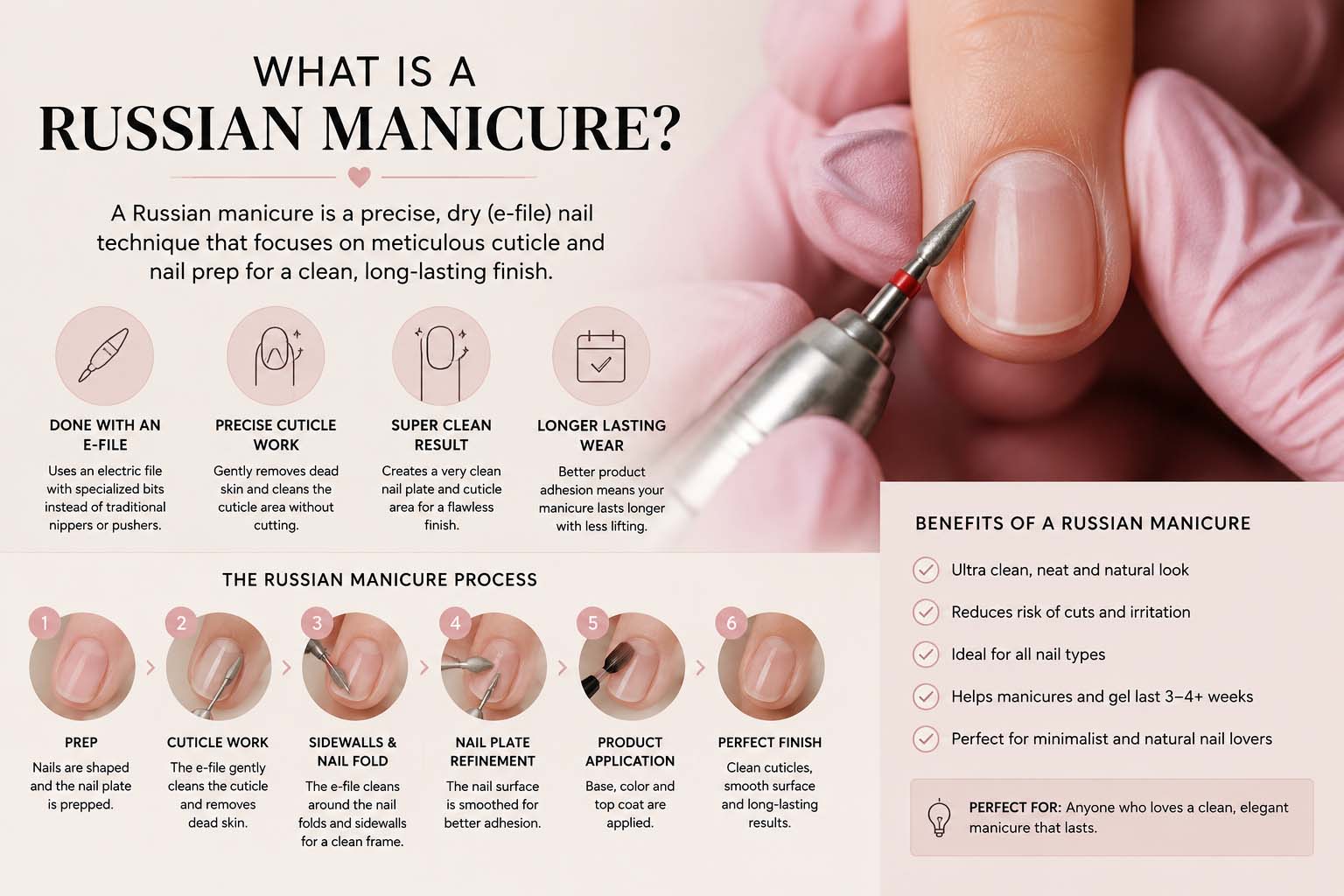
What is a Russian manicure? It is a detailed nail grooming technique that uses an electric nail file and specialized bits to refine the nail surface and surrounding cuticle area. Unlike traditional manicures, which often involve soaking the hands, this method generally uses dry nail preparation to create a precise, polished appearance.
Russian manicures have gained attention because of their neat finish and detailed approach to nail grooming. Many beauty enthusiasts consider them part of their personal grooming routines. However, the technique requires professional skill, particularly when working near the delicate skin surrounding the nails.
Although the finished appearance can be attractive, aggressive cuticle removal may damage protective skin and increase the risk of infection. Therefore, understanding the procedure, benefits, and safety concerns can help you make an informed decision.
For people exploring how to glow up, maintaining clean, healthy nails can complement skincare, haircare, and other everyday self-care habits.
What Is a Russian Manicure and How Does It Work?
A Russian manicure is a precision-focused nail treatment that typically involves dry preparation and specialized electric filing tools.
Nail technicians use different drill bits to refine the nail surface and work around the skin at the base of each nail. The goal is to create a clean-looking nail border before applying polish.
However, techniques vary between salons. Some professionals follow conservative methods, while others perform extensive cuticle removal.
Because the cuticle helps protect the area between the nail and surrounding skin, technicians should avoid damaging this protective barrier.
How It Differs From a Traditional Manicure
Traditional manicures often involve soaking, nail shaping, gentle grooming, and polish application.
In contrast, Russian-style manicures emphasize dry preparation and detailed work around the nail edges.
A technician may use several electric file bits instead of relying mainly on manual tools.
Nevertheless, specialized equipment does not automatically guarantee better results. Proper training, hygiene, and careful handling matter more than the tools themselves.
Russian Manicure Tools and Equipment
The procedure involves specialized equipment that requires professional handling.
Common tools include:
- Electric nail drills with adjustable speeds
- Fine abrasive or diamond-coated bits
- Nail files and buffers
- Nail dust collection equipment
- Appropriate cleaning and sterilization supplies
- Traditional polish or gel products
- Nail shaping accessories
Each tool performs a different task during preparation.
For example, fine drill bits can help remove nonliving debris from the nail surface. Meanwhile, a buffer may smooth minor irregularities before polish application.
However, excessive pressure or unsuitable drill speeds can injure surrounding skin or thin the natural nail.
Russian Manicure Technician Skills and Safety
Electric filing tools require precision and an understanding of nail anatomy.
An inexperienced technician may apply excessive pressure or work too aggressively around the cuticle.
As a result, clients may experience discomfort, abrasions, irritation, or nail thinning.
A qualified professional should understand how to protect the nail plate and surrounding skin.
In addition, the salon should follow appropriate hygiene procedures and process reusable instruments correctly between appointments.
Step-by-Step Russian Manicure Process
The exact procedure varies between salons, but many treatments follow a similar sequence.
Step 1: Nail Examination and Preparation
First, the technician examines the natural nails and surrounding skin.
They check for irritation, visible injuries, and possible signs of infection.
If the client has open wounds or significant inflammation, the technician should avoid working on the affected area.
Next, they prepare the nails according to appropriate hygiene practices.
Step 2: Nail Shaping
The technician shapes the free edge of each nail using a suitable file.
Common shapes include oval, square, round, and almond.
The ideal shape depends on nail length, personal preferences, and daily activities.
For example, shorter rounded nails may suit people who frequently work with their hands.
Step 3: Detailed Cuticle-Area Preparation
Next, the technician uses specialized tools to refine the area around the nail.
This stage requires careful control because the surrounding skin is delicate.
Some techniques involve lifting or cutting cuticle tissue. However, aggressive removal can disrupt the protective barrier between the skin and nail.
A safer approach avoids cutting living skin and minimizes unnecessary manipulation.
Step 4: Nail Surface Refinement
The technician may gently smooth the nail surface before applying polish.
However, excessive buffing can weaken natural nails.
Therefore, professionals should avoid removing unnecessary layers of healthy nail material.
Step 5: Polish or Gel Application
After preparation, the technician applies the selected nail product.
Some clients prefer traditional nail polish, while others choose gel coatings.
The technician may apply color close to the nail’s base to create a precise outline.
However, nail products should not unnecessarily touch surrounding skin because certain ingredients may cause irritation or allergic reactions.
Step 6: Final Inspection
Finally, the technician checks the finished nails for uneven edges or remaining product residue.
The treatment should not cause bleeding, torn skin, or significant pain.
If discomfort develops during the procedure, the client should ask the technician to stop.
Benefits of a Russian Manicure
Many clients choose this nail treatment because they prefer a clean, detailed appearance.
However, results depend on the technician’s experience and the condition of the natural nails.
Precise and Neat Nail Appearance
Detailed preparation can create a clean-looking border between the nail coating and surrounding skin.
As a result, finished nails may appear carefully shaped and polished.
This precise appearance is one of the main reasons people request the service.
Detailed Dry Nail Preparation
Dry preparation allows technicians to examine the nail surface without soaking.
In addition, specialized tools can help professionals work carefully around the nail edges.
However, detailed preparation should never require damaging healthy skin.
Smooth Polish Application
Careful nail preparation may support an even polish application.
Some clients appreciate the appearance of color applied close to the nail’s base.
Nevertheless, polish durability depends on product quality, application technique, and everyday activities.
Personalized Nail Styling
Clients can combine this manicure technique with different nail shapes, colors, and finishes.
For example, neutral shades create a subtle appearance, while darker colors provide a more noticeable result.
Nail styling can also complement different types of aesthetics, from minimalist beauty to glamorous fashion.
Therefore, clients can choose nail colors and designs that reflect their preferences without compromising nail health.
Russian Manicure Risks and Safety Concerns
Although this technique can produce a polished appearance, it also carries risks when technicians use aggressive methods.
The main concerns involve skin injuries, nail damage, irritation, and infection.
Cuticle Damage and Infection
The cuticle helps protect the space between the nail plate and surrounding skin.
Cutting or removing protective tissue can create an opening for microorganisms.
Consequently, clients may develop inflammation or an infection around the nail.
The American Academy of Dermatology recommends protecting your cuticles and following healthy nail-care practices.
This guidance is especially relevant when considering treatments that involve extensive cuticle work.
Nail Plate Thinning
Excessive filing can remove too much material from the natural nail.
As a result, nails may become sensitive, fragile, or more likely to split.
Repeated aggressive treatments can increase the risk of damage.
Therefore, technicians should use conservative filing methods.
Skin Irritation and Allergic Reactions
Some clients react to ingredients in nail products, including certain gel formulations.
Symptoms may include redness, itching, swelling, or a rash around the fingers.
In addition, repeated skin contact with uncured gel products can contribute to sensitization.
If irritation develops, stop using the suspected product and seek appropriate medical advice.
Hygiene and Cross-Contamination
Reusable nail instruments can transfer microorganisms when salons fail to clean and sterilize them properly.
Therefore, clients should choose salons that follow local infection-control requirements.
Technicians should also maintain clean workstations and follow appropriate procedures between appointments.
Is a Russian Manicure Safe for Natural Nails?
Safety depends on the technique, the condition of your nails, and the technician’s training.
A conservative dry manicure that avoids damaging protective skin may carry fewer risks than an aggressive procedure involving extensive cutting.
However, no manicure is completely risk-free.
Before booking, ask whether the technician cuts living cuticle tissue, how they process reusable tools, and what precautions they take to prevent nail damage.
Who Should Be Especially Careful?
People with damaged nails, irritated skin, or previous reactions to nail products should be cautious.
In addition, individuals with diabetes, poor circulation, reduced sensation, or conditions that affect wound healing may face greater consequences from skin injuries.
They should consider discussing nail treatments with a healthcare professional before undergoing aggressive cuticle work.
Anyone with an active nail infection should avoid cosmetic treatment of the affected area until a qualified healthcare professional assesses the condition.
How Long Does a Russian Manicure Last?
The appearance of a finished manicure depends on nail growth, product choice, application quality, and daily activities.
Some clients find that detailed preparation helps their polish look neat as their nails grow.
However, the technique does not guarantee longer-lasting results.
Traditional polish and gel products also have different wear characteristics.
For example, frequent exposure to water, cleaning products, and physical wear can affect the appearance of a manicure.
How Often Should You Book an Appointment?
Appointment frequency depends on nail growth and the type of coating.
Many people schedule regular nail maintenance every few weeks.
However, clients should avoid repeated aggressive filing simply to maintain a polished appearance.
If nails become thin, painful, or irritated, allow them to recover and seek professional advice when necessary.
Russian Manicure Cost and Pricing Factors
The price of this treatment varies by location, salon, technician experience, and service complexity.
Because the procedure involves detailed work, some salons charge more than they do for a basic manicure.
However, higher prices do not automatically indicate better hygiene or safer practices.
What Influences the Price?
Several factors affect the final cost:
- Salon location
- Technician experience and training
- Appointment duration
- Nail length and shape
- Traditional polish or gel application
- Additional nail art
- Product removal requirements
Before booking, ask what the advertised price includes.
For example, some salons charge separately for gel removal or detailed nail designs.
Russian Manicure vs. Regular Manicure
Understanding the differences can help you choose an appropriate nail service.
| Feature | Russian Manicure | Traditional Manicure |
|---|---|---|
| Preparation | Usually dry | May include soaking |
| Main tools | Electric file and specialized bits | Hand files, buffers, and grooming tools |
| Nail-edge work | Often highly detailed | Usually less intensive |
| Appointment time | May take longer | Often shorter |
| Main concern | Potential damage from aggressive filing or cuticle removal | Potential damage from improper trimming or poor hygiene |
| Finish | Precise, detailed appearance | Conventional polished appearance |
Neither approach is automatically safer or better.
Instead, the technician’s methods, hygiene standards, and respect for natural nail anatomy should guide your decision.
How to Choose a Qualified Nail Technician
Choosing the right professional can reduce avoidable risks.
Ask About Training and Experience
Look for a technician who has appropriate training and meets local licensing requirements.
In addition, ask about their experience with electric filing equipment.
A responsible professional should explain the procedure and discuss possible risks.
Check Salon Hygiene
Observe whether the salon maintains clean workstations and follows appropriate instrument-processing procedures.
Reusable tools require more than a quick wipe when proper sterilization is necessary.
Therefore, ask how the salon cleans and sterilizes its equipment between clients.
Avoid Aggressive Cuticle Removal
A neat manicure should not require bleeding, torn skin, or significant discomfort.
If a technician recommends extensive cutting of protective tissue, consider choosing a more conservative service.
Read Customer Reviews Carefully
Customer reviews can provide useful information about communication, appointment quality, and overall service.
However, attractive nail photographs alone do not establish safe practices.
Give greater weight to hygiene, professional training, and consistent client experiences.
Nail Styling and Beauty Accessories
A manicure can complement a wider personal style, especially when clients coordinate their nail colors with clothing and accessories.
For example, neutral nail shades work well with everyday outfits, while metallic or darker colors can create a more dramatic appearance.
Jewelry can also influence the overall look. People exploring different types of earrings may enjoy coordinating their accessories with their preferred nail colors.
However, personal styling should remain separate from nail health decisions. A fashionable finish should never require aggressive cuticle removal or excessive filing.
Russian Manicure Aftercare Tips
Proper aftercare helps maintain the appearance of your nails and supports healthy surrounding skin.
Moisturize Your Hands and Nails
Apply a gentle hand moisturizer to prevent dryness.
In addition, use a suitable moisturizing product around the nails when the skin feels dry.
Avoid applying irritating products to broken or inflamed skin.
Protect Your Hands During Cleaning
Wear protective gloves when cleaning or handling harsh household products.
Frequent exposure to water and cleaning chemicals can affect nail coatings and surrounding skin.
Therefore, reducing unnecessary exposure may help maintain your manicure.
Avoid Picking or Peeling Gel Polish
Picking at gel polish can remove layers from the natural nail.
Instead, follow the product manufacturer’s recommended removal process or visit a qualified technician.
Aggressive scraping can cause additional damage.
Watch for Signs of Infection
Monitor the surrounding skin after your appointment.
Increasing redness, swelling, warmth, pain, or pus may indicate a problem.
If these symptoms develop, seek medical assessment rather than attempting further cosmetic treatment.
Common Mistakes to Avoid
Several habits can increase the risk of nail damage.
Choosing Appearance Over Safety
A flawless-looking nail border should never come at the expense of healthy skin.
Therefore, prioritize safe preparation over extremely aggressive cuticle work.
Booking Treatments Too Frequently
Repeated filing and product removal may stress natural nails.
Allow appropriate maintenance intervals and respond to signs of sensitivity.
Ignoring Discomfort
Pain or bleeding during a manicure is not a normal requirement for achieving a polished finish.
Ask the technician to stop if the procedure causes injury or significant discomfort.
Removing Nail Products Incorrectly
Peeling or scraping coatings can weaken the nail surface.
Instead, use appropriate removal methods and avoid forcing products off the nails.
Frequently Asked Questions About Russian Manicures
What Is a Russian Manicure Used For?
A Russian manicure focuses on detailed dry nail preparation and creating a neat appearance around the nail edges.
However, the procedure should avoid damaging protective skin or healthy nail tissue.
Does a Russian Manicure Hurt?
A properly performed, conservative manicure should not cause significant pain.
If you experience sharp discomfort, bleeding, or burning, ask the technician to stop.
Is a Russian Manicure Better Than a Regular Manicure?
Neither method is automatically better.
The most suitable option depends on your preferences, nail condition, and the technician’s safety practices.
Can a Russian Manicure Damage Your Nails?
Yes. Aggressive electric filing can thin the nail plate, while excessive cuticle removal can injure the surrounding skin.
Therefore, choose a qualified technician who uses conservative methods.
Can You Get a Russian Manicure on Short Nails?
Yes. Technicians may perform dry nail preparation on short natural nails.
However, the condition of the nails and surrounding skin matters more than nail length.
Is a Russian Manicure Suitable for Beginners?
Beginners can consider the service, but they should understand the potential risks before booking.
A conservative approach that preserves protective skin is preferable to aggressive cuticle removal.
Final Thoughts
Understanding what is a Russian manicure helps you evaluate this detailed nail-care technique before scheduling an appointment.
The procedure typically uses electric filing tools and dry preparation to create a precise, polished appearance. However, aggressive cuticle removal and excessive filing can increase the risk of injury, irritation, and infection.
Choose a qualified technician, prioritize proper hygiene, and avoid procedures that damage living skin.
A beautiful manicure should support healthy nails rather than compromise them.