
Difference Between Vinyl and Laminate Flooring: Which Should You Buy?
Choosing new flooring often comes down to two popular options: vinyl and laminate. At first glance, they can look surprisingly similar, especially when both imitate natural wood. However, the difference between vinyl and laminate flooring becomes much clearer when you compare their materials, water resistance, comfort, durability, maintenance, and cost. a kitchen, basement, or busy family room.
Still, neither option wins in every situation. Your room, lifestyle, budget, and preferred feel underfoot should guide the purchase.
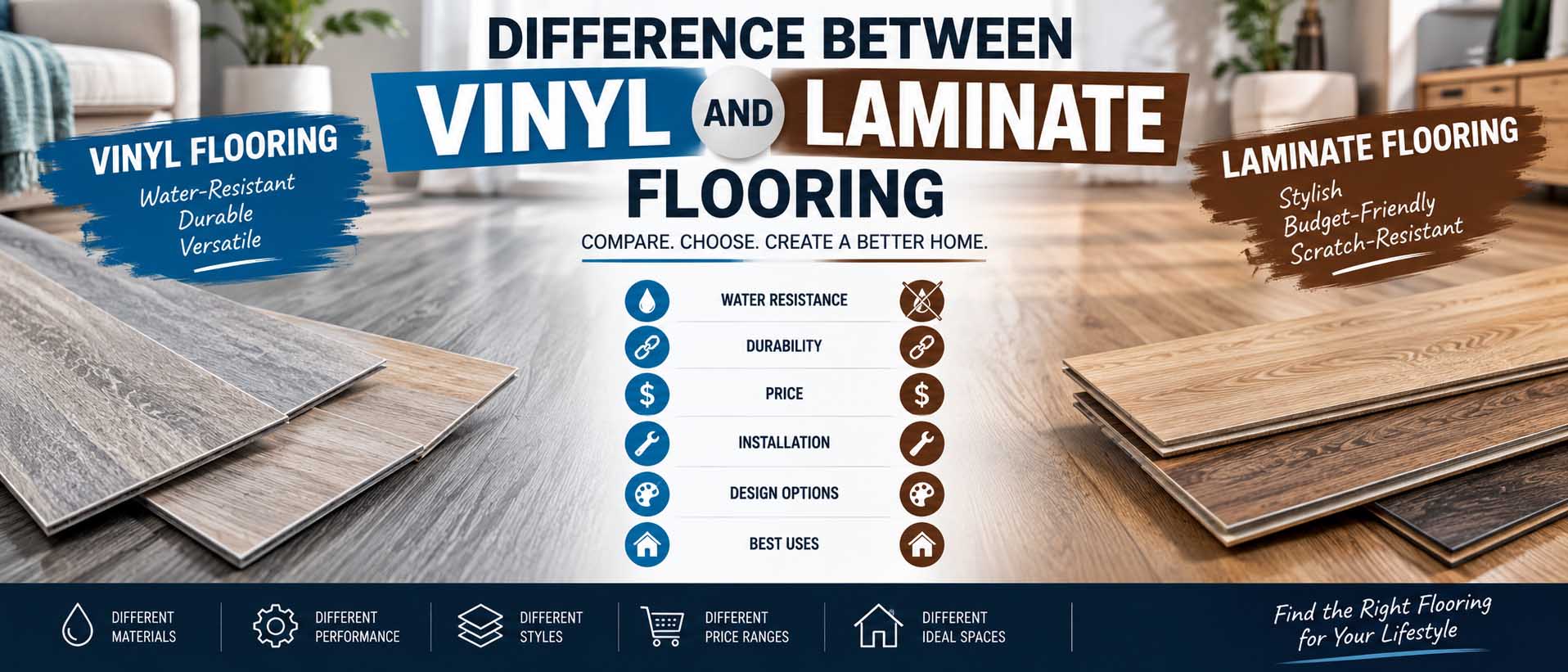
Quick Comparison: Vinyl vs. Laminate Flooring
Before comparing the details, this quick-reference table shows where the two flooring types usually differ.
| Feature | Vinyl Flooring | Laminate Flooring |
|---|---|---|
| Main material | PVC-based synthetic layers | Fiberboard core with decorative and protective layers |
| Water resistance | Usually very good; many products are waterproof | Varies; prolonged moisture can damage many products |
| Appearance | Excellent wood, stone, and tile designs | Especially convincing wood appearance |
| Feel underfoot | Softer and slightly more flexible | Firmer and often more wood-like |
| Scratch resistance | Good, depending on wear layer | Often very good on quality products |
| Maintenance | Easy | Easy, but excess water should be avoided |
| Best rooms | Kitchens, bathrooms, basements, living spaces | Bedrooms, living rooms, offices, dining areas |
| Installation | Click-lock, glue-down, or loose-lay options | Commonly click-lock floating installation |
Specifications vary by product, so shoppers should always check the manufacturer’s water-resistance rating, wear-layer information, installation requirements, and warranty rather than relying on the flooring category alone.
What Is the Difference Between Vinyl and Laminate Flooring?
The biggest difference starts inside the plank.
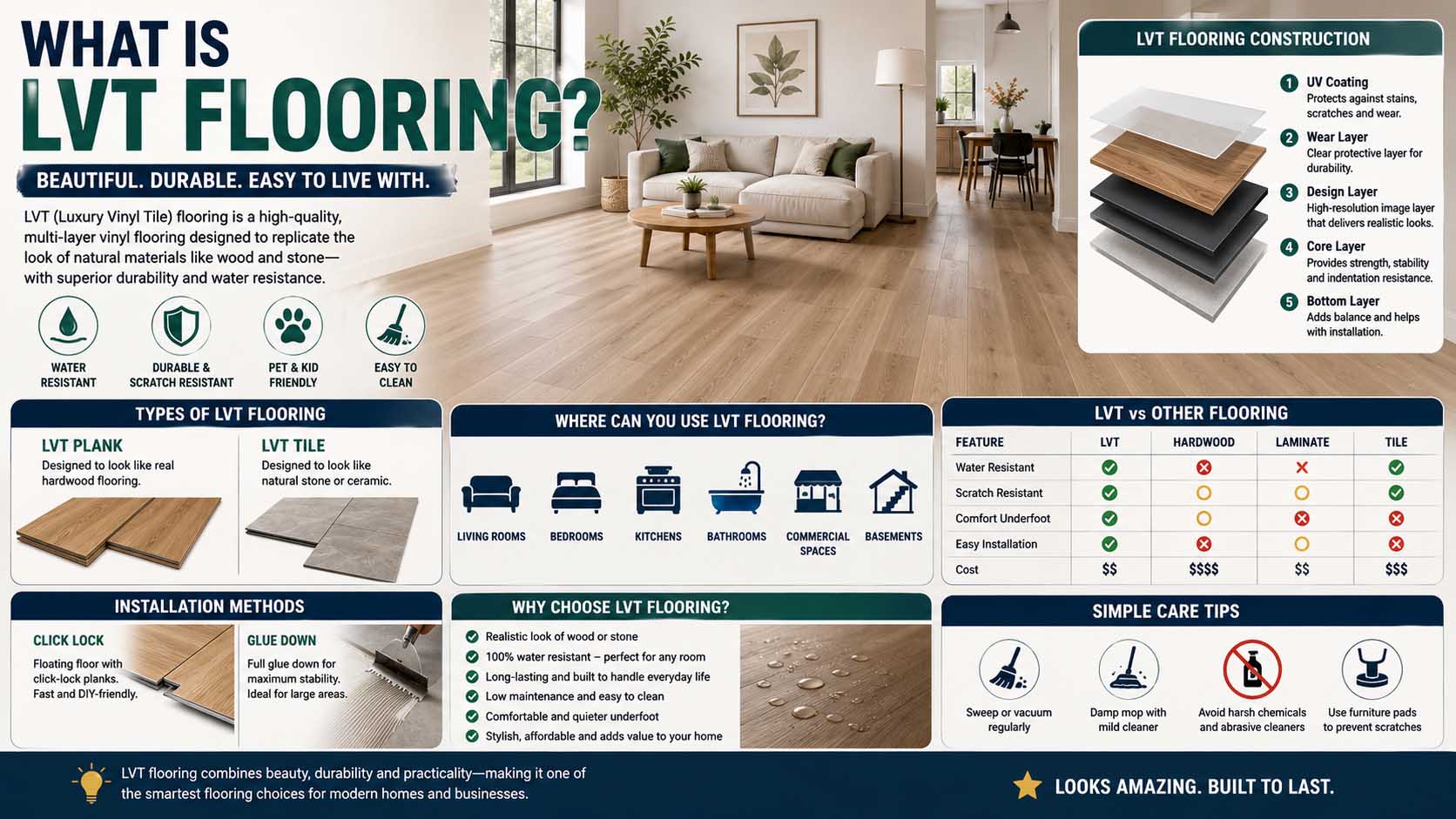
Vinyl flooring consists mainly of synthetic materials. Modern products often use several layers, including a backing, core, printed design, and transparent wear layer. Luxury vinyl can reproduce wood grain, stone, and tile while remaining highly resistant to everyday moisture.
If you are comparing vinyl formats, understanding what is lvp flooring can also help because luxury vinyl plank, or LVP, is specifically designed in plank shapes that commonly recreate the appearance of hardwood.
Laminate uses a different construction. Most laminate flooring includes a fiberboard core, a printed decorative layer, and a durable transparent surface layer. Because manufacturers can create detailed wood imagery and surface textures, good laminate can look remarkably similar to real wood.
That core construction affects where each material works best. Vinyl’s synthetic composition generally handles water better, while laminate’s wood-based core requires more careful moisture management.
Difference Between Laminate and Vinyl Flooring in Appearance
Appearance used to create a much bigger gap between these products. Today, however, both can look convincing.
Laminate has traditionally been popular with shoppers who want a realistic hardwood look. High-quality products can include textured surfaces, detailed grain patterns, beveled edges, and varied plank designs that reduce repetitive patterns.
Vinyl has also improved considerably. Luxury vinyl flooring can imitate oak, walnut, stone, slate, and other materials. Some products combine detailed printing with embossed textures, which makes the surface feel more realistic.
Meanwhile, shoppers researching wood-look materials may also encounter what is engineered wood when comparing alternatives. Engineered wood contains a real wood surface layer, so it belongs to a different product category from both vinyl and laminate despite potentially having a similar plank appearance.
For buyers, samples are especially useful here. View several full planks rather than judging flooring from one small display piece. Also, examine samples in your home’s natural and artificial lighting because colors can look noticeably different once installed.
Water Resistance Can Decide the Purchase
For kitchens, bathrooms, laundry areas, entryways, and basements, water exposure deserves close attention.
Vinyl usually has the advantage because the material itself resists water well. Many luxury vinyl products are sold as waterproof flooring, although shoppers should still check the exact manufacturer’s specifications. Water can sometimes reach the subfloor through joints or edges even when the planks themselves resist moisture.
Laminate requires more careful product selection. Traditional laminate can swell or warp when water penetrates its fiberboard core. However, newer water-resistant and waterproof-rated laminate products offer better protection than older designs.
Even so, buyers should read the fine print. “Water-resistant” and “waterproof” do not necessarily mean the same thing, while warranties may set limits on how long standing water can remain on the floor.
Therefore, if spills, wet shoes, pet bowls, or frequent moisture are expected, compare the actual water warranty rather than choosing based only on the package label.
How to Tell the Difference Between Vinyl and Laminate Flooring
If you are examining installed flooring, appearance alone may not give you the answer.
First, consider how the surface feels. Laminate usually feels harder and more rigid, while vinyl often has a slightly softer or more resilient feel.
Next, inspect an exposed edge if one is safely visible. Laminate normally has a dense fiberboard core, whereas vinyl has synthetic layers without the same wood-fiber center.
Sound can offer another clue. Laminate may produce a harder or more hollow sound when walked on, particularly when installed as a floating floor. Vinyl generally sounds quieter, although the underlayment and subfloor can change the result.
For tile-shaped products, shoppers may also want to understand what is lvt flooring, since luxury vinyl tile uses vinyl construction while commonly recreating ceramic tile or natural stone.
Durability: Which Flooring Handles Daily Life Better?
Both options can last well when buyers choose the right quality level for the room.
This transparent protective surface takes much of the everyday contact from shoes, furniture, pets, and cleaning. Generally, a more substantial wear layer is worth considering for busy areas, although specifications and warranties should guide your decision.
Laminate is also known for a tough top surface. Quality laminate can resist everyday scratches and scuffs effectively, which makes it appealing for active households.
However, each material has weaknesses. Heavy or sharp objects can gouge vinyl, while moisture reaching laminate’s core can cause permanent swelling. Furniture can also damage either flooring type when legs drag directly across the surface.
Consequently, don’t shop by a single “durability” claim. Instead, consider the actual risks in your home: moisture, pets, children’s activities, heavy furniture, direct sunlight, and foot traffic.
Comfort, Noise, and the Feel Underfoot
Flooring affects more than appearance.
Vinyl often feels slightly softer and quieter underfoot. Some thicker luxury vinyl products also include attached backing, which can improve comfort and reduce sound.
Laminate generally feels firmer. For some buyers, that firmness contributes to a more traditional wood-floor sensation. However, an appropriate underlayment can improve both sound control and comfort.
Subfloor preparation matters as well. Uneven areas can create movement, noise, or joint problems regardless of which flooring you buy. Therefore, account for preparation costs before comparing final project prices.
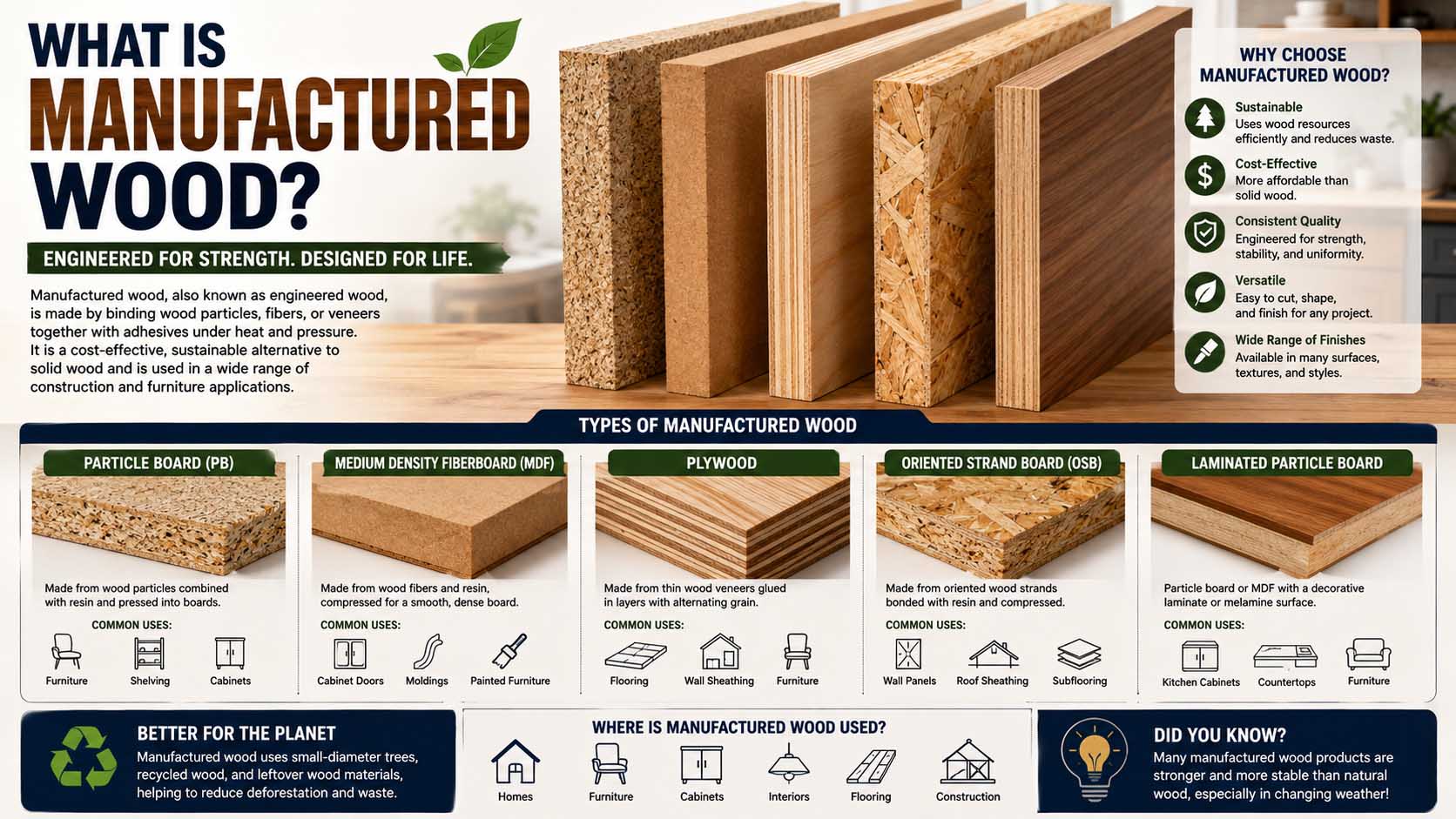
The core material also matters when evaluating flooring products. If unfamiliar terminology appears on product labels, learning what is manufactured wood can make it easier to understand how wood-derived materials differ from fully synthetic vinyl construction.
Installation: Which Is Easier for DIY Buyers?
Many laminate floors use click-lock edges and floating installation. Because the planks connect without being permanently attached to the subfloor, experienced DIY shoppers may find the system approachable.
Luxury vinyl plank also commonly comes with click-lock construction. However, vinyl is available in other installation styles, including glue-down products.
The easier choice depends on the room and product rather than simply “vinyl versus laminate.” Before buying, check whether you need underlayment, moisture barriers, transition strips, special cutting tools, or floor-leveling materials.
Also, measure beyond the room’s basic square footage. Flooring projects normally require extra material for cuts, pattern matching, mistakes, and future repairs. The appropriate allowance depends on the layout and manufacturer’s guidance.
Price Difference Between Vinyl and Laminate Flooring
Both categories cover broad price ranges.
Budget laminate can be inexpensive, while premium waterproof laminate with realistic textures may cost considerably more. Likewise, basic vinyl and premium luxury vinyl can sit at very different price points.
Installation also changes the total. A less expensive floor may become costly if the subfloor needs extensive preparation or if professional installation is required.
When comparing quotes, calculate the complete project rather than only the price per square foot. Include flooring, underlayment if needed, trim, transitions, delivery, removal of existing flooring, subfloor preparation, installation, and waste material.
Prices vary by brand, retailer, location, product quality, and time, so current local quotes provide a more useful comparison than a fixed national price estimate.
Pros and Cons for Shoppers
Vinyl Flooring
Pros
- Strong moisture resistance
- Many realistic wood and stone designs
- Usually easy to clean
- Often quieter underfoot
- Multiple installation formats
- Suitable for many moisture-prone rooms
Cons
- Sharp or heavy objects can gouge some products
- Quality varies considerably between budget and premium lines
- Lower-quality prints may look repetitive
- Subfloor imperfections can sometimes become noticeable
Laminate Flooring
Pros
- Strong selection of realistic wood designs
- Durable surface on quality products
- Often DIY-friendly
- Wide range of styles and price points
- Firm feel can appeal to buyers seeking a wood-like experience
Cons
- Moisture can damage some products
- Damaged fiberboard cores generally cannot be restored
- May sound harder or more hollow without suitable underlayment
- Water-resistance claims require careful comparison
Buying Checklist: What Should You Compare?
Instead of buying based on appearance alone, take a few specifications with you when shopping.
- Room type: Is the flooring going into a dry bedroom or a moisture-prone kitchen?
- Water rating: Check exactly what the manufacturer’s warranty covers.
- Wear protection: Compare wear-layer or surface-durability specifications.
- Installation method: Decide whether you want floating, click-lock, or glue-down flooring.
- Subfloor requirements: Check flatness and moisture requirements before ordering.
- Comfort: Compare thickness, backing, and compatible underlayment.
- Design variation: Look for enough plank variation to avoid obvious repeated patterns.
- Warranty: Read residential-use, water, pet, and installation exclusions.
- Total cost: Include preparation, accessories, waste, and labor rather than comparing plank prices alone.
Taking home samples is also worthwhile. Place them beside cabinets, walls, furniture, and trim before ordering an entire room.
Common Mistakes When Choosing Vinyl or Laminate
One common mistake is assuming all vinyl is waterproof and all laminate performs poorly around water. Product technology varies, so individual specifications matter more than broad assumptions.
Another mistake is choosing purely by thickness. A thicker product is not automatically more durable. Construction quality, wear protection, locking-system quality, core design, and proper installation all affect long-term performance.
Shoppers also sometimes overlook the subfloor. Even premium flooring may perform poorly over an uneven, damp, or unsuitable base.
Finally, don’t select a floor solely because the sample looks attractive under bright showroom lighting. Take samples home and inspect them throughout the day.
FAQs About the Difference Between Vinyl and Laminate Flooring
Is vinyl or laminate better for kitchens?
Vinyl often makes more sense where spills are frequent because many products provide strong water resistance. However, some waterproof-rated laminate products are designed for kitchens as well. Check the specific warranty before purchasing.
Which looks more like real wood?
Both can look convincing. Laminate has long been strong in realistic wood reproduction, while modern luxury vinyl also offers detailed printing and textured surfaces. Comparing full-size samples usually gives shoppers a better answer than comparing product photos online.
Which is better for bedrooms?
Either can work well. Laminate may appeal to shoppers who prefer a firmer wood-like feel, while vinyl can suit buyers who want a quieter, slightly softer surface. Design and budget may matter more than moisture resistance in a typical dry bedroom.
Is laminate the same as vinyl flooring?
No. Although they can look similar, their construction differs. Vinyl relies primarily on synthetic materials, while laminate generally contains a fiberboard core beneath its decorative and protective layers.
Which is easier to maintain?
Both are relatively low-maintenance. Vinyl generally tolerates moisture better, while laminate requires more care with excess water. In either case, follow the flooring manufacturer’s cleaning instructions and avoid products that could damage the finish.
Which Flooring Makes More Sense for Your Home?
The difference between vinyl and laminate flooring matters most when matched to the room where the floor will actually be used. Vinyl is often a practical choice for shoppers prioritizing moisture resistance, easy maintenance, and quieter performance. Laminate can be attractive for dry living areas where a firm feel and convincing wood appearance are priorities.
Rather than choosing one material for the entire house automatically, compare flooring room by room. Check water ratings, surface durability, installation requirements, warranty terms, and total project cost. Then take samples home before ordering. That approach makes it much easier to choose flooring that fits both your home’s daily demands and the look you want.