
What Is LVT Flooring? A Practical Guide for Homeowners and Buyers
If you are comparing flooring for a kitchen, bathroom, living room, or renovation project, you may be wondering what is LVT flooring and whether it is worth buying. LVT, or luxury vinyl tile, is a multi-layer vinyl flooring designed to recreate the appearance of materials such as natural stone, ceramic tile, and wood. It combines realistic visuals with relatively simple maintenance, making it a popular alternative to several traditional flooring materials.
However, not every LVT product offers the same quality. Thickness, wear layer, construction, installation system, surface texture, and warranty can vary considerably. Therefore, understanding those features before shopping can help you choose flooring that matches both your room and your budget.
What Is LVT Flooring?
So, what is LVT flooring? LVT stands for luxury vinyl tile. Manufacturers produce it in individual tiles or planks, depending on the design and product line.
Although traditional vinyl flooring has existed for decades, LVT uses modern printing and surface-texturing techniques to create a more convincing representation of natural materials. As a result, a stone-look LVT tile may reproduce variations in color and texture without requiring actual stone.
The word “luxury” refers to the product category rather than guaranteeing a particular quality level. Therefore, shoppers should compare specifications instead of assuming every product labeled LVT is premium.
LVT also differs from real timber products. If you’re comparing vinyl with wood-based flooring, understanding what is engineered wood can help clarify why the materials perform differently in areas exposed to moisture.
What Is LVT Flooring Made Of?
A common buying question is what is LVT flooring made of, especially because the finished surface can look surprisingly similar to wood or stone.
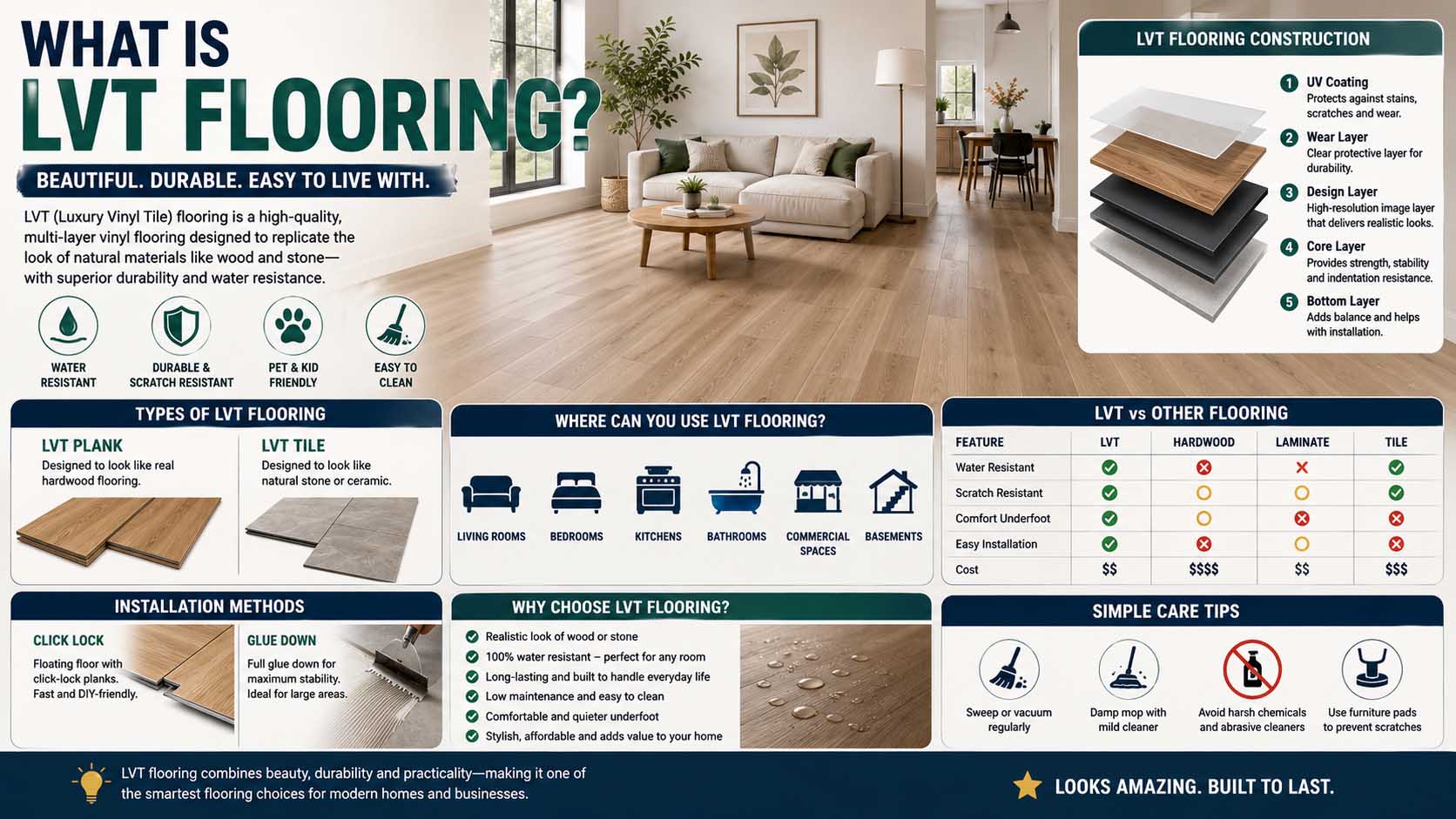
Most LVT uses several layers rather than one solid piece of material. Exact construction varies by manufacturer, but a typical product includes a backing, structural vinyl layers, a printed design layer, a transparent wear layer, and a protective surface treatment.
Backing and Structural Layers
The lower portion provides dimensional support and forms much of the flooring’s body. Depending on the product, its construction may be flexible or more rigid.
Some newer vinyl flooring products use rigid composite cores designed to improve dimensional stability and provide a firmer feel underfoot.
Printed Design Layer
The decorative layer creates the appearance shoppers actually see.
High-resolution printing can reproduce oak grain, marble patterns, slate, concrete, and many other surfaces. Better products may use varied patterns across multiple pieces so that the finished floor does not look excessively repetitive.
Wear Layer
A transparent wear layer sits above the printed image and helps protect it from everyday abrasion.
Wear-layer thickness is an important specification when comparing LVT products. Generally, higher-traffic spaces benefit from flooring designed for greater wear. However, a thicker wear layer does not automatically mean the product performs better in every other respect.
Surface Finish
Finally, manufacturers may add protective coatings and textured finishes. Embossing can make wood-look flooring feel more realistic because the surface texture follows or resembles the printed grain.
So, when shoppers ask LVT flooring what is it made of, the simple answer is multiple vinyl-based and protective layers engineered to work together.
What Does LVT Stand For?
LVT stands for Luxury Vinyl Tile.
However, the word “tile” can create some confusion. LVT is not ceramic or porcelain tile, even when it closely imitates those materials.
Likewise, some manufacturers and retailers use luxury vinyl terminology broadly. Consequently, product listings may refer to luxury vinyl tile even when the pieces have a plank-style format.
Therefore, always check the actual dimensions, construction, and installation method instead of relying only on the category name.
LVT Flooring vs. LVP: What’s the Difference?
LVT and LVP are closely related flooring categories, so shoppers frequently see the terms together.
Traditionally, LVT has been associated with tile and stone visuals, whereas LVP is commonly designed to resemble hardwood planks.
If you’re deciding between the two formats, a guide explaining what is LVP flooring can help you compare plank construction, installation options, and typical uses in more detail.
Here’s a quick comparison:
| Feature | LVT | LVP |
|---|---|---|
| Full name | Luxury Vinyl Tile | Luxury Vinyl Plank |
| Typical shape | Tile or rectangular format | Long plank |
| Common appearance | Stone, ceramic, wood | Hardwood |
| Maintenance | Generally easy | Generally easy |
| Installation | Glue-down or floating, depending on product | Glue-down or floating, depending on product |
| Best choice | Depends on desired style and room | Depends on desired style and room |
In practice, the distinction can blur because manufacturers offer a wide variety of formats. Therefore, specifications matter more than the acronym alone.
Advantages of LVT Flooring
LVT appeals to shoppers because it balances appearance, maintenance, and practical everyday use.
Wide Range of LVT Designs
One of its biggest strengths is choice.
You can find products that resemble oak, walnut, limestone, slate, marble, concrete, and many other materials. Consequently, LVT can fit traditional, contemporary, industrial, and minimalist interiors.
Easier Maintenance
Routine care is generally straightforward. Regular sweeping or vacuuming removes loose debris, while damp cleaning with a manufacturer-approved product handles most everyday dirt.
Unlike some natural materials, LVT generally does not require periodic refinishing.
Moisture-Resistant Vinyl Construction
Vinyl itself resists water well, which makes many LVT products appealing for kitchens, bathrooms, laundry areas, and entryways.
However, “waterproof flooring” does not mean the entire room becomes waterproof. Water can still reach the subfloor through edges, seams, walls, or damaged areas.
Therefore, always check the manufacturer’s installation requirements for moisture-prone rooms.
Comfortable Flooring Surface
LVT generally feels less hard underfoot than ceramic or natural stone tile. As a result, some buyers prefer it in spaces where they stand frequently.
However, the exact feel depends on construction, subfloor, and underlayment.
Disadvantages of LVT Flooring to Consider
No flooring suits every household, and LVT has several trade-offs worth considering.
Heavy furniture or sharp objects can potentially dent, scratch, or damage some products. Although a wear layer improves surface durability, it does not make the flooring indestructible.
Likewise, inexpensive products may show repetitive patterns or less convincing textures.
LVT also does not offer the same material authenticity as real stone or wood. Therefore, buyers specifically seeking genuine timber may not get the character they want from vinyl.
Meanwhile, repairing a damaged area can require replacing individual pieces. As a result, buying and storing a small quantity of matching spare flooring can be useful after installation.
When comparing flooring materials and indoor renovation products, shoppers can also review the U.S. Environmental Protection Agency’s guidance on indoor air quality and volatile organic compounds to better understand VOCs and potential indoor sources.
LVT Flooring Compared With Other Materials
Before buying, compare LVT with alternatives based on the room rather than appearance alone.
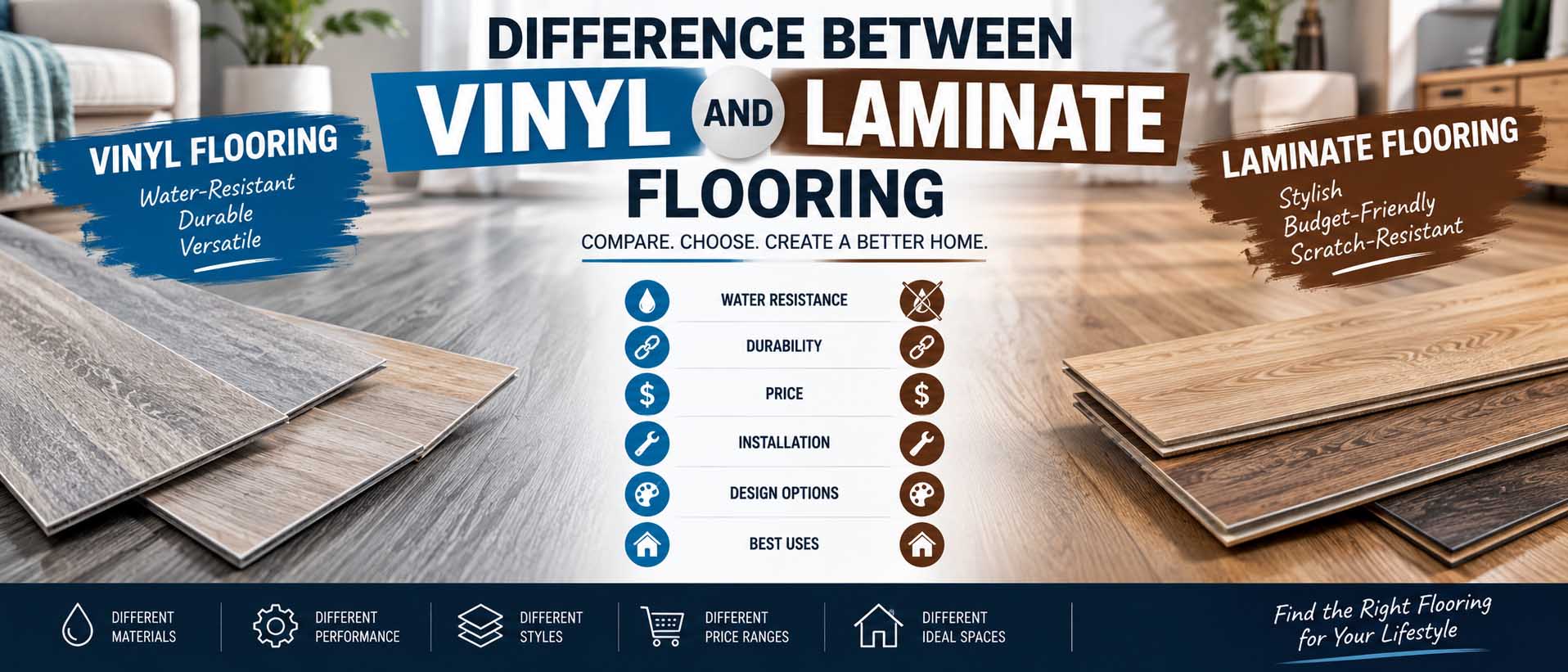
LVT vs. Laminate
Laminate typically uses a wood-derived core beneath its decorative and protective layers. LVT, meanwhile, relies on vinyl-based construction.
Both offer realistic printed designs, yet their response to moisture varies by product. Therefore, check manufacturer specifications instead of assuming either category is automatically suitable for every wet area.
LVT vs. Hardwood
Real hardwood offers genuine wood grain and can sometimes be refinished. However, it usually costs more and may require more careful moisture management.
LVT provides a wood-inspired appearance without being actual hardwood.
LVT vs. Ceramic Tile
Ceramic and porcelain tile provide a hard, mineral-based surface and can perform very well in wet areas when properly installed.
However, tile feels harder and colder underfoot. Installation can also involve mortar, grout, cutting, and more extensive subfloor preparation.
LVT can be faster to install in suitable situations, although preparation still matters.
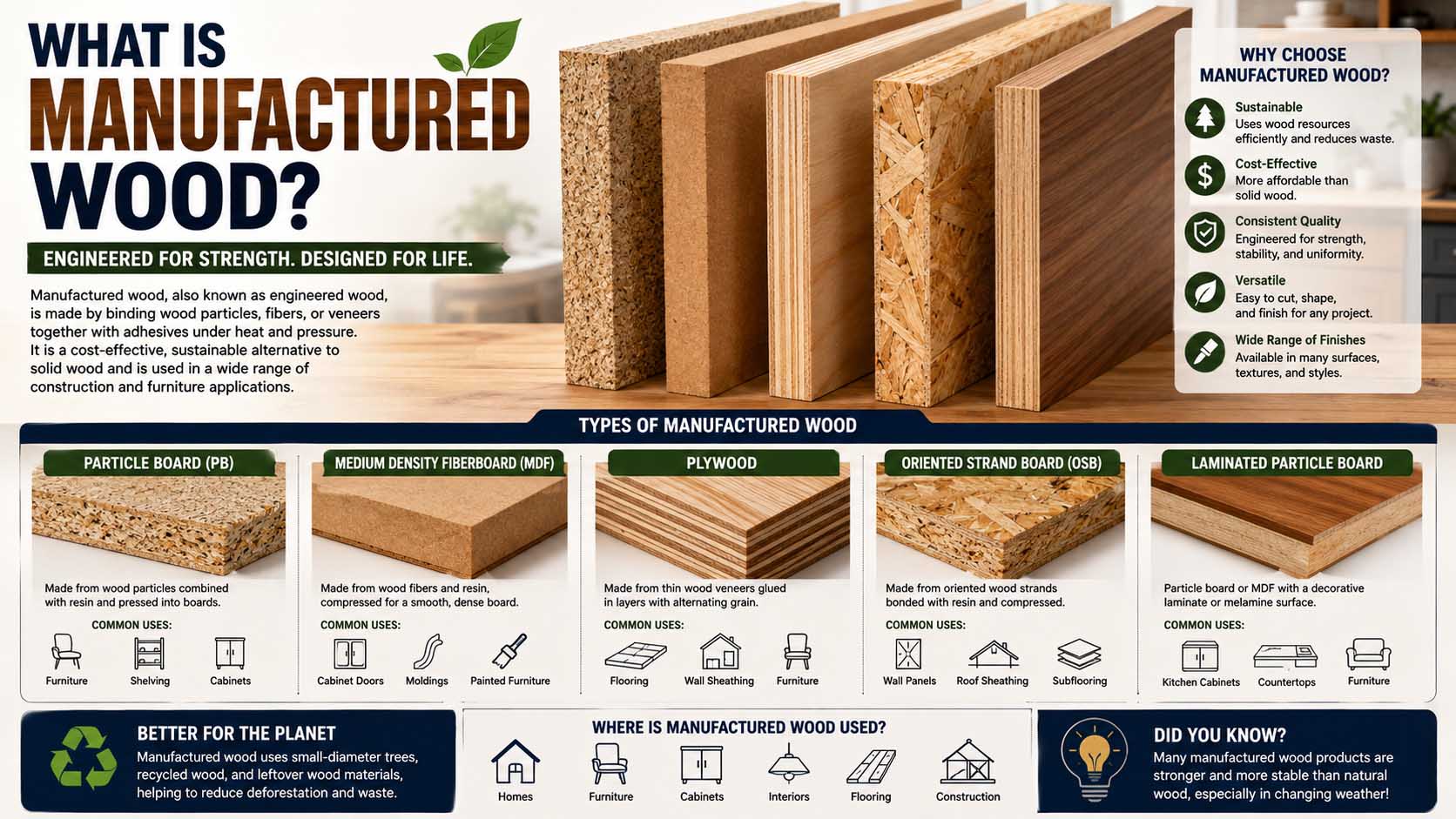
Products described as manufactured wood belong to a different material family, so shoppers should not assume that every floor with a printed wood pattern contains real wood.
How Much Does LVT Flooring Cost?
LVT prices vary widely depending on brand, construction, wear layer, design quality, installation system, retailer, and location.
Entry-level products generally cost less, while premium collections with thicker wear layers, detailed embossing, specialized cores, or stronger commercial ratings can cost considerably more.
However, the flooring price per square foot is only one part of your budget.
Remember to account for:
- Underlayment when required
- Subfloor preparation
- Adhesive for glue-down products
- Transition strips
- Trim or baseboards
- Professional installation
- Removal of old flooring
- Waste from cuts
- Delivery costs
Professional installation rates also vary by region and project complexity. Therefore, compare total installed cost rather than judging products solely by the box price.
What to Look for When Buying LVT Flooring
A good buying decision starts with the room where the flooring will be installed.
Check the LVT Wear Layer
For bedrooms or lightly used spaces, extreme wear resistance may not be necessary. However, busy kitchens, hallways, entryways, or homes with pets may benefit from a product designed for heavier use.
Therefore, compare wear-layer specifications and warranties across similar products.
Choose the Installation Method
LVT can use several installation methods.
Glue-down products attach directly to a properly prepared subfloor. Meanwhile, click-lock or floating systems connect pieces together without bonding every tile directly to the subfloor.
Neither method is automatically best. Instead, the right choice depends on the product, room, subfloor, and installation requirements.
Look Closely at Pattern Variation
When shopping for realistic wood or stone effects, examine several pieces rather than one sample.
More pattern variation generally reduces obvious repetition across a large floor. Similarly, textured finishes can make printed surfaces appear more natural.
Your flooring should also coordinate with surrounding finishes. For example, comparing types of paint can help you choose wall colors and finishes that work well with the tone and texture of your new floor.
Read the Flooring Warranty
Do not judge a warranty only by the number of years printed on the package.
Instead, check what it actually covers. Residential wear, commercial use, moisture, installation, scratches, and manufacturing defects may have different terms and exclusions.
Preparing a Room for LVT Flooring
The subfloor should meet the manufacturer’s requirements for flatness, cleanliness, dryness, and structural stability. Bumps and depressions may eventually become visible or interfere with locking systems.
Moisture testing may also be necessary, particularly over concrete.
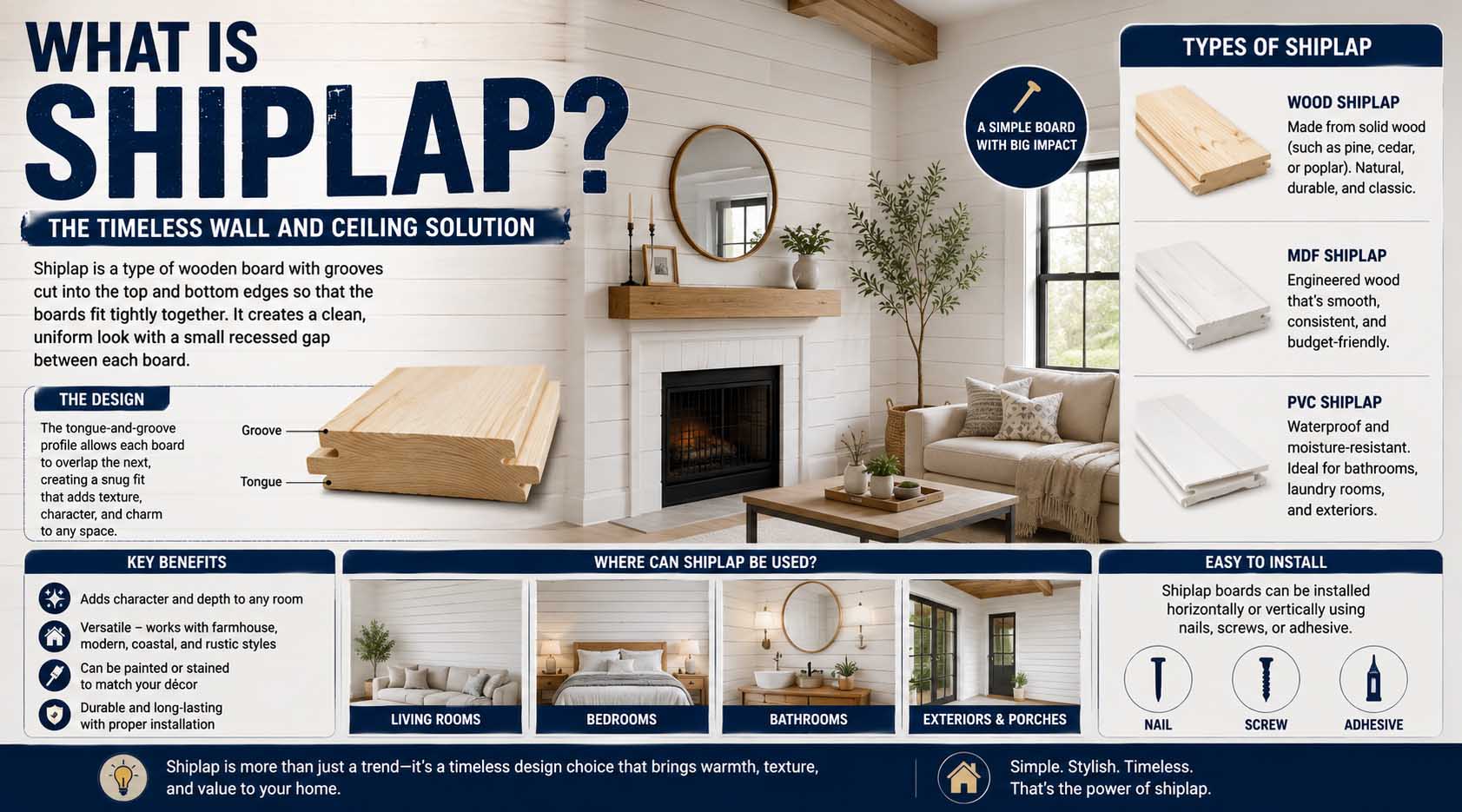
If you’re renovating walls at the same time, decorative finishes such as what is shiplap may affect the order of work because flooring and wall projects should be planned together to avoid unnecessary damage to newly installed surfaces.
Also, allow the flooring to acclimate when the manufacturer requires it. Different products have different instructions, so follow the documentation supplied with your specific flooring.
Maintaining LVT Flooring After Installation
Routine maintenance is relatively simple.
First, sweep, dust mop, or vacuum regularly to prevent grit from scratching the surface. When deeper cleaning is needed, use a damp mop and a cleaner approved by the flooring manufacturer.
Avoid flooding the floor with water.
In addition, place protective pads under furniture. Mats near entrances can reduce the amount of dirt carried across the surface. However, check whether the manufacturer restricts certain rubber-backed mats because some materials can discolor particular vinyl floors.
Finally, clean spills promptly, especially substances that could stain.
Most of all, follow the care instructions for your exact product rather than relying on a universal cleaning method.
Common LVT Flooring Buying Mistakes
One mistake is choosing flooring based only on appearance. A beautiful sample tells you little about wear layer, installation requirements, warranty, or suitability for the room.
Another mistake is buying the exact measured square footage. Cuts, damaged pieces, room shape, and pattern layout create waste, so installers normally account for extra material.
Shoppers also sometimes assume every luxury vinyl product is identical. In reality, construction and quality can differ significantly between collections.
Finally, do not ignore the subfloor. Spending more on premium LVT cannot compensate for poor preparation underneath it.
LVT Flooring FAQs
Is LVT Waterproof?
Many LVT products are marketed as waterproof because vinyl does not absorb water like some wood-based materials. However, seams and room edges can still allow moisture to reach the subfloor, so installation requirements remain significant.
Is LVT Good for Bathrooms?
Many products are suitable for bathrooms when installed according to manufacturer instructions. Still, verify that the specific flooring is approved for the intended location.
Can LVT Look Like Real Wood?
Yes. Modern printing and embossing can create convincing wood visuals. However, realism varies by product, so examine multiple samples before buying.
Can You Install LVT Over Existing Flooring?
Sometimes. The existing surface must meet the flooring manufacturer’s requirements and may need preparation. Therefore, check the product instructions before installing over tile, vinyl, or another existing floor.
Is LVT Better Than Laminate?
Neither is universally better. LVT often appeals to buyers prioritizing moisture resistance, while laminate may offer a different feel, construction, or pricing. Therefore, compare specific products rather than broad categories.
How Long Does LVT Flooring Last?
Service life depends on product quality, wear layer, installation, traffic, maintenance, and environmental conditions. Therefore, use the manufacturer’s residential or commercial warranty as one comparison point rather than expecting every LVT floor to last the same length of time.
Choosing the Right LVT Flooring for Your Home
Understanding what is LVT flooring makes shopping much easier because you can move beyond appearance and compare the specifications that actually affect everyday use.
First, consider the room, expected foot traffic, moisture exposure, and installation method. Then compare wear layers, construction, pattern quality, warranty terms, and total installed cost across several products.
LVT can be a practical choice for shoppers who want the look of wood or stone with straightforward maintenance and a broad range of designs. However, choosing the right product matters more than simply choosing the LVT label. Take home samples when possible, view them under your room’s actual lighting, and compare the full specifications before placing a large flooring order.